Linking Viscosity and Droplet Microstructure in Liquid Metal Composites via 3D MicroCT Analysis
Hugh P. Grennan, Ohnyoung Hur, Michael D. Bartlett

TL;DR
This study uses 3D imaging to show how the viscosity of liquid metal composites affects their microstructure, which is important for making better soft electronics and robotics.
Contribution
The novel integration of rheology and 3D microCT imaging reveals how composite viscosity controls droplet microstructure in liquid metal composites.
Findings
MicroCT analysis shows that LM volume and fumed silica content influence droplet size and dispersion.
Rheological properties determine microstructural homogeneity and electrical conductivity upon indentation.
A 105x increase in electrical conductivity is achievable by tailoring composite microstructure.
Abstract
Liquid metal (LM) composites offer unique combinations of compliance, conductivity, and functionality that enable applications in soft robotics, wearable devices, and flexible electronics. Realizing these capabilities requires a fundamental understanding of how processing influences microstructure, since droplet size, dispersion, and settling govern material properties. Here, rheological measurements are combined with micro‐computed tomography (microCT) imaging to uncover how uncured composite viscosity directs the formation of LM microstructures in elastomeric matrices. By systematically varying LM volume fraction (ϕ = 10%, 20%, 30%) and fumed silica (FS) weight fraction (ψ = 0%, 4%, 8%) while holding planetary mixing conditions constant, the role of rheology is isolated in shaping LM droplet populations. MicroCT analysis provides quantitative 3D characterization of thousands of…
Genes, proteins, chemicals, diseases, species, mutations and cell lines named across the full text — each resolved to its canonical identifier and authoritative record.
Click any figure to enlarge with its caption.
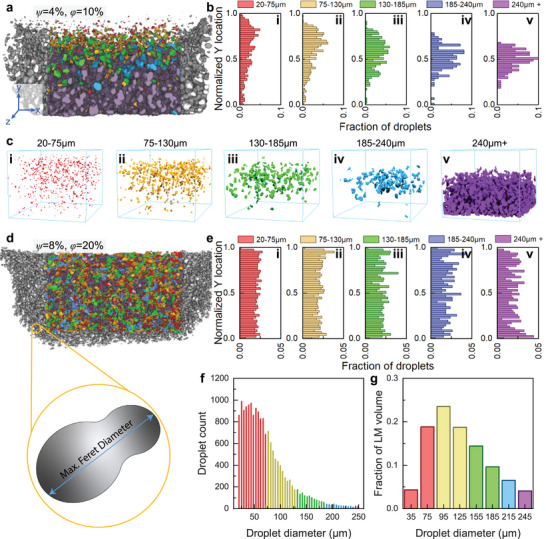 Figure 1
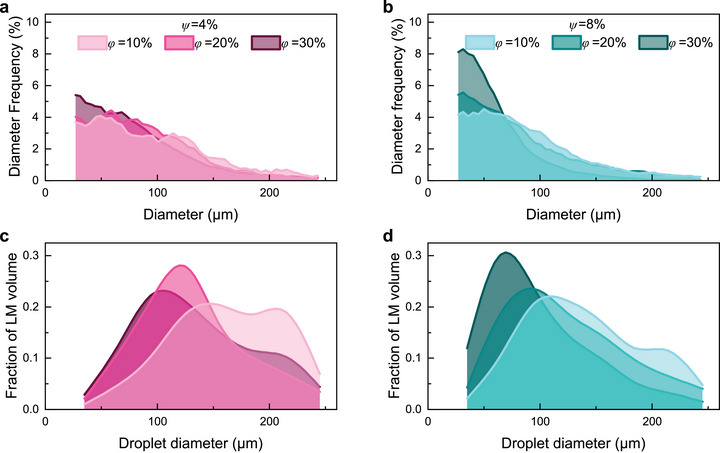 Figure 2
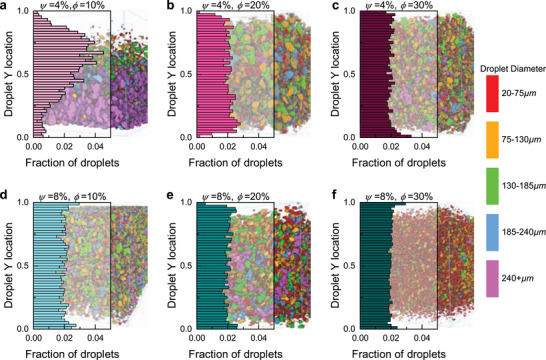 Figure 3
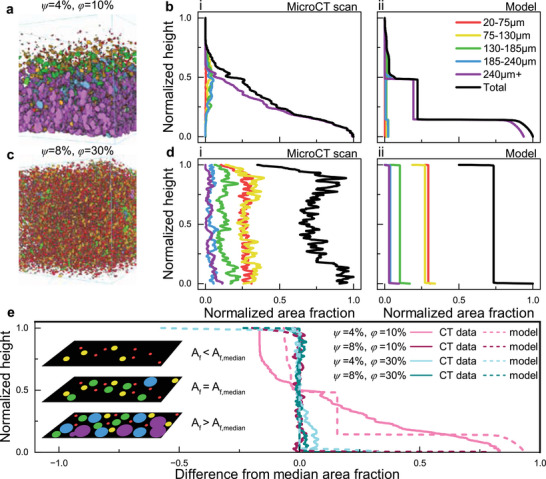 Figure 4
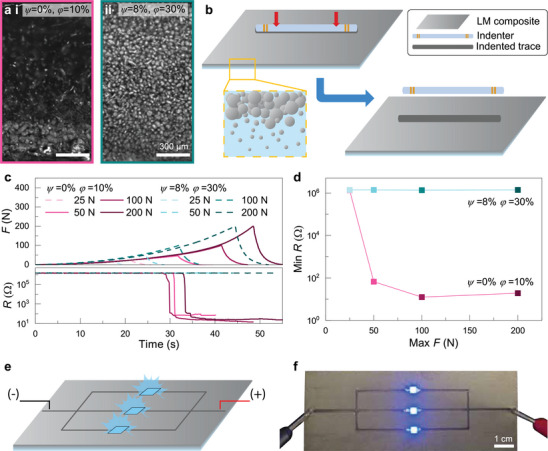 Figure 5
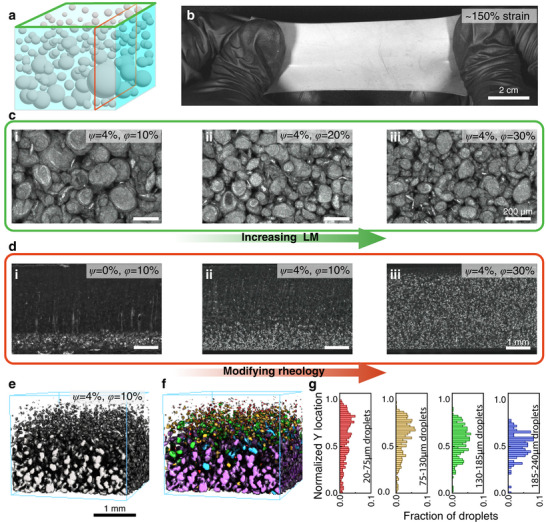 Figure 6
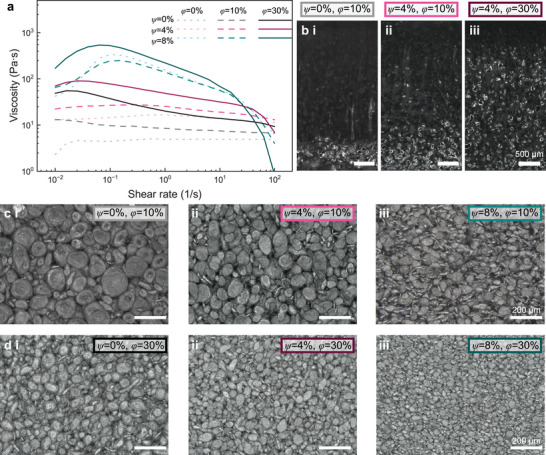 Figure 7
 Figure 8
Peer Reviews
No public reviews on file for this paper yet. If you reviewed it on a platform where reviews are public (OpenReview, ICLR, NeurIPS, ICML), you can paste yours below so the community can read it here.
Videos
No videos yet. Explain this paper in a talk, walkthrough, or lecture? Add one.
Taxonomy
TopicsAdvanced Sensor and Energy Harvesting Materials · Surface Modification and Superhydrophobicity · Nanomaterials and Printing Technologies