A Simple, Ultrastable, and Cost‐Effective Oxygen‐Scavenging System for Long‐Term DNA‐PAINT Imaging
Rebecca T. Perelman, George M. Church, Johannes Stein

TL;DR
A new, low-cost oxygen-scavenging system improves DNA-PAINT microscopy by preserving DNA integrity and enabling long-term high-resolution imaging.
Contribution
An enzyme-free, cost-effective oxygen scavenging buffer using sodium sulfite and Trolox enhances DNA-PAINT performance and stability.
Findings
The new system preserves docking strand integrity for over 24 hours.
The buffer improves stability tenfold and reduces costs by over 90%.
It enables faster and higher-precision localizations in DNA-PAINT imaging.
Abstract
DNA‐PAINT (Points Accumulation in Nanoscale Topography) is a super‐resolution microscopy technique capable of nanoscale imaging through the transient binding of fluorescently labeled imager strands to complementary DNA docking strands. Imager strands can be continuously replenished from an effectively infinite pool, making DNA‐PAINT inherently resistant to photobleaching. However, extended DNA‐PAINT imaging is limited by the formation of reactive oxygen species (ROS), which damage docking strands and reduce localization sampling over time. Although the state‐of‐the‐art oxygen‐scavenging system (OSS) can mitigate this damage, its enzymatic components degrade over time, reducing its performance, robustness, and utility. Here, we introduce a simple, enzyme‐free oxygen scavenging buffer based on sodium sulfite (Na2SO3) that overcomes these challenges. Our optimized formulation, combining…
Genes, proteins, chemicals, diseases, species, mutations and cell lines named across the full text — each resolved to its canonical identifier and authoritative record.
Click any figure to enlarge with its caption.
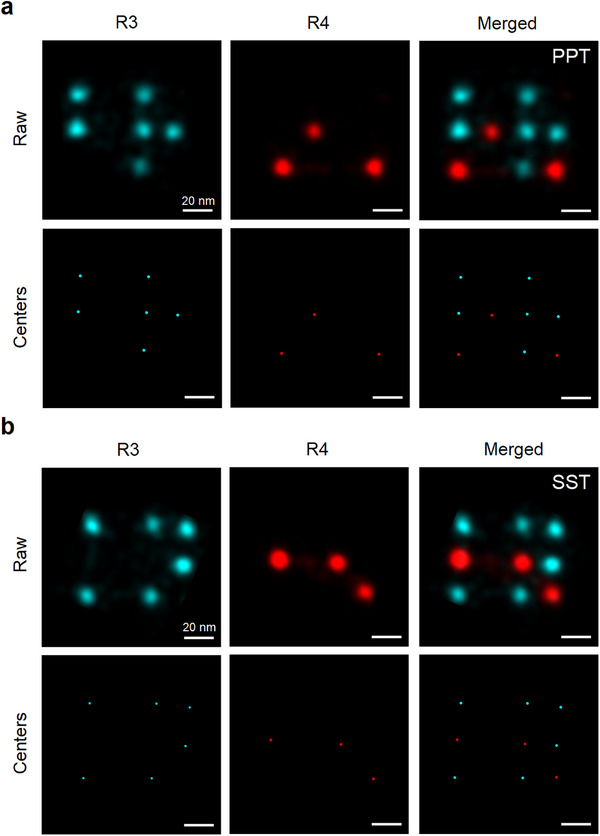 Figure 1
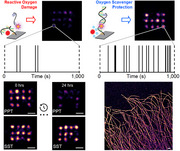 Figure 2
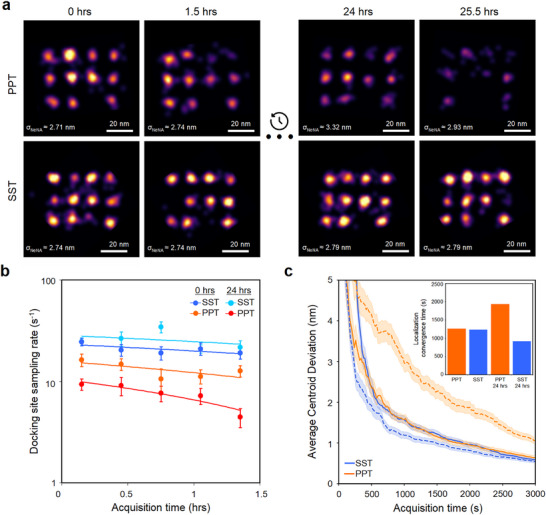 Figure 3
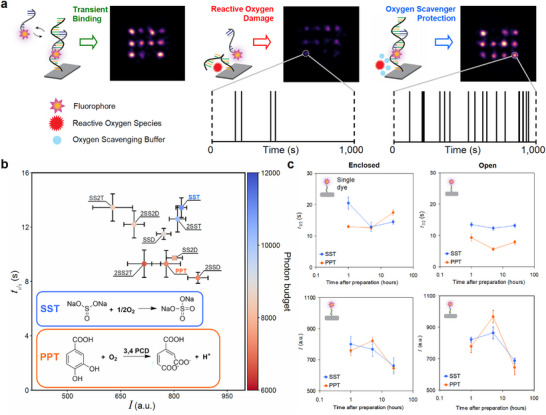 Figure 4
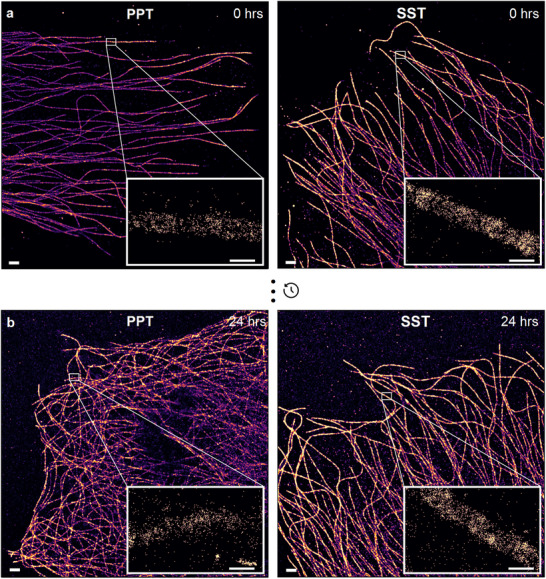 Figure 5
Peer Reviews
No public reviews on file for this paper yet. If you reviewed it on a platform where reviews are public (OpenReview, ICLR, NeurIPS, ICML), you can paste yours below so the community can read it here.
Videos
No videos yet. Explain this paper in a talk, walkthrough, or lecture? Add one.
Taxonomy
TopicsAdvanced Fluorescence Microscopy Techniques · Digital Holography and Microscopy · Advanced biosensing and bioanalysis techniques