Multimodal Large Language Models for Cystoscopic Image Interpretation and Bladder Lesion Classification: Comparative Study
Yung-Chi Shih, Cheng-Yang Wu, Shi-Wei Huang, Chung-You Tsai

TL;DR
This study compares multimodal large language models for interpreting cystoscopy images and classifying bladder lesions, finding that OpenAI-o3 performs best but still needs improvement for complex diagnoses.
Contribution
The study introduces a rigorous evaluation of MM-LLMs for cystoscopy using clinician-defined stress-test datasets and assesses interpretive and classification capabilities.
Findings
OpenAI-o3 achieved the highest lesion detection accuracy (88.3%) and balanced sensitivity-specificity trade-off in tumor-like lesion classification.
In-context learning improved OpenAI-o3's microaverage accuracy from 40.7% to 46.0%.
MM-LLMs show potential for assisting in cystoscopy interpretation but require optimization for complex differential diagnoses.
Abstract
Cystoscopy remains the gold standard for diagnosing bladder lesions; however, its diagnostic accuracy is operator dependent and prone to missing subtle abnormalities such as carcinoma in situ or misinterpreting mimic lesions (tumor, inflammation, or normal variants). Artificial intelligence–based image-analysis systems are emerging, yet conventional models remain limited to single tasks and cannot produce explanatory reports or articulate diagnostic reasoning. Multimodal large language models (MM-LLMs) integrate visual recognition, contextual reasoning, and language generation, offering interpretive capabilities beyond conventional artificial intelligence. This study aims to rigorously evaluate state-of-the-art MM-LLMs for cystoscopic image interpretation and lesion classification using clinician-defined stress-test datasets enriched with rare, diverse, and challenging lesions,…
Genes, proteins, chemicals, diseases, species, mutations and cell lines named across the full text — each resolved to its canonical identifier and authoritative record.
Click any figure to enlarge with its caption.
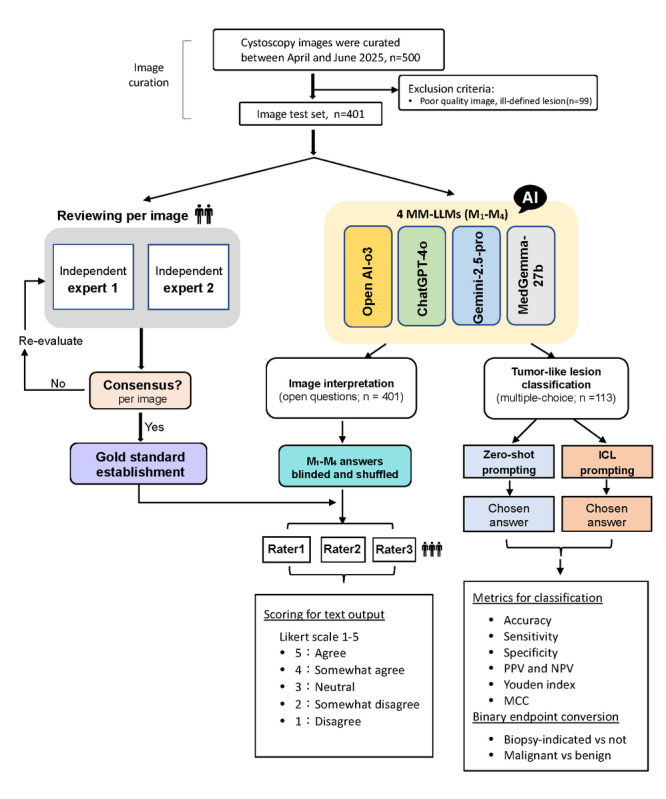 Figure 1
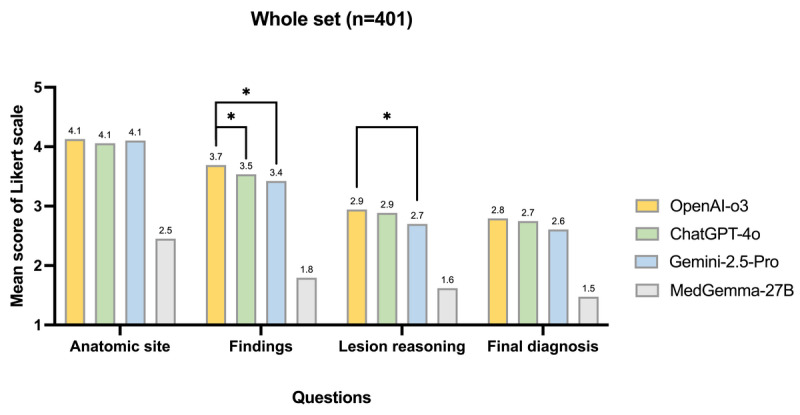 Figure 2
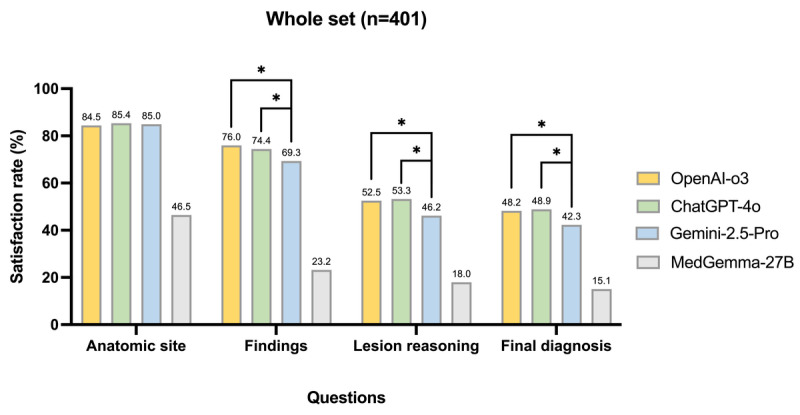 Figure 3
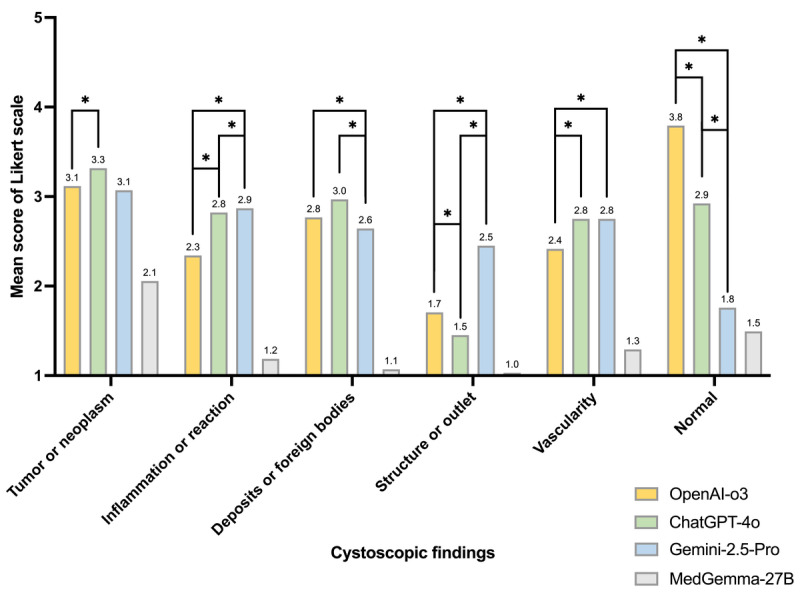 Figure 4
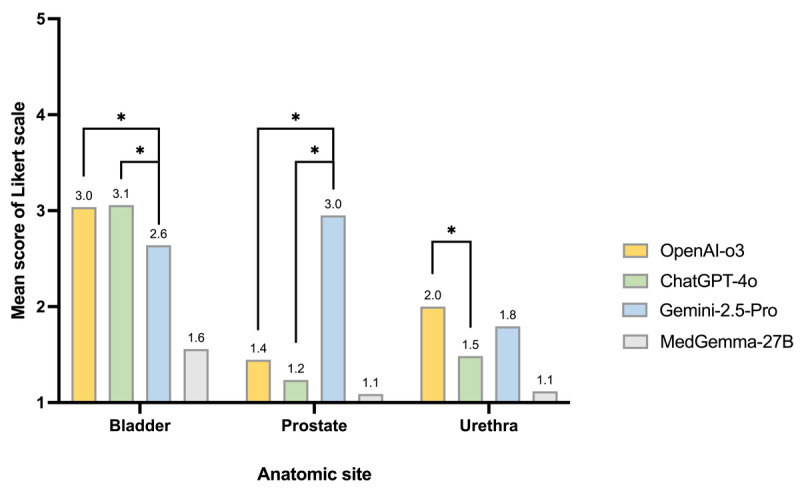 Figure 5
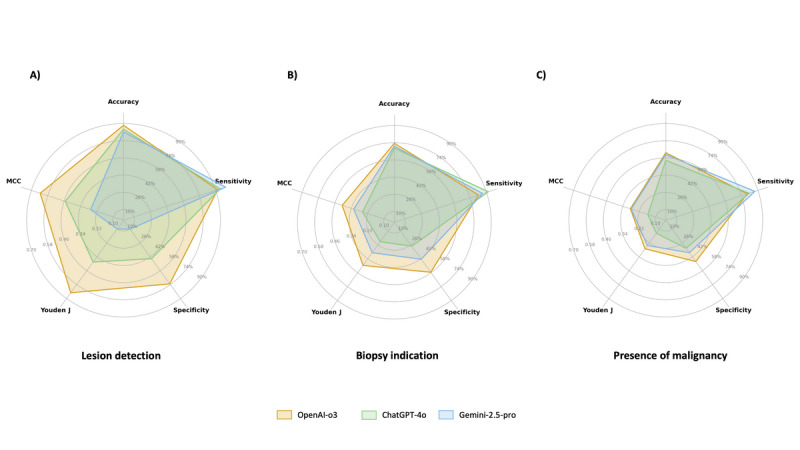 Figure 6
Peer Reviews
No public reviews on file for this paper yet. If you reviewed it on a platform where reviews are public (OpenReview, ICLR, NeurIPS, ICML), you can paste yours below so the community can read it here.
Videos
No videos yet. Explain this paper in a talk, walkthrough, or lecture? Add one.
Taxonomy
TopicsBladder and Urothelial Cancer Treatments · Urinary and Genital Oncology Studies · Urological Disorders and Treatments