“It Felt Good to Be Able to Say That Out Loud”—Therapeutic Alliance and Processes in AVATAR Therapy for People Who Hear Distressing Voices: Peer-Led Qualitative Study
Emily Rutter-Eley, Thomas Craig, Philippa Garety, Mar Rus-Calafell, Hannah Ball, Moya Clancy, Jeffrey McDonnell, Andrew Gumley, Gillian Haddock, Sandra Bucci, Miriam Fornells-Ambrojo, Nerys Baldwin, Jed Harling, Alie Phiri, Charlie MacKenzie-Nash, Nicholas Hamilton, Amy Grant

TL;DR
AVATAR therapy helps people who hear distressing voices by allowing them to confront and challenge these voices through a digital avatar, improving their sense of control and well-being.
Contribution
This study provides new insights into the therapeutic processes and challenges of AVATAR therapy, emphasizing the role of therapeutic alliance and participant engagement.
Findings
Participants reported increased power and control over their voices after engaging in AVATAR therapy dialogues.
A strong therapeutic alliance was crucial for participants' sense of safety and comfort, even for those who dropped out of therapy.
Emotional intensity and participants' determination were key factors in successful engagement with AVATAR therapy.
Abstract
AVATAR therapy is a novel psychological therapy that aims to reduce distress associated with hearing voices. The approach involves a series of therapist-facilitated dialogues between a voice-hearer and a digital embodiment of their main distressing voice (the avatar), which aim to increase coping and self-empowerment. This study explored therapeutic processes that are distinctive to AVATAR therapy, including direct early work with voice content and the role of the therapist in dialogue enactment. People with lived experience relating to psychosis (peer researchers) contributed to each stage of the study. Peer researchers led semistructured interviews, which were conducted with 19 participants who received AVATAR therapy as part of the AVATAR2 trial, including 3 participants who dropped out of therapy. Data were analyzed using interpretative phenomenological analysis (n=5) and template…
Genes, proteins, chemicals, diseases, species, mutations and cell lines named across the full text — each resolved to its canonical identifier and authoritative record.
Click any figure to enlarge with its caption.
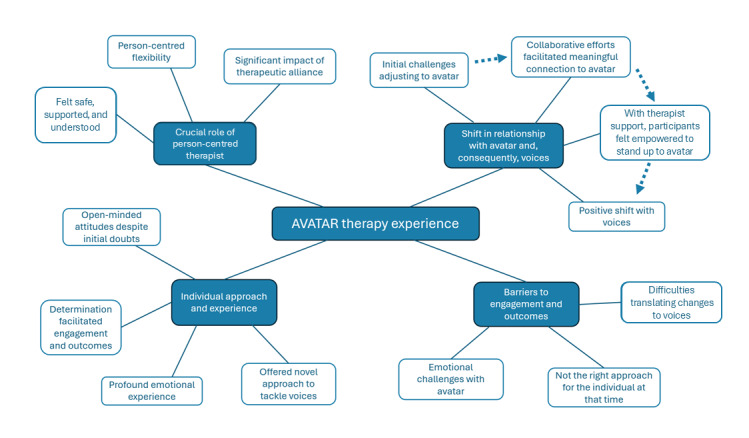 Figure 1
Peer Reviews
No public reviews on file for this paper yet. If you reviewed it on a platform where reviews are public (OpenReview, ICLR, NeurIPS, ICML), you can paste yours below so the community can read it here.
Videos
No videos yet. Explain this paper in a talk, walkthrough, or lecture? Add one.
Taxonomy
TopicsHearing Loss and Rehabilitation · Hearing Impairment and Communication · Occupational Therapy Practice and Research