A hybrid vocal fold phonatory platform for pediatric phonation modeling
Leila Donyaparastlivari, Rishi Kuriakose, Mohaddeseh Mohammadi, Ayda Pourmostafa, Daniel Li, Scott L. Thomson, Chen Shen, Amir K. Miri

TL;DR
This paper introduces a new hybrid model of vocal folds for studying how children produce sound, combining biological and synthetic materials to better mimic real infant vocal folds.
Contribution
The novel contribution is a hybrid vocal fold platform integrating hydrogels and silicone to replicate infant vocal fold biomechanics and dimensions.
Findings
Material properties and geometrical scaling significantly affect vibratory behavior and acoustic output.
Size reduction matches pediatric anatomical dimensions and reduces cell volume for future biologically active models.
The platform supports scalable and bio-integrative studies of pediatric phonation and vocal fold pathology.
Abstract
Understanding pediatric phonation requires models that capture the biomechanical properties and dynamic airflow interactions of vocal folds. While synthetic vocal fold models have advanced the study of airflow–structure interactions in phonation, they cannot incorporate biologically relevant components such as hydrogels or human-derived cells. We developed a hybrid vocal fold phonatory platform that integrates a natural hydrogel with a silicone-based synthetic framework to address this limitation, enabling biomechanical fidelity and biological relevance. We adapted and downscaled a human vocal fold model (EPI) to replicate the dimensions of infant vocal folds. Using silicone elastomers and gelatin-silicone composites, we fabricated infant-scale replicas that mimic native tissue. Our results demonstrate that the material properties and geometrical scaling significantly affect vibratory…
Genes, proteins, chemicals, diseases, species, mutations and cell lines named across the full text — each resolved to its canonical identifier and authoritative record.
Click any figure to enlarge with its caption.
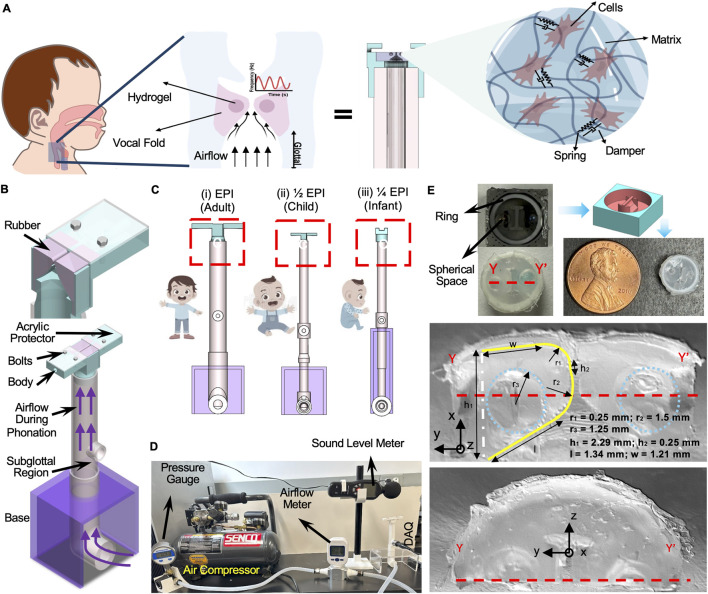 Figure 1
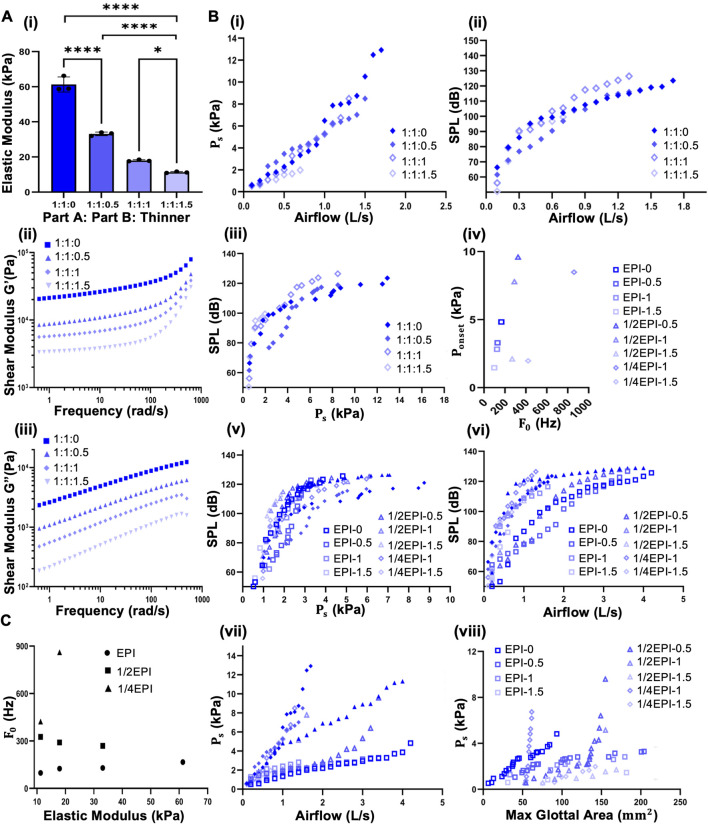 Figure 2
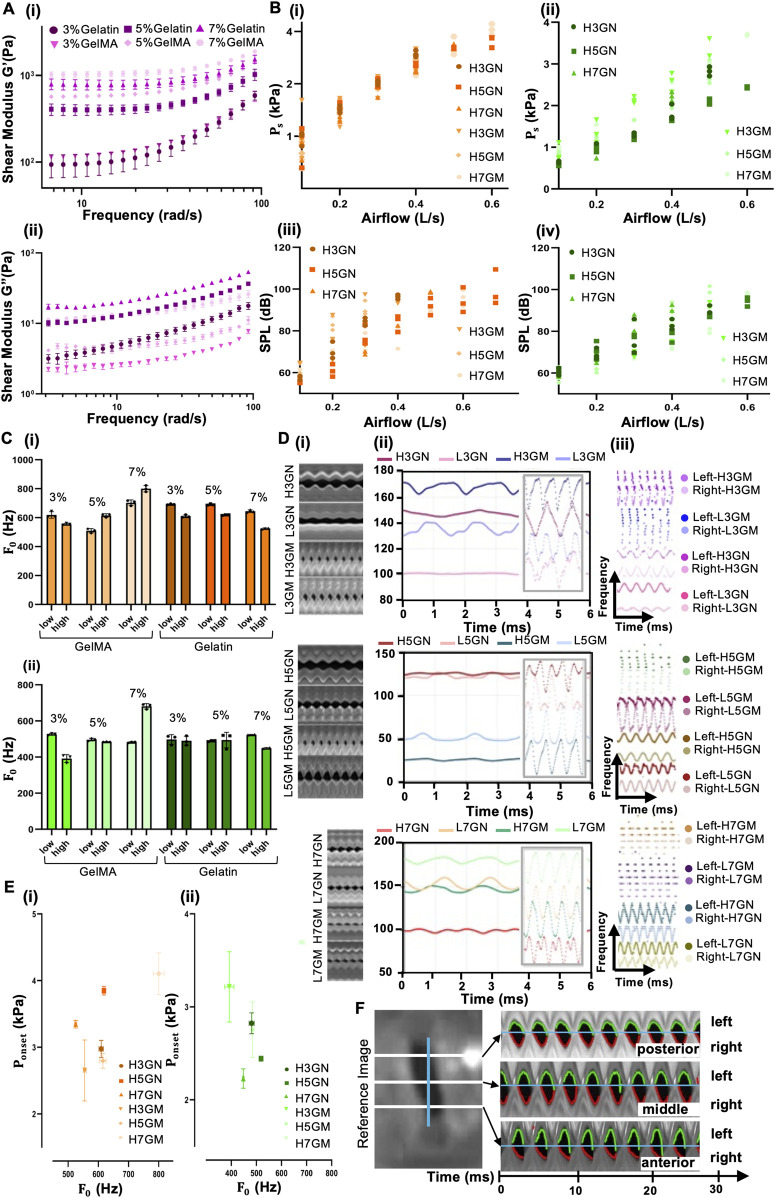 Figure 3
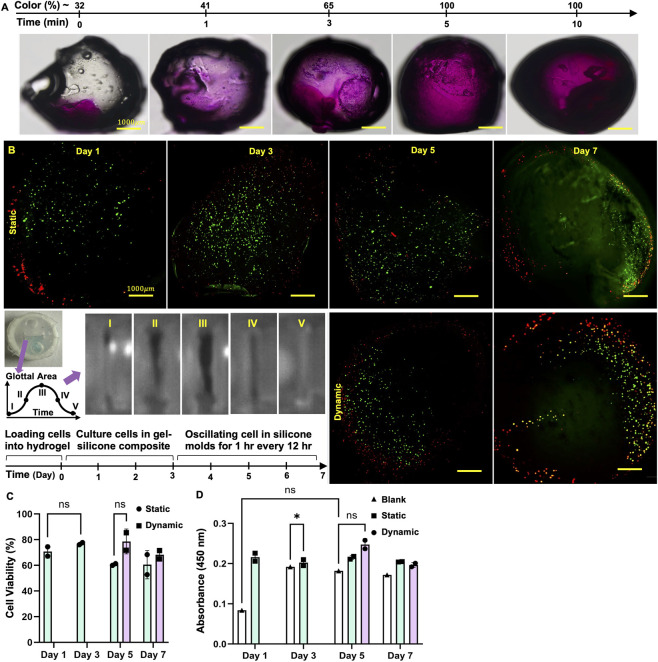 Figure 4
Peer Reviews
No public reviews on file for this paper yet. If you reviewed it on a platform where reviews are public (OpenReview, ICLR, NeurIPS, ICML), you can paste yours below so the community can read it here.
Videos
No videos yet. Explain this paper in a talk, walkthrough, or lecture? Add one.
Taxonomy
TopicsVoice and Speech Disorders · Tracheal and airway disorders · Phonocardiography and Auscultation Techniques