Quantification of 25-hydroxyvitamin D 3 in dried blood spots as compared to plasma among Indian adults
Ashwini V Shete, Jyoti Sawant, Rajani Bagul, Ujjwala Ghule, Sarang S. Saluke, Christopher R. Sudfeld, Katarzyna Dzik, Christopher Sudfeld, Christopher T Sempos

TL;DR
This study compares vitamin D levels measured in dried blood spots and plasma among Indian adults, finding strong agreement between the two methods.
Contribution
The study demonstrates that dried blood spots can reliably measure vitamin D levels in Indian adults, offering a cost-effective alternative to plasma testing.
Findings
25(OH)D3 concentrations in dried blood spots and plasma were highly correlated (Pearson’s correlation = 0.976).
DBS measurements were on average 6% lower than plasma measurements across the observed vitamin D distribution.
The study supports the use of dried blood spots for vitamin D assessment in large-scale epidemiologic studies.
Abstract
Vitamin D may play an important role in later-life physical and cognitive health. Vitamin D status is standardly assessed in serum and plasma; however, collection, transport, and storage costs make large epidemiologic studies challenging. We assessed the agreement of 25-hydroxyvitamin D 3 (25(OH)D 3) quantification from dried blood spots (DBS) as compared to standard plasma assessment among older Indian adults. A total of 58 adults over 45 years of age who resided in Pune, India were enrolled in the study from July 2020 to June 2021. Liquid chromatography-tandem mass spectrometry (LC-MS/MS) was used to assess 25(OH)D 3 concentrations in paired plasma and DBS samples. Plasma and DBS 25(OH)D 3 concentrations were highly correlated (Pearson’s correlation = 0.976). The median 25(OH)D 3 concentration of the study population assessed by plasma was 14.6 ng/mL (Q1=12.0, Q3= 18.1) while the…
Genes, proteins, chemicals, diseases, species, mutations and cell lines named across the full text — each resolved to its canonical identifier and authoritative record.
Click any figure to enlarge with its caption.
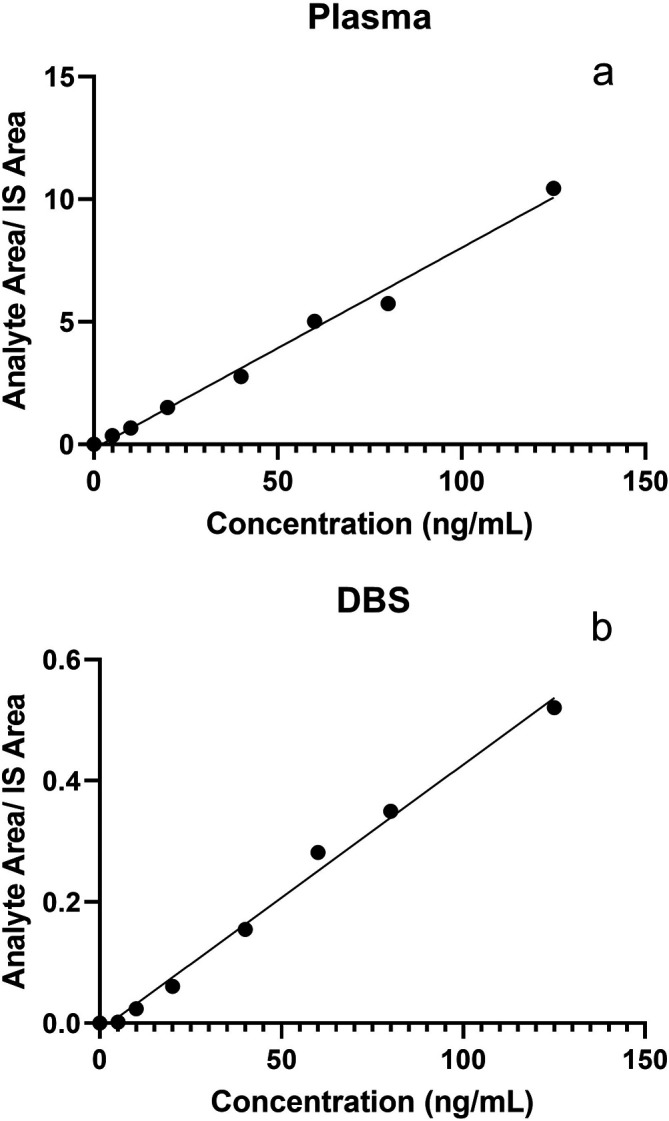 Figure 1
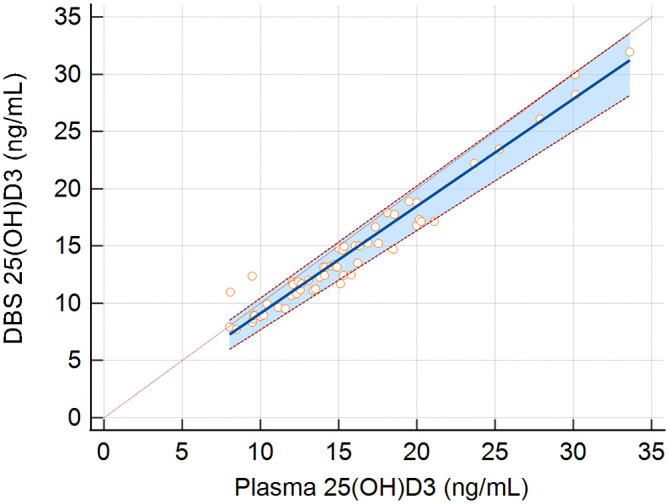 Figure 2
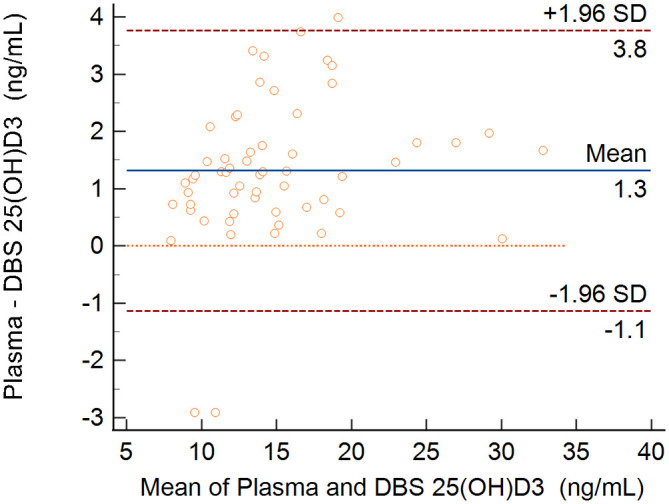 Figure 3
Peer Reviews
No public reviews on file for this paper yet. If you reviewed it on a platform where reviews are public (OpenReview, ICLR, NeurIPS, ICML), you can paste yours below so the community can read it here.
Videos
No videos yet. Explain this paper in a talk, walkthrough, or lecture? Add one.
Taxonomy
TopicsVitamin D Research Studies · Healthcare cost, quality, practices · Nutritional Studies and Diet