A Differential Evolution-Based Optimized Ensemble for Balanced and Imbalanced Medical Datasets
Surajit Das, Samaleswari P. Nayak, Biswajit Sahoo, Satyananda Champati Rai, Charles Ikerionwu, Biswajit Sahoo, Najah Al-shanableh

TL;DR
This paper introduces a new machine learning framework that improves detection of rare medical cases by combining multiple models and optimizing their performance using differential evolution.
Contribution
The novel OEDE framework optimizes ensemble weights using differential evolution to improve minority class detection in imbalanced medical datasets.
Findings
OEDE outperformed or matched traditional models in AUC, F1-score, and Recall on imbalanced medical datasets.
The framework showed robust performance across varying imbalance ratios (1.89 to 14.6).
Differential evolution effectively optimized ensemble weights to maximize AUC.
Abstract
Class imbalance is a frequent and severe problem in medical datasets, where instances from the minority class are usually high risk or disease positive. Most traditional classifiers suffer from a biasness towards the majority class, resulting in a poor detection rate of the minority class and, therefore, decreased confidence in prediction systems in medical applications. In this paper, we present an optimized ensemble by differential evolution (OEDE), a novel ensemble learning framework, to address this problem. OEDE harmonizes three dissimilar base learners (Logistic Regression, Random Forest, and XGBoost) and trains each using class-balancing techniques. Next, the model utilized Differential Evolution (DE) to discover the most appropriate ensemble weights to maximize the area under the ROC curve (AUC) on a validation dataset. We conducted experiments on four real-world medical…
Genes, proteins, chemicals, diseases, species, mutations and cell lines named across the full text — each resolved to its canonical identifier and authoritative record.
Click any figure to enlarge with its caption.
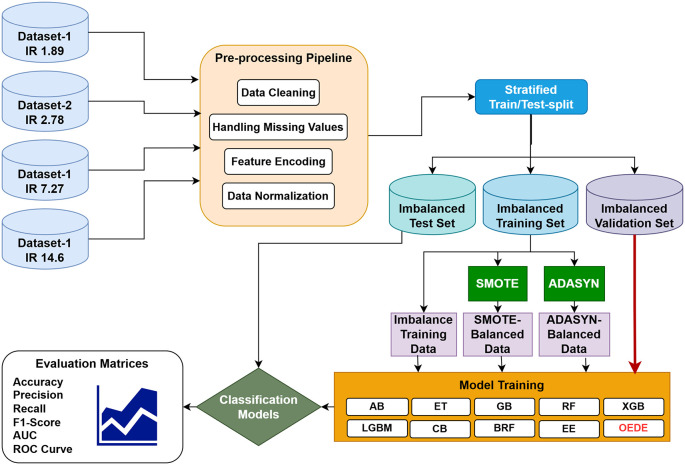 Figure 1
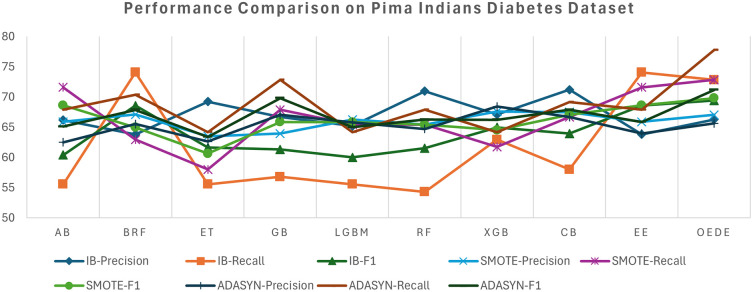 Figure 2
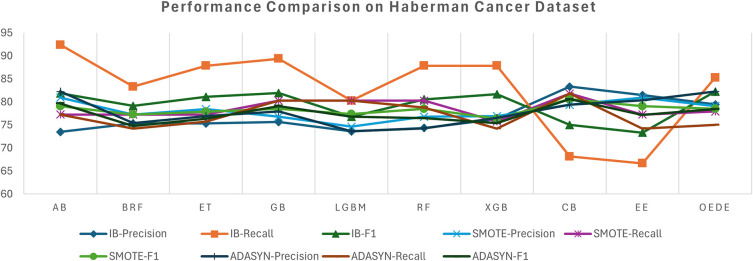 Figure 3
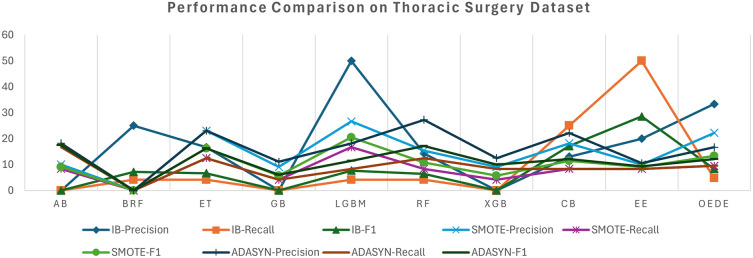 Figure 4
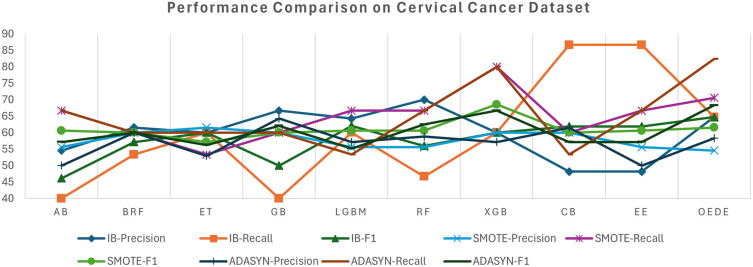 Figure 5
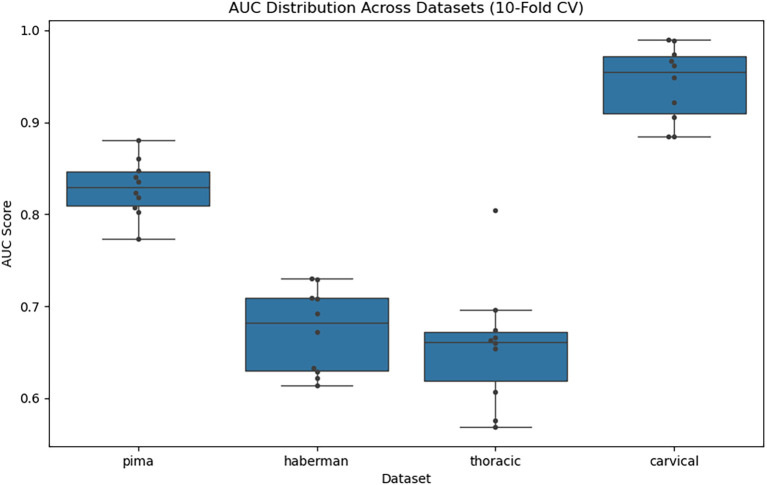 Figure 6
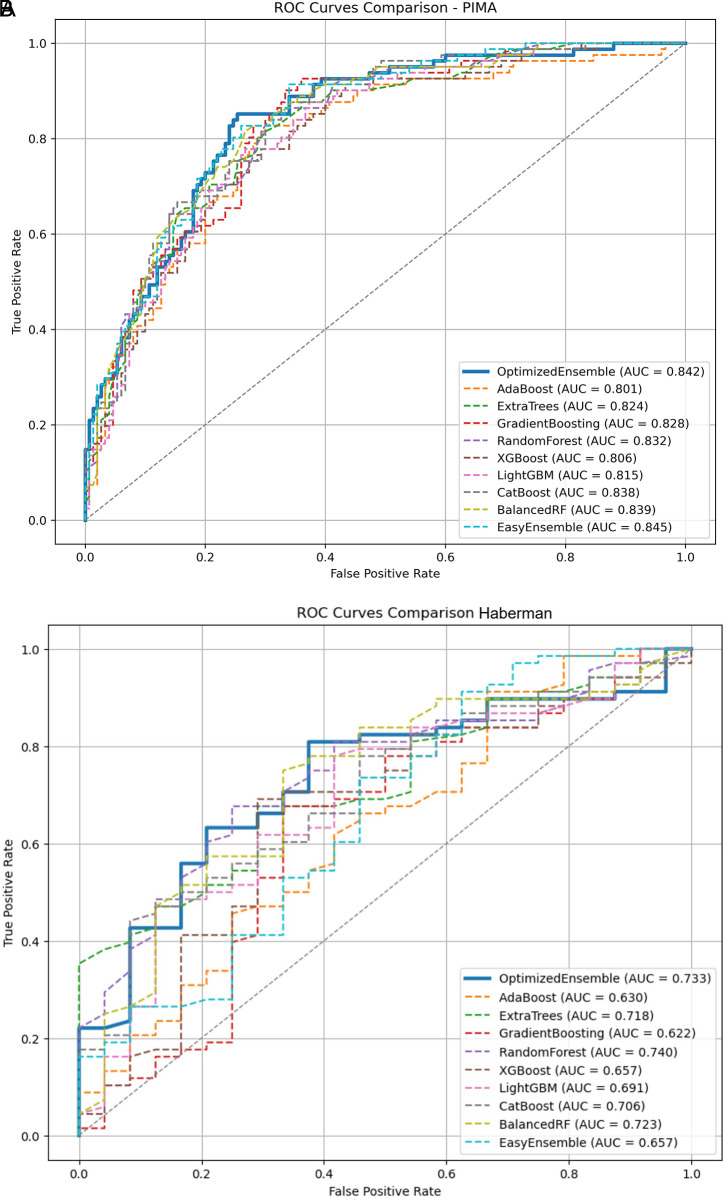 Figure 7
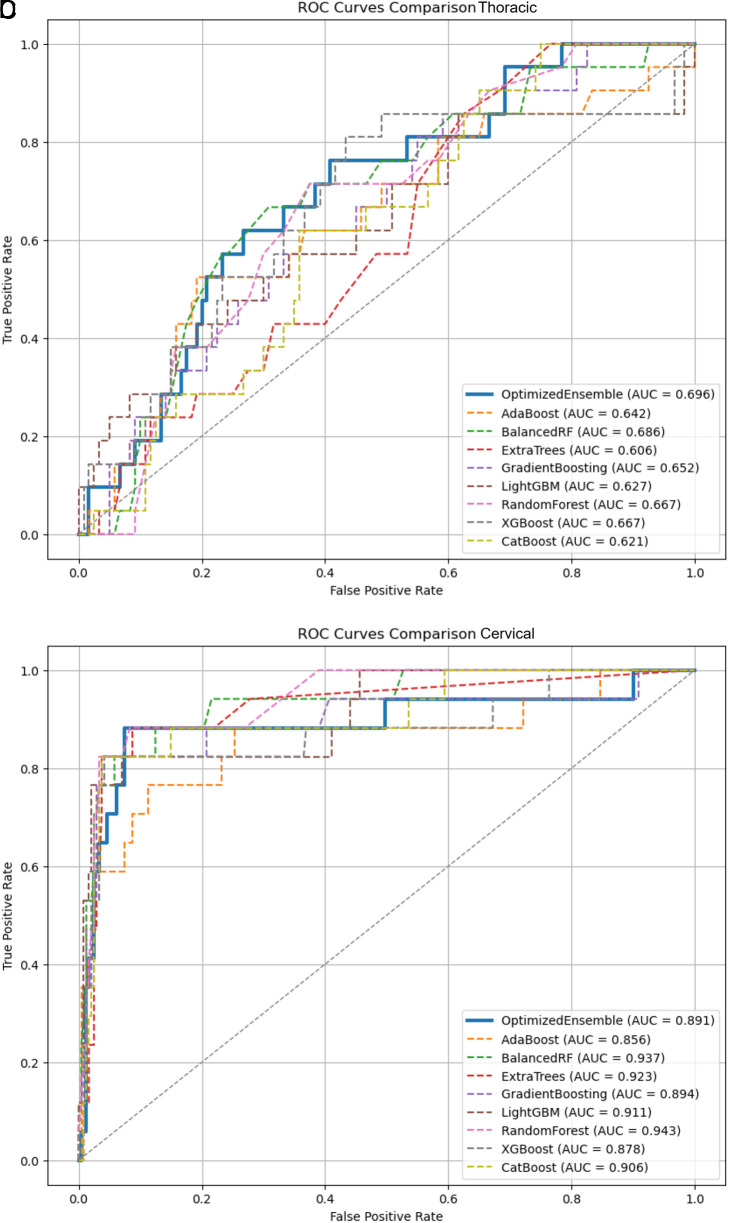 Figure 8
Peer Reviews
No public reviews on file for this paper yet. If you reviewed it on a platform where reviews are public (OpenReview, ICLR, NeurIPS, ICML), you can paste yours below so the community can read it here.
Videos
No videos yet. Explain this paper in a talk, walkthrough, or lecture? Add one.
Taxonomy
TopicsArtificial Intelligence in Healthcare · Machine Learning in Healthcare · Imbalanced Data Classification Techniques