Practices, Attitudes, Perceived Knowledge, and Intentions Underlying Low‐Fat Dietary Behaviours in Adults Living With Bile Acid Diarrhoea: A Cross‐Sectional Study
Yvonne A. McKenzie, Christopher Todd, Calvin Heal, Sorrel Burden

TL;DR
This study explores why people with bile acid diarrhoea follow low-fat diets and finds that health beliefs and symptom improvement are key factors.
Contribution
The study identifies specific predictors of dietary behavior in managing bile acid diarrhoea using the Theory of Planned Behaviour.
Findings
Many individuals with bile acid diarrhoea continue to experience symptoms despite using low-fat diets and bile acid sequestrants.
Perceived necessity for health and symptom improvement are strong predictors of intention to reduce fat intake.
Dietary modifications beyond fat reduction may be needed for effective symptom and weight management in bile acid diarrhoea.
Abstract
The effectiveness of low‐fats diet for managing bile acid diarrhoea (BAD) is unclear, yet many individuals may restrict fat intake. This study aims to explore factors associated with reducing fat intake. Cross‐sectional survey using convenience sampling recruited adults from the United Kingdom with a self‐reported diagnosis of BAD via online platforms (April to May 2021). Demographics, clinical characteristics, and low‐fat diet follower status data were collected. Potential predictors of intention to reduce fat intake were assessed using a modified validated questionnaire framed on the Theory of Planned Behaviour. Multinomial logistic regression was performed. Of 434 respondents, current, past and non‐followers of low‐fat diets were 49%, 34% and 17%, whilst 79%, 83% and 78% reported chronic diarrhoea, respectively. Intention to reduce fat intake was associated with higher odds for six…
Genes, proteins, chemicals, diseases, species, mutations and cell lines named across the full text — each resolved to its canonical identifier and authoritative record.
Click any figure to enlarge with its caption.
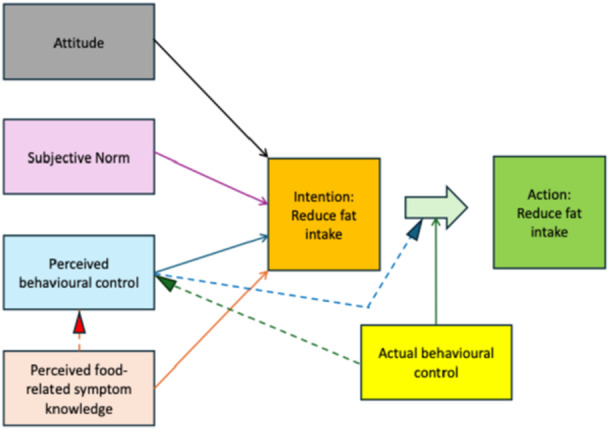 Figure 1
 Figure 2
Peer Reviews
No public reviews on file for this paper yet. If you reviewed it on a platform where reviews are public (OpenReview, ICLR, NeurIPS, ICML), you can paste yours below so the community can read it here.
Videos
No videos yet. Explain this paper in a talk, walkthrough, or lecture? Add one.
Taxonomy
TopicsGastrointestinal motility and disorders · Gut microbiota and health · Celiac Disease Research and Management