Assessing Cardiac Mechanical Dysfunction in Transfusion‐Dependent β‐Thalassemia With History of Atrial Fibrillation: The Role of Speckle Tracking Echocardiography
Federico Marchini, Maria Mele, Elena Marchetti, Laura Rotondo, Federica Frascaro, Michele Malagù, Rita Pavasini, Elisabetta Tonet, Matteo Serenelli, Alberto Cossu, Filomena Longo, Maria Lo Monaco, Erika Bertella, Gianluca Campo, Matteo Bertini

TL;DR
This study shows that β-thalassemia patients with a history of atrial fibrillation have worse heart function, as measured by advanced ultrasound techniques.
Contribution
The study is the first to investigate the role of speckle tracking echocardiography in β-thalassemia patients with a history of atrial fibrillation.
Findings
Patients with a history of AF had significantly lower global longitudinal strain and peak atrial longitudinal strain.
AF patients showed a higher prevalence of both ventricular and atrial mechanical dysfunction.
PALS demonstrated high diagnostic accuracy for detecting a history of AF.
Abstract
Atrial fibrillation (AF) is highly prevalent in patients with transfusion‐dependent beta‐thalassemia (TDT). Speckle tracking echocardiography (STE) provides detailed information about left ventricular (LV) and atrial function, however its role in TDT patients with AF has not been completely investigated. This study aimed to assess differences in cardiac mechanical parameters between thalassemia patients with and without history of AF. 223 TDT patients in sinus rhythm were enrolled and, among them, 26 (11%) had history of AF. A complete STE analysis with the evaluation of global longitudinal strain (GLS), peak atrial longitudinal strain (PALS) and myocardial work (MW) indices were performed. The primary endpoint was the difference in STE parameters. The secondary endpoint was the prevalence of cardiac mechanical dysfunction. Patients with history of AF showed significantly lower values…
Genes, proteins, chemicals, diseases, species, mutations and cell lines named across the full text — each resolved to its canonical identifier and authoritative record.
Click any figure to enlarge with its caption.
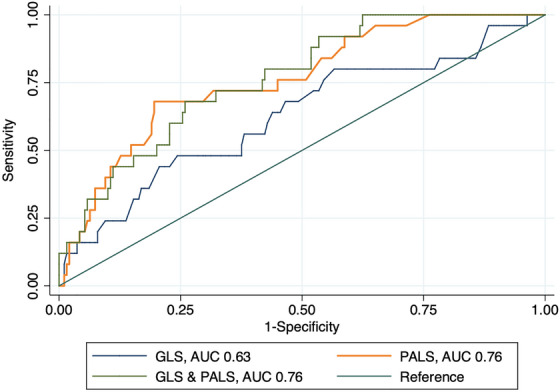 Figure 1
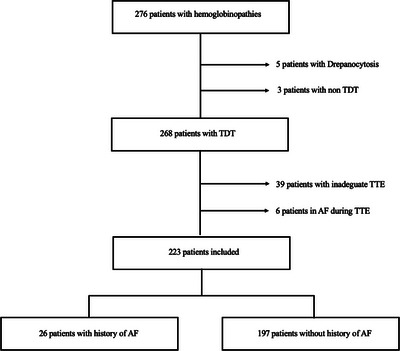 Figure 2
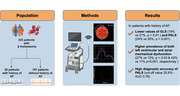 Figure 3
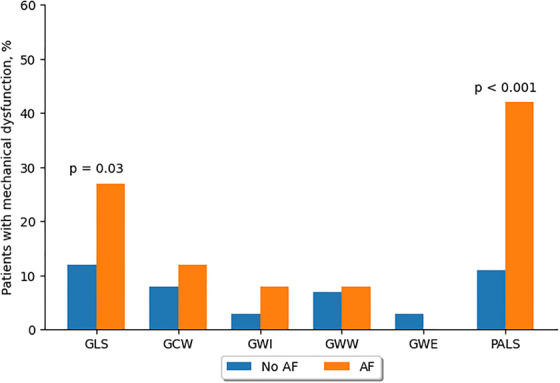 Figure 4
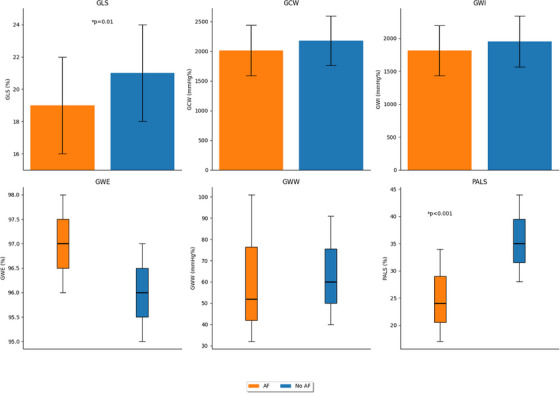 Figure 5
Peer Reviews
No public reviews on file for this paper yet. If you reviewed it on a platform where reviews are public (OpenReview, ICLR, NeurIPS, ICML), you can paste yours below so the community can read it here.
Videos
No videos yet. Explain this paper in a talk, walkthrough, or lecture? Add one.
Taxonomy
TopicsCardiovascular Function and Risk Factors · Hemoglobinopathies and Related Disorders · Blood properties and coagulation