Sex‐Specific Phenotype‐Performance Links: Divergent Correlations Between Morphology, Coloration, and Bite Force in the Mountain Dragon (Diploderma vela)
Songwen Tan, Ling Li, Wei Gao, Guocheng Shu, Peng Guo, Yayong Wu

TL;DR
The study explores how male and female mountain dragons differ in traits like body shape and coloration, and how these traits relate to bite force, revealing sex-specific adaptations.
Contribution
The paper demonstrates sex-specific correlations between morphology and bite force in Diploderma vela, extending understanding of sexual dimorphism beyond trait means.
Findings
Male mountain dragons show male-biased dimorphism in most morphological traits, while females have longer abdomens.
Morphology-bite force relationships differ between sexes, but coloration does not correlate with bite force in either sex.
Sexual dimorphism in D. vela is shaped by sexual selection, fecundity advantage, and niche divergence, enhancing adaptive fitness.
Abstract
Sexual dimorphism in lizards arises from the dynamic interplay between natural and sexual selection, manifesting in divergent phenotypic traits across taxa. A key unresolved question is whether the relationship between such sexually dimorphic traits and functional performance also differs between the sexes. This study investigated this question in the mountain dragon (Diploderma vela), a protected species endemic to the upper Lancang River basin in southwestern China, by quantifying its sexual dimorphism in morphology and coloration and assessing their sex‐specific correlations with bite force. A total of 94 individuals were assessed for nine morphological traits, maximum bite force capacity, and body coloration across 15 anatomical regions. After controlling for body size, significant male‐biased dimorphism was detected in most morphological traits, whereas abdomen length was…
Genes, proteins, chemicals, diseases, species, mutations and cell lines named across the full text — each resolved to its canonical identifier and authoritative record.
Click any figure to enlarge with its caption.
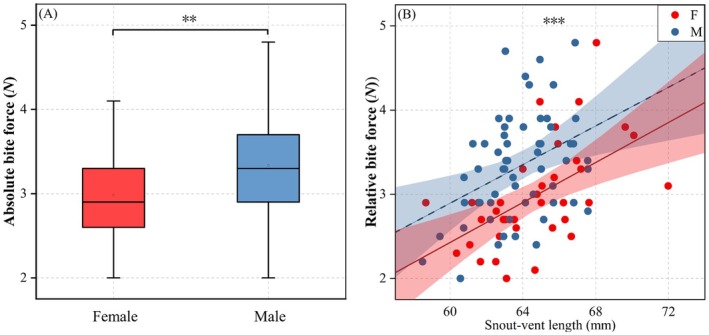 Figure 1
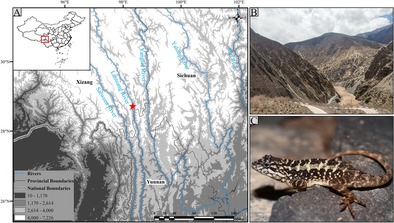 Figure 2
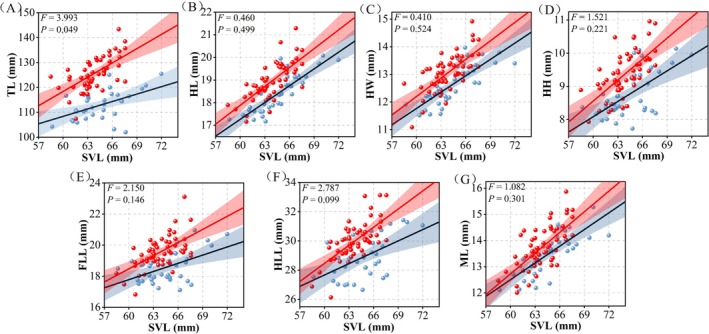 Figure 3
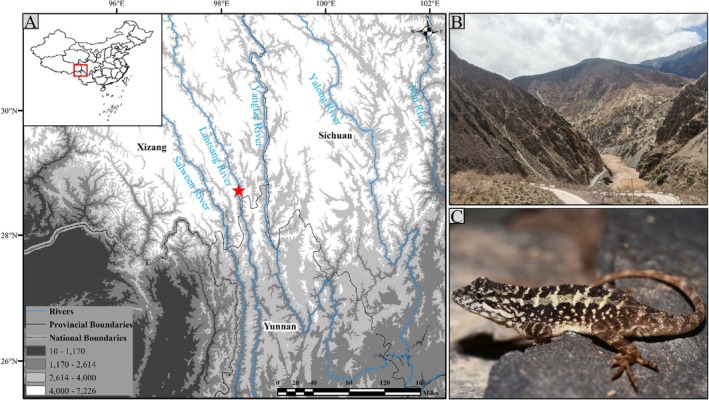 Figure 4
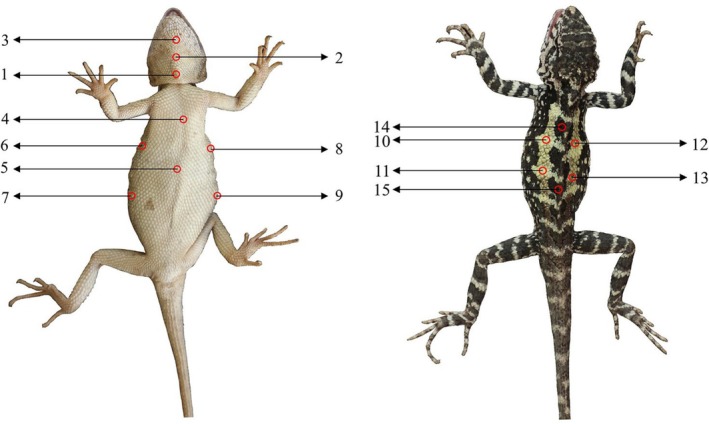 Figure 5
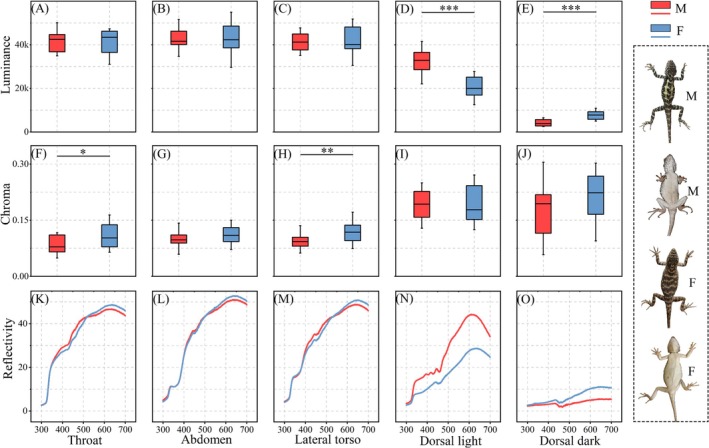 Figure 6
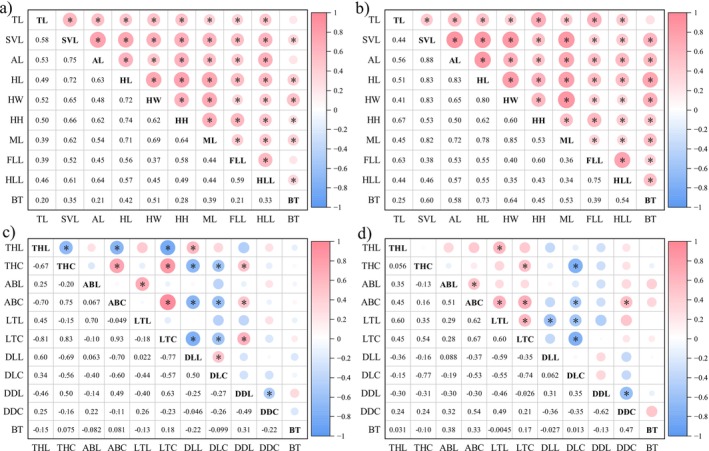 Figure 7
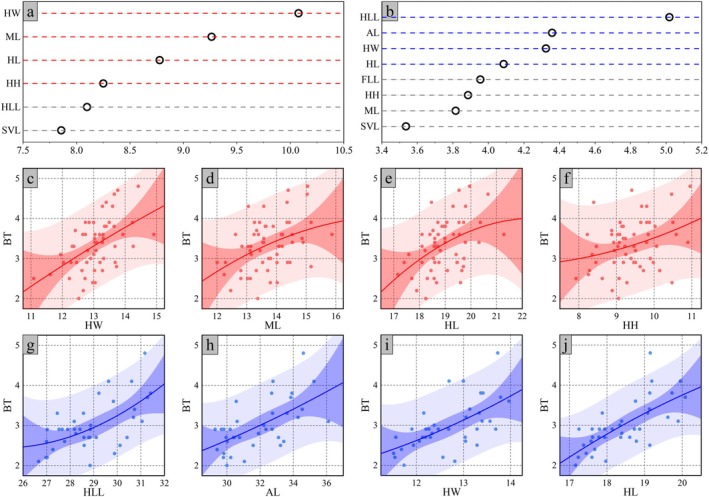 Figure 8
Peer Reviews
No public reviews on file for this paper yet. If you reviewed it on a platform where reviews are public (OpenReview, ICLR, NeurIPS, ICML), you can paste yours below so the community can read it here.
Videos
No videos yet. Explain this paper in a talk, walkthrough, or lecture? Add one.
Taxonomy
TopicsAmphibian and Reptile Biology · Animal Behavior and Reproduction · Turtle Biology and Conservation