Comparative Effectiveness and Modality‐Dependent Prognostic Value of Pathological Response Following Neoadjuvant Therapy for Locally Advanced Gastric Cancer
Yongfeng Zhu, Zhenchong Chen, Minju Jo, Shoucheng Feng, Yi Zeng, Xiaojiang Chen, Jianrong Guo, Chao Ding, Yukai Jin, Haibo Qiu

TL;DR
This study compares how well different pre-surgery treatments for advanced stomach cancer work, showing that some improve survival while others do not, despite better tissue response.
Contribution
The study reveals modality-specific differences in how pathological response correlates with survival outcomes in gastric cancer neoadjuvant therapies.
Findings
NACIT improved disease-free survival compared to NACT, but no overall survival difference was observed.
NACRT increased pathological response rates but did not lead to better survival outcomes.
Major pathological response correlated with improved survival in NACT and NACIT groups, but not in NACRT.
Abstract
Neoadjuvant therapies, including chemotherapy (NACT), chemoradiotherapy (NACRT), and chemoimmunotherapy (NACIT), are standard for locally advanced gastric cancer (LAGC). Pathological response is a key surrogate for treatment effectiveness, but its correlation with long‐term outcomes across modalities remains unclear. This retrospective cohort study analyzed 256 LAGC patients receiving neoadjuvant therapy (NACT n = 162; NACRT n = 48; NACIT n = 46) from January 2017 to December 2022. Pathological responses, disease‐free survival (DFS), and overall survival (OS) were evaluated using Kaplan–Meier estimates and Cox models. Compared to NACT, NACIT was associated with significantly improved DFS (HR = 0.75, p = 0.035), though no OS difference was observed. Although NACRT enhanced pathological response rates, this was not accompanied by a survival benefit. Crucially, major pathological…
Genes, proteins, chemicals, diseases, species, mutations and cell lines named across the full text — each resolved to its canonical identifier and authoritative record.
Click any figure to enlarge with its caption.
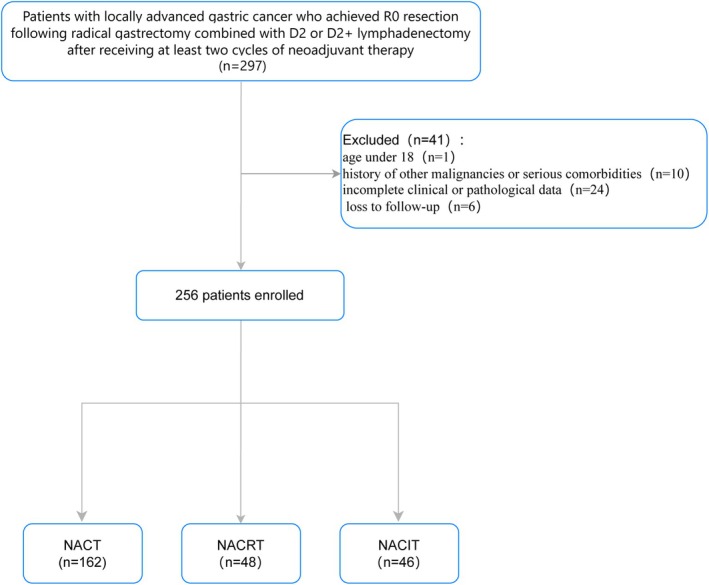 Figure 1
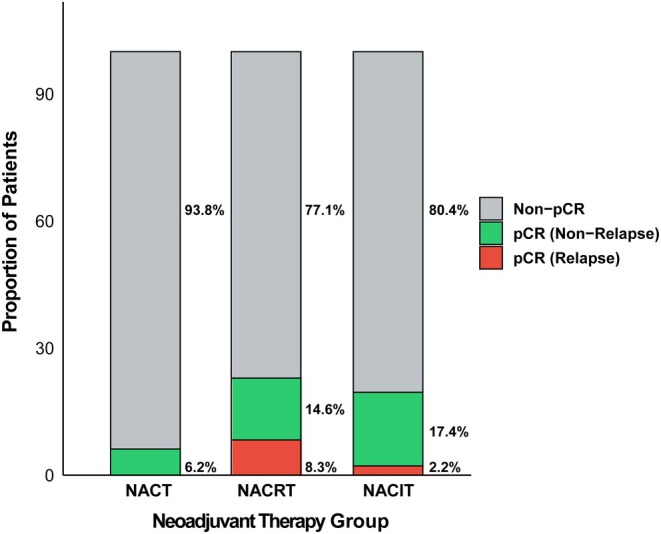 Figure 2
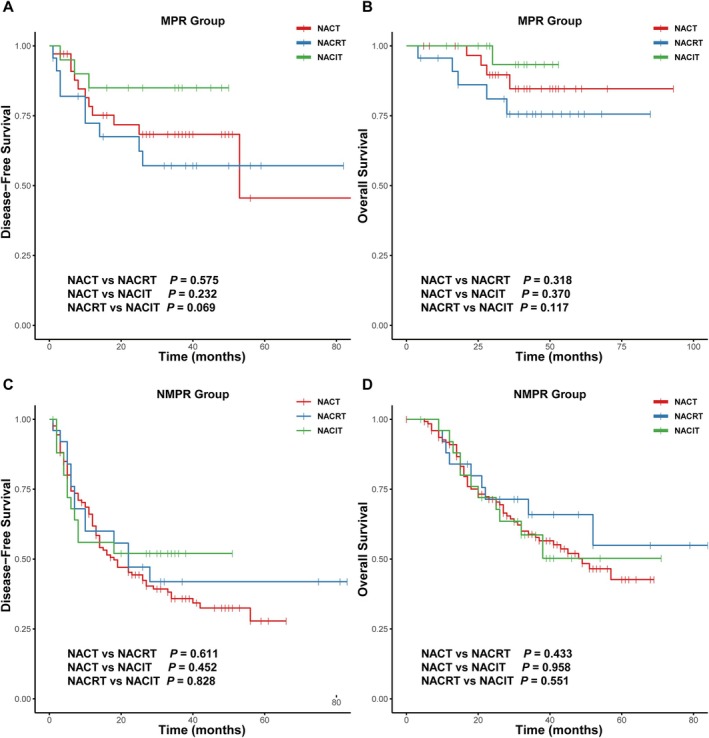 Figure 3
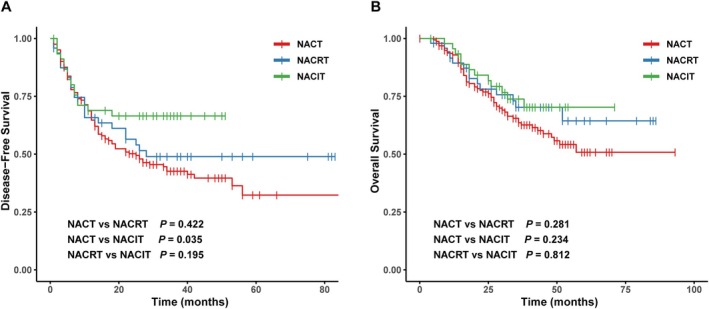 Figure 4
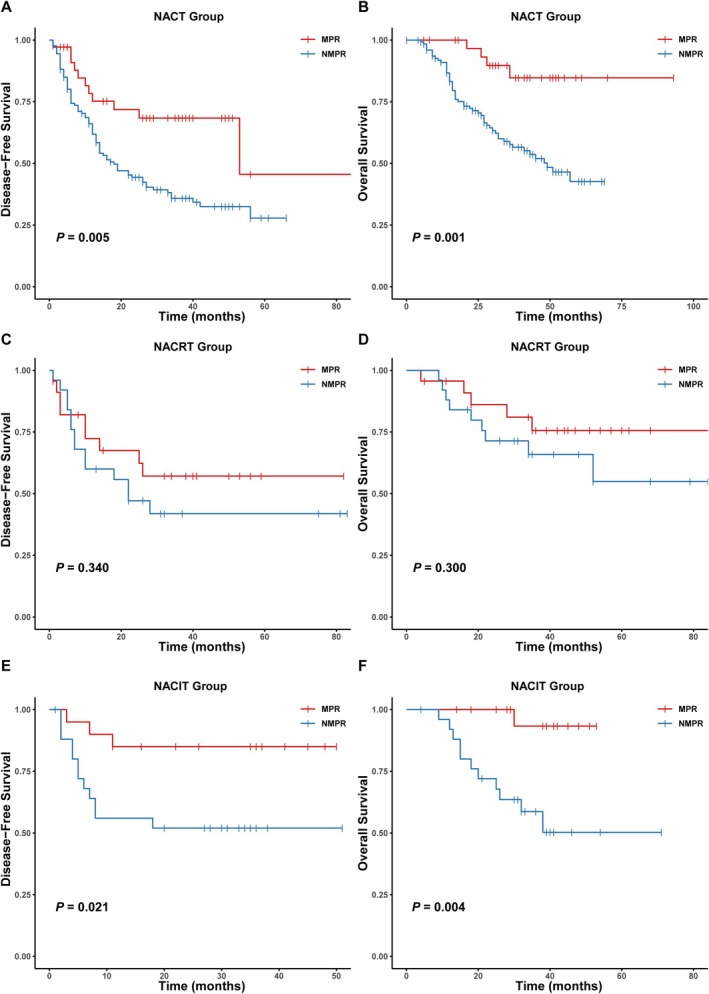 Figure 5
Peer Reviews
No public reviews on file for this paper yet. If you reviewed it on a platform where reviews are public (OpenReview, ICLR, NeurIPS, ICML), you can paste yours below so the community can read it here.
Videos
No videos yet. Explain this paper in a talk, walkthrough, or lecture? Add one.
Taxonomy
TopicsGastric Cancer Management and Outcomes · Cholangiocarcinoma and Gallbladder Cancer Studies · Esophageal Cancer Research and Treatment