fNIRS cortical activation in Tai Chi observational learning
Shenglai Yang, Shumei He, Bing Shi

TL;DR
This study uses fNIRS to examine brain activity during observational learning of Tai Chi, finding that regular-speed video demonstrations are more effective than slow-motion ones.
Contribution
The study introduces a novel factorial fNIRS design to analyze cortical activation patterns during observational learning of motor skills.
Findings
RSVD group showed higher movement accuracy than SMVD group.
FEF and SMA/Pre-SMA showed increased activation during observational learning.
RFPC activation was higher in simple task conditions compared to moderate and difficult ones.
Abstract
Observational learning plays a critical role in motor skill acquisition. Investigating the neural substrates involved in this process is of great significance for optimizing teaching methodologies and advancing brain-computer interface technologies. An experimental design combining functional near-infrared spectroscopy (fNIRS) and behavioral analysis was employed. The fNIRS protocol utilized a 2×3×2 factorial design. Behavioral findings: The RSVD group (Regular-Speed Videos Demonstration) exhibited significantly higher movement accuracy scores compared to the SMVD group (Slow-Motion Video Demonstration). Cognitive load assessments revealed that the SMVD group experienced significantly higher cognitive load than the RSVD group. During the observational learning phase, significant activation increases were observed in the Frontal Eye Fields (FEF, BA8) and the Pre-Motor/Superior Motor…
Click any figure to enlarge with its caption.
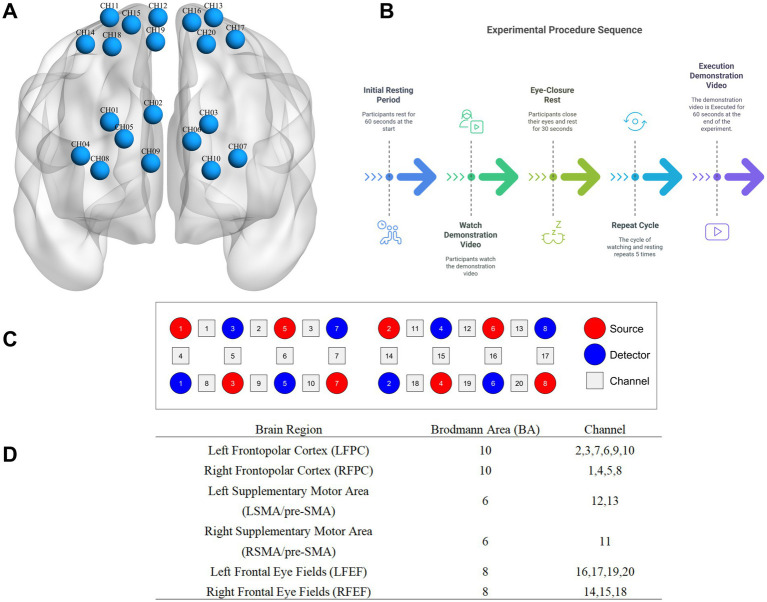 Figure 1
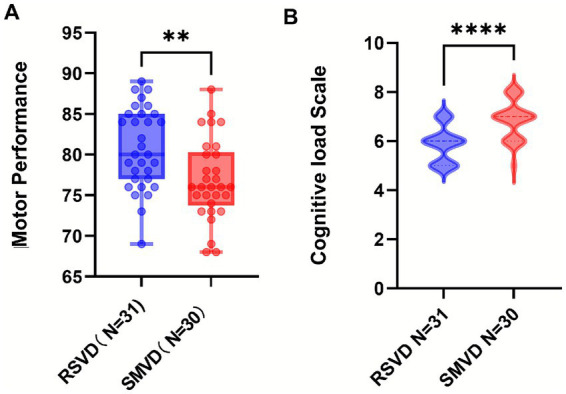 Figure 2
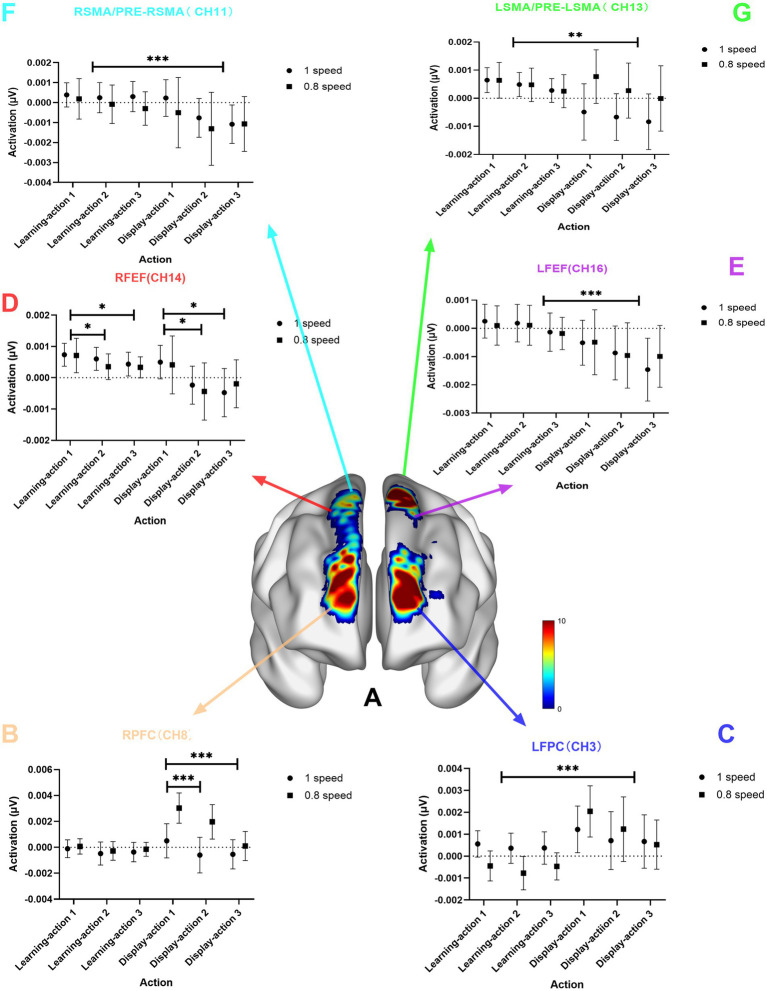 Figure 3
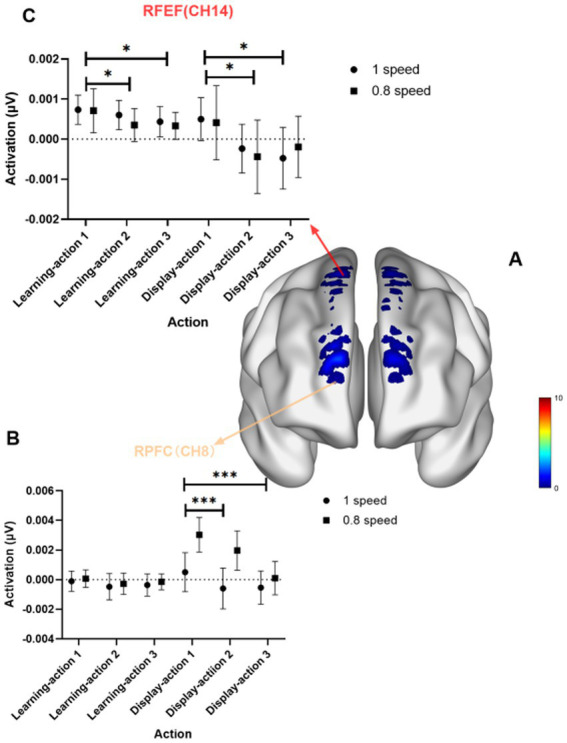 Figure 4
Peer Reviews
No public reviews on file for this paper yet. If you reviewed it on a platform where reviews are public (OpenReview, ICLR, NeurIPS, ICML), you can paste yours below so the community can read it here.
Videos
No videos yet. Explain this paper in a talk, walkthrough, or lecture? Add one.
Taxonomy
TopicsOptical Imaging and Spectroscopy Techniques · EEG and Brain-Computer Interfaces · Motor Control and Adaptation