An automated framework for qur’anic education of the hearing-impaired using body pose classification and Arabic sign language integration
Hany AbdElghfar, Hassan A. Youness, Mohamed Wahba, Hammam M. Abdelaal

TL;DR
This paper proposes an automated system to teach the Quran to hearing-impaired students using Arabic Sign Language and body pose classification.
Contribution
The novel contribution is an accessible Quranic education framework integrating Arabic Sign Language and body pose classification for hearing-impaired learners.
Findings
A dataset of 2,054 labeled images was created with input from local institutions working with deaf users.
The ResNet50-based model achieved near-perfect performance in classifying Arabic Sign Language postures.
Keypoint-based models using MLP, SVM, and RF also showed high performance but were limited by dataset and evaluation constraints.
Abstract
In this paper, an accessible pipeline of automated teaching of the Quran to deaf and hard-of-hearing students is proposed based on the identification of Arabic Sign Language (ArSL) postures that match the words of S The piping includes an instructional method that is accessible to both deaf and hard-of-hearing students, necessitating the use of Arabic Sign Language postures to correspond to the words. A designed list of 2,054 labeled images was obtained with local institutions working with deaf users as guidance. In order to be linguistic and unambiguously semantically designated with Qur’anic terms, DIN 31,635 transliterations is used as a canonical internal representation of all class annotations, and Arabic forms are used to present them. Two complementary approaches are evaluated: (i) a pose-keypoint classification approach using MediaPipe features, trained with multilayer…
Genes, proteins, chemicals, diseases, species, mutations and cell lines named across the full text — each resolved to its canonical identifier and authoritative record.
Click any figure to enlarge with its caption.
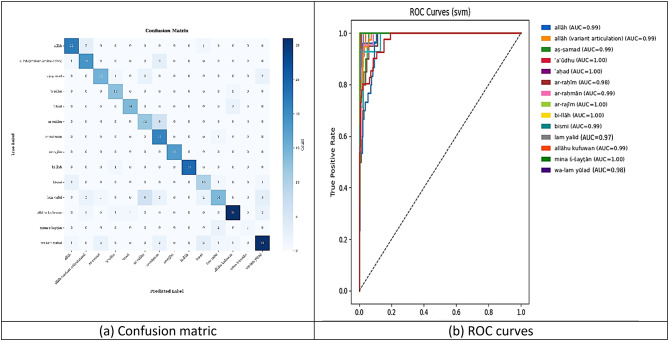 Figure 10
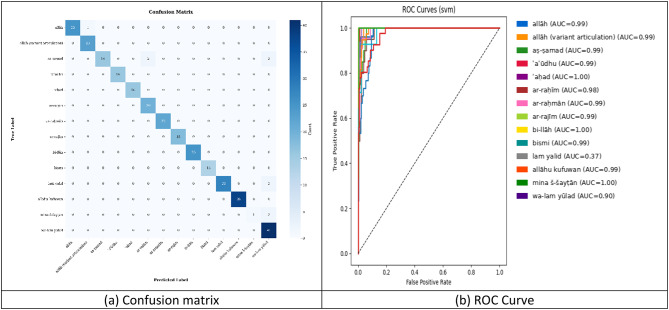 Figure 11
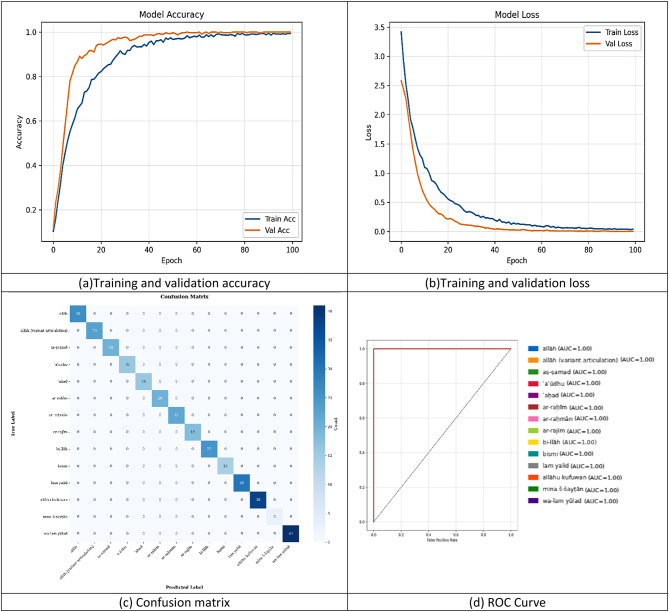 Figure 12
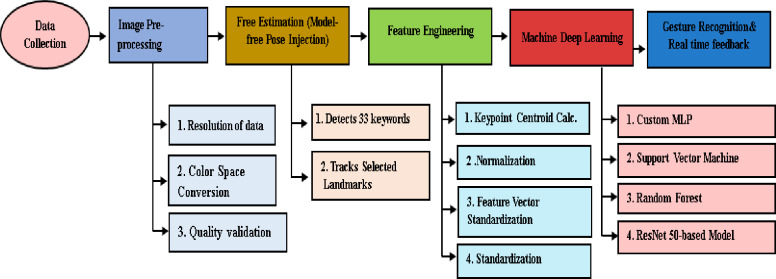 Figure 1
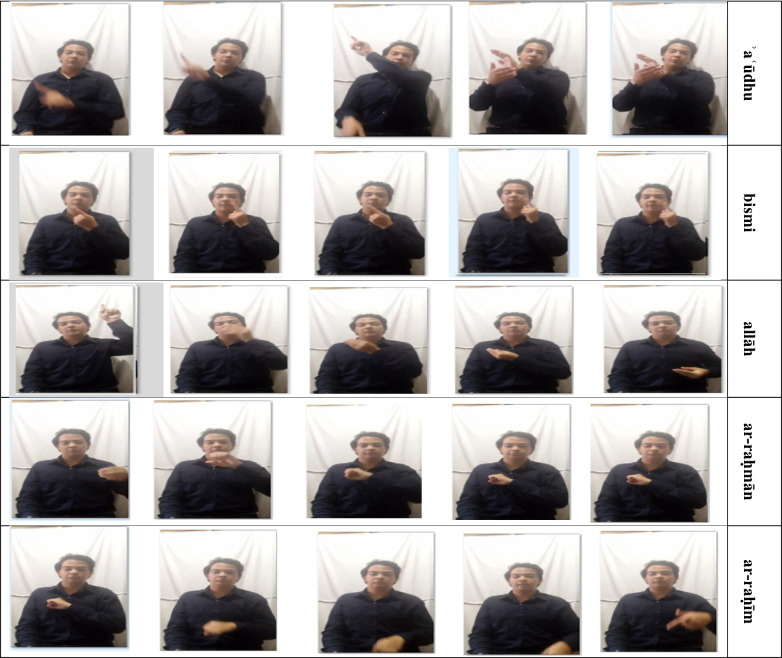 Figure 2
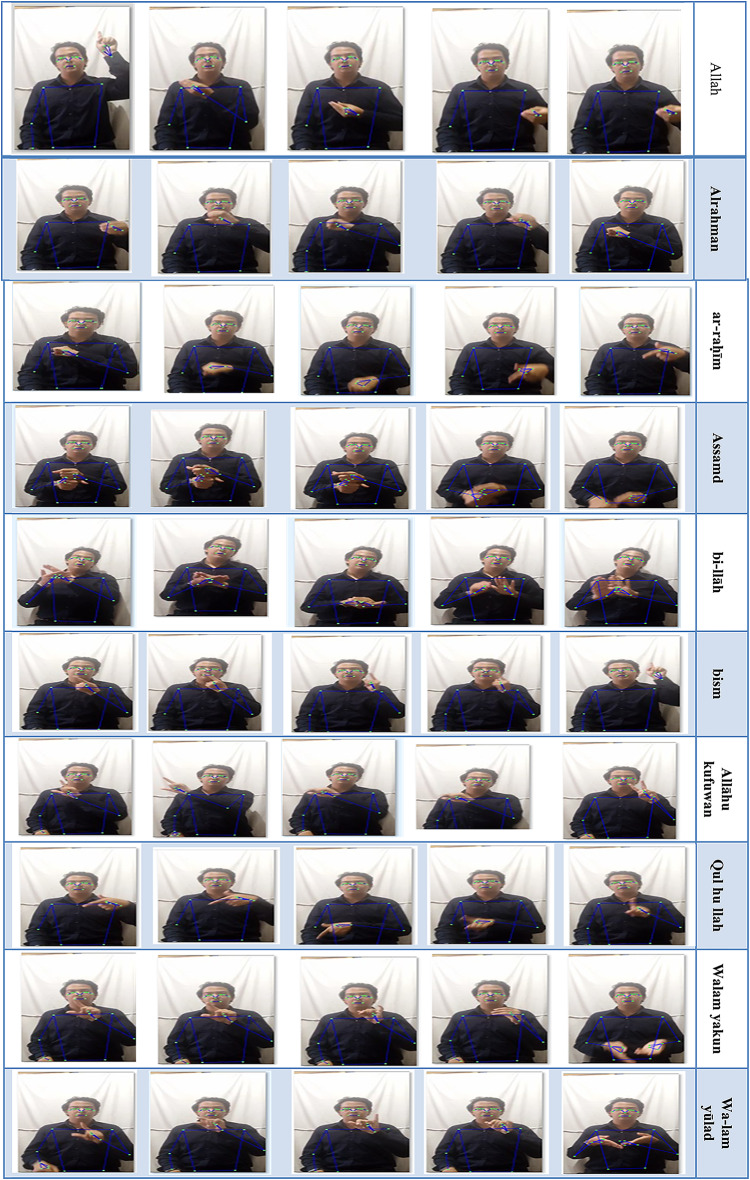 Figure 3
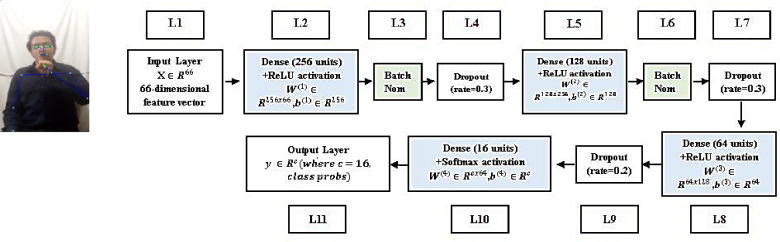 Figure 4
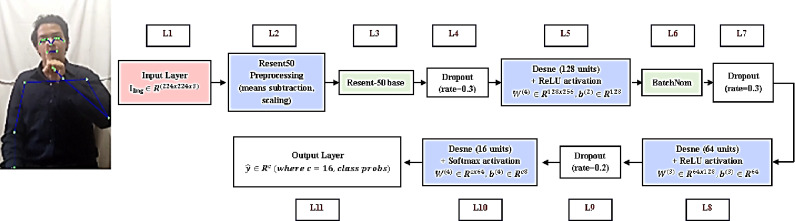 Figure 5
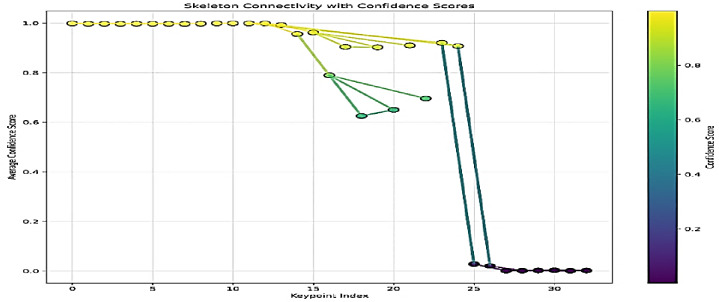 Figure 6
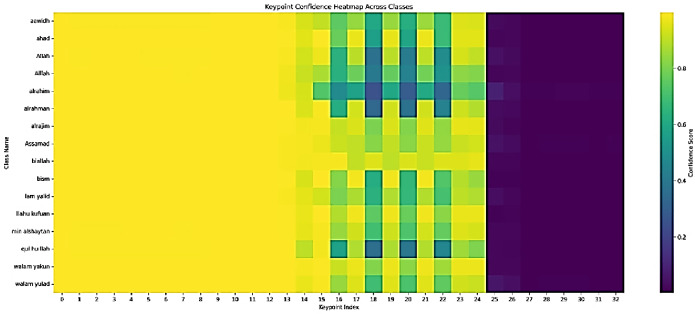 Figure 7
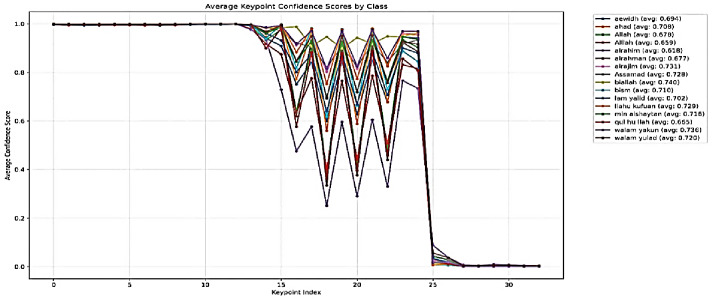 Figure 8
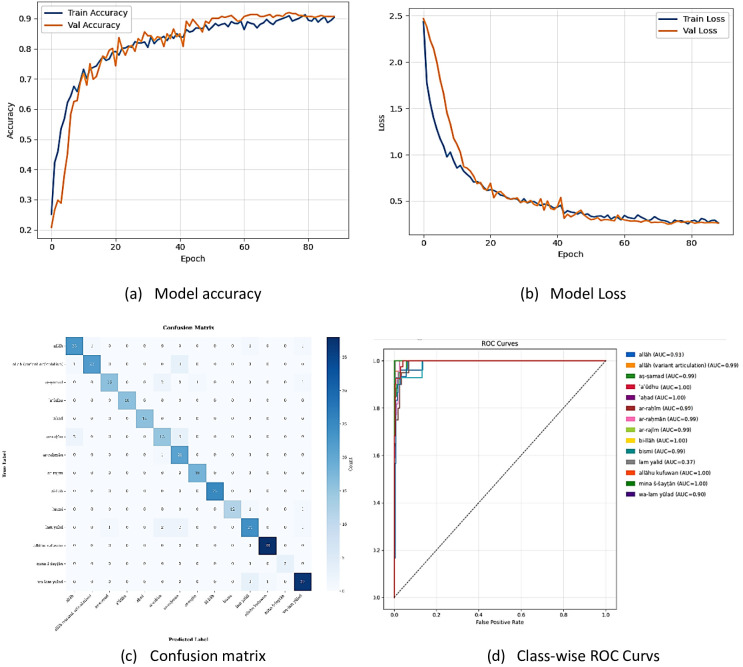 Figure 9
Peer Reviews
No public reviews on file for this paper yet. If you reviewed it on a platform where reviews are public (OpenReview, ICLR, NeurIPS, ICML), you can paste yours below so the community can read it here.
Videos
No videos yet. Explain this paper in a talk, walkthrough, or lecture? Add one.
Taxonomy
TopicsHand Gesture Recognition Systems · Hearing Impairment and Communication · Natural Language Processing Techniques