NKG2D upregulation sensitizes tumors to combined anti-PD1 and anti-VEGF therapy and prevents hearing loss
Simeng Lu, Zhenzhen Yin, Limeng Wu, Yao Sun, Jie Chen, Lai Man Natalie Wu, Janet L. Oblinger, Day C. Blake, Bingyu Xiu, Lukas D. Landegger, Richard Seist, William Ho, Adam P. Jones, Alona Muzikansky, Konstantina M. Stankovic, Scott R. Plotkin, Long-Sheng Chang, Lei Xu

TL;DR
Combining anti-PD1 and anti-VEGF therapies effectively treats vestibular schwannomas in mice by improving immune response and preventing hearing loss.
Contribution
The study demonstrates that NKG2D upregulation enables effective combination therapy for NF2-related schwannomatosis.
Findings
Combination therapy inhibits tumor growth and prevents hearing loss in mouse models.
Anti-VEGF therapy enhances anti-PD1 efficacy by normalizing tumor vasculature and promoting immune cell infiltration.
NKG2D upregulation is critical for T and NK cell cytotoxicity in the treatment response.
Abstract
NF2-related schwannomatosis (NF2-SWN) is a debilitating condition, characterized by bilateral vestibular schwannomas (VSs) that progressively cause irreversible sensorineural hearing loss. Current management relies on surgery or radiotherapy, while bevacizumab (αVEGF) is used off-label, with variable and often transient efficacy. Effective therapies that durably suppress tumor growth and preserve hearing are urgently needed. Although immune checkpoint inhibitors have transformed cancer treatment, their efficacy in non-malignant tumors such as VS remains unclear. Here, we evaluate combined anti-PD1 (αPD1) and αVEGF therapy in two syngeneic, immune-competent VS models. Combination treatment significantly outperforms either monotherapy, inhibiting tumor growth and preventing hearing loss. Mechanistically, αVEGF enhances αPD1 efficacy by normalizing tumor vasculature, improving drug…
Genes, proteins, chemicals, diseases, species, mutations and cell lines named across the full text — each resolved to its canonical identifier and authoritative record.
Click any figure to enlarge with its caption.
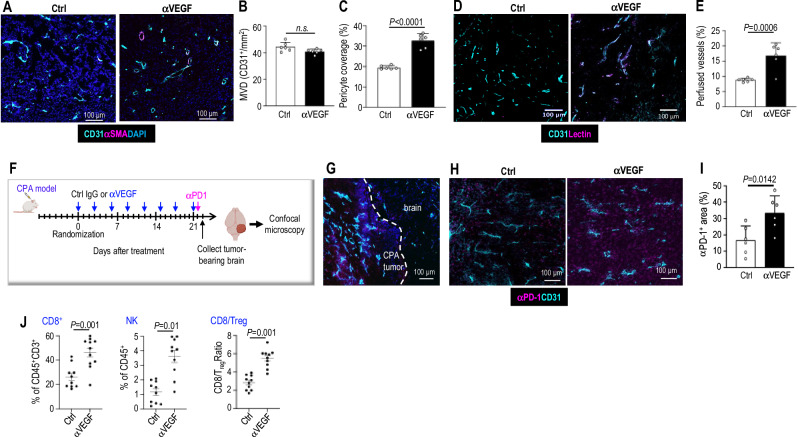 Figure 1
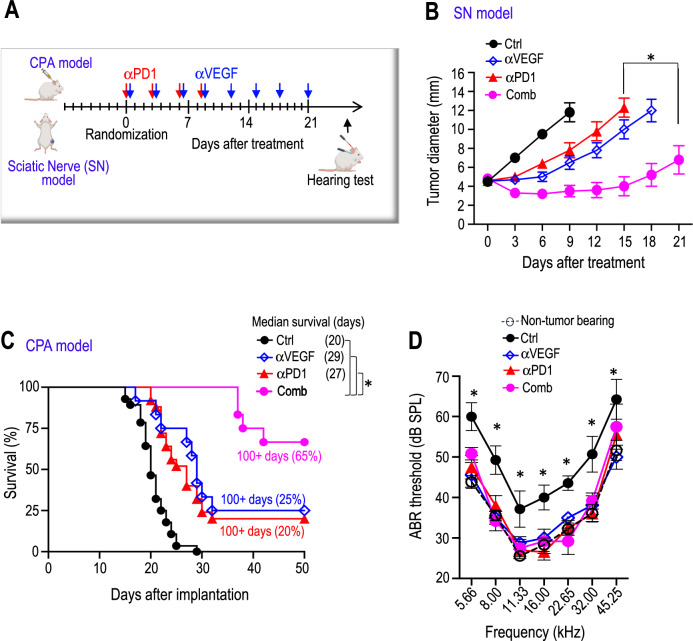 Figure 2
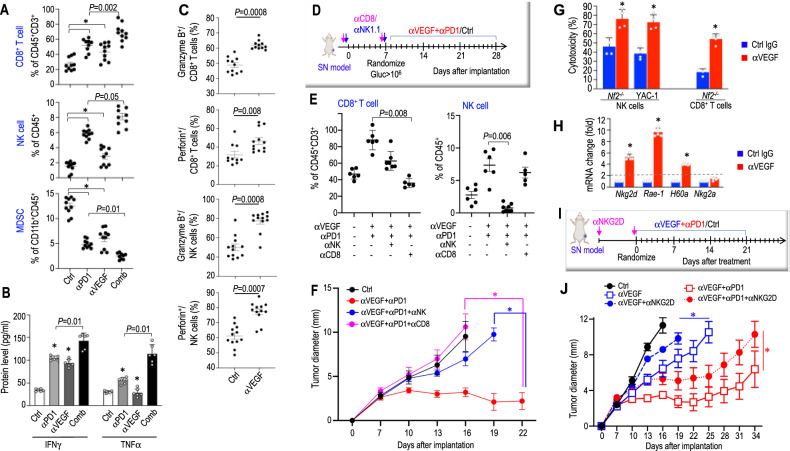 Figure 3
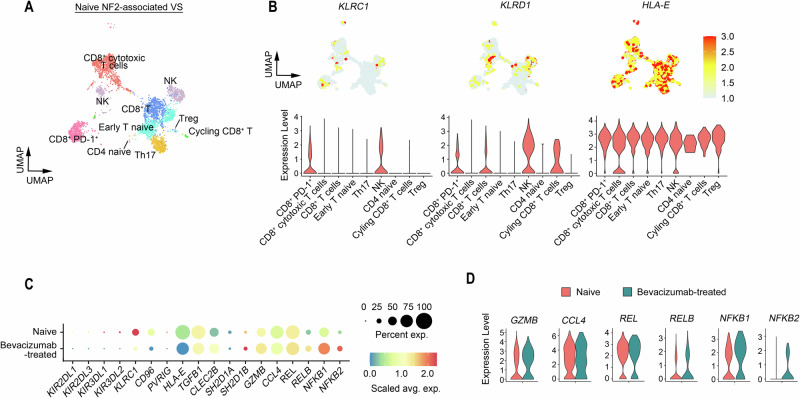 Figure 4
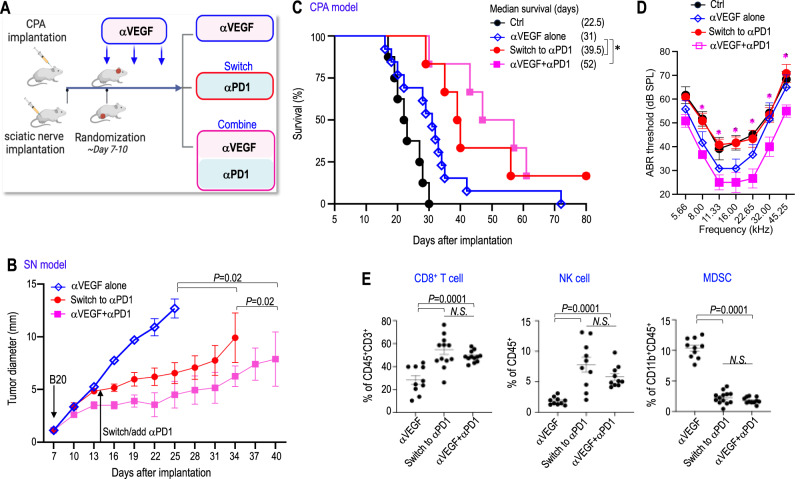 Figure 5
Peer Reviews
No public reviews on file for this paper yet. If you reviewed it on a platform where reviews are public (OpenReview, ICLR, NeurIPS, ICML), you can paste yours below so the community can read it here.
Videos
No videos yet. Explain this paper in a talk, walkthrough, or lecture? Add one.
Taxonomy
TopicsNeurofibromatosis and Schwannoma Cases · Meningioma and schwannoma management · Bone Tumor Diagnosis and Treatments