Molecular crowding effects on protein stability in a bacterial proteome
Kate McKeever, Eugene T. Dillon, Kieran Wynne, Gerard Cagney

TL;DR
This study explores how molecular crowding affects protein stability in bacteria, finding that some proteins become more stable in crowded environments.
Contribution
The study provides new insights into how molecular crowding affects specific subsets of proteins in a bacterial proteome.
Findings
Molecular crowding agents reduced the global mean melting temperature of proteins in Cupriavidus necator.
Some proteins showed increased stability in the presence of crowding agents, particularly hydrophobic or enzyme-like proteins.
The results support a model where crowding agents enhance stability through direct binding or preferential exclusion.
Abstract
Molecular crowding refers to the restriction of space available for molecular mobility in solution due to the presence of other macromolecules. Crowding can influence biological phenomena such as protein stability and folding, diffusion, enzyme kinetics, molecular interactions, and phase separation. However, the relative contributions of entropic (excluded volume) and enthalpic (direct chemical interactions) is still an open question. In contrast to biochemical studies that employ dilute solutions containing a small number of reactants, the cellular environment is considered to be highly crowded, with up to 40% of cell volume occupied by many thousands of proteins and other large biomolecules. We examined the protein stability effects of widely used molecular crowders in a bacterial proteome (Cupriavidus necator) using the Thermal Proteome Profiling (TPP) method, whereby melting…
Genes, proteins, chemicals, diseases, species, mutations and cell lines named across the full text — each resolved to its canonical identifier and authoritative record.
Click any figure to enlarge with its caption.
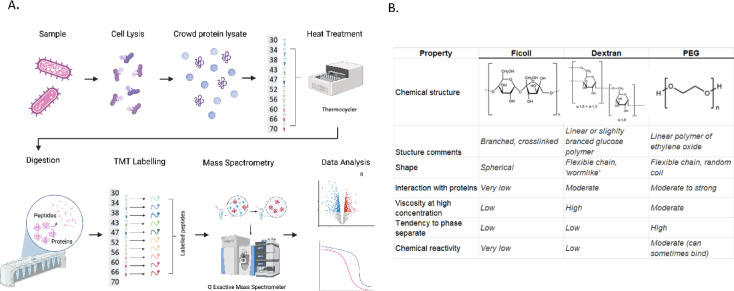 Figure 1
 Figure 2
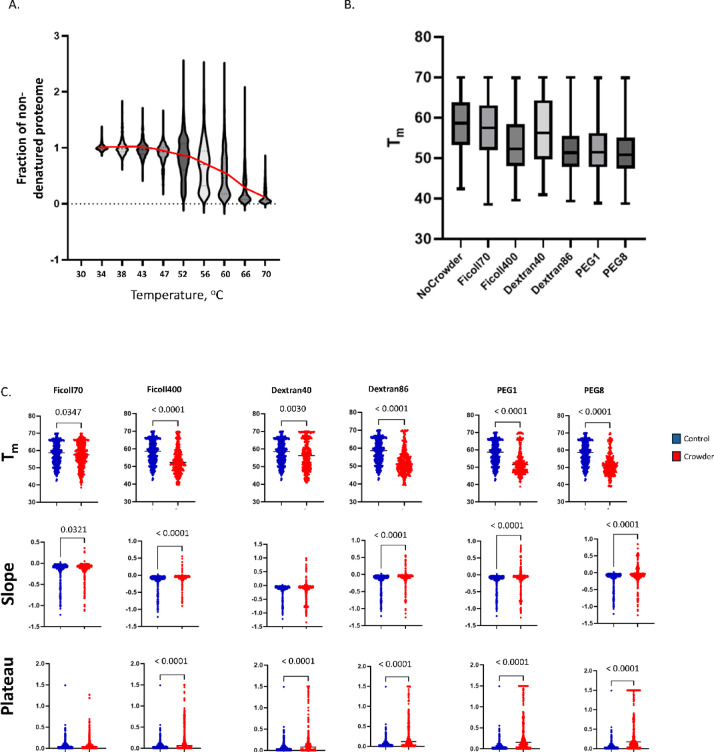 Figure 3
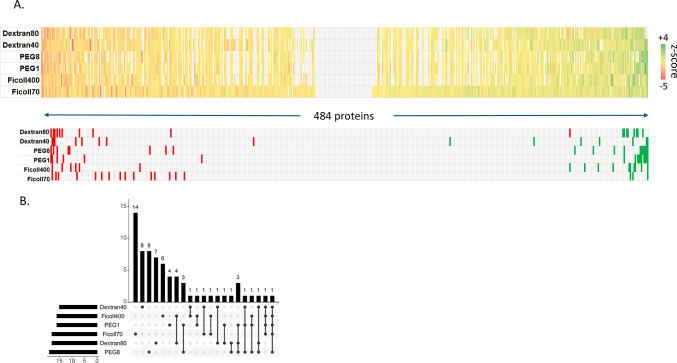 Figure 4
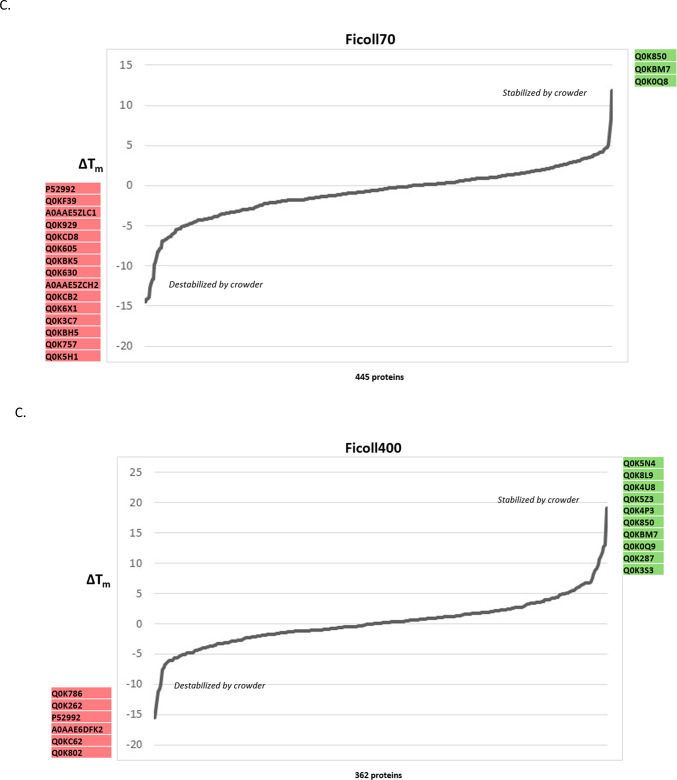 Figure 4
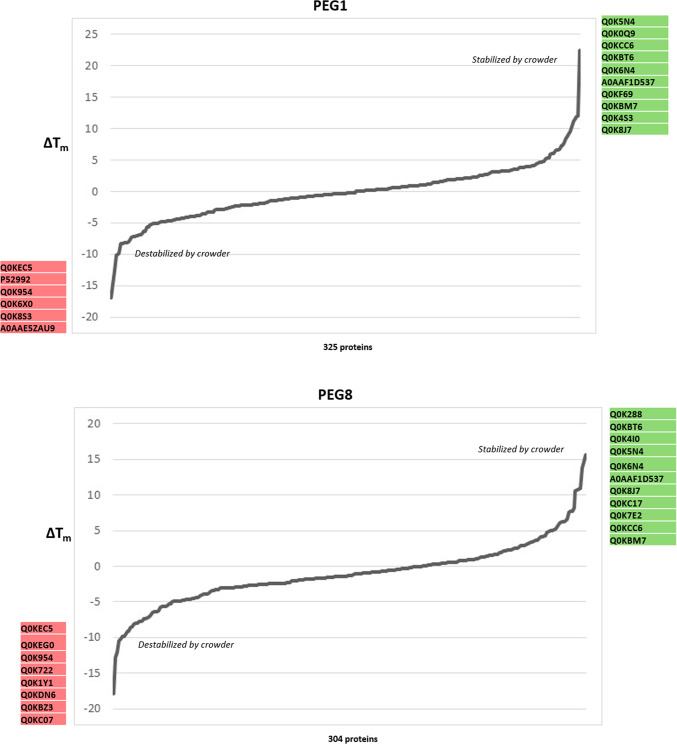 Figure 4
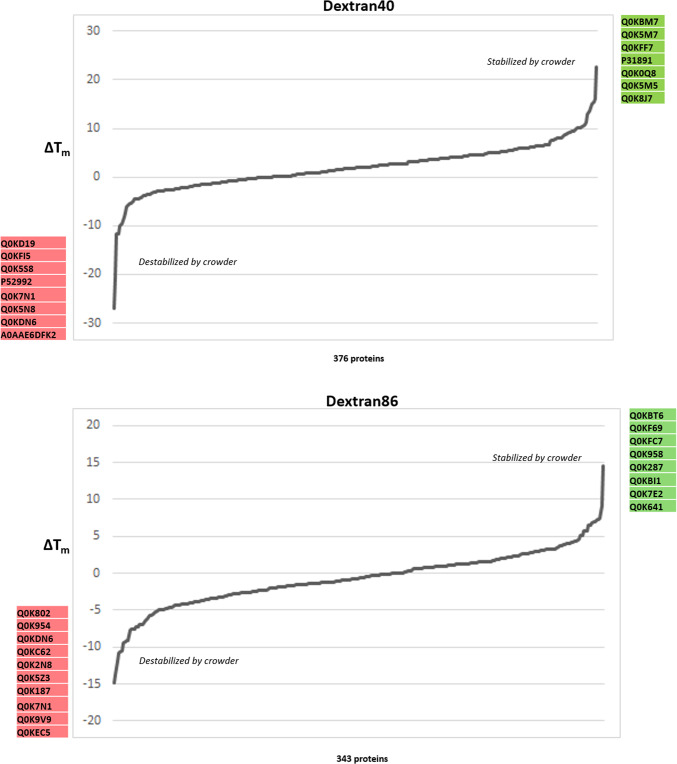 Figure 4
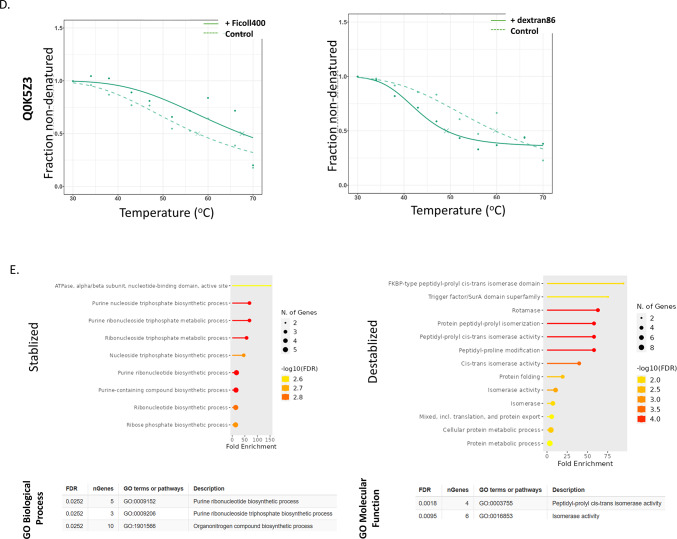 Figure 4
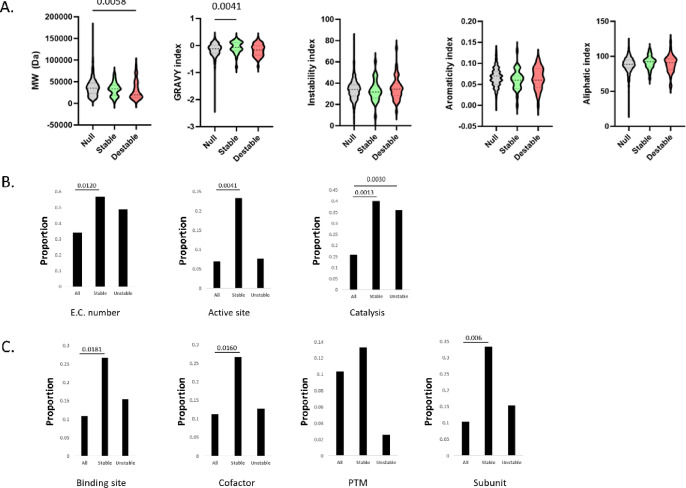 Figure 5
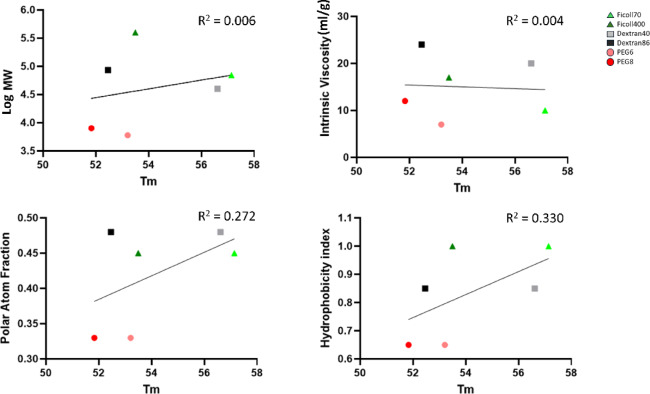 Figure 6
Peer Reviews
No public reviews on file for this paper yet. If you reviewed it on a platform where reviews are public (OpenReview, ICLR, NeurIPS, ICML), you can paste yours below so the community can read it here.
Videos
No videos yet. Explain this paper in a talk, walkthrough, or lecture? Add one.
Taxonomy
TopicsProtein Structure and Dynamics · Bacterial Genetics and Biotechnology · Protein purification and stability