The TAK-003 story: key decisions that shaped development of a tetravalent dengue vaccine
Ian Escudero, Dieter Gniel, Shibadas Biswal, Eckhardt Petri, Gonzalo Perez, Mayuri Sharma, John Weil, Derek Wallace

TL;DR
This paper reviews the key decisions made during the development of TAK-003, a tetravalent dengue vaccine, highlighting its design and testing process.
Contribution
The paper outlines the rationale behind critical development choices for TAK-003, a dengue vaccine, offering insights into its design and evaluation.
Findings
TAK-003's development involved decisions on vaccine composition and safety assessments.
The vaccine's dosing schedule and immunogenicity were carefully evaluated.
A pivotal phase 3 study was designed to assess the vaccine's efficacy.
Abstract
The approved, live-attenuated tetravalent dengue vaccine TAK-003 has undergone extensive preclinical and clinical assessment. This review provides an overview of the rationale for some key decisions made during TAK-003 development. These include decisions around vaccine composition, assessment of factors that may be associated with the safety of live-attenuated viral vaccines, dosing schedule, immunogenicity assessments, and design of the pivotal phase 3 efficacy study.
Genes, proteins, chemicals, diseases, species, mutations and cell lines named across the full text — each resolved to its canonical identifier and authoritative record.
Click any figure to enlarge with its caption.
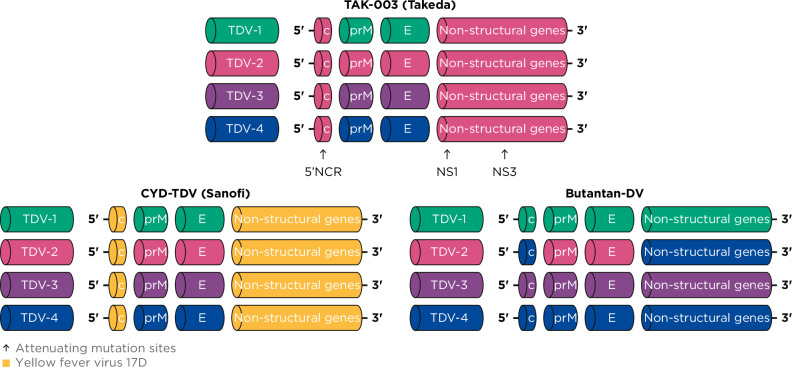 Figure 1
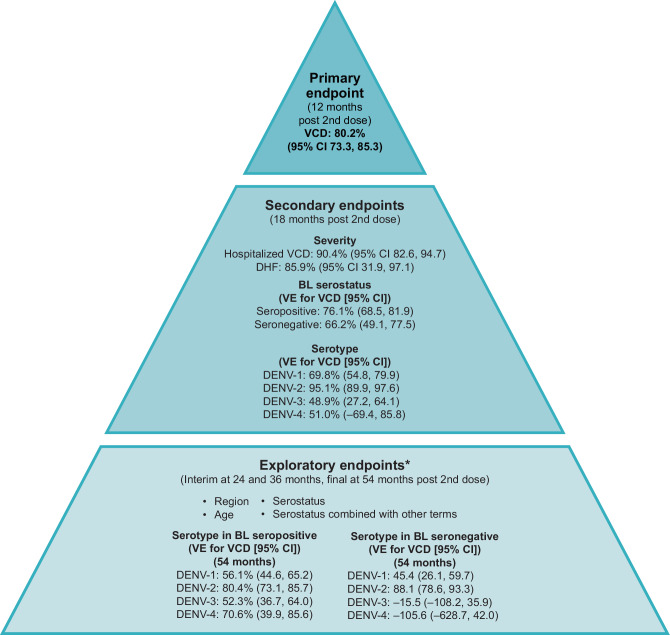 Figure 2
Peer Reviews
No public reviews on file for this paper yet. If you reviewed it on a platform where reviews are public (OpenReview, ICLR, NeurIPS, ICML), you can paste yours below so the community can read it here.
Videos
No videos yet. Explain this paper in a talk, walkthrough, or lecture? Add one.
Taxonomy
TopicsMosquito-borne diseases and control · Viral Infections and Outbreaks Research · Virology and Viral Diseases