Associations of biological ageing and genetic risk with incident abdominal aortic aneurysm
Chen Yao, Guochang You, Runnan Shen, Kangjie Wang, Yunhao Sun, Xiong Chen, Kai Huang

TL;DR
This study finds that accelerated biological aging increases the risk of developing abdominal aortic aneurysms, especially in those with high genetic risk.
Contribution
The study establishes biological aging as a significant risk factor for AAA when combined with genetic predisposition.
Findings
Accelerated biological aging is linked to a higher risk of AAA, with hazard ratios of 1.29 (KDMAge) and 1.63 (PhenoAge).
Individuals with both accelerated biological aging and high genetic risk have the highest AAA risk (HRs of 2.15 and 2.72).
There is a significant additive interaction between genetic risk and PhenoAge-based accelerated aging.
Abstract
Abdominal aortic aneurysm (AAA) is a degenerative cardiovascular disorder prevalent with ageing. While accelerated biological ageing contributes to age-related diseases, its specific role in AAA risk remains unclear. This study investigates the relationships between biological ageing and risk of incident AAA and genetic predisposition to the disease. This retrospective study used UK Biobank data from 350,483 participants without AAA at baseline. Biological age was assessed using Klemera-Doubal Method (KDMAge) and phenotypic age (PhenoAge) algorithms. Accelerated biological ageing was determined through residual analysis against chronological age, with values above 0 indicating accelerated ageing. Cox proportional hazards models evaluated the associations of biological age accelerations with AAA risk. Polygenic risk scores were calculated to evaluate genetic predisposition to AAA. We…
Genes, proteins, chemicals, diseases, species, mutations and cell lines named across the full text — each resolved to its canonical identifier and authoritative record.
Click any figure to enlarge with its caption.
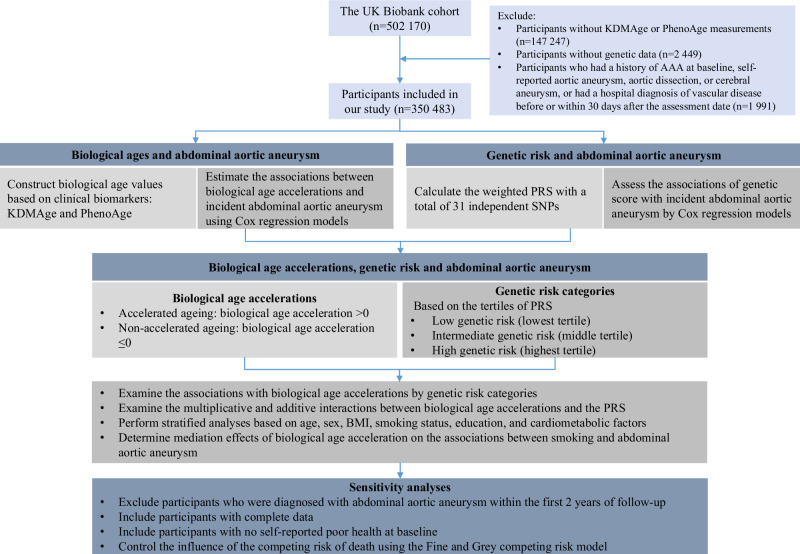 Figure 1
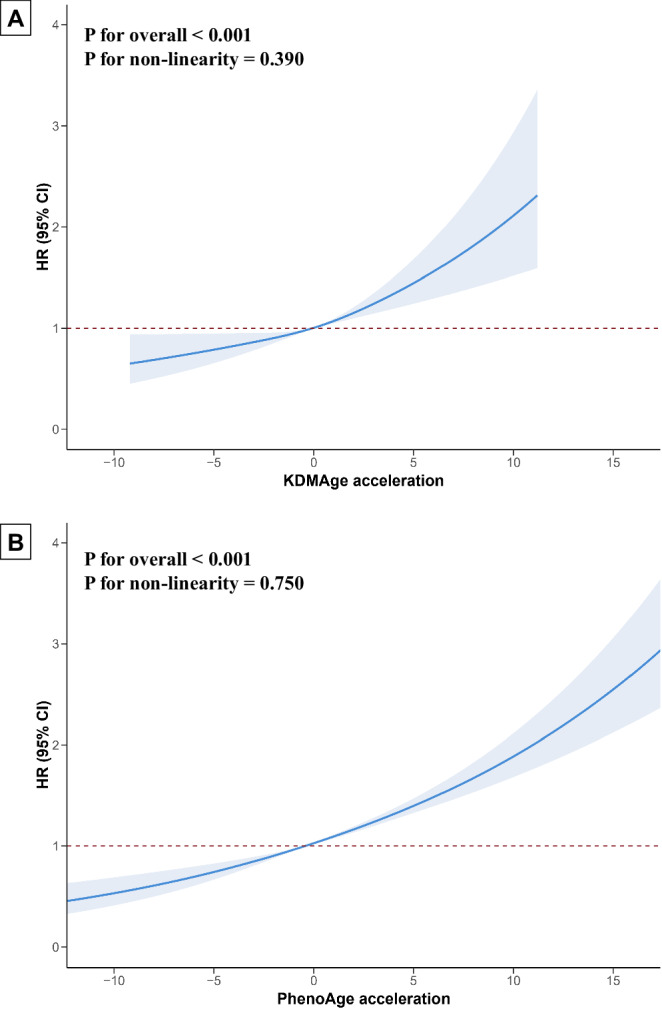 Figure 2
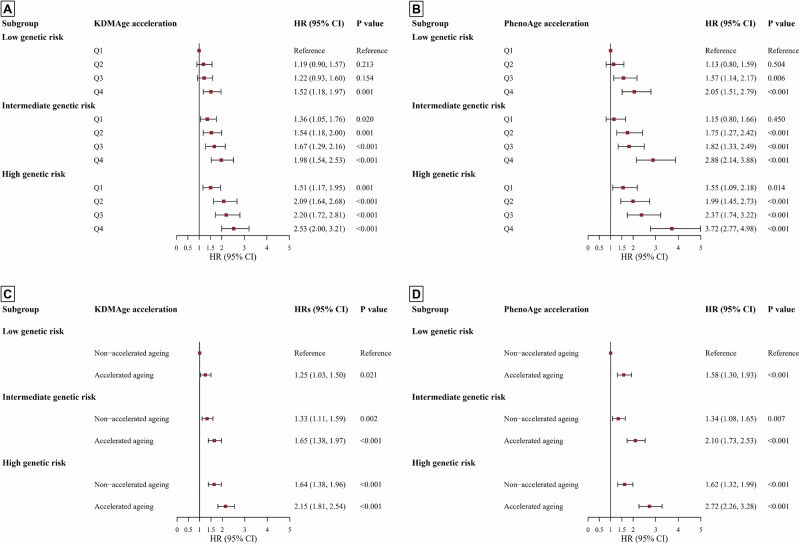 Figure 3
 Figure 4
Peer Reviews
No public reviews on file for this paper yet. If you reviewed it on a platform where reviews are public (OpenReview, ICLR, NeurIPS, ICML), you can paste yours below so the community can read it here.
Videos
No videos yet. Explain this paper in a talk, walkthrough, or lecture? Add one.
Taxonomy
TopicsAortic aneurysm repair treatments · Connective tissue disorders research · Genetic Associations and Epidemiology