A curated resource of chemolithoautotrophic genomes and marker genes for CO₂ fixation pathway prediction
Shuichi Kawashima, Yoko Okabeppu, Seiha Miyazawa, Natsuko Ichikawa, Hikaru Nagazumi, Yutaka Nishihara, Takeru Nakazato, Susumu Goto, Ken Kurokawa, Masaharu Ishii, Hiroshi Mori

TL;DR
This paper introduces a new tool and dataset for identifying CO₂ fixation pathways in microbial genomes, improving accuracy for underrepresented pathways.
Contribution
A curated dataset of chemolithoautotrophic genomes and a new tool, AutoFixMark, for predicting CO₂ fixation pathways with higher precision.
Findings
AutoFixMark outperforms existing tools in precision and recall for underrepresented CO₂ fixation pathways.
The curated dataset includes 347 genomes from 16 phyla and 15 well-characterized genomes for benchmarking.
Publicly available resources include marker genes, prediction rules, and benchmark datasets.
Abstract
Autotrophic CO₂ fixation is a fundamental metabolic process that enables microorganisms to inhabit carbon-limited environments. Multiple pathways mediate this process, with variants distributed across diverse taxa and some genes shared among pathways, making their identification from genomic data challenging. Here, we present a curated resource comprising pathway-specific KEGG Orthology marker genes and a lightweight, rule-based tool AutoFixMark for predicting the presence of seven known CO₂ fixation pathways in microbial genomes. To support marker gene identification and benchmarking, we compiled two reference datasets: (i) 347 manually curated chemolithoautotrophic genomes from 16 phyla, and (ii) a set of 15 well-characterized chemolithoautotrophic genomes used for defining pathway-specific marker genes. Using these marker genes, we developed AutoFixMark and evaluated its performance…
Genes, proteins, chemicals, diseases, species, mutations and cell lines named across the full text — each resolved to its canonical identifier and authoritative record.
Click any figure to enlarge with its caption.
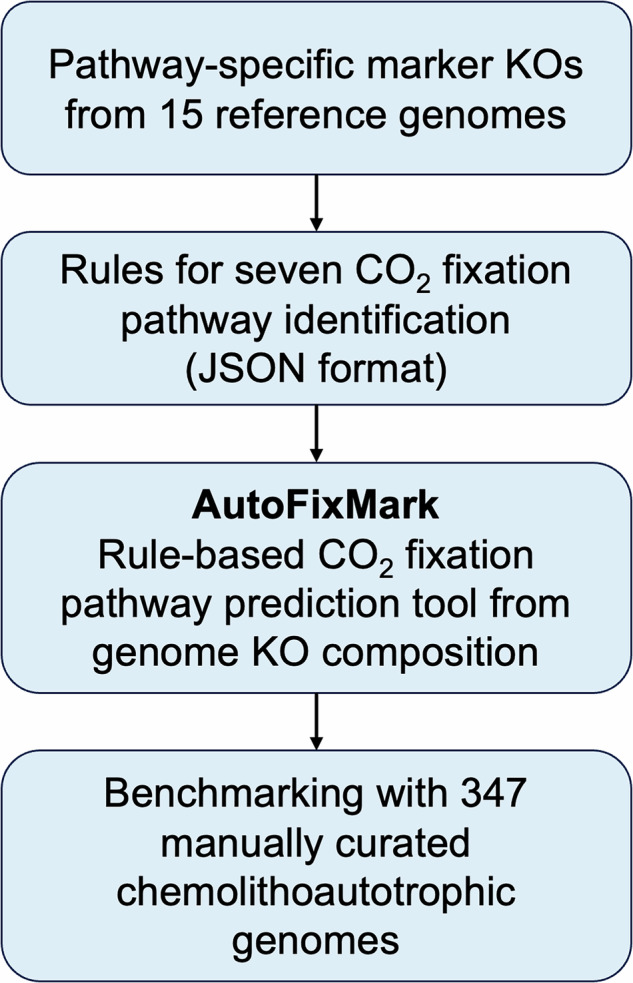 Figure 1
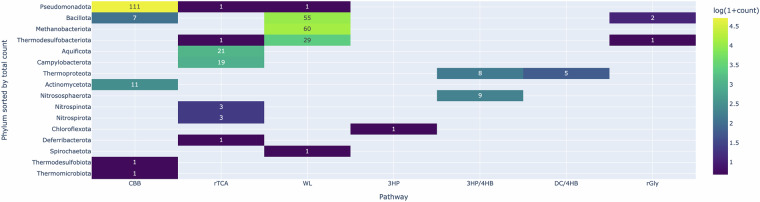 Figure 2
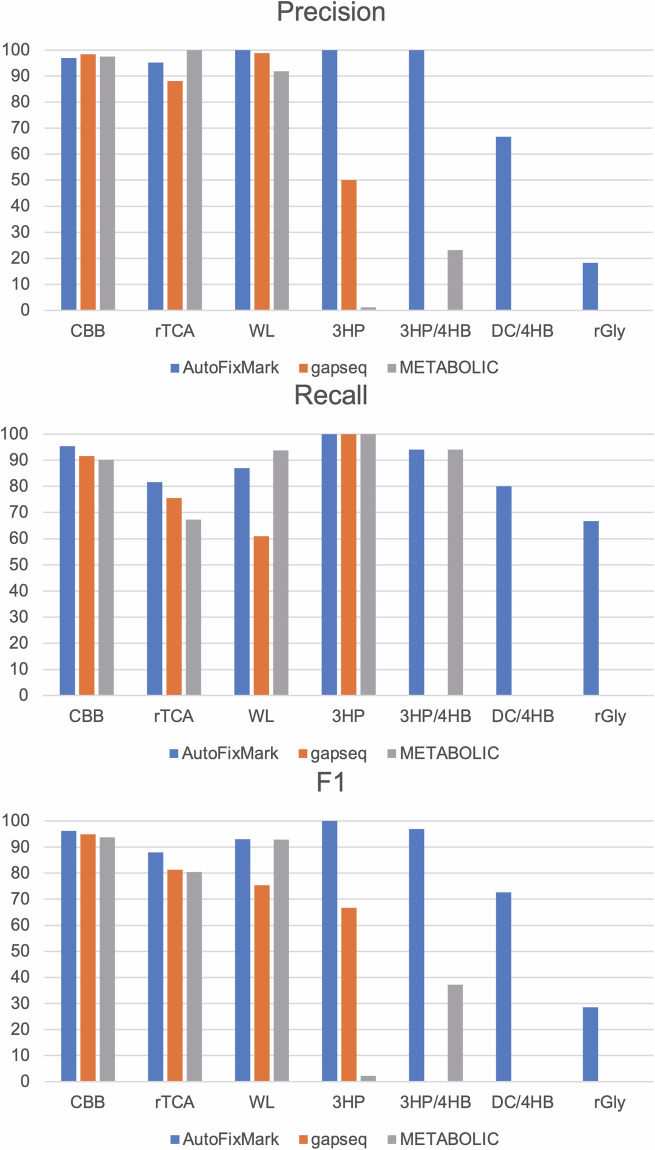 Figure 3
Peer Reviews
No public reviews on file for this paper yet. If you reviewed it on a platform where reviews are public (OpenReview, ICLR, NeurIPS, ICML), you can paste yours below so the community can read it here.
Videos
No videos yet. Explain this paper in a talk, walkthrough, or lecture? Add one.
Taxonomy
TopicsMicrobial Metabolic Engineering and Bioproduction · Microbial metabolism and enzyme function · Genomics and Phylogenetic Studies