Urinary CD4+ T helper cells are a potential biomarker for tubulointerstitial nephritis in Sjögren’s disease
Viona Laas, Frederic Christian Feindt, Pascal Böse, Tom Zimmermann, Pavels Klimicevs, Julia Hagenstein, Laura-Isabell Ehnold, Georg R. Herrnstadt, Matthias T. Warkotsch, Hans-Joachim Paust, Ulf Panzer, Christian F. Krebs, Tobias B. Huber, Thorsten Wiech, Oliver M. Steinmetz

TL;DR
This study identifies urinary CD4+ T helper cells as a potential biomarker for diagnosing and monitoring kidney inflammation in Sjögren’s disease.
Contribution
The study introduces urinary CD4+ TH cells as a novel biomarker for diagnosing and monitoring tubulointerstitial nephritis in Sjögren’s disease.
Findings
Urinary CD4+ TH cells are elevated in SjD-TIN and can distinguish it from other kidney diseases.
Urinary CD4+ TH cells strongly correlate with the severity of tubulointerstitial nephritis.
CD4+ TH cell levels decrease with treatment and clinical improvement in SjD-TIN patients.
Abstract
Sjögren’s Disease (SjD) is the most common connective tissue disease. An estimated 5–27% of patients have kidney involvement, usually in the form of tubulointerstitial nephritis (TIN). To date, there are no validated biomarkers for either diagnosis or assessment of therapeutic response. Since one of the hallmarks of TIN is leukocyturia, we aimed at investigating the potential role of urinary leukocytes as a diagnostic tool for SjD-TIN. We prospectively recruited 13 patients with SjD, that underwent kidney biopsy for suspected TIN. A multicolor flow cytometry panel was established to quantify 8 different urinary leukocyte populations. Our analyses showed, that urinary CD4+ TH cells are increased in patients with SjD-TIN and can differentiate precisely between SjD-TIN and SjD-patients with other non-inflammatory kidney pathologies (SjD-CKD). In contrast, no other urinary cell population…
Genes, proteins, chemicals, diseases, species, mutations and cell lines named across the full text — each resolved to its canonical identifier and authoritative record.
Click any figure to enlarge with its caption.
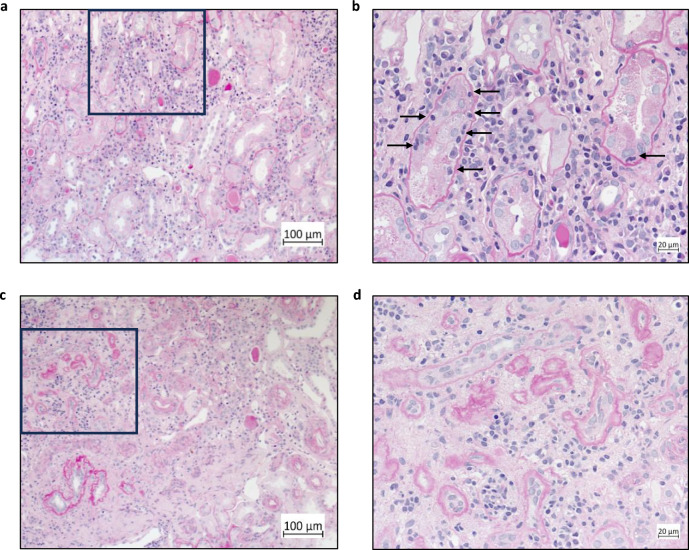 Figure 1
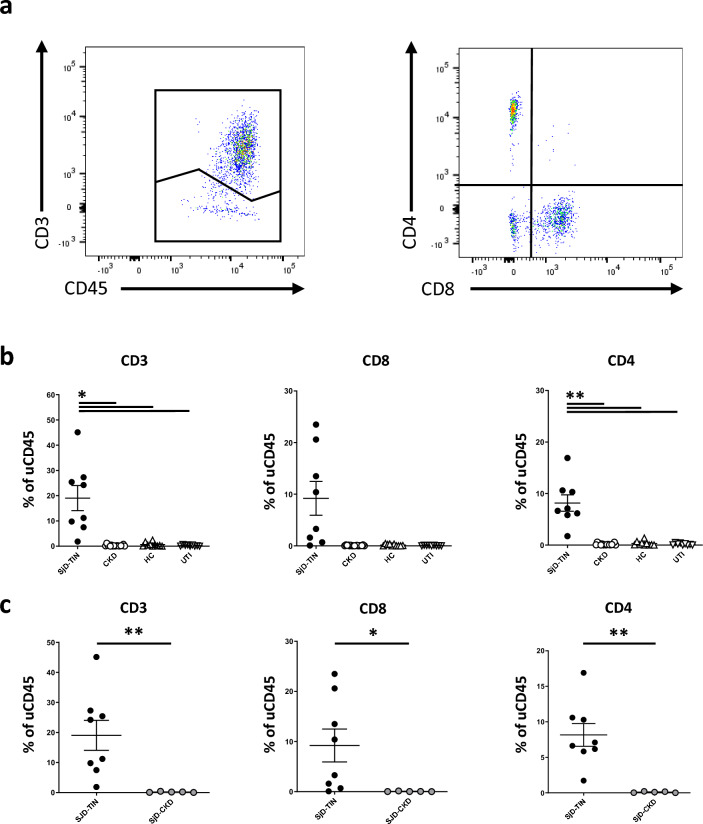 Figure 2
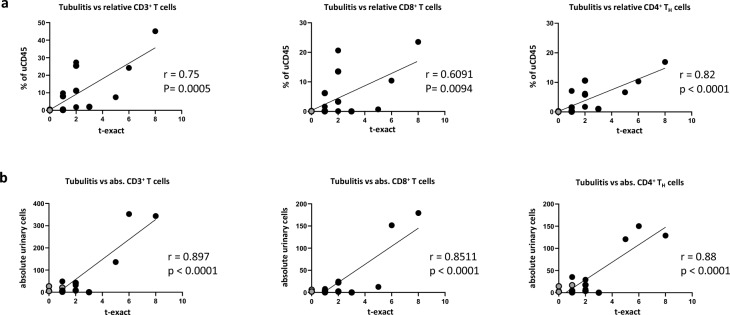 Figure 3
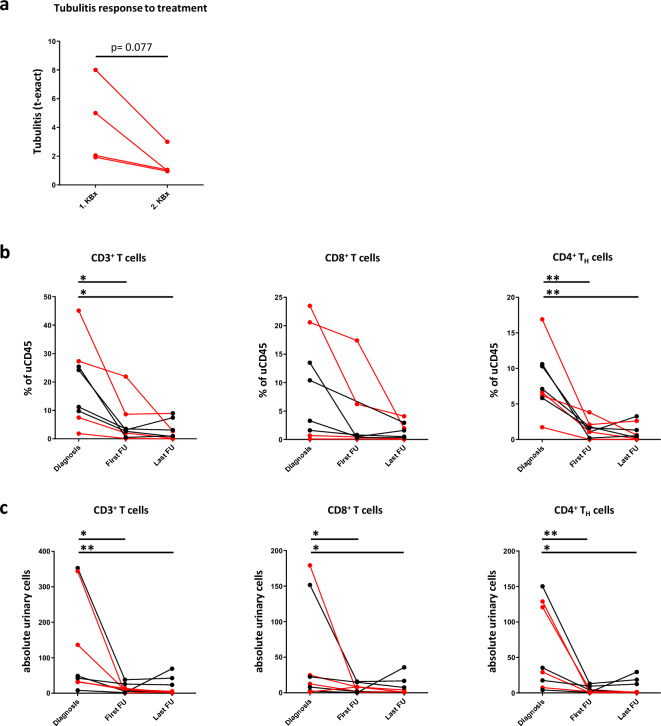 Figure 4
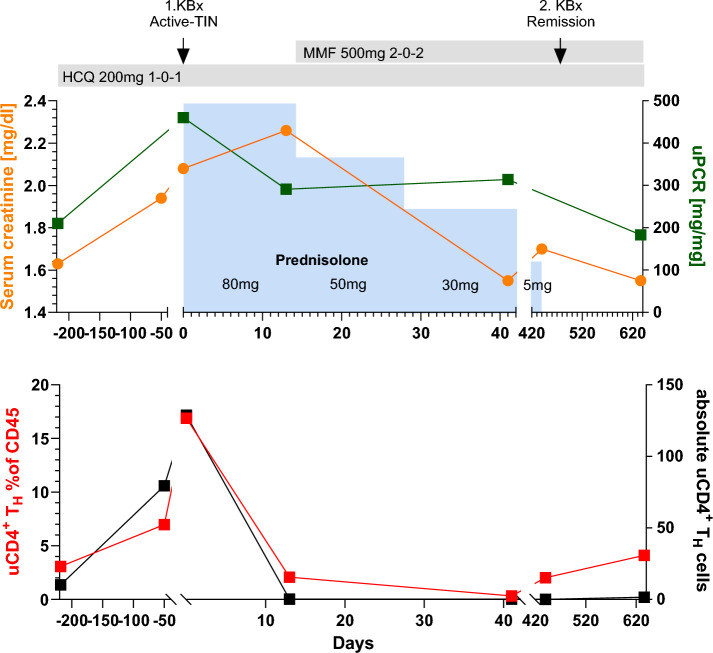 Figure 5
Peer Reviews
No public reviews on file for this paper yet. If you reviewed it on a platform where reviews are public (OpenReview, ICLR, NeurIPS, ICML), you can paste yours below so the community can read it here.
Videos
No videos yet. Explain this paper in a talk, walkthrough, or lecture? Add one.
Taxonomy
TopicsNephrotoxicity and Medicinal Plants · Renal Diseases and Glomerulopathies · Salivary Gland Disorders and Functions