Comparing and combining xevinapant with ATR and PARP inhibition for the radiosensitization of HPV-negative HNSCC cells
Julius Roehrle, Adriana Perugachi-Heinsohn, Fruzsina Gatzemeier, Sabrina Christiansen, Cordula Petersen, Kai Rothkamm, Christian Betz, Malte Kriegs, Henrike Barbara Zech, Thorsten Rieckmann

TL;DR
This study compares xevinapant with ATR and PARP inhibitors to improve radiation treatment in HPV-negative head and neck cancer cells.
Contribution
The study reveals that ATR and PARP inhibition may be more effective than xevinapant for radiosensitization in HPV-negative HNSCC.
Findings
Xevinapant showed moderate radiosensitization in some but not all HPV-negative HNSCC cell lines.
ATR and PARP inhibitors (tuvusertib and olaparib) induced stronger radiosensitization than xevinapant.
Combining ATR and PARP inhibitors was especially effective in three out of four cell lines tested.
Abstract
Radiochemotherapy with the apoptosis stimulator xevinapant demonstrated superiority over radiochemotherapy in a randomized phase 2 trial in head and neck squamous cell carcinoma (HNSCC) but the subsequent phase 3 trial failed. Here, we compared the radiosensitization through xevinapant with two other emerging approaches, the inhibition of ATR and PARP through tuvusertib and olaparib, in a panel of four radioresistant HPV-negative HNSCC cell lines (HSC4, UT-SCC-60A, SAS, SAT). Without irradiation the analyses of proliferation and colony formation showed varying sensitivities of the cell lines towards the different agents and their combinations. When combined with radiation in colony formation assays, we observed moderate radiosensitization through xevinapant in individual cell lines but not in general. Both tuvusertib and olaparib induced stronger radiosensitization than xevinapant and…
Genes, proteins, chemicals, diseases, species, mutations and cell lines named across the full text — each resolved to its canonical identifier and authoritative record.
Click any figure to enlarge with its caption.
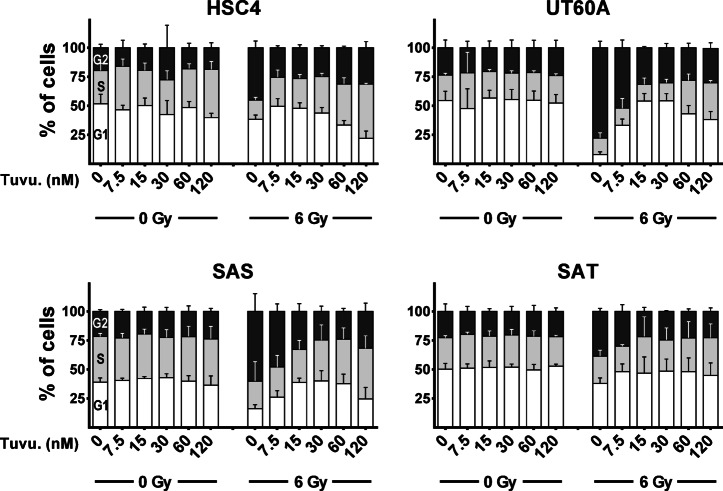 Figure 1
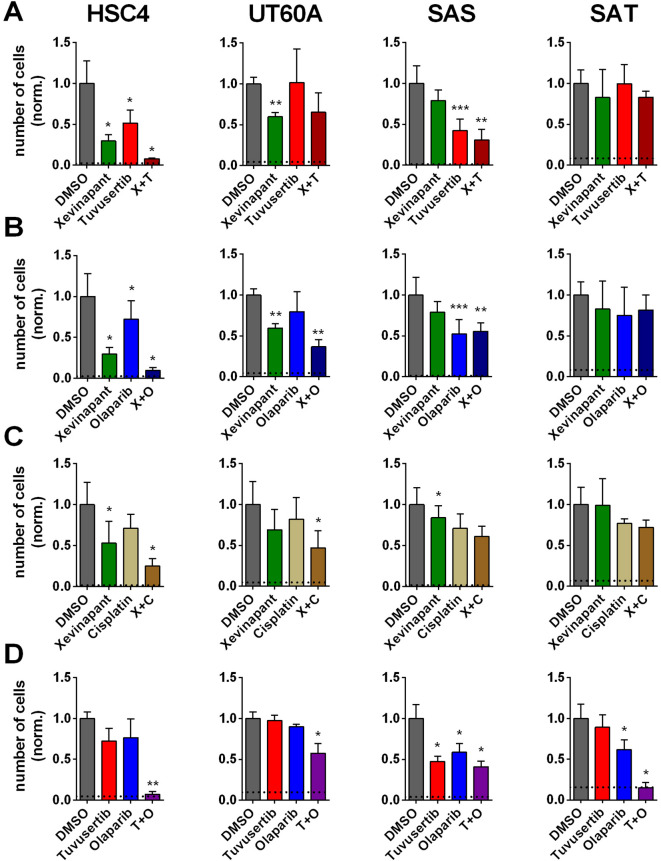 Figure 2
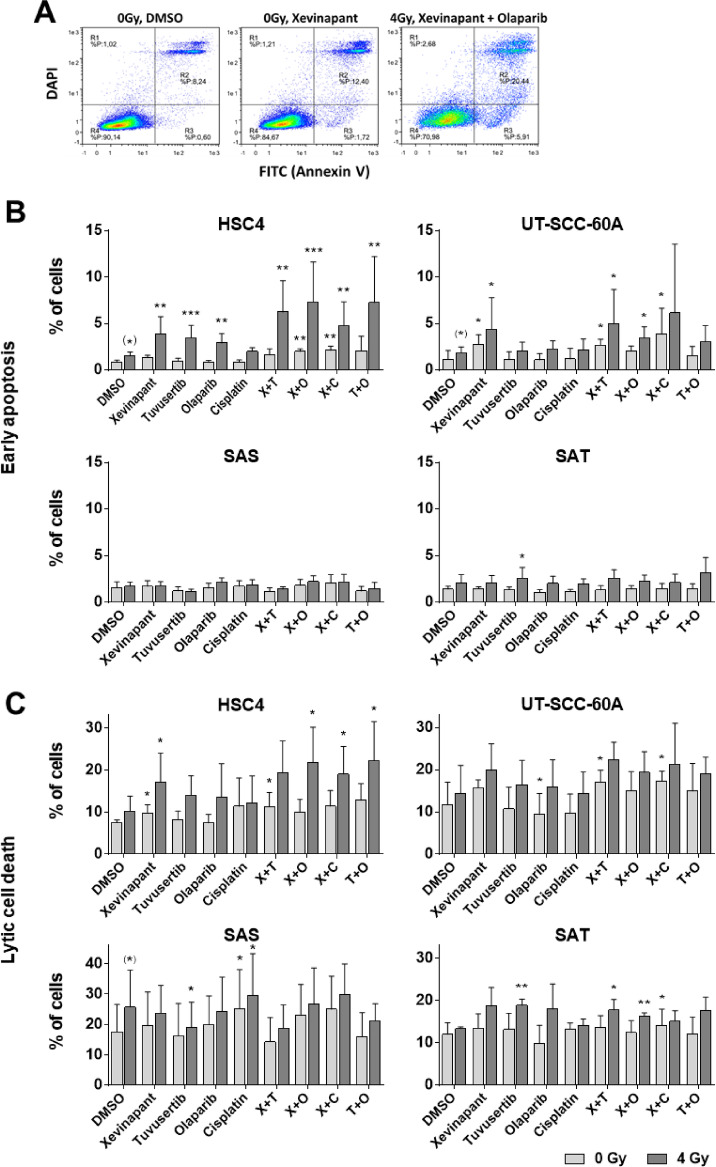 Figure 3
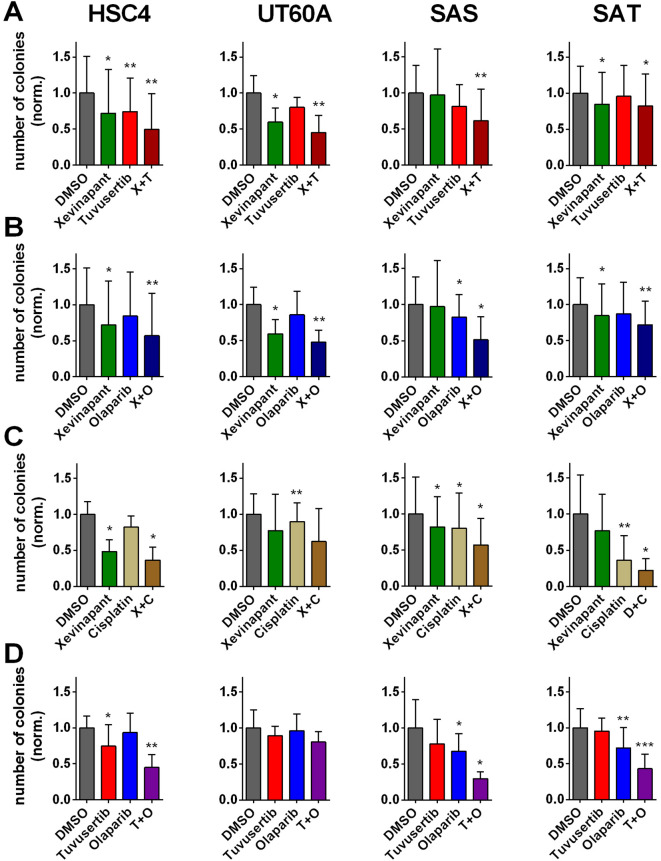 Figure 4
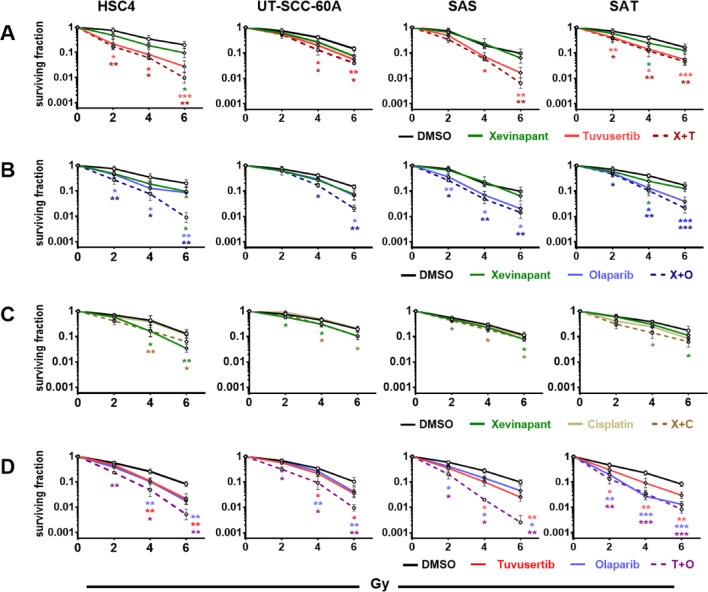 Figure 5
Peer Reviews
No public reviews on file for this paper yet. If you reviewed it on a platform where reviews are public (OpenReview, ICLR, NeurIPS, ICML), you can paste yours below so the community can read it here.
Videos
No videos yet. Explain this paper in a talk, walkthrough, or lecture? Add one.
Taxonomy
TopicsPARP inhibition in cancer therapy · Cell death mechanisms and regulation · DNA Repair Mechanisms