Perception of Altered Smile Esthetics by Orthodontists, General Dentists, and Laypeople: -
Ozra Niknam, Shole Shahi, Jale Narimisaei, Mohabbat Mousaei Emami

TL;DR
This study compares how orthodontists, dentists, and laypeople rate the attractiveness of altered smiles, focusing on factors like gingival margin position, golden ratio, and smile arc.
Contribution
The study introduces a novel comparison of esthetic perception across three distinct groups using systematically altered smile images.
Findings
Equal gingival margins for central and lateral incisors were rated most attractive.
Wider golden ratios (80%) were consistently preferred across all groups.
Laypeople favored flat and reverse smile arcs more than dental professionals.
Abstract
Considering the significance of creation of a consonant smile arc and gap of information on the role of smile arc, gingival margin position, and the golden ratio in smile esthetics, this study assessed the perception of laypeople, general dentists, and orthodontists from altered smile esthetics. This descriptive study was conducted in 2019 with three rater groups: orthodontists (n=31), general dentists (n=49), and laypeople (n=61). A standardized frontal-view smile photograph of a female subject was digitally altered using Photoshop (version 19) to create images differing in (a) gingival margin position (four variations), (b) golden ratio (62%, 70%, and 80%), and (c) smile arc curvature (five variations). Raters, blinded to the alterations, evaluated each image’s attractiveness using a 10-point Likert scale. Due to non-normal data distribution, Kruskal–Wallis, Mann–Whitney, and…
Click any figure to enlarge with its caption.
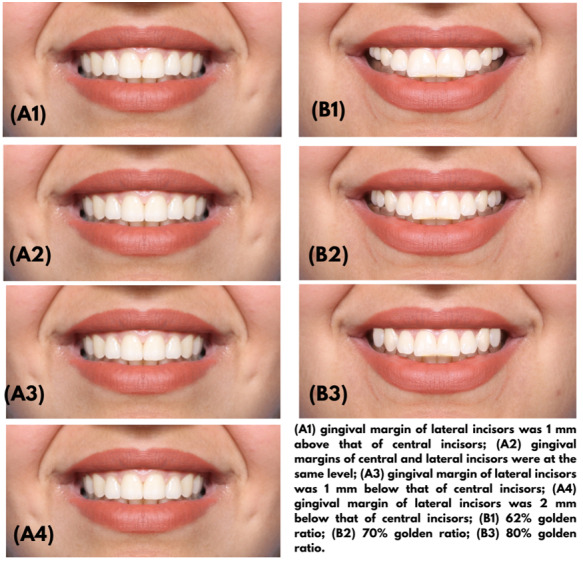 Figure 1
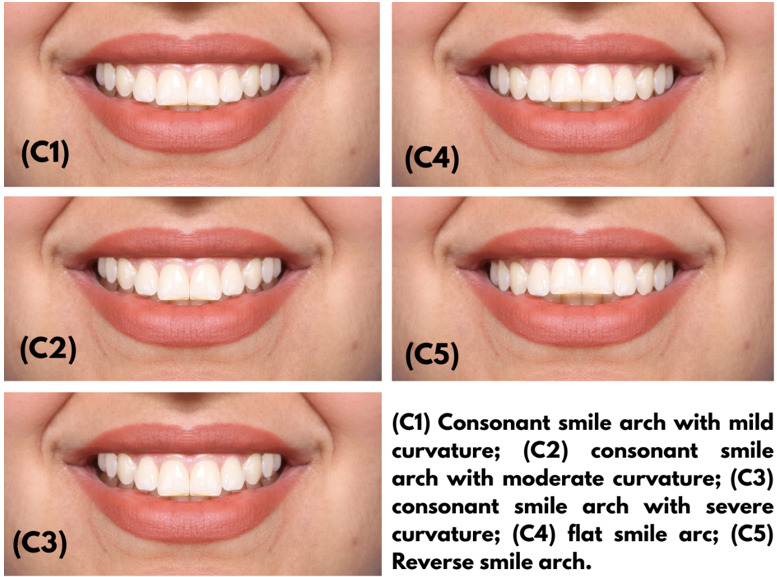 Figure 2
Peer Reviews
No public reviews on file for this paper yet. If you reviewed it on a platform where reviews are public (OpenReview, ICLR, NeurIPS, ICML), you can paste yours below so the community can read it here.
Videos
No videos yet. Explain this paper in a talk, walkthrough, or lecture? Add one.
Taxonomy
TopicsOrthodontics and Dentofacial Orthopedics · Temporomandibular Joint Disorders · dental development and anomalies