Detecting Adverse Drug Events in Social Media: A Brief Literature Review
Imane Guellil, Yousra Berrachedi, Nidhal Eddine Chenni, Massi-Nissa Abboud, Jinge Wu, Honghan Wu, Beatrice Alex

TL;DR
This paper reviews 100 studies on using AI to detect drug side effects from social media posts, highlighting common methods, challenges like language bias, and future directions.
Contribution
The first comprehensive review of 100 peer-reviewed studies on NLP for ADE detection in social media, organized by task types and methodological trends.
Findings
Transformer-based models like BERT dominate ADE detection in social media.
Twitter is the primary data source, with most studies focusing on English.
Multilingual and code-mixed content remain underexplored challenges.
Abstract
Adverse drug events (ADEs) remain a significant burden to public health and a persistent challenge for pharmacovigilance. The proliferation of patient-generated discourse on social media offers a complementary, real-time signal for ADE surveillance. This article provides a concise yet comprehensive review of recent natural language processing (NLP) research on identifying ADEs in social media text. We systematically reviewed 100 peer-reviewed studies (2017–2025) on NLP/AI for detecting or analysing ADEs in social media. Searches in Google Scholar targeted English-language journal and conference papers; patents and protocols were excluded. Of 130 records screened, 6 were protocols and 24 were excluded because the full text could not be located or the item was a conference abstract lacking methodological detail (i.e., no description of approaches or experiments), yielding a final sample…
Genes, proteins, chemicals, diseases, species, mutations and cell lines named across the full text — each resolved to its canonical identifier and authoritative record.
Click any figure to enlarge with its caption.
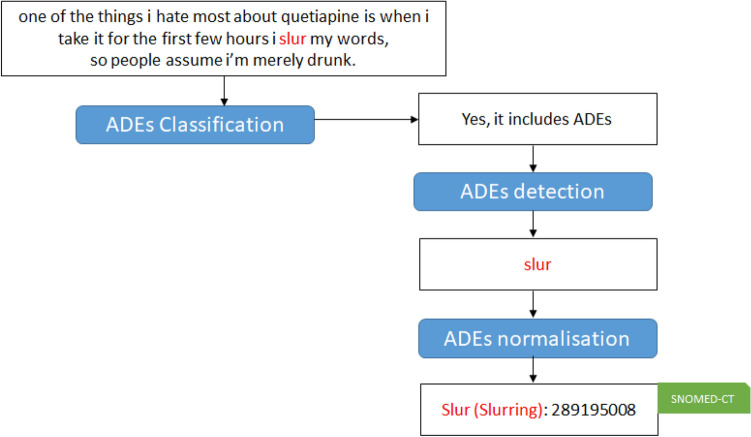 Figure 1
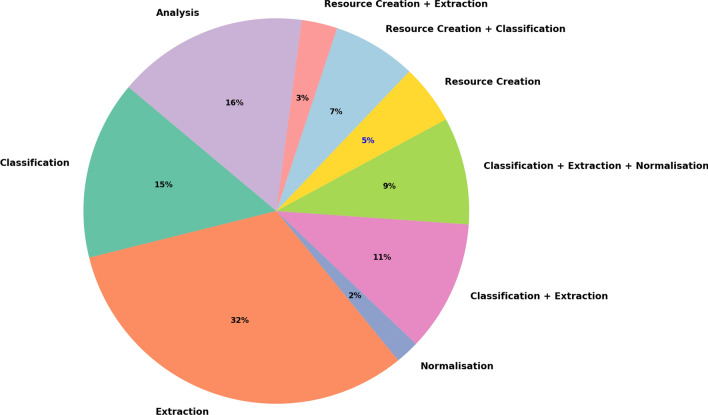 Figure 2
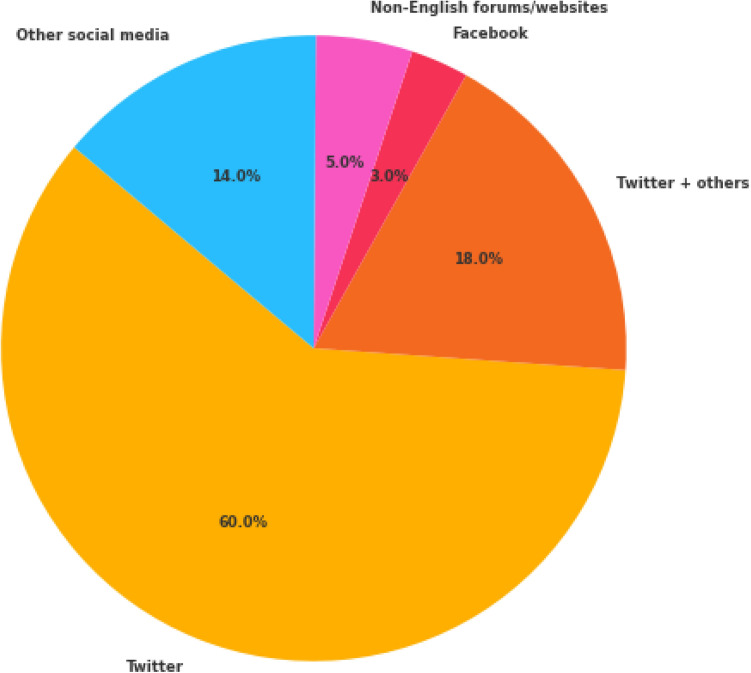 Figure 3
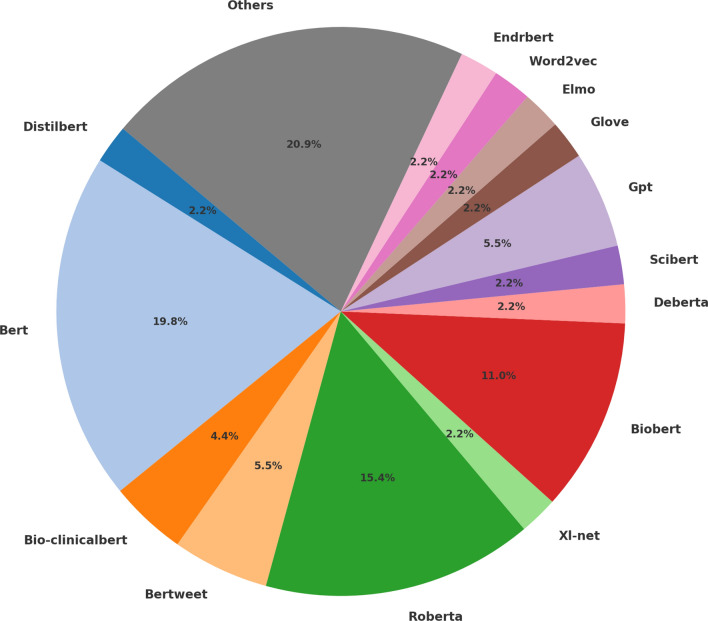 Figure 4
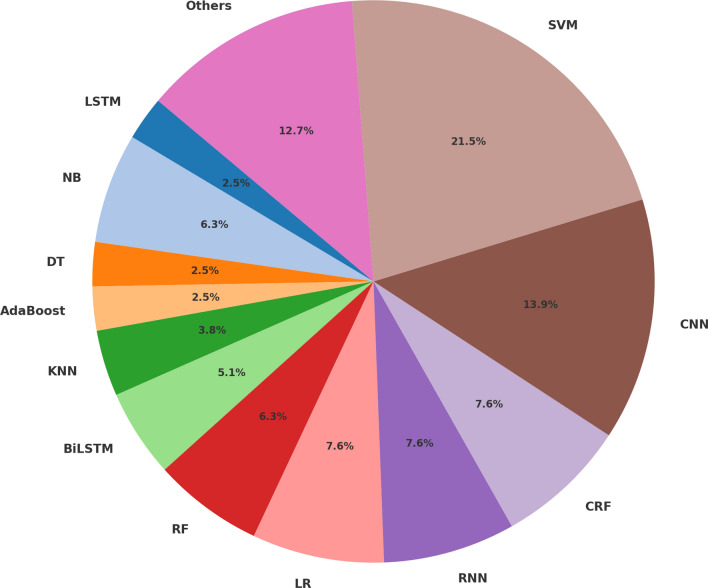 Figure 5
- —National Institute for Health Research
Peer Reviews
No public reviews on file for this paper yet. If you reviewed it on a platform where reviews are public (OpenReview, ICLR, NeurIPS, ICML), you can paste yours below so the community can read it here.
Videos
No videos yet. Explain this paper in a talk, walkthrough, or lecture? Add one.
Taxonomy
TopicsPharmacovigilance and Adverse Drug Reactions · Misinformation and Its Impacts · Biomedical Text Mining and Ontologies
Introduction
Social media platforms have become integral venues for health-related discourse, providing large-scale patient-generated data on symptoms, medication use, and adverse drug events (ADEs). An adverse drug event is defined as follows: An Adverse Drug Event (ADE), also known as ADR for Adverse Drug Reaction or drug side-effect, refers to any injuries resulting from medication use, including physical harm, mental harm, or loss of function, that is threatening public health and have become a leading cause of death [72, 81].The large volume of data generated from social media, along with its relevance, makes it a valuable data source for pharmacological studies. Pharmaceutical companies are increasingly analysing social media posts that describe patient-reported experiences with their products. Due to the scale of data, such knowledge distillation would require the application of Natural Language Processing (NLP) techniques to collect, extract, represent, analyse, and verify data from social media such as Twitter, Reddit, Instagram, Facebook, forums, etc. [24, 33, 55, 67].
The detection of ADEs is a crucial task in the pharmaceutical industry, as ADEs can have a profound impact on patient quality of life and contribute to increased mortality worldwide. With the extensive use of social media and the abundance of health-related discussions, drugs and ADE are some of the most frequently discussed topics. Hence, social media provide excellent data for ADE extractions [26, 37, 64, 96, 102].
Detecting adverse events from social media faces many challenges, including typos, grammar errors, elongation, repeated punctuation, and the use of slang, sarcasm, and irony. The following list presents some examples extracted from social media referring to ADEs that were previously included in [31]:
- One of the things i hate most about quetiapine is when i take it for the first few hours i slur my words, so people assume i’m merely drunk.
- Ciprofloxacin: how do you expect to sleep when your stomach is a cement mixer ?
- Just woke up. since i started on the higher dose of quetiapine i’m sleeping even more ...; i feel knackered when i wake. These phenomena also motivate robustness and domain-shift research, cross-platform analyses, and exploration of multilingual or multimodal signals [4, 67, 85, 108].
Different methods have been proposed for classifying, detecting, normalising and analysing ADEs using NLP. For example, studies focusing on classification only detect if a post/comment includes an ADE or not. All of the above examples include ADEs, so the task of a classification system is to detect them as including ADEs. The task of ADE detection consists of extracting different ADEs from the posts/comments. In the previous examples: ‘slur’ would be extracted from the first example, ‘sleep’ and ‘stomach is a cement mixer ?’ from the second example and ‘sleeping’ and ‘knackered when i wake’ from the third example. The task of normalisation means to map the different extracted ADEs to an existing ontology such as Unified Medical Language System (UMLS),1SNOMED CT2 or to the Medical dictionary for the Regulatory Activities (MedDRA).3 For example, if ADEs are mapped to MedDRA, ‘slur’ should be associated with Slurred speech, ‘sleep’ with Sleeplessness, ‘stomach is a cement mixer ?’ with Stomach perforation, ‘sleeping’ with Sleepiness and ‘knackered when i wake’ with Groggy on awakening. Recent work has improved normalisation in noisy, informal contexts using sentence-transformer biomedical representations and zero-shot linking, and by coupling extraction and linking in end-to-end pipelines [104, 140].
Some of the previous work reviewed in this area relies on two or three of these tasks combined in a pipeline that first classifies comments before extracting different ADEs. In some cases, ADEs are also mapped to an ontology after being extracted. To classify, detect and normalise ADEs, the majority of the existing research studies rely on machine learning algorithms, which require training data. Hence some of the works mainly focus on the construction of the resources that would be required for training and validating the proposed models. Finally, the last group of reviewed works is dedicated to different analyses related to ADEs and mentioned drugs. These studies also highlight the sentiment and anxiety related to ADEs. More recently, transformer and LLM-based pipelines, ensembles, and quantum-inspired models have been explored for end-to-end pharmacovigilance on social media and patient reviews [29, 64, 83, 96, 130, 140].
To summarise, synthesise and classify the different works related to the use of NLP for classifying, detecting, normalising and analysing ADEs. This paper is organised as follows: Sect. 3 is dedicated to the background related to ADEs in social media. Section 4 illustrates and groups the papers reviewed into different categories. Section 5 presents an analysis of the studies works. Section 6 highlights Practical applications of findings in pharmacovigilance and regulatory practices. Section 7 contributes a discussion and presents future direction. of the reviewed research. Finally, Sect. 8 provides a general conclusion by highlighting some insights learned as a result of this review.
Adverse Drug Events in Social Media: Background
In the United States, ADEs affect hundreds of thousands of people and cost billions of dollars in outpatient settings in the U.S. alone, with these costs showing an increasing trend [135].
Detection of ADEs is one of the main tasks in the pharmaceutical industry, where monitoring drug side effects is a crucial task for pharmaceutical companies developing drugs and the Food and Drug Administration (FDA). Such adverse effects impose substantial clinical and economic burdens and, in severe cases, necessitate post-marketing regulatory action up to and including market withdrawal [54]. Different ADEs are identified during clinical trials via the analysis of discharge summaries. However, they affect only patients who have participated in the clinical trial [102]. Moreover, healthcare providers are limiting reports to serious events only. The majority of people experiencing ADEs are reluctant to report their symptoms through official reporting systems for various reasons, including unfamiliarity with the reporting systems (e.g., the Yellow Card system in the UK4). They might also find it difficult to understand the terminology used in those systems or can be unaware of the importance of reporting ADEs [14].
Because of the existing gap between healthcare professionals and the general public (patients) in expressing the same health concepts [60], an alternative approach for detecting ADEs promptly on a larger scale is to analyse social media which is used by billions of people (around 4.7 billion people) around the world [14, 131]. Social media platforms such as Twitter, Reddit, Facebook, Instagram, Pinterest, etc. have been extensively used for market analysis of various products, including medications. Among large volumes of patient-generated content, drugs and ADEs are the most widely discussed topics [81].
Social media has great benefits for detecting ADEs. However, working on data extracted from social media has a set of challenges and limitations, including detecting variations of medical terms, typos, ungrammatical sentences, abbreviations, consumer vocabularies and short forms [126]. In most cases, social media data have to be pre-processed to be used. This includes removing URLs, lower-casing, reducing character elongation and tokenisation [80, 138]. Finally, data collected from social media do not represent the whole population evenly [92]. For example, nearly 60% of Twitter users are aged between 18 and 44, making the collected information highly imbalanced compared to the other patients’ ages [65].
Adverse Drug Events in Social Media: Related Works
Methodology
For this literature review, we used Google Scholar5 as the primary source to collect studies detecting/analysing adverse events from social media, noting that it indexes the majority of relevant works also retrieved by databases such as IEEE Xplore and Scopus. We employed title-restricted queries, including “social media” AND “adverse drug events”, “social media” AND “adverse drug reactions”, “social media” AND “side effects”, and “social media” AND “adverse reactions”. We then filtered for recent publications (2017 onward). Eligible items were English-language research papers published in conferences or journals; patents and protocols were excluded. We focused on studies proposing NLP or Artificial Intelligence approaches for detecting/analysing ADEs from social media.
Initially, 130 papers were identified. Of these, 6 protocols were excluded. A further 24 items were removed because the full text could not be located or they were conference abstracts without methodological detail (i.e., no description of approaches or experiments). We additionally excluded papers that did not propose approaches for detecting/analysing ADEs from social media. After screening, 100 research papers were retained for analysis. To reduce selection bias, initial screening was conducted by one reviewer, and full-text eligibility assessment by a second reviewer.
The published work on ADE detection in social media can be grouped into the following categories: classification, extraction, normalisation, corpus creation, and other analyses related to ADEs (e.g., drug-ADE correlation studies or sentiment analysis). We present the related work per category in the remainder of this section.
ADE Classification
This task entails assigning a class label to social media posts (e.g., tweets, forum messages, and comments). In most studies it is formulated as a binary problem with two labels: ADE (texts containing an adverse drug event) and NoADE (texts without an adverse drug event). Classification typically serves as the initial screening stage to determine whether a text references an ADE prior to downstream extraction or normalisation. The following works focus on this task: [2, 16, 23, 29, 37, 48, 54, 63, 64, 80, 87, 100, 102, 105, 125].
A common general system pipeline was used by these authors including five main components:
- Data collection which was mainly conducted using the Twitter API.6 Almost all of these studies used Twitter data, with datasets ranging in size between 4,252 tweets [102] and 18,000 tweets [2, 63, 100] and which are in the context of the task dedicated to the classification, extraction and normalisation of Adverse Effect mentions in English tweets as part of the shared task Social Media Mining for Health Applications 2021 (SMM4H). Works on extraction and normalisation will be presented more specifically in the following sections. However, two works focused on other social media where they respectively extracted 261,464 posts from MedHelp7 [80] and 10,000 posts from cancer discussion forums [16]. Another work by [48] relied on topic modelling for collecting and filtering tweets allowing for the collection of more than 800,000 tweets during two phases (400,000 during the first phase and 411,010 tweets during the second phase). This work is dedicated to vaccine adverse events, and the tweets were collected using a set of keywords including vaccination, vaccinations, vaccine, vaccines, vax, vaxx, vaxine, vaccinated, vaccinated, flushot, flu shot. In addition to the previously cited studies, more recent works have expanded data collection practices in notable ways. [29] gathered data from a variety of online platforms, including Twitter, online forums, and patient review websites, compiling a dataset that includes drug names, associated conditions, and user-provided ratings. [64] utilised an existing annotated Twitter corpus, emphasising the reuse and benchmarking of previously validated datasets (in [23]). Ref. [37] combined Twitter data with PubMed abstracts to examine ADE-related content across both social and biomedical publication platforms.
- Data pre-processing where almost all the authors performed some type of pre-processing of the datasets including tokenisation [23, 80, 105], de-emojisation of tweets, i.e. replacing emojis with their text strings [63, 100] and removal (or replacement) of URLs and other special characters (used by almost all the works).
- Feature extraction mainly using bag-of-word algorithms [80, 87] with the work of [87] also relying on Dimensionality Reduction using PCA, Principal Component Analysis [1]), on the n-gram model [23] or both n-gram analysis and a lexicon [54] or using TF-IDF [37].
- Handling an imbalanced dataset where some works relied on oversampling methods which consisted of duplicating examples in the minority class or synthesizing new examples from the examples in the minority class. The authors relied on different techniques for oversampling the data including WESMOTE, word embedding-based synthetic minority over-sampling technique [23] or a semantic enrichment technique [102], random oversampling combined with an increase of the class weights [2]
- Classification where different machine learning algorithms and embedding models were used, mainly including Support Vector Machine (SVM) [54, 80, 102, 125] and transformer models [129] such as BERT-base [27], BERT-large [27], DistilBERT [111], ALBERT [70], Bio-ClinicalBERT [5], BERTweet [94], XLNET [133], RoBERTa [82]. The latter studies include [2, 63, 100] and [48]. In more recent work, [29] introduced a hybrid classical-quantum model that combines BioBERT with quantum variational circuits, achieving high performance on ADE classification tasks using diverse patient review data. [64] applied ensemble learning by stacking CNN, LSTM, and SVM models with GloVe embeddings, reporting competitive results on an existing annotated Twitter dataset. Additionally, [37] performed a comparative evaluation of multiple machine learning classifiers (including Naive Bayes, SVM, and XGBoost) using TF-IDF features over Twitter and PubMed data, highlighting the generalisability of models across different data sources (Table 1). Table 1. Synthesis of the works on classificationWorkYearApproachSocial media sourceModels (or tools)DatasetsBest resultsAnnotation guideline[80]2019A feature-weighted-based improved disagreement-based semi-supervised learning method (WIDSSL)MedHelpRandom Subspace (RS) method, WIDSSL method, Random Forest (RF), SVMCollected: 261,464 posts. Annotated: 319 ADEs and 981 NoADEsAUC: 84.21% (WIDSSL)No[105]2021To create a labelled database and ontology to improve the pre-processing of tweets for classificationTwitterNot includedCollected: 30,000 tweets. Annotated: 1,000 tweets5% of tweets classified as ADEsNo[23]2019A novel word embedding-based synthetic minority over-sampling technique (WESMOTE)TwitterAKNN, SMOTE, WESMOTE, WSVM, RUS, VUE, RUSBTwo annotated corpora: PSB (15,717 tweets), SMM (25,678 tweets)F1-score: 0.426 (PSB-SMM) with RUS_WESMOTE; 0.422 (SMMH) with VUENo[16]2021Determine the frequency of reportable AEs in a large sample of patient postsA cancer discussion forumNo models usedCollected: 10,000 postsAUC: 0.928No[102]2021A multichannel approach extended to Convolutional Neural Network (CNN)TwitterCNN, SVM-MCNN4,252 annotated tweetsPrecision: 0.9, Recall: 0.78, F1-score: 0.82No[2]2021The use of Bert for the classificationTwitterDistilBERT, ALBERT, BERT-base/large, Bio-ClinicalBERT, BERTweet, BERTweet-Covid19517,344 tweets for training, 913 for validationF1: 84.30 (BERTweet-Covid195)No[63]2021The use of Bert for the classificationTwitterBERT, RoBERTa, BERTweetTraining: 18,000 tweets, Validation: 953, Test: 10,000F1-score: 0.836 (BERTweet)No[87]2017To train SVM classifier to identify side effectsTwitterSVMDataset includes 7,000 tweets (based on [40])ACC: 84.21%No[54]2021Use sentiment features to detect drug-caused side effectsTwitterNB, LGR, SVM, SGD, kNN, DT, RF, EnsemblesCollected: 486,689 tweets; Final: 226,834 tweetsACC: 0.776 (Ensembles)No[100]2021Evaluate transformer-based models with SMOTE and augmentationTwitterBERT, DistilBert, XLNet, RoBERTaTrain: 18,000, Validation: 953, Test: 10,000 tweetsF1-score: 0.8433 (RoBERTa + augmentation)No[125]2018Combine Twitter and VAERS to identify potential AEs after flu shotsTwitterLibShortText, SVM, LR, NN, miFV, miVLAD, MILRTwitter (11.9B tweets), VAERS (2500 records)ACC: 0.86 (MILR)No[48]2022Topic modeling and classification for vaccine discussionsTwitterVarious including SVM, CNN, BiLSTM, RoBERTa, XLNet 811,000 tweets collected over 2 yearsF1-score: 0.919 (RoBERTa Large)No[29]2024A hybrid classical-quantum model detects ADEs combining machine learning and quantum computingOnline forums, Twitter, patient reviewsBio-BERT, Quantum Variational Circuit (VQC)Review datasets with drug names, conditions, and ratings from patient reviewsAccuracy: 97%, F1-score: 97%, Training Loss: 0.0659, Validation Loss: 0.072No[64]2024Applies ensemble learning (CNN, LSTM, SVM) to detect adverse drug eventsTwitterCNN, LSTM, SVM (base models), Logistic Regression (meta-model), GloVe, vaderSentimentTwitter ADE dataset (Dai & Wang, 2019)Stacking (CNN, LSTM, SVM) F1-score: 0.87, Accuracy: 0.89, AUC: 0.91No[37]2023Compares machine learning methods for binary ADE classification with TF-IDF featuresTwitter + PubmedNaive Bayes, SVC, LR, RF, XGBoost, AdaBoost, Voting, Bagging, Decision TreeTwiMed (PubMed), CADEC, ADE: 1644 abstracts with labeled ADR sentencesNaive Bayes: F1-scores - 64.93% (TwiMed), 94.29% (CADEC), 78.76% (ADE)No
ADEs Detection
Accurate and timely extraction of adverse drug events (ADEs) from user-generated text is pivotal for pharmacovigilance. Yet pre-approval clinical trials–constrained by limited duration and sample size–capture only a fraction of potential adverse effects, leaving many to be identified post-marketing [81]. A substantial body of work indicates that social media provides complementary early signals for ADE extraction. Realising this potential requires rigorously designed NLP pipelines and alignment with regulatory pharmacovigilance practices, including robust methodology, high-quality annotation, and reproducible evaluation, to support product-safety surveillance. [131].
Two common approaches have been used for medical entity extraction in general: (1) lexicon-based and (2) machine learning-based methods [131]. Some studies adopted the lexicon-based approach and explored the use of existing knowledge bases or customized lexicons, such as United Medical Language System (UMLS), FDA Adverse Event Reporting System (FAERS),8 Consumer Health Vocabulary (CHV),9 GATE10 and Medical Language Extraction and Encoding System (MedLEE) to detect adverse event mentions [10, 58, 80, 122] [96]. However, the majority of the most recent studies rely on machine learning approaches, which usually achieve higher precision and overcome some of the shortcomings and limitations associated with traditional non-learning-based approaches. They include [4, 9, 14, 26, 28, 33, 39, 67, 72, 79, 83, 102, 113, 115, 118, 119, 124, 127, 128, 131, 138, 139].
We also observed that some approaches cannot be classified into those two categories where the authors extracted ADEs from a corpus that was manually annotated without using any lexicon or machine learning techniques [3]. Other approaches exploited various lexical, semantic, and syntactic features, and integrated ensemble learning and semi-supervised learning to detect ADEs [81]. Some authors started by training the embedding model which they used subsequently for the detection. For example, [51] trained and tested AC-SPASM, a Bayesian model for the authenticity and credibility-aware detection of potential ADEs in social media. Finally, in addition to detecting ADEs, some approaches also highlighted the correlation between drugs and ADEs [25]. Ref. [34] builds a knowledge graph of ADEs from Reddit using GPT-4o and visualizes the structure using D3.js. Ref. [108] integrates multimodal data (text and medical images) for ADE detection using vision-language models such as nstructBLIP, GIT, and LSTM with CNN backbones (VGG16 and ResNet50) (Table 2).Table 2. Synthesis of the works on detectionWorkYearApproachSocial mediaModels (or tools)DatasetsBest resultsAnnotation guideline[58]2021Analysed the frequency of occurrence of selected common symptoms in PolandTwitterNo models were mentioned43,375 Tweets in Polish with #szczepionka. 1,249 reports from postmarketing registryPains were the ADEs with the highest frequencyNo[122]2019Reporting the occurrence of ADEs when taking medicinal productsForum (puls.bg)No machine learning3,018 user posts60 ADEs reportedNo[39]2020Develop an ADE recognition system and identify potential factors influencing the transferabilityTwitterBayesian probabilistic model, LR, word2vec196,533 (138,885 after preprocessing) + 57,473 annotated tweetsF1-score: 0.26 (WEB-RADR reference)No[124]2021Identify the ADEs associated with kratom and their predominance using social media analytics and data mining techniquesReddit and TwitterLDA algorithm, ReadMe, TF-IDF36,516 posts, 96.8% from Reddit26% of users’ posts discussed multiple kratom side effectsNo[127]2021The use of concept and relation detection to extract Dietary Supplement Adverse EventsTwitterBERT, CRF, RoBERTa, BioELECTRA, DeBERTa, etc247,807 tweets; 2,000 manually annotatedF1: 0.866 (concept), F1: 0.788 (relation)Yes[72]2021A semi-supervised approach estimating ADE severity using social media embeddingsopenFDA websiteRedMed embeddings, k-NN, node2vec variant2929 ADEs, FDA AE reportsSAEDR: 0.595, 0.633, \documentclass[12pt]{minimal} \usepackage{amsmath} \usepackage{wasysym} \usepackage{amsfonts} \usepackage{amssymb} \usepackage{amsbsy} \usepackage{mathrsfs} \usepackage{upgreek} \setlength{\oddsidemargin}{-69pt} \begin{document}$$-$$\end{document} 0.748 for outcomesNo[10]2022VAERS reports of potential COVID vaccine-associated haematological AEs identifiedTwitterNo ML21 Twitter reports + various AE mentionsVaginal/menstrual bleeding, miscarriages, clotting eventsNo[25]2020Adopts Fuzzy Formal Concept Analysis (Fuzzy FCA)TwitterStanford CoreNLP, Fuzzy framework20k tweets + 4k citing papers91% of extracted correlations considered reliableNo[81]2017Framework for ADE relation extraction with ensemble and semi-supervised learningMedHelpAdaBoost, RS, OpenNlp, SVM261,464 posts; 1,281 annotated (493 events, 2983 rels)AUC: up to 81.48% (full feature set)No[115]2020Detect ADEs in Twitter using a graph-boosted frameworkTwitterGloVe, CNN, Seq2seq-Attn, SDNE, FastText, RNN608 samples (234 pos, 374 neg)F1: 74%, +2.9% (multi-channel CNN)No[113]2021Graph adversary representation (GAR) combining graph embedding and adversarial trainingTwitter (TwiMed + TwitterADR)DeepWalk, Node2vec, CNN, BiLSTM, AttentionTwiMed and TwitterADR datasetsF1: 75.25% on TwiMedNo[131]2018Mining e-cigarette AEs in social media using Bi-LSTMtestbedBi-LSTM, CRF, Skip-gram, RNN, MetMap6 M+ posts from 197k users across 64 brandsF1: 92.9%, Precision: 94.1%, Recall: 91.8%Yes[51]2018Bayesian model for authenticity and credibility-aware ADE detectionTwitterAC-SPASM1.19M tweets from 13,178 usersF1: 80%, Precision@10: 90%No[139]2020Investigate details of ADE words for better classification performanceTwitter + DailyStrengthSVM (BoW, max/mean pooling)5076 (Diego lab), 3705 (DailyStrength)AUC: 94.44%, 88.97%No[138]2021Adversarial transfer learning for ADEs + PubMed biomedical infoTwitter + PubMedAdv. transfer learning, charCNN, BiLSTM, attentionTwiMed-PubMed + ADE dataset from 644 PubMed abstractsF1: 68.58% (Bi-LSTM)No[3]2020Investigate Instagram content related to acne drug isotretinoinInstagramBinary classifier (not part of study)Public posts between Feb-May 20187,661 Instagram posts analyzedNo[102]2021Method to improve Twitter AE identification accuracyTwitter (SMM datasets)Multi-channel CNN, SVMSMM + benchmark datasetsAccuracy: 90%, F1: 82%, Recall: 75%No[14]2018Determine causal relation between drug and ADE using contextTwitter + FacebookLinear kernel SVMPosts with 1 drug/event mentionAccuracy: 77.7% (skip-gram features)No[96]2023Uses lexicon and semantic type filtering for extracting ADRs in diabetes drugsAskAPatient, WebMD, IodineMetaMap for NER, semantic analysis, interfacing with UMLS6797 drug reviews across 49 diabetes drugs2572 ADRs detected, including previously unknown ADRs; 684 unique ADRs identifiedNo[28]2024A quantum transformer model encodes drug reviews for ADE detection via zero-shot classificationTwitter, Online ForumsQuantum Transformer, Variational Quantum Circuits, Zero-shot ClassifierPublic reviews datasetAccuracy: 93%, F1-score: 0.90No[33]2024BERT model fine-tuned for ADE extraction with external validation using ADE-Corpus-V2TwitterBERT-based, BioBERT, SciBERTADE-Corpus-V2, SMM4HF1 scores: 0.8575, 0.9049, 0.9813 (internal eval); 0.8127, 0.8068, 0.9790 (external eval)No[79]2023Fine-tunes BioBERT and GPT for ADE classification on social media postsTwitterBioBERT-Base, RoBERTa-Base, GPT \documentclass[12pt]{minimal} \usepackage{amsmath} \usepackage{wasysym} \usepackage{amsfonts} \usepackage{amssymb} \usepackage{amsbsy} \usepackage{mathrsfs} \usepackage{upgreek} \setlength{\oddsidemargin}{-69pt} \begin{document}$$-$$\end{document} 3.5MedTxt-SMF1 scores: 0.91 (BioBERT-Base), 0.90 (RoBERTa-Large)No[119]2023Integrates VADER sentiment analysis with BERT for enhanced ADE detection from tweetsTwitterBERT, BioBERT, GPT \documentclass[12pt]{minimal} \usepackage{amsmath} \usepackage{wasysym} \usepackage{amsfonts} \usepackage{amssymb} \usepackage{amsbsy} \usepackage{mathrsfs} \usepackage{upgreek} \setlength{\oddsidemargin}{-69pt} \begin{document}$$-$$\end{document} 3.5, RoBERTaSMM4H, ADE-Corpus-V2F1 scores: 0.76 for BioBERT-Base, 0.78 for RoBERTa-Base, 0.90 for symptom detection in some casesNo[83]2025A question-answering framework with multi-GRU and attention improves ADR detection on tweetsTwitterMulti-GRU, vMF, Attention MechanismPSB2016-Task1, SMM4H2018-Task3 datasetsF1-score: 81.30% on SMM4H2018No[118]2024A deep convolutional network integrates sentiment, statistics, and medical keywords for ADE detectionHealth forums, medication reviewsDCNNADE-Corpus-V2, PubMed datasetsF1-score: 97.63%No[9]2024Uses AI and NER to process social media posts for unreported ADEsReddit, Twitter, SIDERScispaCy, NER model, GPT \documentclass[12pt]{minimal} \usepackage{amsmath} \usepackage{wasysym} \usepackage{amsfonts} \usepackage{amssymb} \usepackage{amsbsy} \usepackage{mathrsfs} \usepackage{upgreek} \setlength{\oddsidemargin}{-69pt} \begin{document}$$-$$\end{document} 3.511,185 Twitter posts, 489,529 Reddit posts, 13,491 PubMed articles, SIDER databaseIdentified 134 ADEs of GLP-1 Receptor Agonists, including both established and novel ADEs, with clusters and co-occurrences highlightedNo[4]2024Topic modelling and SVM classifier analyse Arabic tweets for vaccine side effectsTwitterBTM, SVM, Fuzzy String Matching65,387 tweets (148,324 symptom mentions)51 symptoms identified; 7 affected systems; clustering of co-occurring symptomsNo[128]2025Combines transformer models with DRUGO ontologies and GAT for ADE detectionTwitter, Ask a Patient, Medical case reportsBERT, BioBERT, ERNIE, GATCADEC, SMM4H, PsyTAR, ADE, TACF1-scores: 94.15% on TAC corpus with BioBERT and contextual drug knowledgeNo[26]2024Fine-tunes BERT, RoBERTa, Bio_ClinicalBERT, and ChatGPT to classify ADEs from TwitterTwitterBERT-base, Bio_ClinicalBERT, RoBERTa, RoBERTa-Large, ChatGPTSMM4HRoBERTa-Large achieved the best F1-measure (0.80), and ChatGPT fine-tuned performed second best (0.75)No[67]2023Fine-tunes BERT-based models for ADE extraction from Twitter posts with external validationTwitterBERT, RoBERTa, Bio_ClinicalBERTCADECv2, SMM4H challenge datasetF1-Score: 0.80 (Achieved by RoBERTa-Large model)No[34]2025Uses LLMs to extract and structure ADEs from Reddit into a knowledge graphRedditGPT-4o mini, D3.jsReddit, FAERSSide effects like nausea, depression, weight gain identified; results validated with FAERSNo[108]2024Integrates textual descriptions and medical images for ADE detection using vision-language modelsTwitter, Healthcare blogsnstructBLIP, BLIP, GIT, LSTM+VGG16, LSTM+ResNet50MMADE dataset (1,500 image-text pairs)Best rouge(0.571), Bleu (0.319), BERTScore(0.893), MoverScore(0.6222)Yes (short)
The aforementioned studies generally rely on a detection pipeline including five main phases:
- Data extraction. For extracting the data, two different techniques were used. Some authors collected data from Twitter, Reddit, Facebook or Instagram [3, 9, 10, 14, 25, 26, 58, 79, 119, 124, 127]. While others used other data sources such as PubMed, Europe PMC services, MedHelp or patient forums [25, 34, 81, 96, 113]. The size of datasets varied from hundreds to millions of posts collected over many years [51, 67, 115, 128, 131].
- Data pre-processing. Most studies applied common text normalization techniques such as lowercasing, removing numbers and URLs, filtering stop words, segmenting hashtags, and using TF-IDF representations [51, 58, 79, 83, 124, 127, 139]. Some also incorporated fuzzy string matching or language filtering [4].
- Feature extraction. Different techniques were explored including lexical and POS (part-of-speech) techniques [10, 81, 96], sentiment-based features [118, 119], graph embeddings and node features [113, 128], and multimodal (text-image) integration [108].
- Annotation. Some of the work collecting data from social media relied on manual annotation to improve the training results or for constructing a gold dataset [3, 113]. To improve the quality of the annotation, some authors [108, 127] designed a tailor-made annotation guideline or by using widely accepted corpora such as SMM4H and ADE-Corpus-V2 [33, 67].
- Named Entity Recognition(NER). Different techniques and algorithms were used, including deep neural networks, Bayesian or BERT models, a CRF Classifier, RoBERTa, BioELECTRA [101], DeBERTa [49], the RedMed [71] word-embedding model as well as an SVM [21] model [72, 81, 127]. These were used in various combinations across studies [9, 33, 67, 72, 81, 127, 128]. In addition to ADE extraction, the work published by [81] also focused on extracting the relationship between drugs and ADEs.
Normalisation
Normalisation refers to mapping extracted adverse drug event (ADE) mentions to controlled vocabulary codes in biomedical ontologies such as the Unified Medical Language System (UMLS), SNOMED CT, and the Medical Dictionary for Regulatory Activities (MedDRA). In most pipelines, normalisation follows detection/extraction: ADE spans are first identified automatically and then linked to ontology entries. To the best of our knowledge, no publications address normalisation as a stand-alone task independent of ADE detection [59]. For instance, [59] employed a neural transition-based named entity recognition (NER) model to extract ADE mentions and subsequently linked each to a MedDRA code, experimenting with GloVe [98], ELMo [99], and convolutional neural network (CNN) architectures [66]. The preprocessing pipeline included whitespace- and punctuation-based tokenisation; lowercasing; replacing URLs with httpurl; replacing user handles with username; and normalising HTML escape characters (e.g.,& ! &).
More recently, [104] proposed a new approach leveraging the BioLORD model and its variants, including BioLORD-STAMB2 and BioLORD-STAMB2-STS2, for the normalisation of ADE mentions in social media. Their system was evaluated on several benchmark datasets such as CADEC, PsyTAR, and TwiMed, and showed significantly improved performance. It achieved F1-scores of 60.28 for CADEC, 65.49 for PsyTAR, and 50.57 for TwiMed using the BioLORD-STAMB2-STS2 variant. These results highlight the effectiveness of sentence-transformer-based biomedical representations, particularly when fine-tuned with semantic textual similarity tasks, for ADE normalisation (Table 3).Table 3. Synthesis of the works on normalisationWorkYearApproachSocial mediaModels(or tools)DatasetsBest resultsAnnotation guideline[59]2021Recognize the adverse drug effect (ADE) mentions from tweets and normalize the identified mentions to their mapping MedDRA preferred term IDsTwitterGlove, ELMo, Neural Transition-based Model for named entity recognition (NER), CNN29,274 tweets and MedDRA v21.1 KB with 25,463 unique preferred term IDsF1: 0.220, R: 0.218, P: 0.231 (for the normalisation with neural transition-based joint mode)No[104]2023Uses BioLORD model with STS fine-tuning for ADE normalisation in social mediaTwitterBioLORD, BioLORD-STAMB2, BioLORD-STAMB2-STS2CADEC, PsyTAR, TwiMed, SMM4HF1 scores: 60.28 for CADEC, 65.49 for PsyTAR, 50.57 for TwiMed (BIOLORD-STAMB2-STS2)No
Resource Creation
As noted in Sects. 4.2 and 4.3, machine-learning approaches predominate for automated ADE detection. However, these methods require substantial volumes of expertly annotated data, making corpus construction costly and time-consuming [115]. Consequently, several studies have focused on developing benchmark resources [6, 30, 62, 68]. Both [30] and [6] created reference datasets for evaluating system performance: [30] curated and manually annotated a Twitter corpus of 57,473 de-duplicated, sampled tweets11 , while [6] produced the TwiMed dataset comprising 1,000 annotated tweets and 1,000 PubMed sentences focused on ADEs related to Diclofenac and Lipitor. Other efforts have leveraged drug names as retrieval keywords to assemble candidate posts, including Twitter data [68] and patient-forum narratives from AskaPatient [62], the latter introducing the CADEC corpus (A Corpus of Adverse Drug Event Annotations)12
Other studies focus on validating the constructed corpus either by classifying ADEs [35, 47, 60, 77, 114, 117] or by extracting them [7, 77].
Other studies focus on validating the constructed corpora either by classifying ADEs [35, 47, 60, 77, 114, 117] or by extracting them [7, 77].
For this group of works, Twitter was also the predominant source for collecting data [35, 47, 60, 77, 114, 117]. Ref. [114] also used MedHelp posts and [7] extracted their dataset from French health forums.
More recently, four additional studies contributed notable advances to resource creation. Ref. [112] annotated VAERS reports using MedDRA to enable temporal analysis of vaccine-related adverse events, achieving a significant improvement in inter-annotator agreement from 69% to 86% after refining guidelines. Ref. [88] applied transfer learning models, including BERT and BETO to classify Spanish-language COVID-19 vaccination tweets, with RoBERTuito achieving the best F1-score (0.79), demonstrating strong performance compared to traditional classifiers. Ref. [85]evaluated ADE classification robustness across linguistic factors using handcrafted templates, reporting F1-scores of around 0.70 on held-out test sets for both BioRedditBERT and XLM-RoBERTa. Finally, [24] introduced the MultiADE benchmark for ADE extraction across heterogeneous sources such as clinical notes, scholarly articles, and social media, reporting the highest F1-score of 69.0% using RoBERTa-Large in its domain.
Several corpora were released alongside complementary resources and tools for processing, including ADRMine (a conditional random field-based sequence-labelling system for ADE extraction) [117], UMLS [77, 117], cTAKES for clinical concept extraction [60], and the FDA Adverse Event Reporting System (FAERS) [77]. Across this body of work, a wide range of classifiers and sequence models were explored–from traditional baselines (logistic regression, LR [22]; stochastic gradient descent, SGD, classifiers [106]; linear SVC) to neural architectures (multi-channel CNNs [47, 114]; LSTM [52]; GRU [19]; BiGRU [18]; CNN–BiLSTM; CNN–BiGRU) and large pretrained transformers (BERT; RoBERTa/RoBERTa-Large; XLNet/XLNet-Large; XLM) [47, 69], as well as Bayesian hierarchical models [77] (Table 4).Table 4. Synthesis of the works on resource creation/ resource creation + classification/ resource creation + extractionWorkYearTaskApproachSocial mediaModels (or tools)DatasetsBest resultsAnnotation guideline[30]2020Resource creationCreate a benchmark dataset to evaluate ADE recognition systemsTwitterNo model used5.6M tweets ? 57,473 after sampling1,056 ADEs, 56,417 NoADEsYes[68]2018Resource creationUse keyword combinations and filtering for data collectionTwitterNo model used10,000 keywords ? 438 (scenario1), 1,323 (scenario2) tweetsTweet counts per scenarioNo[6]2017Resource creationBenchmark corpus to compare drug reports in Twitter vs. PubMedTwitterBrat and Knowtator (annotation)29,435 PubMed + 165,489 Twitter sentences3144 entities, 2749 relations, 5003 attributesYes[62]2015Resource creationConstruct CADEC corpus for ADEs in medical forumsAskaPatientNo model used1,253 posts9,111 entities: 69.3% ADEs, 19.8% drugsYes[112]2024Resource creationAnnotates VAERS reports using MedDRA for temporal analysis of vaccine-related eventsVAERS reportsMedDRA terms282 VAERS reports (1990-2016)Inter-annotator agreement improved from 69% to 86% after refining guidelinesYes[117]2018Resource creation + classificationCompare ADE mentions in FAERS, DIDs, and TwitterTwitterNot mentioned10,188 tweets (Humira/adalimumab keywords)Reported ADEs resemble FAERS more than DIDsNo[114]2018Resource creation + classificationNLP + DNN-based method to mine ADEsTwitterSkip-gram, CNN, TF-IDF, Word2Vec1013 ADE, 3122 NoADE samplesF1: 74.4% (multi-channel CNN)No[47]2021Resource creation + classificationIdentify effective NLP pipelines for VAEM tweetsTwitterVariety: Logistic RCV, SVMs, CNN, RNNs, RoBERTa, BERT, etc688,357 tweets totalF1: 0.91 (RoBERTa Large)No[35]2019Resource creation + classificationSystem to collect/process drug-related tweets for ADEsTwitterNot mentionedTweetAEMiner tool + drug-specific wordsDetected 8 known + 2 novel doxycycline AEsNo[60]2018Resource creation + classificationExpand Consumer Health Vocabulary with Twitter termsTwittergensim, word2vec, VSM, SIDER53 M tweets using 1,147 meds as keywords333 new side effect terms found (vs. 90 in CHV)Yes[77]2020Resource creation + extractionCompare signal detection from Twitter vs. SRSTwitterMCEM model, Bayesian hierarchical model192,000 tweets from 4 datasetsAUC (combo): 0.587 \documentclass[12pt]{minimal} \usepackage{amsmath} \usepackage{wasysym} \usepackage{amsfonts} \usepackage{amssymb} \usepackage{amsbsy} \usepackage{mathrsfs} \usepackage{upgreek} \setlength{\oddsidemargin}{-69pt} \begin{document}$$-$$\end{document} 0.637; Twitter: 0.525 \documentclass[12pt]{minimal} \usepackage{amsmath} \usepackage{wasysym} \usepackage{amsfonts} \usepackage{amssymb} \usepackage{amsbsy} \usepackage{mathrsfs} \usepackage{upgreek} \setlength{\oddsidemargin}{-69pt} \begin{document}$$-$$\end{document} 0.534No[7]2018Resource creation + extractionProtocol for evaluating ADE extraction toolsatoute, doctissimo, e-sante, aufemininNER and entity recognition models325,535 annotated forum messagesPrecision, recall, CI at 95%Yes[88]2024Resource construction + classificationUses transfer learning models (BERT, BETO) to classify Spanish post-vaccination tweetsTwitterBERT, BETO, RoBERTuito, SVM, RF1332 Spanish tweets related to COVID-19 vaccinationRoBERTuito achieved the best F1 score (0.79), outperforming traditional modelsYes[85]2024Resource construction + classificationUses handcrafted templates to evaluate ADE classification robustness across linguistic factorsTwitter, Reddit, PsyTARBioRedditBERT, XLM-RoBERTaCustom dataset (SMM4H-2021, SMM4H-2017, NADE)BioRedditBERT and XLM-RoBERTa achieved similar results on the held-out test set, with F1-scores of around 0.70No[24]2024Resource creation + extractionBuilds MultiADE benchmark for ADE extraction across clinical notes, scholarly articles, and postsExisting datasetRoBERTa, GPT-4, Llama-3, BARTn2c2, MADE, PHEE, PsyTAR, CADEC, CADECv2RoBERTa-Large achieved the highest F1 score for ADE recognition (69.0%) in its domainYes
Pipelines for Classification, Detection and Normalisation
While some of the previously reviewed work focused on either the classification or the extraction, some studies combined both tasks in a pipeline, e.g. [134]. Many other studies [13, 38, 45, 65, 121, 126, 130, 137], followed the same approach, while others [8, 31, 36, 57, 86, 103, 109, 140, 141], added normalisation to the pipeline to map the extracted ADEs to codes in the commonly used ontologies such as SNOMED-CT or UMLS.
The majority of the works employing the entire pipeline (classification, extraction and normalisation) were proposed in the context of the SMM4H shared task where participants could either propose a system classifying ADEs, classifying and extracting ADEs or the entire pipeline where the participants could also link the extracted ADEs to an ontology such as MedRRA [31, 36, 103, 109, 140], (SMM4H 2021) as well as the work of [8] (SMM4H 2019). Others did not participate in the shared tasks but also used the SMM4H dataset [86]. Others used the MADE dataset [57].13 In order to highlight the different steps of the pipeline on a proper example, we introduce Fig. 1Fig. 1. Pipeline steps on an example
All the aforementioned studies rely on a pipeline including five phases:
- Data collection: most of the studies focused on data obtained from social media platforms such as Twitter, Facebook, etc. [8, 13, 45, 65, 78, 141]. Some other data sources were also used such as CADEC [109, 121] or other publicly available datasets, including MADE 1.014 [57] and SMM4H15 [31, 38, 109]. However, all of these corpora were constructed from social media or forums. Some works also made use of different corpora including TwiMed and TwitterADR, in addition to SMM4H [126] where the authors used 160GB of data collected from BookCorpus,16,17,18 and Stories. The size of the datasets varied among the studies where [8] used 2,367 tweets, [78] used 5,600 tweets, [65] used 34,293 tweets and [31] used 17,385 training samples. Additionally, [130] used FDA drug labeling documents to automate ADE annotation through a Retrieval-Augmented Generation (RAG) mechanism and a large language model (LLM), achieving F1 scores of 0.978 for DILI, 0.931 for DICT, and 0.911 for AE profiling. Additionally, [130] used FDA drug labelling documents to automate ADE annotation through a Retrieval-Augmented Generation (RAG) mechanism and a large language model (LLM), achieving F1 scores of 0.978 for DILI, 0.931 for DICT, and 0.911 for AE profiling.
- Data preprocessing: This task is also variable and depends on the quality of the available data. Some works such as [121] did not conduct any pre-processing themselves as they used publicly available corpora which were previously pre-processed such as CADEC. Other works [38, 45, 103, 126] applied the most commonly used pre-processing techniques, including lowercasing, URL removal, non-alphabetic character removal, stop word removal, tokenisation and special character removal.
- Word embedding and feature extraction: [65, 126, 38] and [13] considered this to be an essential step in converting text data (letters, words, sentences) into feature vectors that encode the meaning of the text so that instances that are closer in vector space are expected to be similar in meaning. Others used only bag-of-wrords (BOW) and TF-IDF techniques [13, 38].
- Data annotation: As mentioned in the previous section, this phase is used to label data collected from social media. For this purpose, [65] labelled their corpus as non-medical or medical methylphenidate19 after collecting data from Twitter. Ref. [78] manually annotated their corpus to identify tweets containing personal experiences regarding COVID-19 vaccinations.
- Classification, extraction and normalisation: The majority of works relied on transformers for the classification step such as BERT, BERTweet, RoBERTa, BioBERT [74], Bio-clinicalBERT [31, 36, 86, 103, 141], with contextual embeddings such as ELMo [8] were also being used. Glove and FastText [12] were also used by some studies [86]. Some authors applied LSTM, bi-LSTM, CRF [69] or RNN [53] layers for classification [8, 36]. For the extraction step, authors tended to use the same models used for classification only or for both classification and normalisation, e.g. [36, 109] used a neural model combined with BERT for extraction and normalisation. Some other works employed a Named Entity Recognition (NER) pipeline combined with different models such as RoBERTabase and BERTweet for the extraction phase [103]. More recently, [140] used RoBERTa, GPT-4, and BioBERT for ADE classification and normalisation on Twitter, reporting F1 scores of 0.838 (RoBERTa), 0.306 (GPT-4), and 0.354 (BioBERT). In this section, we provided an overview of studies that employed a pipeline-based approach using classification and extraction as well as studies which added the normalisation step, resulting in high performance and very good results in the majority of cases (Table 5).Table 5. Synthesis of the works on pipelines: classification + extraction / classification + extraction + normalisationWorkYearTaskApproachSocial mediaModels (or tools)DatasetsBest resultsAnnotation guideline[134]2021Classification + extractionTask 1 (classification and extraction of ADEs) of the shared task SMM4H 2021TwitterSVM, RBF, BERT variants, BiLSTM-CRF, fastText, BytePair17,385 tweets (classification), 1,717 tweets (extraction)F-score: 0.46 (classification), 0.50 (extraction)No[38]2022Classification + extractionSentence pair classification with BERTTwitterBERT, RoBERTaLARGE29,529 SMM4H + 160GB dataF1: 0.64 (RoBERTa)No[126]2017Classification + extractionQuantum Bi-LSTM with attention for ADE detectionTwitterQBi-LSTMA, Bi-LSTM, LNS, CNN, RNNTwiMed (1,000), TwitterADR (10,822)F1: 73.62% (QBi-LSTMA)No[45]2021Classification + extractionTwo separate systems using Transformer models (SMM4H 2021)TwitterBERTweet, BioBERT, SciBERT, RoBERTa 28k (classification), 18,300 (extraction)F1: 40.0 (classification), 47.3 (extraction)No[137]2019Classification + extractionLexicon-based ADE extraction + binary classificationChinese social mediaSVM, HMM, CRF, pattern-based classifier456,753 messages ? 302,180 sentencesAccuracy: 83.1% (SVM)No[13]2018Classification + extractionCausality measure for ADEs based on classificationTwitter, FacebookSVM, BOW, RBF, CNN44,809 positive + 50,081 negative instancesAccuracy: 74% (BOW)No[121]2018Classification + extractionDetect ADE spans using LSTM-CRF modelTwitter, FacebookLSTM-CRFCADEC + 1250 forum postsF1: 69.94%, P: 68.82%No[65]2020Classification + extractionML analysis of tweets about methylphenidateTwitterSVM34,293 tweetsF1: 0.733, P: 0.920, R: 0.609Yes[78]2022Classification + extractionML pipeline to identify COVID-19 vaccine experiencesTwitterSVM, Logistic Regression, RF, CRF, etc111,229 tweetsBest: random forestNo[130]2025Classification + extractionAutomates ADE annotation with RAG mechanism and LLM using FDA labelling documentsFDA drug labeling documentsAskFDALabel (LLM-powered), Retrieval-Augmented Generation (RAG)DILI (287 annotated drugs), DICT (1167 labeled drugs), AE profiling (200 drugs)AskFDALabel achieved F1-scores of 0.978 for DILI, 0.931 for DICT, and 0.911 for AE profiling, outperforming traditional methodsNo[93]2024Classification + extractionA two-level Bi-LSTM classifier filters and contextualises ADR mentions in tweetsTwitterBi-LSTM (2 levels), BioBERT, SNScrape499,031 tweets (Covaxin + Covishield, Jan-Dec 2021)F1-score: 94.33%No[141]2021Classification + extraction + normalisationADE classification, span extraction and normalisationTwitterBERTweet, RoBERTa, BERT variants29,284 English tweetsF1: 0.49 (class), 0.42 (extract), 0.28 (norm.)No[36]2021Classification + extraction + normalisationJoint training approach for ADE classification/extraction/normalisation (SMM4H 2021)TwitterBERT, Bi-LSTM25,870 tweets + CADECF1: 70.1 (class), 37.0 (extract), 50.3 (norm.)No[86]2021Classification + extraction + normalisationADE classification, span detection, and normalisationTwitterBERT, Glove, FastText, TwitterHealth29,284 tweets with 2,765 ADE mentionsF1: 0.319 (BERT)Yes[57]2020Classification + extraction + normalisationMADE 2018 challenge overview on ADEs from EHRsEHR notesLSTM, CRF, SVM, RFMADE 1.0 corpusF1: 0.8527 (NER), 0.8777 (RI), 0.6612 (NER-RI)Yes[109]2021Classification + extraction + normalisationADE detection with cross-lingual BERT-based modelsTwitterRoBERTaLarge, EnRuDR-BERT, ChemBERTa, HuggingFace models29,283 English + 20,704 Russian tweetsF1: 0.61 (class), 0.40 (extract), 0.29 (norm.)No[31]2021Classification + extraction + normalisationMulti-task learning with transformer models (SMM4H 2021)TwitterBERTbase, BioBERT, Bio-ClinicalBERT17,385 training samples, 23k MedDRA termsF1: 63.5 (class), 56.0 (extract), 18.5 (norm.)No[103]2021Classification + extraction + normalisationADE pipeline from SMM4H 2021 with multiple BERT modelsTwitterRoBERTa, BERTweet, BioBERT, DEBERTa 18k tweets (class.), 1,234 tweets (extract)F1: 61% (class), 50% (extract), 94% (task2)No[8]2019Classification + extraction + normalisationADE detection with bi-LSTM and CRF using char + token embeddingsTwitterbi-LSTM, ELMo, CRF, RNN3,367 tweets (1,712 positive, 1,655 negative)F1 (Relaxed): 59.7, Strict: 40.7No[140]2024classification + extraction + normalisationUses RoBERTa, GPT-4, and BioBERT for ADE mention classification and normalisation on TwitterTwitterRoBERTa, GPT-4, BioBERT#SMM4H 2024 Task 1 datasetF1 scores: 0.838 (RoBERTa), 0.306 (GPT-4), 0.354 (BioBERT)No
ADEs Analysis
The last group of publications is centred around an analysis related to ADEs [17, 20, 32, 42, 43, 61, 75, 76, 84, 92, 107, 116, 120, 132, 136, 142]. These analyses involve examination of sentiments, expectations, and anxieties but also ADEs related to vaccine of social media users reporting ADEs [20, 42, 75, 76, 120, 136]. They can also be related to linguistic features validated by clinical experts for detecting ADEs [84] or to a comparison of ADEs related to a given drug with others or evaluating the use of Complementary and Alternative Medicine (CAM) [43, 92, 107]. Finally, some analyses are dedicated to evaluating the precision and accuracy of ADEs reported on social media [142].
Analytical studies extend beyond textual content to incorporate engagement and source metadata (e.g., likes, comments, post type, platform, language, purpose). For example, [75] conducted a retrospective assessment of 600 Twitter and Instagram posts tagged #covidvaccinesideeffects, recording likes, comments, post type, language, purpose, and source; educational quality was independently rated by three examiners with different training levels. Similarly, [20] investigated whether social communication predicts expectations of post-vaccination side effects: in a prospective longitudinal survey, exposure to side-effect information from social media, news reports, and personal acquaintances–and corresponding expectations–was measured pre-vaccination, followed by assessment of experienced side effects post-vaccination.
For this group of studies, the pipeline includes only three phases related to collection, pre-processing and analysis. Similarly, as for previous work, Twitter was the predominant social media source used. Some authors used a list of keywords to extract the tweets automatically. For example, [107] built a list of food and drug administration names, including 297 brand names mapped to 49 generic names. Based on this list, they extracted English posts containing brand names or generic names of these drugs from Twitter.
The work of [132] analysed the different ADEs mentioned on social media. They also presented a synthesis related to similar social media posts involving ADEs and related drugs. They compared the different numbers of mentions related to drugs and ADEs across different social media such as Twitter and Facebook. They concluded by presenting a general percentage associated with the mention of ADEs related to some drugs. For example, they found that 4% of ADEs mentioned in social media are related to a steroid, whereas 59% are related to antibiotics.
More recently, several studies have been proposed within this area. Ref. [61] conducted a retrospective analysis of Reddit posts over eight years using a Python-based categorisation approach, identifying significant changes in liver and other clinical markers. Ref. [136] used text and graph mining techniques on 386,565 tweets and VAERS data to detect both officially known and previously undocumented COVID-19 vaccine side effects. Ref. [116] evaluated TikTok videos on weight loss medications using the PEMAT-AV tool, finding low overall understandability (43%) and actionability (20%), though personal experience videos scored better. [76] analysed 169 million COVID-19-related tweets using deep learning-based named entity recognition to extract ADE-related sentiments. Finally, [32] compared several biomedical NLP models, including BERT, Sentence-BERT, and SapBERT, for multi-label classification and entity linking on 4,195 Facebook posts from a gastrointestinal disorders forum, reporting improvements in F1 score when using a coarse-grained ontology (Table 6).Table 6. Synthesis of the works on ADEs analysisWorkYearApproachSocial mediaModels (or tools)DatasetsBest resultsAnnotation guideline[42]2019Explore ethical implications of using social media to track adverse events using a multi-method approachTwitter, Facebook, InstagramNo model usedOpen discussion data from August 2018Some participants opposed social media use for AE researchNo[75]2022Analyze posts with #covidvaccinesideeffects by metadata and educational qualityTwitter, InstagramStatistical analysisPosts from Jan-Apr 2021 using specific hashtagInterrater agreement: 89%No[84]2020Categorize data veracity levels and analyze linguistic featuresTwitterMultinomial Logistic Regression10,822 annotated tweets, SIDER 4.17.98% poor, 43.46% moderate, 48.56% good veracityYes[43]2020Compare statin ADEs across social media and regulatory sourcesTwitterNo machine learningHLP DB, FAERS, MHRA, MedDRA, etcHigh agreement between Twitter and official sourcesNo[20]2022Assess how social communication affects expectations and experiences of vaccine side effectsTwitterRegression modelPre- and post-vaccination surveys (Apr-Jul 2021)P = 0.917 (contacts vs. expected side effects)No[17]2018Study CAM use by AIH patients via AIH-focused Facebook groupsFacebookNo ML401 user responses with health and CAM data5% reported serious AEs; 1% hospitalizedNo[107]2021Analyze antidepressant side effects from real-world expressionsTwitterSAGE model707 M tweets by 283,374 usersFocused on 5 key side effect categoriesNo[92]2022Analyze ADEs and sentiment for 18 MS drugs on TwitterTwitterCrimson Hexagon classifier, ReadMe algorithm51,362 tweets (2010-2020)Injectable side effects more prevalent than oral/infusionNo[142]2020Validate social media methodology for detecting pharmaceutical ADEsTwitterNo models mentioned40,000 tweets + 40,539 FAERS reportsOnly a few common drugs had sufficient ADE contentNo[120]2018Identify cluster anxiety-related AEFIs from social media and search dataFacebookNo model used39 AE reports analyzed18 cluster events not found in peer-reviewed literatureNo[132]2021Detect AEs from posts related to specific medications across platformsTwitter, Facebook, YouTube, Tumblr, Reddit, etcNo model usedGrey literature from 9 platformsGeneral detection of AEs across social platformsNo[61]2025A retrospective analysis of Reddit posts over eight years using Python-based categorisationRedditPython-based script3877 posts from RedditSignificant changes in liver and other clinical markersNo[136]2024Analyzes vaccine side effects with text mining using Twitter and VAERS dataTwitter, VAERSText mining, Graph miningTwitter (386,565 tweets), VAERS (side effects data from 1990-2021)Detection of both officially known and unknown vaccine side effectsNo[116]2024Assesses TikTok video understandability using the PEMAT-AV tool for weight loss medicationsTikTokPEMAT-AVTop 50 videos for #ozempicsideeffects, #semaglutidesideeffects, #mounjarosideeffects, #wegovysideeffectsMost videos had low understandability (43%) and actionability (20%), but personal experience videos had higher understandabilityNo[76]2025Analyzes COVID-19 sentiments using deep learning-based NER for ADE extraction//Dataset comprising 169,659,956 COVID-19-related tweets from 103,682,686 users. Identification of 2,124,757 relevant tweets/No[32]2023Compares NER with entity linking and multi-label classification using Sentence-BERTFacebookBERT, PubmedBERT, EndrBERT, Sentence-BERT, BioSyn, SapBERT4195 posts from 527 discussion threads (GIST forum)Micro F1: 0.220 (MLC), improved to 0.498 with coarse ontology levelYes
Analysis of the Studied Works
In total, we reviewed, analysed and classified 100 research publications. We grouped the papers into six different categories: classification, detection, normalisation, the pipeline including classification, detection and normalisation, resources construction and works presenting an analysis of ADEs. Different social media, forums and other sources were used for collecting data, including Twitter, Facebook, Instagram, AskPatient, MedHelp, PubMed and others.
Different conclusions can be drawn from all of the studies which we reviewed. We present our analysis using the following seven different topics:
- Tasks involved in the studies
- Social media source used
- The proposition of annotation guidelines
- Embedding models used
- Machine learning models used
- Drugs referenced within the studies
Tasks Iinvolved in the Studies
All the reviewed works can be categorised into one of six main tasks: classification, extraction, normalisation, resource construction, pipeline development, and analysis. Extraction was the most common task, with 32 out of 100 studies (32%) focusing on extracting adverse drug events (ADEs) from social media. Pipeline approaches were also prominent, appearing in 20 studies (20%), often combining multiple tasks such as classification and extraction (11/100; 11%) or integrating classification, extraction, and normalisation (9/100; 9%).
Classification was performed in 15 studies (15%), making it a widely used method across different ADE detection workflows. Similarly, resource construction and analysis were each the focus of 15 and 16 studies, respectively, indicating strong interest in building foundational tools and evaluating ADE trends. Among the resource construction efforts, 9 studies (9%) also validated their resources using classification techniques. Lastly, normalisation was the least addressed task, with only 2 studies (2%) focusing specifically on mapping extracted ADEs to standardised terminologies.
Social Media Source Used
Twitter was the most used social media platform for extracting data. This is mainly due to the huge amount of data generated daily (500 million tweets) [10, 36, 54, 58]. We can observe that 60 (60%) studies used Twitter data. A subset of those, 11/15 (73.33%) studies, used Twitter data for the classification task, whereas the two other remaining studies respectively focus on MedHelp, Cancer forum, patient reviews and pubmed. Twitter was also predominantly used for normalisation, resource construction and multiple tasks combined in a pipeline where respectively 2/2 (100%), 10/15 (76.66%) and 15/20 (0.75%) studies relied on Twitter. Twitter was used less for the detection and analysis tasks, where respectively 15/32(46.87%) and 6/16(37.5%) studies were on this social media.Fig. 2. Proportion of studied tasks
Another important aspect to note is that some studies did not exclusively use Twitter data but applied their approaches to data from different social media sources. In these cases (18/100 studies; 18%), Twitter data was used in combination with data from other social media, including Facebook, Instagram, DailyStrength, Reddit, VAERS,20 PsyTAR, Healthcare blogs, AskaPatient and PubMed (represented as Twitter + other). Only a few studies were carried out using other social media such as Facebook (3/100; 3%), Instagram (1/100; 1%), Tiktok (1/100; 1%), Reddit (1/100; 1%) and other health social media such as AskPatient (2/100; 2%), MedHelp (2/100; 2%), health forum (2/100; 2%) and BedTest (1/100; 1%). Some works used data from the Food and Drug Administration website21 (2/100; 2%), VAERS (1/100; 1%) and Electronic Health Records (EHR) (1/100; 1%). Finally, 5/100 (5%) of the studies were carried out using data from forums and websites in other languages (e.g. Belgian, French, Chinese, Spanish and Arabic).
Figures 2 and 3 illustrate the proportion of the different studied tasks as well as the proportions of social media sources used within the studies. In Fig. 2 we have the proportion of all the presented tasks: Classification (i.e. studies detecting if the text includes or not ADEs). Extraction (i.e. studies extracting ADEs from text). Normalisation (i.e. studies mapping the ADEs to an ontology). Classification + Extraction (i.e. studies classifying the ADEs first and extracting them after). Classification + Extraction + Normalisation (i.e. studies classifying ADEs, extracting them and associating them to an ontology). Corpus creation (i.e. studies creating dataset). Corpus creation + classification (i.e. studies creating datasets and validating them by proposing a classification approach). Analysis (i.e. studies analysing ADEs and associating them to other NLP tasks such as sentiment analysis) On Fig. 3 we represent the proportion of all the social media that have been used such as Twitter, Facebook, Instagram, MedHelp, etc. We also have a case where Twitter has been used in addition to other social media such as Facebook, Instagram or DailyStrength. In this scenario, we are using the label Twitter + others on the figure.Fig. 3. Proportion of social media sources used.
The Proposition of Annotation Guidelines
The training of the different models requires annotated data. The quality of the outputs returned by a model mainly depends on the quality of the annotated data used. Hence, manual annotation is a fastidious task requiring coherence, consistency and precision. In order to provide this precision, an annotation guideline should be prepared before starting the annotation. This guideline is used by the different annotators in order to ensure coherence and consistency. However, from the literature, we observed that only a few works were dedicated to the presentation of annotation guidelines. The scarcity of annotated datasets and the unavailability of annotation guidelines remains one of the most important challenges related to NLP in general. For example, based on our studied papers, we observed that only 12 (12% of the studies) studies proposed an annotation guideline [7, 24, 30, 32, 60, 65, 84, 88, 108, 112, 127, 131].
However, we observed that in the majority of the cases, the authors are providing only a few details regarding the annotation guideline. For example, Xie et al. [131] just mentioned the fact that a random part of the corpus was annotated by two experts independently. They also provide a table highlighting the different annotated entities with an explanation and an example for each entity. However, they also provided the measure inter-annotator reliability (Cohen’s kappa) [11] that was very high with a value of 0.96). [65] also briefly presented their annotation guideline for identifying tweets mentioning first-hand experience by two annotators. These authors have used the Cohen kappa as well. However, they did not provide the value obtained. They mentioned that any disagreements were resolved by discussion among psychiatrists. [60] also briefly present their annotation guideline by mentioning that the two first authors were annotating a list of ADEs concept and their similarity to a list of terms from Twitter. [84] presents an annotation protocol in the form of a flow chart where they are guiding the annotators. Each expert followed this protocol and independently performed the annotation task. The inter-rater reliability was also measured using Cohen’s Kappa (it was 0.80). Disagreement in annotations was resolved during the panel discussion. [127] presents their annotation guideline as supplementary material. The authors were interested in the extraction of the NER and relationships among four entities supplements, drugs, food and health outcomes. The inter-rater agreement (kappa score) for the concept extraction task was 0.9416 and 0.8299 for the relation extraction task. [30] developed and presented an annotation guideline including different definitions and a flow chart to let the experts distinguish among tweets including ADEs from those that do not. However, they did not provide the measure used for The inter-rater agreement. [7] developed an annotation platform to guide the two experts in medical terminologies to annotate the ADEs relationships. However, the authors did not provide the inter-rater agreement. They just mentioned that In case of disagreements, the annotators discussed to achieve a consensus. If a lot of disagreements occurred, the annotators were asked to learn the guidelines and revise their annotations.
While annotation guidelines remain largely absent in most studies, a few recent works have started to address this gap by proposing more coherent and robust annotation protocols tailored to their specific tasks. Sahoo et al. [108] created the multimodal MMADE dataset combining text and images to enhance adverse drug event (ADE) detection. Although their work focuses on vision-language models and dataset development, they mention using a short annotation guideline for labelling text-image pairs, but the details are limited. [112] annotated VAERS reports specifically for Guillain-Barré Syndrome and highlighted how refining their annotation guideline improved inter-annotator agreement from 69% to 86%. They emphasised lessons learned during the iterative development of these guidelines [112]. Martínez et al. [88] mined Spanish-language Twitter posts for vaccine-related ADEs and used custom annotation guidelines tailored to the informal nature of tweets. The guidelines addressed slang, ambiguity, and annotation agreement, supporting classification tasks using transformer models like RoBERTuito [88]. Dai et al. [24] introduced the MultiADE benchmark spanning social media, clinical notes, and publications. Their CADECv2 dataset was annotated using a comprehensive guideline designed to ensure consistency across domains and to support robust ADEs extraction across contexts [24]. Finally, Dirkson et al. [32] extracted coping strategies from social media posts about ADEs, guided by annotation guidelines that focused on interpreting nuanced, context-rich content. Annotators were trained to handle challenges such as sarcasm and implicit expressions of coping.
Three other research studies also relied on existing annotation guidelines, though not their ones [6, 57, 86]. This used the annotation guidelines from shared tasks (such as the 2009 i2b2 task22) and studies presenting supporting documents (such as the Arizona disease Corpus (AZDC) [73] annotation guidelines) to complete their annotation process. To sum up, we can observe that the majority of the studies including an annotation guideline briefly describe it within the paper. It is an open issue to address where the proposed guidelines could be helpful and useful for other research studies within the field.
Preparing a suitable guideline for annotation is as challenging as it is important for developing a standard and uniform dataset. And, this is not only applicable to adverse event detection or medical datasets. It is related to any NLP tasks. For example [90] highlighted the importance of having an annotation guideline for the sentiment analysis task. These authors also highlighted the major challenges related to sentiment annotation, including named entities, modifiers, questions and modalities.23. More complex than sentiment analysis, emotion detection (i.e. happiness, sadness, fear, surprise, anger) also requires a robust and coherent annotation guideline. For this purpose, [56] demonstrated how the implementation of complete and comprehensive guidelines for multi-label emotion annotation led to substantially (30%) higher agreement scores among human annotators. These authors highlighted some challenges regarding emotion annotation, including the fine-grained contexts, grammar sensitivity and the annotator’s perspective . The annotation is also an important step for extracting semantic roles. In this context, [15] presented the annotation guideline used for annotating PropBank.24 However, the annotation process is fastidious and time-consuming. Hence, the latest research studies are investigating how to achieve a high-quality annotation from non-experts without extensive training. Ref. [46]. In this context, the authors developed a crowdsourcing-friendly coreference annotation methodology (ezCoref) dedicated to coreference annotation. This platform includes an intuitive, open-sourced annotation tool supported by a short, crowd-oriented interactive tutorial. This platform was used to re-annotate 240 passages from different coreference datasets using Amazon Mechanical Turk (AMT). The authors concluded that a high-quality annotation (>90% of the corpora) was achieved from non-expert annotators.
Word Embedding Models Used
In total, 33 (illustrated in Fig. 4) embedding models were used. These models were referenced 91 times within the studied papers. BERT and RoBERTa were the most used models with BERT used in 18/91 (19.8%) studies and RoBERTa in 14/91 (15.4%) studies. BERT is a bidirectional transformer pre-trained using a combination of masked language modeling objective and next sentence prediction on a large corpus comprising the Toronto Book Corpus and Wikipedia. BERT has been popular for different NLP tasks because, unlike recent language representation models, BERT is designed to pre-train deep bidirectional representations from the unlabeled text by joint conditioning on both the left and right context in all layers. As a result, the pre-trained BERT model can be fine-tuned with just one additional output layer to create state-of-the-art models for a wide range of tasks, such as question answering and language inference, without substantial task-specific architecture modifications.25 RoBERTa builds on BERT and modifies key hyperparameters, removing the next-sentence pretraining objective and training with much larger mini-batches and learning rates.26
In general, we observed that the use of transformers is predominant whereas other approaches mainly involve the use of BERT trained on tweets, clinical text or PubMed. However, we also observed that some studies were still relying on first-generation embedding models such as word2vec (3/76; 3.95%), (2/76; 2.63%), Glove (2/91; 1.1%), FastText (1/91; 5.26%) and Glove (2/91; 2.2%).Fig. 4. Proportion of the embedding models
Machine Learning Algorithms, Tools and Libraries
The majority of studies required the use of NLP techniques and machine learning algorithms to perform more advanced tasks such as ADEs detection [28, 33, 58, 80, 119, 122] classification [16, 23, 29, 37, 64, 80, 105] or normalisation [59, 104]. The use of ML allows for solving contextual issues and for automatically finding relations between drugs and side effects. However, their performance highly depends on the approach adopted and on the choice of the right model in the right way as well as on the size of the training data. This is why many studies have been conducted to increase results and improve model performance. Some of them focused on reducing the noise produced [87] where feature reduction was used to improve an SVM model.
A considerable number of machine learning algorithms, libraries and tools have been used in the studied papers (24 in total, illustrated in Fig. 5). The authors used different varieties of algorithms and tools, which can be grouped into traditional machine learning algorithms (i.e. SVM, RF [50], DT [91], NB [89], etc.) and deep learning algorithms (i.e. CNN [95], CNN-LSTM, CNN-BiLSTM, etc.). We observed that SVM is the top-used ML algorithm (24/79; 30.4%)). It is followed by CNN (11/79; 13.92%). Some authors relied on existing tools for named entity recognition such as CoreNLP,27 OpenNLP28 and Spacy.29
The majority of corpora used for the detection of ADEs are unbalanced where the number of documents including events is significantly lower than the number of documents without them. To deal with this situation, some authors used under-sampling (such as RUS, RUSB and VUE) or over-sampling (such as SMOTE and WESMOTE) algorithms to balance the dataset before using ML algorithms for training models.
Other approaches based on the use of AI with deterministic approaches were proposed to mitigate the challenges faced in ADE detection [55]. It is not uncommon to rely on sentiment analysis techniques for improving the performance of the classification and the detection models [54, 119]. However, as the performance of a model mainly depends on its training set, different studies highlighted the fact that increasing the number of annotated data or relying on an additional training dataset improves the results returned by a model and its efficiency [72, 87].
Finally, training these models in a time-efficient manner is also challenging; some models need to be trained for weeks. Some useful modern technologies allow applying heavy computing on cloud platforms and reduce the time needed to train our models such as APACHE SPARK [54].Fig. 5. Proportion of the ML algorithms
Drugs Referenced by the Studies
Table 7 lists the number of referenced drugs for each task. Our first observation is related to the limited number of referenced drugs on papers proposing approaches for detecting ADEs. This is mainly because the majority of studies are not specific. Only a few studies target specific drugs whereas the others are designed for different drugs mentioned in the comments. Different recent studies (8/100; 8%) proposed to highlight the adverse vaccine events of Influenza vaccine based on patients’ testimony on social media [10, 20, 36, 48, 58, 75, 78, 103]. We observed that the number of these studies is more frequent than the studies that have been done on Influenza vaccines (only one study). This observation is relevant not only to the Influenza vaccine but to all other drugs listed in Table 7 which were mentioned only once in the reviewed papers. We observed that almost all of the studies are focused on developing NLP techniques to improve patient-centred care.Table 7. The referenced drugsThe referenced drugsClassificationDetectionNormalisationResource constructionPipelineAnalysisTotal per drugFlu shot1000001COVID19 vaccine116003222Influenza vaccines1000001Dietary Supplements0100001Acne medication Isotretinoine0100001Diclofenac0001001Lipitor0001001Methylphenidate0000101Statin medication0000011Complementary and Alternatively Medcicine with AutoImmune Hepatitis (CAM-AIH)0000011Antidepressants0000011Acétate de cyprotérone0100001Fluoxétine0100001Méthadone0100001Sofosbuvir0100001Codeine0100001Hydroxyzine0100001Nicorandil0100001Midodrine0100001Galantamine0100001Crizotinib0100001Valproate de sodium0100001Fingolimod0100001Aripiprazole0100001Amoxicillin2000002Ibuprofen1201004Cisplatin0101002Doxorubicin0101002Tamoxifen0101002Zoloft1100002Lexapro0100001Ostarine0000011Ligandrol0000011Testolone0000011Ozempic0100012Wegovy0100012Saxenda0100012Trulicity0100012Sinopharm1100002Metformin1001002Hydrochlorothiazide1000001Aspirin1101003Warfarin1100002Semaglutide0101002Adderall1100002Tylenol1100002Dexamethasone1000001Remdesivir1000001Azithromycin1000001Hydroxychloroquine0000011Tramadol0100001Oxycodone0100001Paracetamol1000001Mounjaro0000011salicylic acid0000011retinoids0000011Sertraline1000001Total29400941698
Emerging Trends and Challenges
Comparative performance landscape (across the 100 studies).
- Binary classification (tweet/post level): Classical ML (SVM/LR/NB) typically ACC/F1 \documentclass[12pt]{minimal} \usepackage{amsmath} \usepackage{wasysym} \usepackage{amsfonts} \usepackage{amssymb} \usepackage{amsbsy} \usepackage{mathrsfs} \usepackage{upgreek} \setlength{\oddsidemargin}{-69pt} \begin{document}$$\approx $$\end{document} 0.75 \documentclass[12pt]{minimal} \usepackage{amsmath} \usepackage{wasysym} \usepackage{amsfonts} \usepackage{amssymb} \usepackage{amsbsy} \usepackage{mathrsfs} \usepackage{upgreek} \setlength{\oddsidemargin}{-69pt} \begin{document}$$-$$\end{document} 0.86 [37, 54, 125]. CNN/biLSTM models often F1 \documentclass[12pt]{minimal} \usepackage{amsmath} \usepackage{wasysym} \usepackage{amsfonts} \usepackage{amssymb} \usepackage{amsbsy} \usepackage{mathrsfs} \usepackage{upgreek} \setlength{\oddsidemargin}{-69pt} \begin{document}$$\approx $$\end{document} 0.74 \documentclass[12pt]{minimal} \usepackage{amsmath} \usepackage{wasysym} \usepackage{amsfonts} \usepackage{amssymb} \usepackage{amsbsy} \usepackage{mathrsfs} \usepackage{upgreek} \setlength{\oddsidemargin}{-69pt} \begin{document}$$-$$\end{document} 0.83 [114, 115]. Transformer baselines (BERT/BERTweet/RoBERTa) commonly F1 \documentclass[12pt]{minimal} \usepackage{amsmath} \usepackage{wasysym} \usepackage{amsfonts} \usepackage{amssymb} \usepackage{amsbsy} \usepackage{mathrsfs} \usepackage{upgreek} \setlength{\oddsidemargin}{-69pt} \begin{document}$$\approx $$\end{document} 0.80 \documentclass[12pt]{minimal} \usepackage{amsmath} \usepackage{wasysym} \usepackage{amsfonts} \usepackage{amssymb} \usepackage{amsbsy} \usepackage{mathrsfs} \usepackage{upgreek} \setlength{\oddsidemargin}{-69pt} \begin{document}$$-$$\end{document} 0.92 depending on corpus size/balance and augmentation [2, 26, 48, 63, 100].
- Span extraction (NER): BERT-family and RoBERTa variants with CRF/attention achieve F1 \documentclass[12pt]{minimal} \usepackage{amsmath} \usepackage{wasysym} \usepackage{amsfonts} \usepackage{amssymb} \usepackage{amsbsy} \usepackage{mathrsfs} \usepackage{upgreek} \setlength{\oddsidemargin}{-69pt} \begin{document}$$\approx $$\end{document} 0.78 \documentclass[12pt]{minimal} \usepackage{amsmath} \usepackage{wasysym} \usepackage{amsfonts} \usepackage{amssymb} \usepackage{amsbsy} \usepackage{mathrsfs} \usepackage{upgreek} \setlength{\oddsidemargin}{-69pt} \begin{document}$$-$$\end{document} 0.86 with external validation on ADE corpora [33, 67, 127].
- Normalisation (to MedDRA/UMLS): Neural transition-based methods on tweets remain low (F1 \documentclass[12pt]{minimal} \usepackage{amsmath} \usepackage{wasysym} \usepackage{amsfonts} \usepackage{amssymb} \usepackage{amsbsy} \usepackage{mathrsfs} \usepackage{upgreek} \setlength{\oddsidemargin}{-69pt} \begin{document}$$\sim $$\end{document} 0.22) [59]; sentence-transformer biomedical linkers push to F1 \documentclass[12pt]{minimal} \usepackage{amsmath} \usepackage{wasysym} \usepackage{amsfonts} \usepackage{amssymb} \usepackage{amsbsy} \usepackage{mathrsfs} \usepackage{upgreek} \setlength{\oddsidemargin}{-69pt} \begin{document}$$\sim $$\end{document} 0.50 \documentclass[12pt]{minimal} \usepackage{amsmath} \usepackage{wasysym} \usepackage{amsfonts} \usepackage{amssymb} \usepackage{amsbsy} \usepackage{mathrsfs} \usepackage{upgreek} \setlength{\oddsidemargin}{-69pt} \begin{document}$$-$$\end{document} 0.65 across CADEC/PsyTAR/TwiMed [104]. Zero/few-shot LLMs currently trail these linkers on fine-grained codes [140].
- Imbalance handling: Synthetic oversampling and cost-sensitive training (e.g., WESMOTE, class weighting, targeted augmentation) consistently improve minority recall in ADE-positive classes [2, 23, 100]. Building on the synthesis above, we highlight seven cross-cutting trends that clarify how current methods work in practice, where they succeed, and why important gaps persist. Where possible, we relate each trend to concrete results reported in the reviewed papers to provide a comparative view of model effectiveness.
T1. From lexicons and linear models to transformers–and what each still does best. Early systems relied on lexicons (e.g., UMLS/CHV/MedDRA) and rule-based pipelines, which remain valuable for coverage, auditability, and hypothesis generation (e.g., discovery of candidate ADRs and drug-event co-occurrences) [96, 131]. Classical ML (SVM, LR, NB) with BoW/TF-IDF features performs competitively on clean, balanced corpora and remains strong baselines for binary ADE classification: e.g., SVM and ensembles achieved ACC/F1 in the 0.77 \documentclass[12pt]{minimal} \usepackage{amsmath} \usepackage{wasysym} \usepackage{amsfonts} \usepackage{amssymb} \usepackage{amsbsy} \usepackage{mathrsfs} \usepackage{upgreek} \setlength{\oddsidemargin}{-69pt} \begin{document}$$-$$\end{document} 0.86 range in large Twitter cohorts [37, 54, 125]. CNN/biLSTM models typically improve span sensitivity and context use, yielding F1 around 0.74 \documentclass[12pt]{minimal} \usepackage{amsmath} \usepackage{wasysym} \usepackage{amsfonts} \usepackage{amssymb} \usepackage{amsbsy} \usepackage{mathrsfs} \usepackage{upgreek} \setlength{\oddsidemargin}{-69pt} \begin{document}$$-$$\end{document} 0.83 for tweet-level detection/extraction [114, 115, 121]. Transformer fine-tuning (BERT, RoBERTa, BERTweet, BioClinicalBERT) is now the default for both classification (F1 \documentclass[12pt]{minimal} \usepackage{amsmath} \usepackage{wasysym} \usepackage{amsfonts} \usepackage{amssymb} \usepackage{amsbsy} \usepackage{mathrsfs} \usepackage{upgreek} \setlength{\oddsidemargin}{-69pt} \begin{document}$$\approx $$\end{document} 0.80 \documentclass[12pt]{minimal} \usepackage{amsmath} \usepackage{wasysym} \usepackage{amsfonts} \usepackage{amssymb} \usepackage{amsbsy} \usepackage{mathrsfs} \usepackage{upgreek} \setlength{\oddsidemargin}{-69pt} \begin{document}$$-$$\end{document} 0.92 on SMM4H-style tasks) and extraction (NER F1 \documentclass[12pt]{minimal} \usepackage{amsmath} \usepackage{wasysym} \usepackage{amsfonts} \usepackage{amssymb} \usepackage{amsbsy} \usepackage{mathrsfs} \usepackage{upgreek} \setlength{\oddsidemargin}{-69pt} \begin{document}$$\approx $$\end{document} 0.78 \documentclass[12pt]{minimal} \usepackage{amsmath} \usepackage{wasysym} \usepackage{amsfonts} \usepackage{amssymb} \usepackage{amsbsy} \usepackage{mathrsfs} \usepackage{upgreek} \setlength{\oddsidemargin}{-69pt} \begin{document}$$-$$\end{document} 0.86 with external validation) [2, 26, 33, 48, 63, 67, 100]. In short: lexicons maximise recall and interpretability; linear models are robust and fast; deep sequence models capture local context; transformers provide the strongest general performance.
T2. Joint and end-to-end pipelines help–yet error propagation remains a bottleneck. Joint architectures that share representations across classification, extraction, and normalisation mitigate cascading errors and exploit task synergies [31, 36, 109]. Despite this, normalisation remains the weakest link: tweet-to-MedDRA mapping is still challenging given slang, implicit mentions, and ambiguity. Reported normalisation scores remain modest (e.g., F1 \documentclass[12pt]{minimal} \usepackage{amsmath} \usepackage{wasysym} \usepackage{amsfonts} \usepackage{amssymb} \usepackage{amsbsy} \usepackage{mathrsfs} \usepackage{upgreek} \setlength{\oddsidemargin}{-69pt} \begin{document}$$\approx $$\end{document} 0.18 \documentclass[12pt]{minimal} \usepackage{amsmath} \usepackage{wasysym} \usepackage{amsfonts} \usepackage{amssymb} \usepackage{amsbsy} \usepackage{mathrsfs} \usepackage{upgreek} \setlength{\oddsidemargin}{-69pt} \begin{document}$$-$$\end{document} 0.50 in shared-task settings) [31, 36], with recent sentence-transformer approaches pushing the state of the art into the 0.50 \documentclass[12pt]{minimal} \usepackage{amsmath} \usepackage{wasysym} \usepackage{amsfonts} \usepackage{amssymb} \usepackage{amsbsy} \usepackage{mathrsfs} \usepackage{upgreek} \setlength{\oddsidemargin}{-69pt} \begin{document}$$-$$\end{document} 0.65 range across CADEC/PsyTAR/TwiMed [104]. These results underline a persistent gap between strong mention detection and reliable concept linking in noisy, consumer language.
T3. Multimodality and knowledge integration improve precision and support verification. A growing thread augments text with images and/or biomedical knowledge to reduce false positives and enrich interpretation. Vision-language models and text+image datasets (e.g., MMADE) improve detection and summarisation quality on posts that visually substantiate adverse experiences [108]. On the knowledge side, linking social media signals with FAERS/openFDA, SIDER, DRUGO, or UMLS (and using NER toolkits such as SciSpaCy) strengthens validation and supports cluster/co-occurrence analyses [9, 25, 72, 128]. Recent work also builds knowledge graphs of ADEs from Reddit with LLMs to structure free-text reports [34]. Overall, hybrid text+knowledge pipelines tend to trade a small recall loss for improved precision and actionability.
T4. Multilingual and cross-domain generalisation is still fragile. Performance commonly drops when moving across languages or domains (forums \documentclass[12pt]{minimal} \usepackage{amsmath} \usepackage{wasysym} \usepackage{amsfonts} \usepackage{amssymb} \usepackage{amsbsy} \usepackage{mathrsfs} \usepackage{upgreek} \setlength{\oddsidemargin}{-69pt} \begin{document}$$\leftrightarrow $$\end{document} Twitter \documentclass[12pt]{minimal} \usepackage{amsmath} \usepackage{wasysym} \usepackage{amsfonts} \usepackage{amssymb} \usepackage{amsbsy} \usepackage{mathrsfs} \usepackage{upgreek} \setlength{\oddsidemargin}{-69pt} \begin{document}$$\leftrightarrow $$\end{document} clinical notes). Studies in Arabic and Spanish show that careful pretraining and regional models (e.g., RoBERTuito/BETO) recover much of the loss but not all [4, 88]. Cross-lingual BERT-family models help on Russian/English [109], and Chinese lexicon+sequence approaches demonstrate feasibility [137]. The MultiADE benchmark quantifies domain-shift penalties across social media, clinical notes, and publications, with the best in-domain systems still losing ground out-of-domain [24]. Template-based robustness probes likewise expose sensitivity to lexical/grammatical variations [85]. Practical systems therefore benefit from domain-adaptive pretraining, lightweight continual learning, and judicious use of distant supervision.
T5. Temporal and longitudinal modelling for early warning remains underused. Most ADE systems treat posts as independent and identically distributed (i.i.d) datapoints. However, credible adverse experiences unfold over time (symptom onset \documentclass[12pt]{minimal} \usepackage{amsmath} \usepackage{wasysym} \usepackage{amsfonts} \usepackage{amssymb} \usepackage{amsbsy} \usepackage{mathrsfs} \usepackage{upgreek} \setlength{\oddsidemargin}{-69pt} \begin{document}$$\rightarrow $$\end{document} persistence \documentclass[12pt]{minimal} \usepackage{amsmath} \usepackage{wasysym} \usepackage{amsfonts} \usepackage{amssymb} \usepackage{amsbsy} \usepackage{mathrsfs} \usepackage{upgreek} \setlength{\oddsidemargin}{-69pt} \begin{document}$$\rightarrow $$\end{document} resolution or switching medication). Graph/sequence models (e.g., GAR, credibility-aware Bayesian models) begin to capture temporal/co-mention structure and authenticity [51, 113]. Severity estimation from large embedding spaces (SAEDR) provides an orthogonal, population-level trend measure [72]. Integration with surveillance data (VAERS), topic dynamics, and graph mining uncovers both known and previously undocumented vaccine effects [136]. Large-scale sentiment/NER timelines over pandemic-era tweets further illustrate how longitudinal signals can be exploited [76]. Despite encouraging results, end-to-end, timeline-aware ADE detectors are still rare.
T6. Credibility, quality, bias, and ethics: necessary checks before use in pharmacovigilance. Veracity varies widely; explicit protocols and inter-annotator agreement help, but systematic credibility modelling is needed for deployment. Data-veracity annotation and credibility-aware models reduce spurious flags [51, 84]. Cross-source triangulation indicates that social media signals can agree with official sources for common drug-event pairs, while also surfacing novel signals [9, 43, 142]. Platform demographics (e.g., Twitter’s age skew) pose representativeness concerns [65]. Quality audits of user-generated video (e.g., TikTok) report low understandability/actionability overall, underscoring misinformation risks [116]. Ethical analyses caution that public acceptability, privacy, and consent must be addressed explicitly [42]. These findings argue for built-in bias audits, privacy-preserving processing, and human-in-the-loop review for high-impact signals.
T7. LLMs and quantum-inspired models: promise with caveats. LLM-powered pipelines appear in two roles: (i) as classifiers/extractors and (ii) as retrievers/synthesisers over authoritative documents. As standalone ADE classifiers on tweets, fine-tuned ChatGPT-style models have achieved competitive F1 (e.g., \documentclass[12pt]{minimal} \usepackage{amsmath} \usepackage{wasysym} \usepackage{amsfonts} \usepackage{amssymb} \usepackage{amsbsy} \usepackage{mathrsfs} \usepackage{upgreek} \setlength{\oddsidemargin}{-69pt} \begin{document}$$\sim $$\end{document} 0.75), but remain behind top RoBERTa baselines (F1 \documentclass[12pt]{minimal} \usepackage{amsmath} \usepackage{wasysym} \usepackage{amsfonts} \usepackage{amssymb} \usepackage{amsbsy} \usepackage{mathrsfs} \usepackage{upgreek} \setlength{\oddsidemargin}{-69pt} \begin{document}$$\sim $$\end{document} 0.80) on SMM4H datasets [26]. For normalisation, zero/few-shot LLMs underperform specialised linkers (e.g., GPT-4 F1 \documentclass[12pt]{minimal} \usepackage{amsmath} \usepackage{wasysym} \usepackage{amsfonts} \usepackage{amssymb} \usepackage{amsbsy} \usepackage{mathrsfs} \usepackage{upgreek} \setlength{\oddsidemargin}{-69pt} \begin{document}$$\sim $$\end{document} 0.31 vs. BioLORD/SapBERT-style approaches \documentclass[12pt]{minimal} \usepackage{amsmath} \usepackage{wasysym} \usepackage{amsfonts} \usepackage{amssymb} \usepackage{amsbsy} \usepackage{mathrsfs} \usepackage{upgreek} \setlength{\oddsidemargin}{-69pt} \begin{document}$$\sim $$\end{document} 0.50 \documentclass[12pt]{minimal} \usepackage{amsmath} \usepackage{wasysym} \usepackage{amsfonts} \usepackage{amssymb} \usepackage{amsbsy} \usepackage{mathrsfs} \usepackage{upgreek} \setlength{\oddsidemargin}{-69pt} \begin{document}$$-$$\end{document} 0.65), reflecting the difficulty of precise MedDRA mapping [104, 140]. In contrast, retrieval-augmented LLMs over FDA drug labelling can deliver highly accurate safety profiling (F1 \documentclass[12pt]{minimal} \usepackage{amsmath} \usepackage{wasysym} \usepackage{amsfonts} \usepackage{amssymb} \usepackage{amsbsy} \usepackage{mathrsfs} \usepackage{upgreek} \setlength{\oddsidemargin}{-69pt} \begin{document}$$\ge $$\end{document} 0.91) in document-grounded settings [130]. Quantum and hybrid quantum-classical architectures report strong headline metrics on curated review datasets (F1/ACC \documentclass[12pt]{minimal} \usepackage{amsmath} \usepackage{wasysym} \usepackage{amsfonts} \usepackage{amssymb} \usepackage{amsbsy} \usepackage{mathrsfs} \usepackage{upgreek} \setlength{\oddsidemargin}{-69pt} \begin{document}$$\sim $$\end{document} 0.90 \documentclass[12pt]{minimal} \usepackage{amsmath} \usepackage{wasysym} \usepackage{amsfonts} \usepackage{amssymb} \usepackage{amsbsy} \usepackage{mathrsfs} \usepackage{upgreek} \setlength{\oddsidemargin}{-69pt} \begin{document}$$-$$\end{document} 0.97), but replication on noisy, open-domain social media remains limited [28, 29]. Overall: LLMs excel when grounded by high-quality retrieval; for tweet-level supervised tasks, specialised transformers still set the pace.
Practical gaps and opportunities. First, improved concept linking and explainability are pivotal for regulatory use: severity scoring [72], relation extraction [127], interpretable graph/fuzzy methods [25], and attention/saliency inspection are complementary ways to make outputs reviewable. Second, temporal and user-timeline modelling should become standard to prioritise persistent and escalating signals [51, 113, 136]. Third, multilingual/domain-adaptive pretraining and benchmarks such as MultiADE are essential to close generalisation gaps [4, 24, 85]. Finally, for real-world deployment, the most promising pattern is retrieval-augmented, knowledge-linked transformers/LLMs with calibrated confidence, human-in-the-loop adjudication, and routine bias/quality audits [42, 43, 130, 142].
Practical Applications of Findings in Pharmacovigilance and Regulatory Practices
Social media can help health authorities find possible side effects of drugs earlier than traditional methods. Unlike official reporting systems, social media gives fast and constant access to real-time patient experiences. Studies such as [25, 131] show that NLP tools can identify early warning signs from user posts. Organizations like the FDA or EMA can include social media monitoring tools in their systems to track new or growing safety concerns, allowing faster investigations or safety alerts.
Many patients do not report their side effects through official systems, either because they are unaware of them or because reporting is too complicated. According to [14, 127], people are more likely to talk about their experiences on social media. These platforms offer a simpler and more informal way to learn about how people react to medications. Regulators can use social media to collect more complete information, especially from people who usually don’t report side effects through formal systems.
Sometimes, new side effects appear only after a drug is widely used by the public. Studies like [72, 130] show that social media can provide useful information after a drug is on the market. This information can be linked to medical codes (like MedDRA) to help experts review and update safety labels. egulators can use social media findings to decide if a drug’s label should be changed – for example, to include new warnings or dosage advice.
Social media can help public health officials understand how drug side effects spread over time and in different places. [112] shows how this data can help track vaccine side effects, for example. The insights can guide decisions about where to focus health campaigns or how to respond to public concerns. Health agencies can create better communication plans and health policies based on what they learn from public discussions on platforms like Twitter and Reddit. Social media data, when combined with hospital systems, can also support better clinical decisions. For example, [33] show that combining social media findings with clinical data can help detect side effects more accurately. Hospitals and healthcare software can include ADE alerts in their systems to warn doctors about possible risks when prescribing medications.
Pharmaceutical companies can benefit from monitoring social media to understand how patients feel about their products. They can also detect off-label use, new side effects, or reasons why patients stop taking certain drugs. Studies like [9] show that some side effects found on social media had not been reported in official sources. Drug companies can improve their post-marketing research and make better decisions about product development and risk communication. Many researchers now use common datasets like SMM4H and CADEC to train and compare their models. As [31, 140] point out, this makes it easier to compare results and improve systems. Health regulators can set up testing rules using these datasets to check how reliable ADE detection tools are before approving them for official use.
Discussion and Future Direction
This paper presents a literature review highlighting the most recent approaches, tools, models and datasets that were presented for detecting ADEs from social media using NLP. For extracting our studies, we queried Google Scholar. We were interested in all the papers related to the extraction of ADEs from social media. Hence, we collected the papers including our search query (ADEs/ADR/adverse drug event/adverse drug reaction/side effect, etc. and social media) within the title.
In addition to the title search, we relied only on Google Scholar for extracting our papers. This could also lead to excluding some relevant papers published in other libraries such as Scopus, ACM or IEEE and that we did not include. We also did not rely on any tools such as Covidence30 for preparing this literature review. We only used Word and Excel for screening and data extraction. The de-duplication was then done manually. As the number of papers collected initially was not voluminous (130 papers initially sought), it was manageable to remove duplicated papers manually. However, as we carried out a literature review and not a systematic review, no protocol was proposed. The papers were initially selected by one reviewer. The full-text screening was done by one reviewer and the data extraction was carried out by different reviewers. The data extraction pipeline was defined in Excel.
In order to improve this work, we are currently working on a systematic review, where we defined a protocol and where we are querying six distinct databases (Embase, Medline, Web Of Science, ACM Guide to Computing Literature, IEEE Digital Library and Scopus). For this systematic review, we are using Covidence and de-duplication was done automatically. Also, we have three reviewers for each step where two of them are screening and extracting the data in parallel and the third one is resolving conflicts. Finally, for this ongoing systematic review, we target broader datasets, where we are not only interested in the detection of ADEs in social media. We are also interested in the extraction of ADEs from free text in general (including data from social media, discharge summaries, General practitioner notes, etc.).
Our main observation from this paper is that despite growing advances in detecting Adverse Drug Events (ADEs) from social media using NLP, several research gaps remain. Below are key future directions, each supported by prior studies cited in this review.
Expanding Beyond English and Twitter
The majority of the studies reviewed in this work focused on Twitter, with English as the primary language of analysis. This narrow focus limits the generalizability of ADE detection systems. As noted in [14], and further evidenced in multilingual works like [4], there is a clear need to expand to other platforms such as Reddit, Facebook, and regional health forums, and to support additional languages like Arabic, French, or Chinese. Multilingual approaches, as demonstrated by [85] and [88], show promising results with models such as RoBERTuito and XLM-RoBERTa. Future systems should explore transfer learning and cross-lingual embeddings to detect ADEs across language boundaries.
Improving Annotation Practices and Guidelines
Inconsistent or absent annotation guidelines remain a critical issue. Only a minority of the reviewed works report using formal guidelines during annotation (e.g., [88, 112]. This undermines reproducibility and the ability to compare models across datasets. Annotation ambiguity–especially for implicit ADEs–has been highlighted in [31, 59]. Future research should prioritize the creation of standardized, domain-informed annotation protocols and measure inter-annotator agreement systematically. The integration of expert-driven labeling and public annotation tools such as BRAT or Knowtator [6] is also recommended.
Multimodal and Multisource Integration
While textual analysis dominates the field, emerging studies demonstrate the value of integrating multiple data types. For instance, [108] leverage text-image pairs using vision-language models like LSTM+ResNet50 and GIT, achieving state-of-the-art scores on multimodal benchmarks. Similarly, [9] combine Reddit, Twitter, and PubMed data, enriching ADE detection with structured biomedical information. Such integrative approaches should be extended to include structured sources like FAERS [25], or knowledge graphs built from LLMs [34] . These hybrid pipelines could help bridge the semantic gap between user-generated content and clinical evidence.
Explainability and Trustworthiness of Models
As models become more complex–especially with transformer-based architectures like RoBERTa, BioBERT, and GPT \documentclass[12pt]{minimal} \usepackage{amsmath} \usepackage{wasysym} \usepackage{amsfonts} \usepackage{amssymb} \usepackage{amsbsy} \usepackage{mathrsfs} \usepackage{upgreek} \setlength{\oddsidemargin}{-69pt} \begin{document}$$-$$\end{document} 3.5 [79, 119] –their interpretability becomes increasingly important. [127] emphasize the challenge of validating ADE relations from social media without insight into model decision-making. Future research must adopt explainable AI (XAI) techniques, such as attention heatmaps or SHAP values, particularly for high-stakes applications. This aligns with ongoing concerns in health AI more broadly, where explainability is a prerequisite for regulatory acceptance and clinical use.
Temporal and Longitudinal Analysis
Most current ADE systems process social media posts in isolation. However, symptoms often develop over time, requiring temporal modeling to capture causality or chronic side effects. While longitudinal analysis remains underexplored, [51, 113] introduce early models that utilise sequential data and attention mechanisms, hinting at the potential for timeline-aware ADE surveillance. Building user-level timelines across multiple posts–especially using graph embeddings or time-aware transformers–could improve real-time pharmacovigilance and early warning systems.
Domain Adaptation and Few-/Zero-Shot Learning
The fast pace of drug development and evolving public health crises (e.g., COVID-19) demand models that generalise to unseen scenarios. [29, 33] have demonstrated strong performance using transformer models and hybrid architectures for generalisation. Meanwhile, [83] employ question-answering frameworks that could be adapted for zero-shot inference. Future work should focus on developing robust few-shot learning pipelines and domain-adaptive pretraining (e.g., continual learning with BioClinicalBERT) to ensure adaptability to emerging ADEs.
Ethical Considerations and Bias Mitigation
Demographic skew and lack of diversity in social media data remain pressing issues. As noted in [65], younger users dominate Twitter, leading to unbalanced population representation. Moreover, works like [48] show that keyword-based filtering can reinforce biases. Ethical ADE systems must incorporate bias audits, fairness metrics, and privacy-preserving techniques (e.g., de-identification, differential privacy). Additionally, models should be stress-tested across different demographics and linguistic styles to ensure equitable performance.
Real-World Deployment and Collaboration with Regulatory Bodies
While many models show high F1-scores in controlled benchmarks ( [29, 102]) , few are integrated into real-world pharmacovigilance pipelines. Collaboration with regulatory bodies like the FDA, MHRA, and WHO is essential to validate these systems against real-world data and reporting workflows. Studies such as [130] show the feasibility of deploying large language models with retrieval mechanisms for real-time ADE profiling. Future work should emphasize system integration, user interface design, and clinical validation to ensure practical uptake.
Comparison with Existing Reviews
Several recent reviews discuss adverse event detection and pharmacovigilance from complementary vantage points, but differ from our scope and granularity. Golder et al. [41] present a scoping review of social media analysis for adverse event detection, emphasising utility, feasibility, and overarching challenges (e.g., data quality, ethics, integration with signal detection). In contrast, our review delivers a task-structured, model-centric synthesis across 100 studies (2017–2025), spanning binary/multilabel classification, sequence labelling for extraction, ontology-driven normalisation (e.g., MedDRA/UMLS/SNOMED CT), end-to-end pipelines, resource construction, and downstream analytical studies. We provide side-by-side comparisons of classical ML, CNN/RNN/CRF, and transformer/LLM variants (BERT, BioBERT, RoBERTa, BERTweet), including strategies for class imbalance and augmentation, external validation on widely used benchmarks (e.g., SMM4H, CADEC, TwiMed), and a fine-grained error typology (implicit ADEs, figurative language, sarcasm).
Golder et al. [44] scope NLP and ML for ADE detection in EHR/EMR text, focusing on clinical-document pipelines (section detection, negation, concept extraction) and governance issues specific to clinical narratives. Our review is complementary: we concentrate on open-domain user-generated content (Twitter/X, Reddit, forums) and its distinct methodological pressures (noisy consumer vocabulary, conversational context, platform conventions), while extending the analysis to normalisation from consumer phrasing to clinical ontologies and cross-platform robustness.
Broader pharmacovigilance surveys such as Salas et al. [110] synthesise the use of AI in pharmacovigilance across case processing, signal detection, and workflow automation. They provide a wide operational lens, whereas our contribution offers deep coverage of NLP methods specifically for ADE detection from social media, including multimodal (text+image) settings, multilingual coverage, emerging LLM- and quantum-inspired models, temporal modelling, and practical pathways for regulatory integration. Finally, the perspective on patient and public involvement by van Hunsel et al. [123] underlines engagement, ethics, and representativeness—concerns we operationalise by quantifying annotation practice and agreement, documenting dataset biases, and proposing concrete reporting and linkage practices (e.g., consistent use of MedDRA coding) to translate social-media signals into pharmacovigilance workflows.
Distinct contributions of this review. (i) A task-structured synthesis (classification, extraction, normalisation, pipelines, resources, analyses) with comparative model effectiveness across families and benchmarks; (ii) the most detailed coverage to date of normalisation from noisy consumer mentions to standard ontologies and joint extraction+linking pipelines; (iii) explicit quantification of annotation practices (guideline availability, IAA) and class-imbalance handling; (iv) integration of multilingual and multimodal advances alongside LLM/quantum-inspired methods and temporal modelling; and (v) practice-facing guidance mapping findings to pharmacovigilance and regulatory use.
Conclusion
Detecting Adverse Drug Events (ADEs) from social media using Natural Language Processing (NLP) has evolved into a dynamic and impactful research area. This literature review analyzed 100 peer-reviewed studies published between 2017 and 2025, highlighting the range of methods, datasets, and challenges involved in ADE classification, extraction, normalization, and analysis.
Our findings confirm that Twitter is still the most widely used social media platform in this domain, with the vast majority of studies focused on English-language data. Transformer-based models, particularly BERT and its variants such as RoBERTa, BioBERT, and BERTweet, dominate current approaches due to their strong performance across tasks. Pre-processing techniques like URL removal, tokenization, and lowercasing are almost universally applied, and data imbalance remains a key issue, particularly when detecting rare or implicit ADE mentions. Despite technical progress, significant challenges persist. Annotation of ADEs, especially those involving subtle or implicit drug-event relationships, is still inconsistent and under-documented. Many studies rely heavily on shared datasets such as SMM4H, but these are often limited in scope, language, and real-world diversity. Multilingual support, cross-platform data integration, and temporal modeling of patient health narratives remain underexplored but promising areas.
Recent trends show increasing interest in multimodal approaches, explainable AI, and real-world validation. However, deployment in regulatory settings and integration into clinical workflows is still limited. For ADE detection systems to have meaningful real-world impact, future research must address these challenges while promoting collaboration with regulatory bodies, healthcare providers, and multilingual user communities.
The reference list from the paper itself. Each links out to its DOI / PubMed record.
- 1Alsentzer E, Murphy JR, Boag W, Weng W-H, Jin D, Naumann T, Mc Dermott M. Publicly available clinical bert embeddings; 2019. ar Xiv preprint ar Xiv:1904.03323.
- 2Arnoux-Guenegou A, Girardeau Y, Chen X, Deldossi M, Aboukhamis R, Faviez C, Dahamna B, Karapetiantz P, Guillemin-Lanne S, Texier N, et al. Protocol for evaluating the extraction of adverse drug reactions information in social media, the adr-prism project. JMIR Res Protocols, 2018.10.2196/11448 PMC 652843531066711 · doi ↗ · pubmed ↗
- 3Bartal A, Jagodnik KM, Pliskin N, Seidmann A. Utilizing ai and social media analytics to discover adverse side effects of glp-1 receptor agonists, 2024. ar Xiv preprint ar Xiv:2404.01358.
- 4Bollegala D, Sloane R, Maskell S, Hajne J, Pirmohamed M. Learning causality patterns for detecting adverse drug reactions from social media. J Med Internet Res, 2018.10.2196/publichealth.8214 PMC 596665629743155 · doi ↗ · pubmed ↗
- 5Cho K, Van Merriënboer B, Gulcehre C, Bahdanau D, Bougares F, Schwenk H, Bengio Y. Learning phrase representations using rnn encoder-decoder for statistical machine translation, 2014. ar Xiv preprint ar Xiv:1406.1078.
- 6Devlin J, Chang M-W, Lee K, Toutanova K. Bert: Pre-training of deep bidirectional transformers for language understanding, 2018. ar Xiv preprint ar Xiv:1810.04805.
- 7Duan Z, Wei K, Xue Z, Jin J, Yang S, Zhou J, Ma S, et al. Crowdsourcing-based knowledge graph construction for drug side effects using large language models with an application on semaglutide, 2025. ar Xiv preprint ar Xiv:2504.04346.
- 8Duval FV, Silva FA Bd. Mining in twitter for adverse events from malaria drugs: the case of doxycycline. Cadernos de saude publica, 35;201910.1590/0102-311X 0003341731141025 · doi ↗ · pubmed ↗