Haplotype-resolved genome of a citronella provides insights into the evolution of citronelloid biogenesis pathway
Hai He, Zemian Lin, Zanchen Zhou, Pinhao Chen, Lifeng Xia, Hao Li, Yu Zhang

Abstract
Genes, proteins, chemicals, diseases, species, mutations and cell lines named across the full text — each resolved to its canonical identifier and authoritative record.
Click any figure to enlarge with its caption.
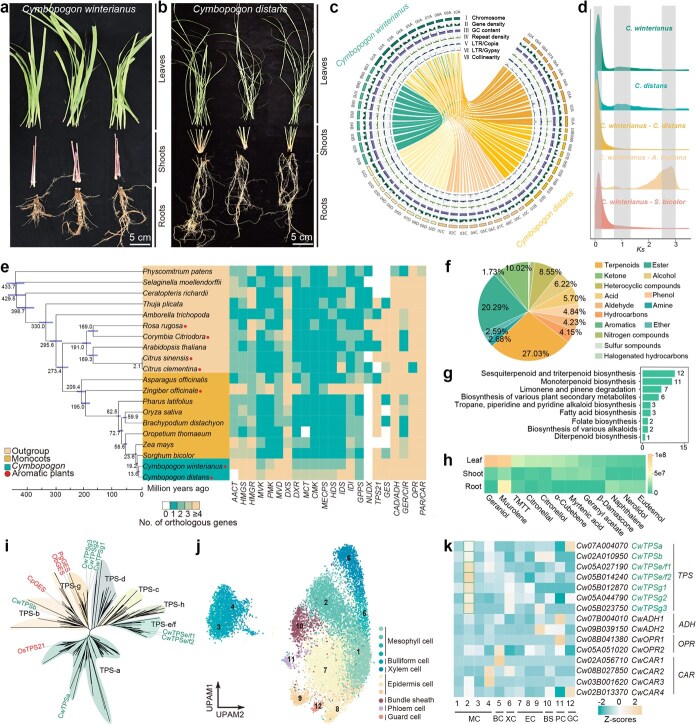 Figure 1
- —High-performance Computing Public Platform (Shenzhen Campus) of Sun Yat-sen University
- —Fundamental Research Funds for the Central Universities, Sun Yat-sen University
- —National Natural Science Foundation of China10.13039/501100001809
Peer Reviews
No public reviews on file for this paper yet. If you reviewed it on a platform where reviews are public (OpenReview, ICLR, NeurIPS, ICML), you can paste yours below so the community can read it here.
Videos
No videos yet. Explain this paper in a talk, walkthrough, or lecture? Add one.
Taxonomy
TopicsIdentification and Quantification in Food · Microbial Metabolism and Applications · Genomics and Phylogenetic Studies
Dear Editor,
Many plants employ citronellol for pollination and interorganism communication, while some leaves utilize citronellal for biotic defense [1, 2]. The defensive metabolites produced and stored constitutively in plant tissues are typically referred as phytoanticipins. This study focuses on natural citronelloid-related compounds (citronelloid refers to related oxygenated, acyclic monoterpenes like citronellal, citronellol, and geraniol) in the Poaceae family, specifically the Cymbopogon genus. C. winterianus is characterized by an abundant of volatile linear monoterpene alcohols and aldehydes. These compounds are biologically and economically significant, and have been utilized in cancer treatments to reduce cancer progression [3]. However, the detailed description of the monoterpenes biosynthesis mechanisms in Cymbopogon are unclear, and lack of genomic information hindered evolutionary studies and genome-based researches in citronelloid biosynthesis pathways.
C. winterianus is characterized by abundant citronellal and citronellol, while C. distans lack these compounds. The genomic information of the Cymbopogon genus offers valuable genetic resources for breeding and essential oil production. Hence, C. winterianus (Fig. 1a) and C. distans (Fig. 1b) were used to assemble from the Cymbopogon genus that have distinct ploidy levels. In total, we presented reference genomes for C. winterianus (diploid cultivar, 1.49 Gb) and C. distans (tetraploid wild species, 2.58 Gb) using PacBio sequencing in HiFi and Hi-C data, and 107 480/185756 predicted coding genes were identified, respectively. An overview of the genes is presented in Fig. 1c, such as the density distribution of genes, GC content and repeat sequences. We employed BUSCO analysis to assess the integrity of the assembled genomes. The results identified that the completeness of genome assembly was 99.10% for C. winterianus and 99.10% for C. distans. Consequently, we successfully completed two sets of haplotype-resolved chromosome-level genome sequences of Cymbopogon. These achievements lay a solid foundation for subsequent analyses.
To assess evolutionary relationships between Cymbopogon and other species, we conducted an analysis on the Ks values of orthologous gene pairs. The analysis revealed peaks at Ks = 0.26 for C. winterianus–Sorghum bicolor and at Ks = 2.83 for C. winterianus–Arabidopsis thaliana, respectively. Through intragenomic comparison (dot-plot analyses) of C. winterianus, we characterized the structure of ancient duplications based on analysis of 3907 genes in the haplotype A subgenome of C. winterianus (Fig. S1). Comparative analysis of chromosomes revealed strong collinearity between S. bicolor, and the subgenomes of C. winterianus and C. distans, indicating that their structures were highly similar and well conserved (Fig. S2). These findings indicated that C. winterianus, C. distans, and S. bicolor likely shared a common origin from the same WGD events. Additionally, we observed peaks at Ks = 0.11 for C. winterianus–C. distans (Fig. 1d). This deviation might stem from specific variations in evolutionary rates. Therefore, we conducted divergence time estimation and phylogenetic analysis divergence time estimation with 19 other sequenced plant species based on their representative evolutionary positions, including eight monocot plants and five aromatic plants (Fig. 1e). Phylogenomic analysis revealed that two Cymbopogon species were clustered together, and diverged from their close outgroup (S. bicolor) approximately 19.2 million years ago (Fig. 1e).
Furthermore, we investigated the evolution of terpenoid biosynthesis pathway gene families in green plants. Among the 22 orthologous gene clusters examined, most appear to have originated or been lost only a few times across the monocot family and other species (Fig. 1e; Table S1). The number of copies of several genes that are involved in early terpenoid biosynthesis, such as HMGS, HMGR, and IDI, was expanded in the Poaceae. Notably, Nudix hydrolase (NUDX) orthologous genes were most frequently present among several early-evolving species outside the Poaceae family, suggesting that NUDX genes were lost during genome evolution in the Poaceae family. In some plants such as rose petals, geraniol can be produced through GPP-specific RhNUDX rather than the terpene synthase enzyme [4]. As anticipated, the copy numbers of most terpene synthases (TPSs) were increased in Cymbopogon and aromatic plants (Zingiber officinale and Corymbia citriodora) compared to all other species.
Therefore, we analyzed volatiles from leaves, shoots, and roots and identified 1158 compounds in C. winterianus using HS-SPME/GC-MS (Table S2). The primary volatile organic compounds (VOCs) were terpenoids, esters, and heterocyclic compounds (Fig. 1f). Terpenoids constituted the largest proportion (27.03%) when compared against KEGG database, with monoterpenoids, sesquiterpenoids, and triterpenoids being the most abundant among the detected terpenoids (Fig. 1g). The absolute contents of geraniol, muurolene, TMTT, citronellal, and citronellol were comparatively high, with VOCs in leaves showing higher concentrations than those in shoots and roots (Fig. 1h).
The TPSs function as key metabolic regulators in the biosynthesis of diverse plant terpenoids [4]. To investigate TPSs responsible for volatile monoterpenes in the Cymbopogon genome, we examined reported genes participating in the citronelloid biosynthesis pathways of other species [5] (Table S3). A total of 82 and 86 TPSs were expressed in different tissues of C. winterianus and C. distans, respectively (Table S4). Phylogenetic tree analysis of CwTPS genes in C. winterianus and C. distans belongs to the TPS-a, TPS-b and TPS-g, and TPS-e/f subfamilies, respectively (Figs 1i and S3). Additionally, the enzymatic modifications of geraniol across various plant species have been characterized. The cloning of dehydrogenases responsible for the geraniol–citral (a mixture of geranial and neral) conversion have been reported in alcohol dehydrogenase (ADH) [1]. Citral is capable of being further reduced to citronellal by reductases, which have been identified as geranial reductase, 12-oxophytodienoate reductase (OPR), and citronellal reductase (CAR) [5]. In this study, such citronelloid-biogenesis-related genes were identified and analyzed in C. winterianus and C. distans (Figs S3–S7; Table S4). Understanding the relationship between chemical diversity and genetic information is essential for elucidating biosynthetic pathways. Subsequently, we carried out an association analysis between the metabolome and transcriptome of C. winterianus to identify candidate genes participating in the citronelloid biosynthesis pathway. We identified 19 differentially expressed genes (DEGs) that showed strong positive correlation with citronelloid content, respectively (R > 0.99), including seven CwTPS, five CwADH, two CwOPR, and five CwCAR genes were identified (Table S5). The expression heatmap demonstrated that these genes were expressed at higher level in C. winterianus leaves compared to C. distans leaves among the same clades (Figs S3–S7). The results of quantitative reverse transcription PCR (RT-qPCR) were further confirmed and identified that these genes showed higher expression in leaves than that in shoots and roots of C. winterianus (Fig. S8). In conclusion, we characterized the candidate genes involved in citronelloid biosynthesis in C. winterianus.
Lastly, we conducted single-cell RNA sequencing of nuclei from C. winterianus leaves using two biological replicates, generating 135 Gb data. We integrated the datasets using UMAP, resulting in 12 transcriptionally distinct cell clusters (Fig. 1j; Tables S6 and S7). The marker genes from Arabidopsis, maize, tomato, and rice were used to determine the cellular identities of C. winterianus clusters via orthologous genes (Table S8). To detect DEGs among distinct cell clusters will contribute to explaining and understanding specialized metabolism in C. winterianus leaves. Nineteen candidate genes were identified above through integrated transcriptome and metabolome data sets. Notably, four candidate genes showed no expression in any single cells, highlighting the importance of conducting transcriptomic analysis at both bulk tissue and single-cell levels. It suggested that rare or low-abundance transcripts in scRNA-seq may be missed due to technical limitations in sequencing depth as well as differences in gene alignment and quantification methods. Our scRNA-seq data indicated distinct expression patterns of genes for citronelloid biosynthesis (Fig. 1k; Table S9), with most candidate CwTPS genes highly expressed in mesophyll cells (cluster 2), suggesting that mesophyll cells might be a crucial cell type for citronelloid biosynthesis. Furthermore, dehydrogenase and reductase enzymes (ADH, OPR, and CAR) showed distinct expression patterns among cell types, potentially playing an important role in ensuring citronelloid diversity in C. winterianus. These results imply that expression of genes related to citronelloid biosynthesis occurs in distinct cell types, potentially contributing to pathway compartmentation. To elucidate the molecular mechanisms underlying the contribution of candidate genes to citronelloid biosynthesis, in vitro enzyme activity assays are warranted. First, we will overexpress the candidate genes in the heterologous expression system. Subsequently, absolute quantification methods such as isotope-labeled standards will be performed to characterize the functions of candidate genes involved in citronelloid biosynthesis.
In summary, this study unveils the first high-quality genome assemblies in Cymbopogon. The research identifies candidate genes involved in citronelloid biosynthesis, drawing from genomic, transcriptomic, and metabolic resources. Our integrative analysis of transcriptomics and metabolomics data from C. winterianus led to the identification of candidate homolog genes (CwTPS, CwADH, and CwCAR) potentially involved in citronelloid biosynthesis. Additionally, single-cell RNA sequencing revealed distinct cellular locations of these candidate genes. This study not only contributes to understanding evolution of citronelloid biosynthetic pathways within Poaceae family, but also provides abundant cellular and genetic resources for further molecular biology research on C. winterianus and other plant species.
Supplementary Material
Web_Material_uhaf287
The reference list from the paper itself. Each links out to its DOI / PubMed record.
- 1Xu H, Bohman B, Wong DCJ. et al. Complex sexual deception in an orchid is achieved by co-opting two independent biosynthetic pathways for pollinator attraction. Curr Biol. 2017;27:1867–1877.e 528625782 10.1016/j.cub.2017.05.065 · doi ↗ · pubmed ↗
- 2Ou Yang Q, Liu Y, Oketch OR. et al. Citronellal exerts its antifungal activity by targeting ergosterol biosynthesis in Penicillium digitatum. J Fungi. 2021;7:43210.3390/jof 7060432 PMC 822968434072578 · doi ↗ · pubmed ↗
- 3Fatima K, Luqman S. Suppression of molecular targets and sntiproliferative effect of citronellal on triple-negative breast cancer cells. Curr Mol Pharmacol. 2021;14:1156–6633687907 10.2174/1874467214666210309120626 · doi ↗ · pubmed ↗
- 4Shang J, Feng D, Liu H. et al. Evolution of the biosynthetic pathways of terpene scent compounds in roses. Curr Biol. 2024;34:3550–3563.e 839043188 10.1016/j.cub.2024.06.075 · doi ↗ · pubmed ↗
- 5Li H, Li Y, Yan H. et al. The complexity of volatile terpene biosynthesis in roses: Particular insights into β-citronellol production. Plant Physiol. 2024;196:1908–2239186538 10.1093/plphys/kiae 444 · doi ↗ · pubmed ↗