A new mouse model of typhoid fever using Salmonella enterica serovar Paratyphi C as a surrogate pathogen
Hoan T. Pham, Masatomo Morita, Kohei Yamazaki, Toshihiro Endo, Satoshi Takayama, Azusa Hiyoshi, Takeshi Haneda, Renée M. Tsolis, Andreas J. Bäumler, Toshio Kodama, Hirotaka Hiyoshi

TL;DR
Researchers developed a new mouse model using Salmonella Paratyphi C to study typhoid fever, which better mimics the disease's progression and offers a platform for vaccine development.
Contribution
The study introduces S. Paratyphi C as a more suitable mouse model for typhoid fever due to its expression of the Vi antigen and prolonged disease progression.
Findings
S. Paratyphi C colonized systemic organs for up to 28 days, unlike S. Typhimurium, which caused rapid lethality.
The Vi antigen was crucial early in infection, while Salmonella pathogenicity island 2 became important later.
Vaccination with Vi antigen suppressed S. Paratyphi C dissemination and the model showed fever after a 3-day incubation period.
Abstract
Salmonella enterica serovar (S.) Typhi, the etiological agent of typhoid fever, is strictly human adapted, which presents a significant challenge for studying its pathogenesis in animal models. A common strategy to overcome this limitation is to infect mice with S. Typhimurium as a surrogate pathogen. Since S. Typhimurium is a non-typhoidal serovar that does not encode the virulence-associated capsular polysaccharide (Vi antigen) of S. Typhi, we explored whether the mouse virulent typhoidal Salmonella serovar Paratyphi C, which expresses the Vi antigen, would be better suited as a surrogate pathogen to study typhoid fever pathogenesis in the mouse. In contrast to the nontyphoidal serovar Typhimurium, which produced lethal morbidity in C57BL/6 mice within a few days after infection, S. Paratyphi C demonstrated prolonged colonization of systemic organs for up to 28 days after infection.…
Genes, proteins, chemicals, diseases, species, mutations and cell lines named across the full text — each resolved to its canonical identifier and authoritative record.
Click any figure to enlarge with its caption.
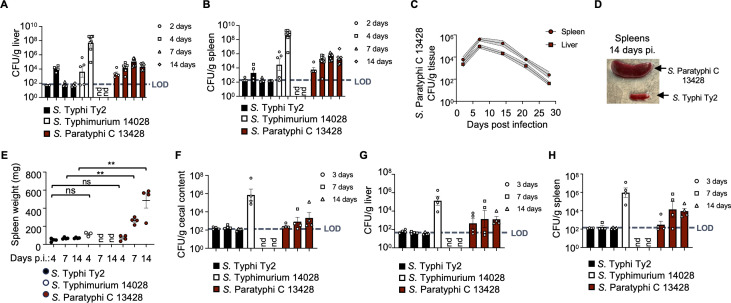 Figure 1
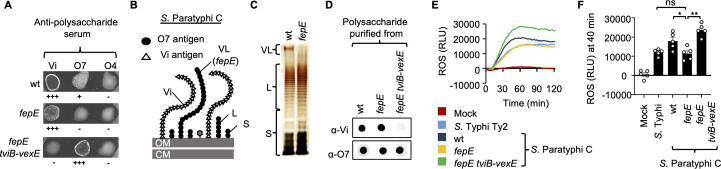 Figure 2
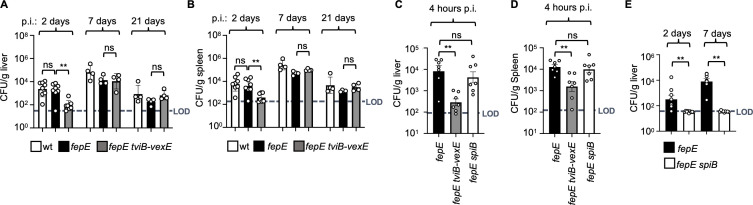 Figure 3
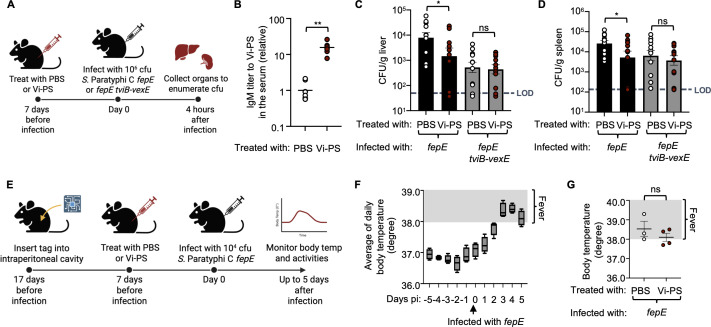 Figure 4
Peer Reviews
No public reviews on file for this paper yet. If you reviewed it on a platform where reviews are public (OpenReview, ICLR, NeurIPS, ICML), you can paste yours below so the community can read it here.
Videos
No videos yet. Explain this paper in a talk, walkthrough, or lecture? Add one.
Taxonomy
TopicsSalmonella and Campylobacter epidemiology · Aquaculture disease management and microbiota · Cancer Research and Treatments