Candida albicans-induced ubiquitination of EGFR reveals novel host–fungal interaction pathways
Léa Lortal, James S. Griffiths, Emily L. Priest, Alexander Kempf, Olivia K. A. Paulin, Nicole O. Ponde, Antzela Tsavou, Don N. Wickramasinghe, Andrew Donkin, Claire M. Lyon, Olivia W. Hepworth, Jonathan P. Richardson, Julian R. Naglik

TL;DR
Candida albicans manipulates the host's EGFR receptor through ubiquitination, a process that affects receptor degradation and supports fungal infection.
Contribution
The study reveals a novel mechanism by which C. albicans modulates host ubiquitination pathways during infection.
Findings
C. albicans induces EGFR ubiquitination, leading to altered trafficking and lysosomal degradation.
The process depends on Als3p and Ece1p, key fungal virulence factors.
Conditional EGFR knockout in mice reduces disease severity, indicating EGFR supports infection.
Abstract
Candida albicans causes severe mucosal and systemic infections, with hypha formation playing a key role in its virulence. Hyphal invasion via endocytosis is mediated predominantly through interactions between Als3p and the epidermal growth factor receptor (EGFR). Subsequent EGFR activation by candidalysin, a hyphal-secreted cytolytic peptide toxin encoded by the ECE1 gene, induces receptor signaling and immune responses. While EGFR ubiquitination critically regulates receptor trafficking and signaling, its involvement during C. albicans infection has remained unexplored. Here, we demonstrate that C. albicans induces EGFR ubiquitination, leading to altered trafficking and lysosomal degradation in an ECE1- and ALS3-dependent manner. This correlates with changes in EGFR ligand expression, adaptor recruitment, and protein ubiquitination in oral epithelial cells. In a mouse model of…
Genes, proteins, chemicals, diseases, species, mutations and cell lines named across the full text — each resolved to its canonical identifier and authoritative record.
Click any figure to enlarge with its caption.
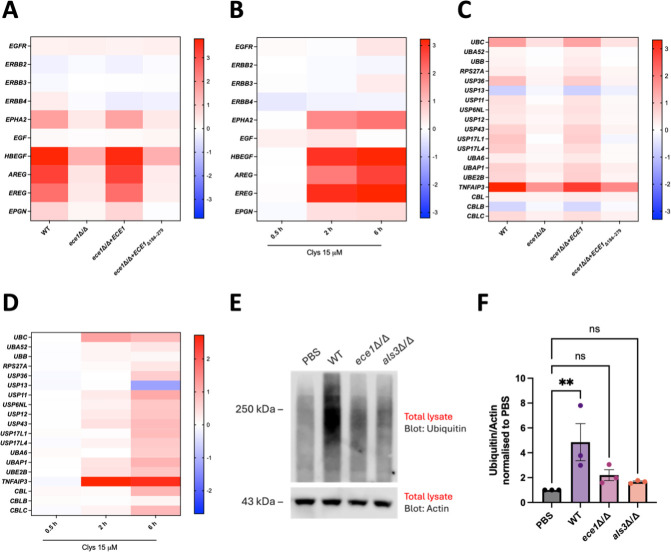 Figure 1
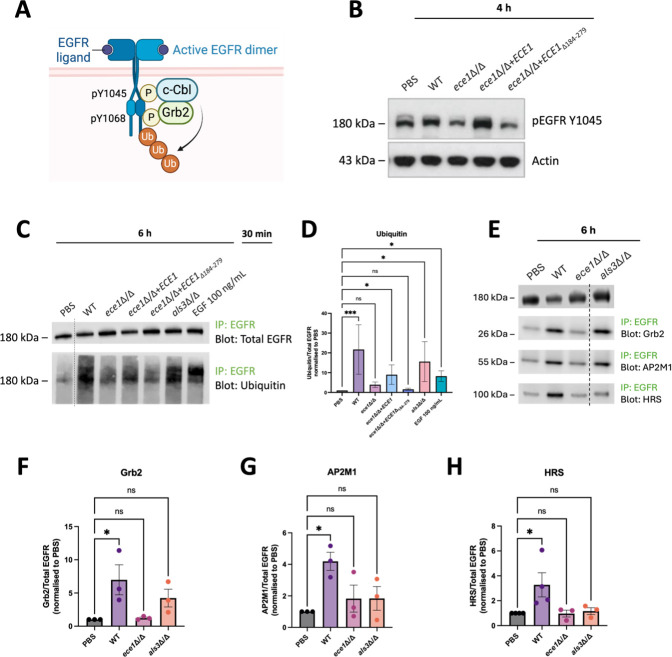 Figure 2
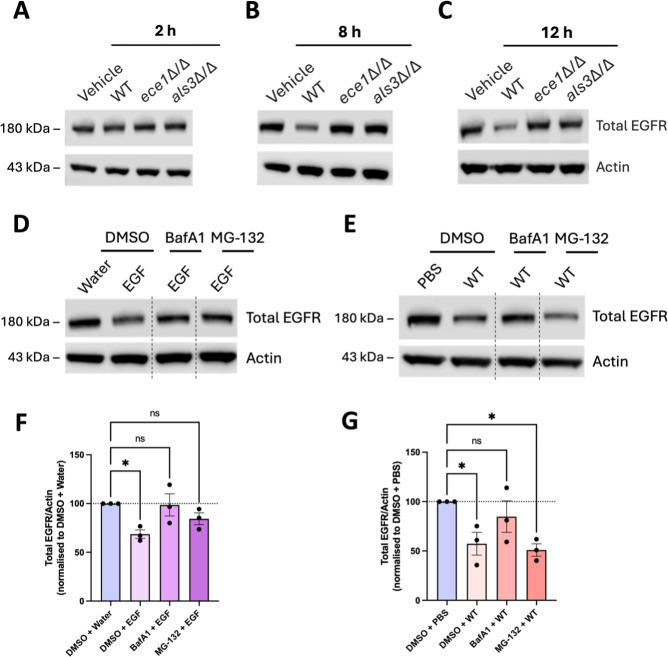 Figure 3
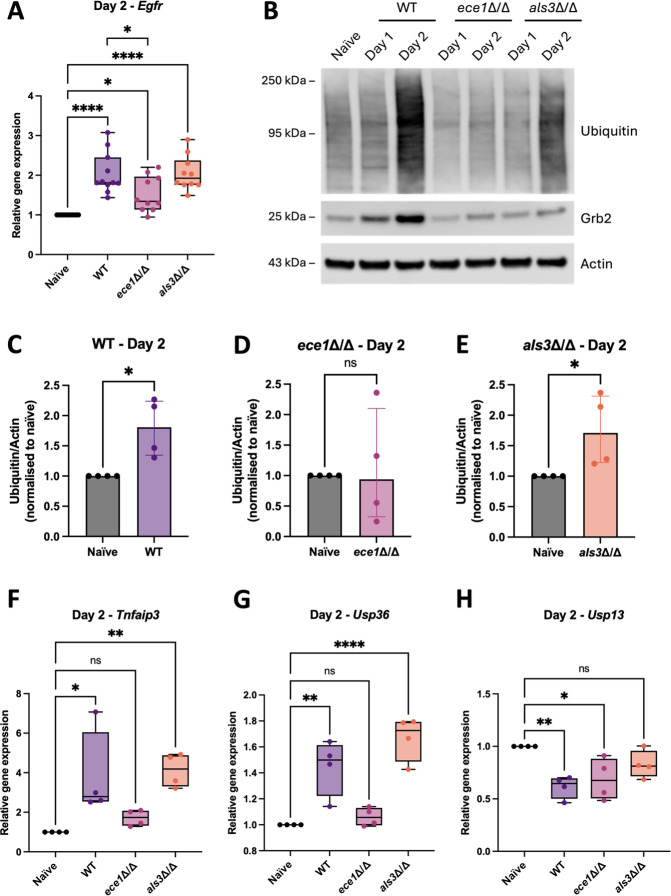 Figure 4
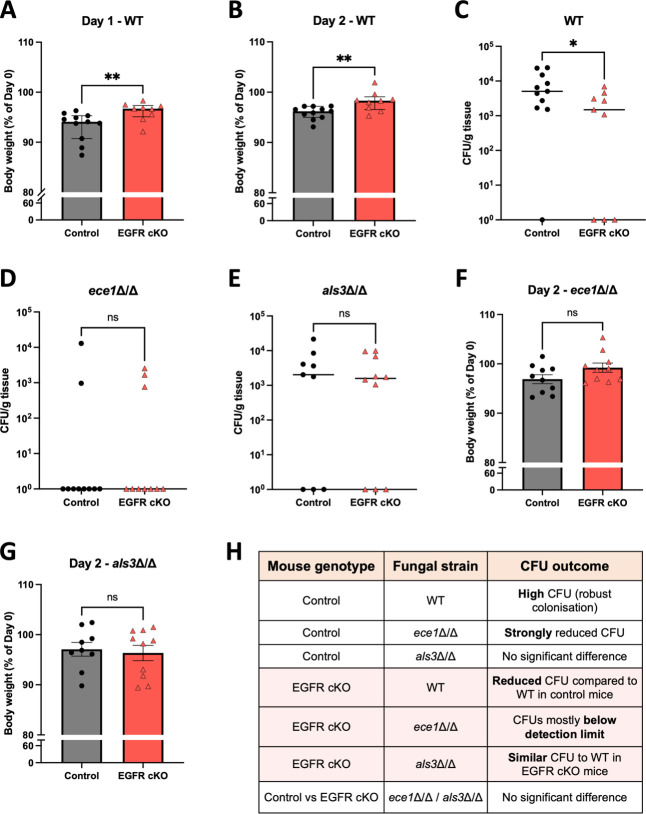 Figure 5
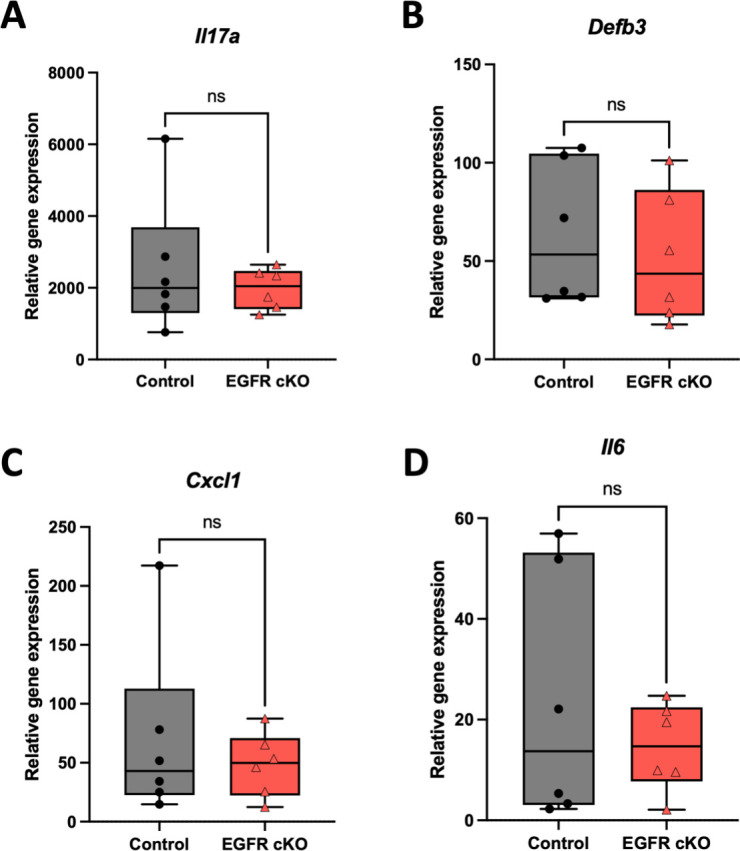 Figure 6
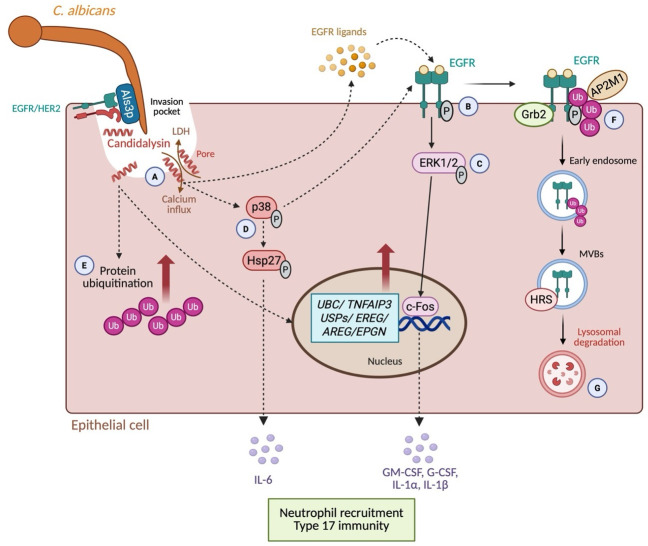 Figure 7
Peer Reviews
No public reviews on file for this paper yet. If you reviewed it on a platform where reviews are public (OpenReview, ICLR, NeurIPS, ICML), you can paste yours below so the community can read it here.
Videos
No videos yet. Explain this paper in a talk, walkthrough, or lecture? Add one.
Taxonomy
TopicsAntifungal resistance and susceptibility · Fungal Infections and Studies · Pneumonia and Respiratory Infections