Pseudomonas aeruginosa DEV phage exploits the essential LptD outer membrane protein as receptor for adsorption
Jimena Nieto Noblecia, Nathan F. Bellis, Cristian A. Antichi, Shirin Aminian, Francesca Forti, Federica A. Falchi, Davide Sposato, Francesco Imperi, Gino Cingolani, Federica Briani

TL;DR
This study reveals that the Pseudomonas aeruginosa phage DEV uses the essential outer membrane protein LptD as a secondary receptor for infection, offering new insights for phage therapy.
Contribution
The first evidence that a Pseudomonas aeruginosa phage uses an essential outer membrane protein, LptD, as a receptor.
Findings
DEV phage uses LptD as a secondary receptor when the primary O-antigen receptor is absent.
The DEV receptor-binding fiber is composed of gp54, gp55, and gp56 proteins.
The gp56-gp55-gp54 module is likely horizontally transferred among phages and involved in tail sealing.
Abstract
Pseudomonas aeruginosa bacteriophage (phage) DEV is a podovirus of the Schitoviridae family, related to the prototypical Escherichia coli phage N4. N4 uses the novel glycan receptor (NGR) surface glycan, presumably bound by the gp66 appendages, and the NGR transporter NfrA, recognized by the phage gp65 tail sheath, as receptors for adsorption. In contrast, DEV relies on the O-antigen moiety of lipopolysaccharide (LPS) as the primary receptor recognized by the gp53 long tail fibers. However, DEV can infect deep-rough strains that lack the O-antigen moiety by using another, still unknown receptor. Here, we provide evidence that the essential LPS transporter LptD serves as the DEV secondary receptor and that DEV gp54 is its cognate receptor-binding protein. gp54 is encoded within the essential gp56-gp55-gp54 operon, which also includes gp56, the short tail fiber gene. Using cryogenic…
Genes, proteins, chemicals, diseases, species, mutations and cell lines named across the full text — each resolved to its canonical identifier and authoritative record.
Click any figure to enlarge with its caption.
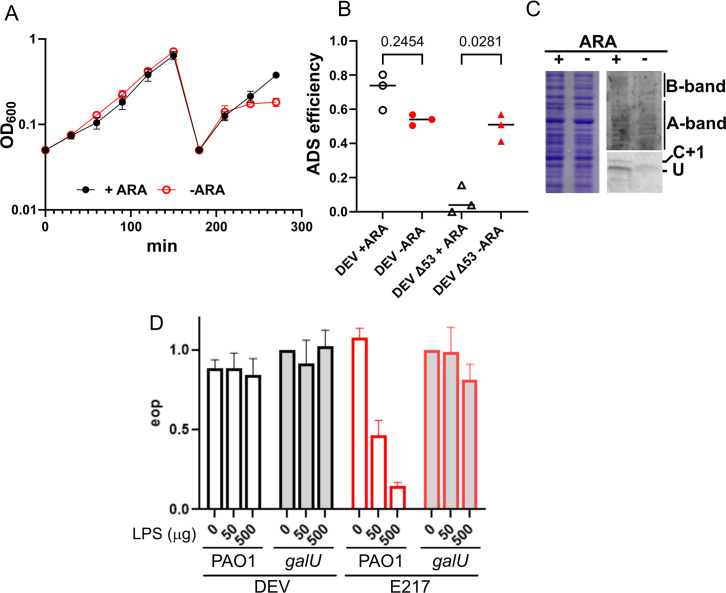 Figure 1
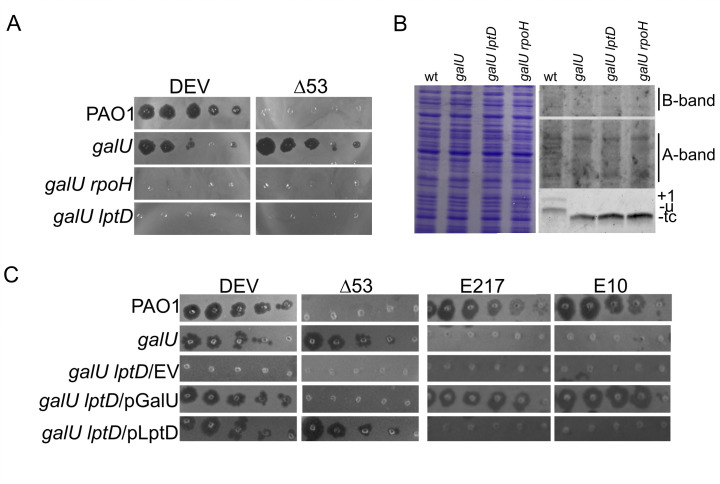 Figure 2
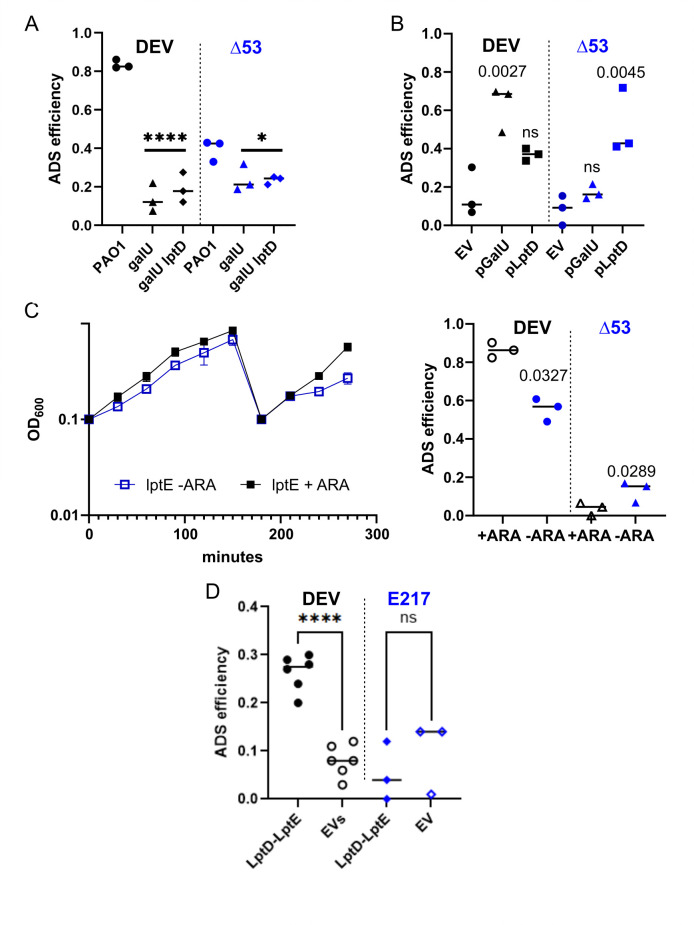 Figure 3
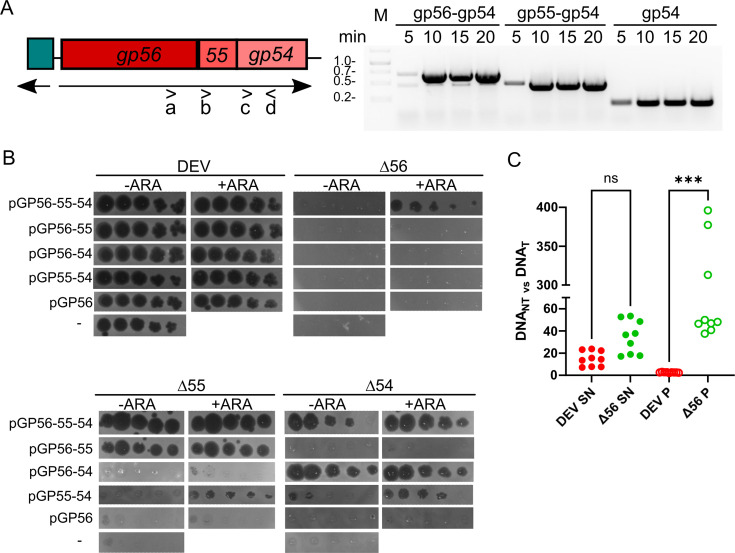 Figure 4
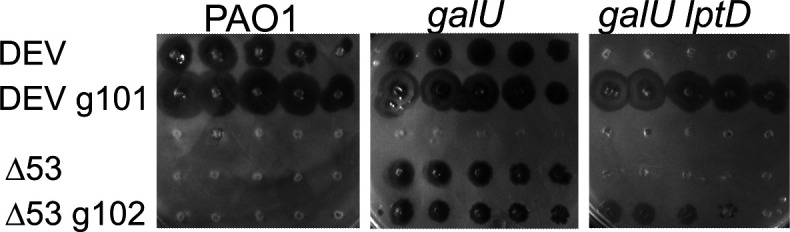 Figure 5
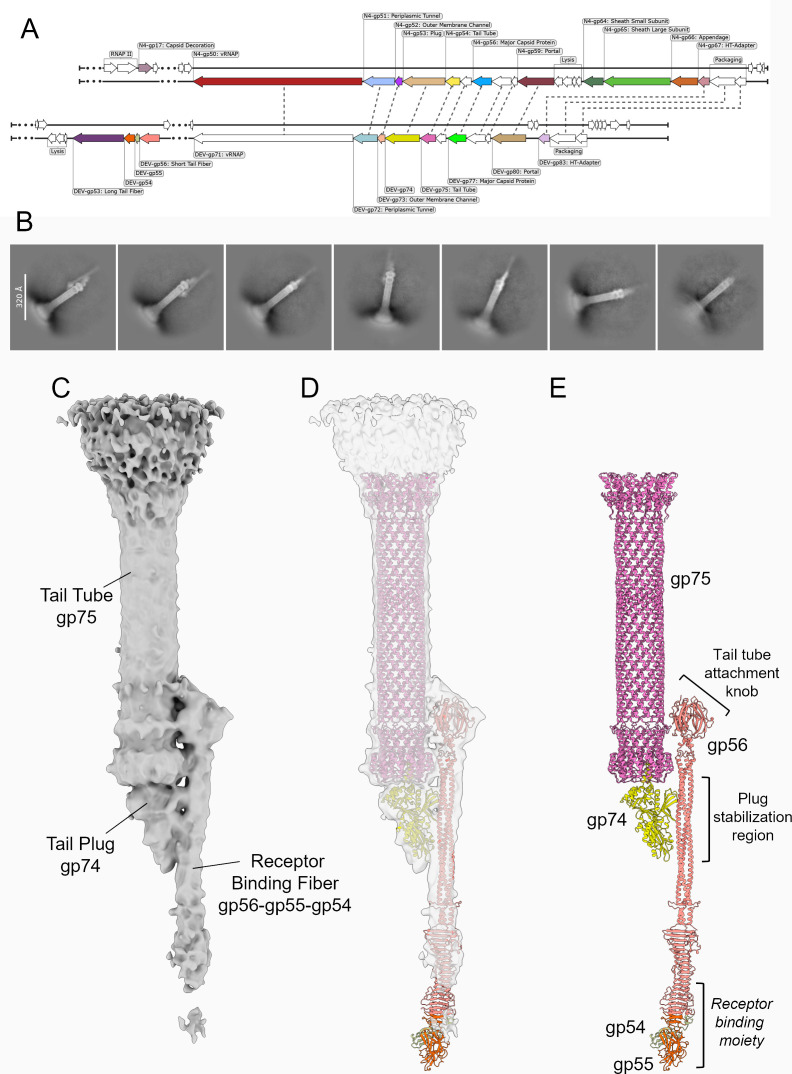 Figure 6
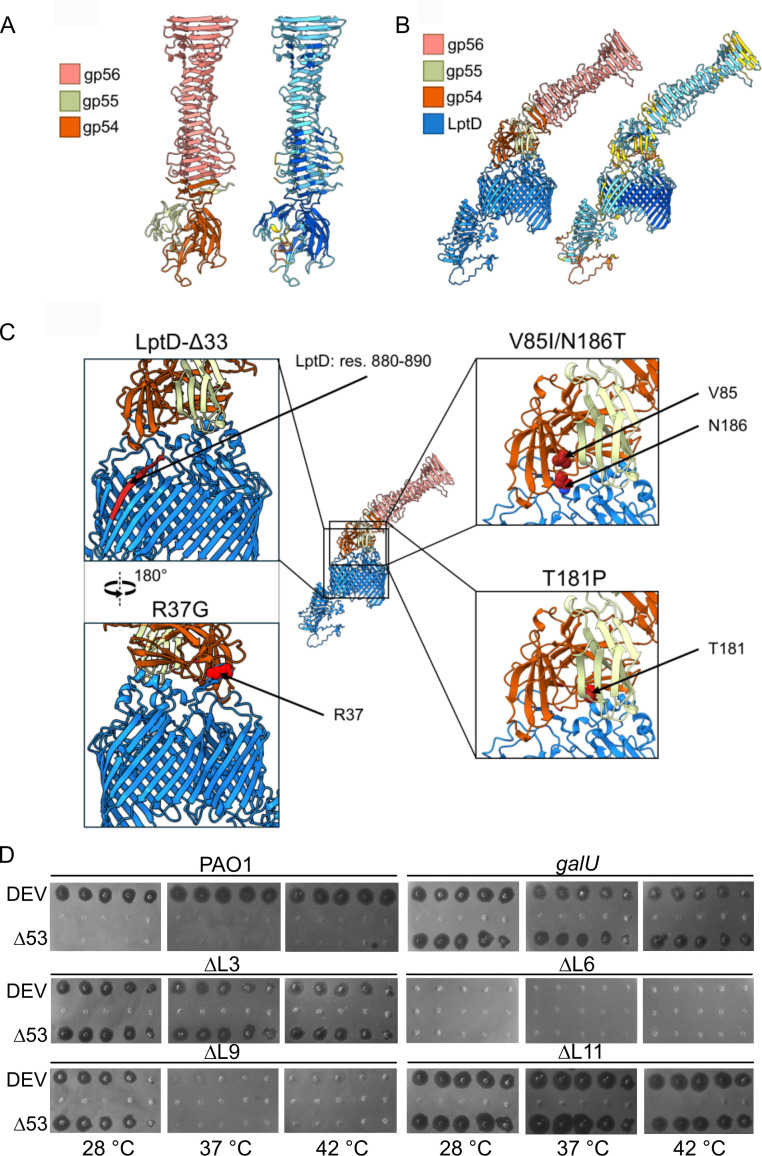 Figure 7
Peer Reviews
No public reviews on file for this paper yet. If you reviewed it on a platform where reviews are public (OpenReview, ICLR, NeurIPS, ICML), you can paste yours below so the community can read it here.
Videos
No videos yet. Explain this paper in a talk, walkthrough, or lecture? Add one.
Taxonomy
TopicsBacteriophages and microbial interactions · Escherichia coli research studies · Immune Response and Inflammation