Nucleoside binding by a surface lipoprotein governs conjugative ICE acquisition in mycoplasmas
M'hamed Derriche, Laurent Xavier Nouvel, Calvin Fauvet, Núria Mach, Elisa Simon, Gwendoline Pot, Hortensia Robert, Alexandre Stella, Christian de la Fe, Renaud Maillard, Sergi Torres-Puig, Yonathan Arfi, Christine Citti, Eric Baranowski

TL;DR
A surface protein in mycoplasma bacteria helps them acquire new genes through conjugation by recognizing nucleosides, changing how we understand bacterial gene transfer.
Contribution
The study identifies a recipient-encoded surface lipoprotein, P48, as a critical factor for ICE acquisition in mycoplasmas.
Findings
P48 is a nucleoside-binding lipoprotein essential for ICE uptake in Mycoplasma species.
Nucleoside recognition by P48 is critical for conjugation, but nucleoside transport is not required.
Loss of P48 activates vestigial ICE genes and does not affect ICE transfer from donor cells.
Abstract
Integrative and conjugative elements (ICEs) are major mediators of horizontal gene transfer in bacteria. However, the role of recipient cells in their acquisition has received little attention. Using the ruminant pathogens Mycoplasma agalactiae and Mycoplasma bovis as minimal models, we combined genome-wide transposon mutagenesis with high-throughput mating assays to identify recipient factors required for ICE acquisition. The surface lipoprotein P48 emerged as the primary determinant of ICE uptake in both species. Structural and functional analyses revealed that P48 is the substrate-binding component of an ABC transporter with nucleoside-binding capacity. A single-point mutation that abolished nucleoside binding drastically reduced ICE acquisition, demonstrating that P48-mediated nucleoside recognition is essential for conjugative transfer. However, ICE uptake did not require…
Genes, proteins, chemicals, diseases, species, mutations and cell lines named across the full text — each resolved to its canonical identifier and authoritative record.
Click any figure to enlarge with its caption.
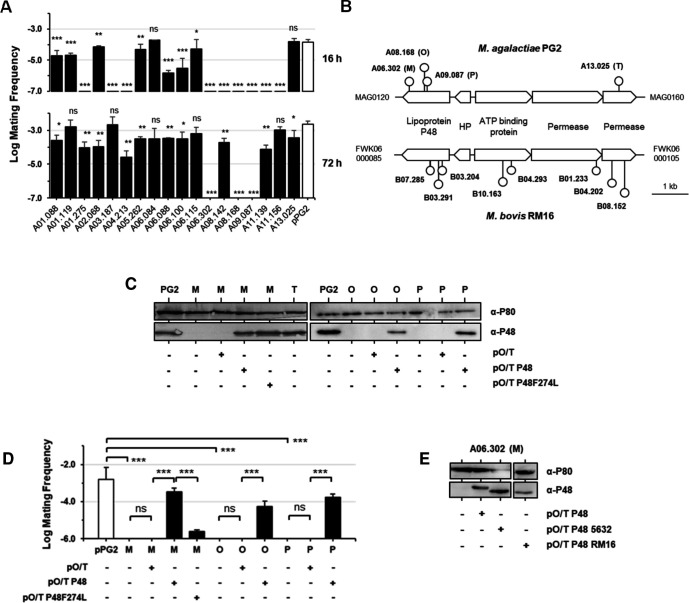 Figure 1
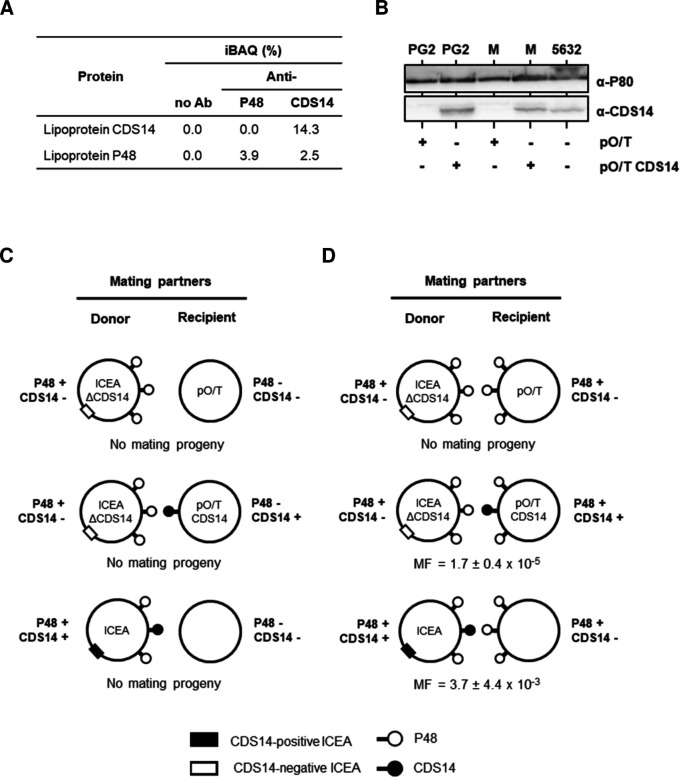 Figure 2
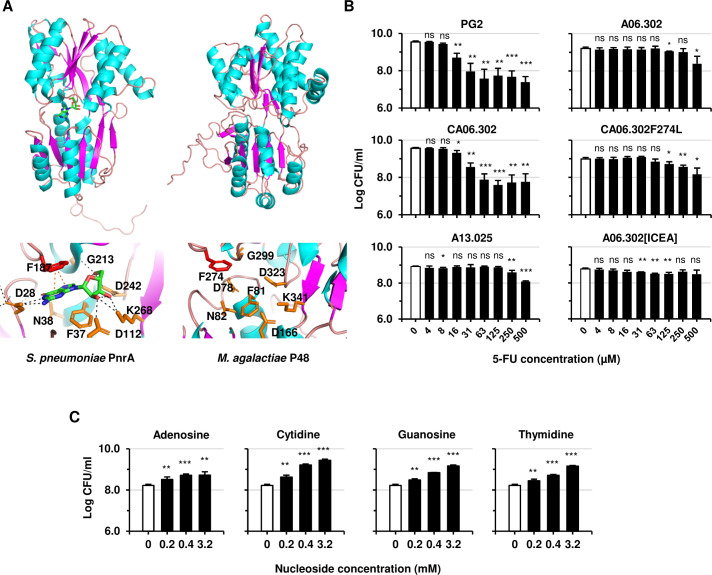 Figure 3
Peer Reviews
No public reviews on file for this paper yet. If you reviewed it on a platform where reviews are public (OpenReview, ICLR, NeurIPS, ICML), you can paste yours below so the community can read it here.
Videos
No videos yet. Explain this paper in a talk, walkthrough, or lecture? Add one.
Taxonomy
TopicsMicrobial infections and disease research · Bacterial Genetics and Biotechnology · Bacteriophages and microbial interactions