Case-control and genomic epidemiology characterization of SARS-CoV-2 breakthrough infections during the Delta-to-Omicron transition
Erin Yuan, Chelsea L. Hansen, Sana Tamim, Samia Kanwar, David J. Spiro, Refugio Gonzalez-Losa, Laura Conde-Ferraez, Pilar Granja-Pérez, Salha Villanueva-Jorge, Irma López-Martínez, Gisela Barrea-Badillo, André Corvelo, Samantha Fennessey, Michael C. Zody

TL;DR
This study examines how SARS-CoV-2 breakthrough infections evolved in Yucatán, Mexico, during the Delta-to-Omicron transition, showing vaccines reduced severe outcomes and how relaxed travel rules increased Omicron spread.
Contribution
The study provides real-world evidence of vaccine efficacy and links relaxed public health measures to increased Omicron introductions using combined epidemiological and genomic data.
Findings
Vaccination reduced hospitalization and death risks in breakthrough infections compared to unvaccinated cases.
Omicron infections were less severe than Delta but more transmissible, with diverse global origins.
Relaxed travel restrictions correlated with increased Omicron introductions in Yucatán.
Abstract
Severe acute respiratory syndrome coronavirus 2 (SARS-CoV-2) vaccines reduced severe coronavirus disease 2019, but variants like Delta and Omicron caused widespread breakthrough infections (BIs). Mexico, offering diverse vaccines, and its Yucatán region, a major travel hub, provide a unique setting to study BIs. We characterized SARS-CoV-2 BIs in Yucatán during the Delta-to-Omicron transition (September 2021–January 2022), assessing disease severity, symptoms, and viral transmission dynamics using epidemiological and genomic data. A case-control study using health system data (n = 13,325) compared outcomes in BIs (n = 5,183) versus unvaccinated infections (UIs; n = 8,142) via logistic regression, also comparing Delta versus Omicron waves. Phylodynamic modeling of 205 BI sequences, contextualized globally (n = 1,152 total), reconstructed the evolutionary history and transmission routes.…
Genes, proteins, chemicals, diseases, species, mutations and cell lines named across the full text — each resolved to its canonical identifier and authoritative record.
Click any figure to enlarge with its caption.
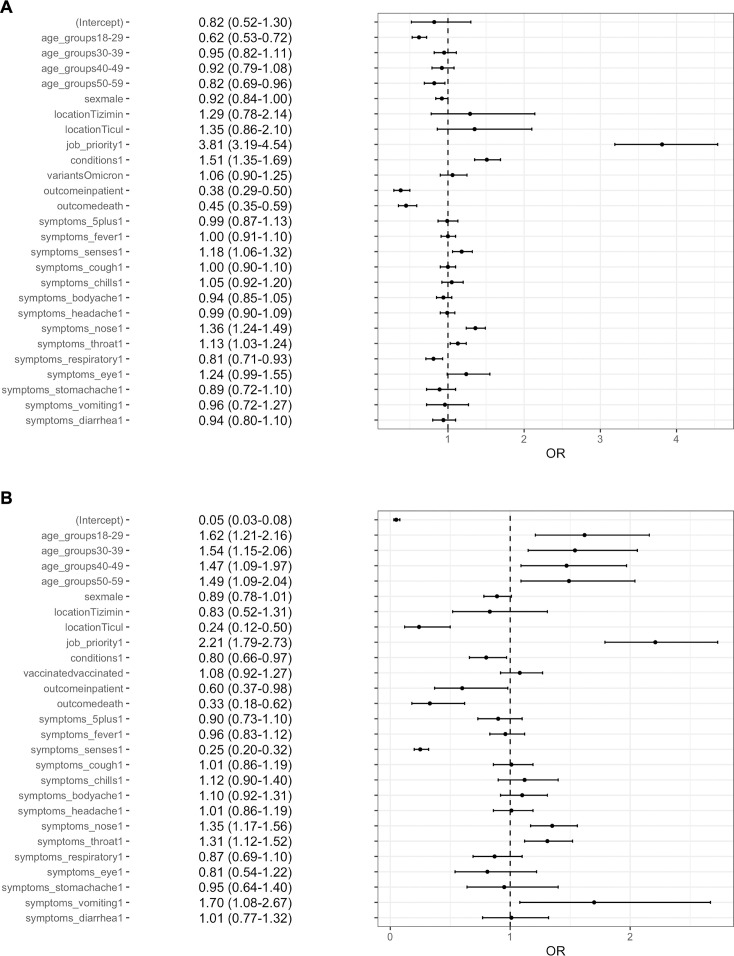 Figure 1
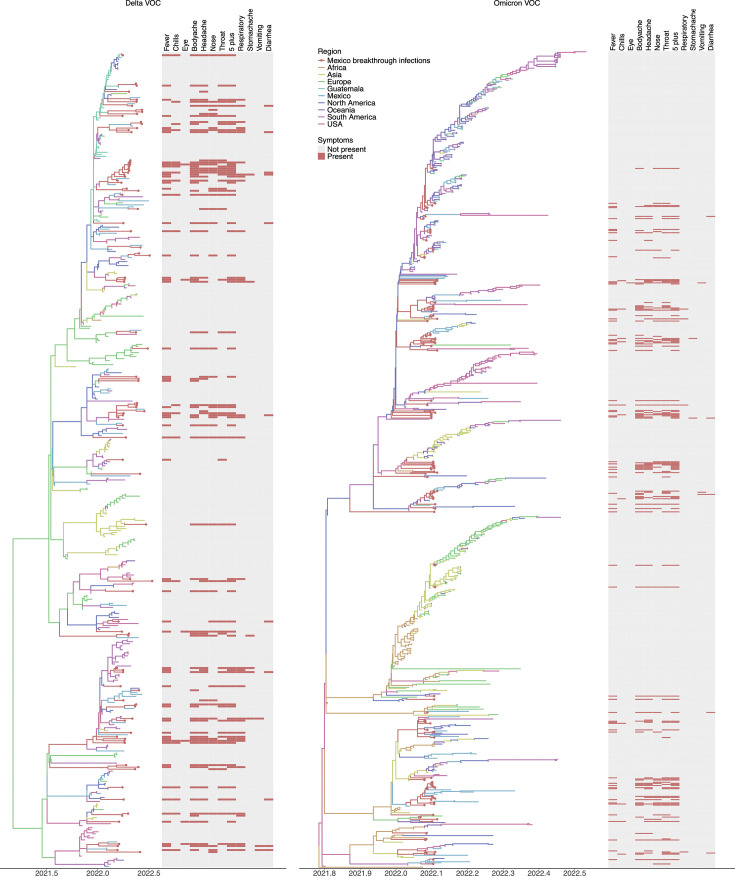 Figure 2
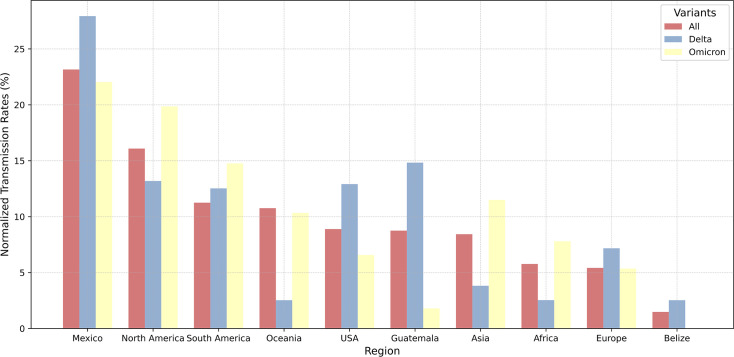 Figure 3
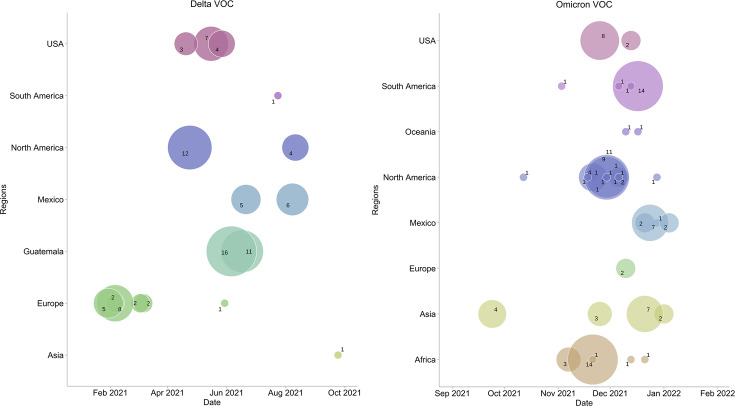 Figure 4
Peer Reviews
No public reviews on file for this paper yet. If you reviewed it on a platform where reviews are public (OpenReview, ICLR, NeurIPS, ICML), you can paste yours below so the community can read it here.
Videos
No videos yet. Explain this paper in a talk, walkthrough, or lecture? Add one.
Taxonomy
TopicsSARS-CoV-2 and COVID-19 Research · vaccines and immunoinformatics approaches · COVID-19 epidemiological studies