Emergence and epidemiology of dominant variants of human metapneumovirus in the United States between 2016 and 2021
Lora Lee Pless, Lambodar Damodaran, Ray Pomponio, Rose Patrick, Marissa Pacey Griffith, Sara Walters, Kady D. Waggle, Atalia Pleskovitch, Vatsala Rangachar Srinivasa, Cole A. Varela, Lee H. Harrison, John P. Barton, Louise H. Moncla, Marian G. Michaels, John V. Williams

TL;DR
This study tracks how human metapneumovirus (HMPV) variants evolved and spread in the US from 2016 to 2021, finding that specific genetic insertions in the virus's attachment protein are linked to dominant strains.
Contribution
The study is the first to report B2 insertion variants in HMPV and provides the largest genomic epidemiological analysis of HMPV in the US.
Findings
HMPV variants with insertions in the G gene's attachment protein became dominant in different seasons.
Insertions in the G gene are associated with distinct phylogenetic clades and may enhance viral fitness.
HMPV infection and disease severity are linked to age and comorbidities, but not to specific HMPV subgroups.
Abstract
Human metapneumovirus (HMPV) causes acute respiratory disease worldwide and is the second leading cause of lower respiratory infection and hospitalization in young children in the USA. There is no licensed vaccine or therapeutic. HMPV mutates rapidly; however, the specific genomic features that explain strain dominance remain undefined because there is limited routine genomic surveillance of HMPV. We analyzed prospectively collected nasal specimens and medical data from 8,000 pediatric acute respiratory infection cases and sequenced 219 HMPV whole genomes from Pittsburgh, PA, between 2016 and 2021. Only A2, B1, and B2 subgroups were detected. The dominant subgroup varied between seasons. Variants with an in-frame 111- or 180-nucleotide (nt) insertion that nearly duplicates the preceding flanking region in the 660-nt G gene (encodes the attachment protein) were the predominant A2 viruses…
Genes, proteins, chemicals, diseases, species, mutations and cell lines named across the full text — each resolved to its canonical identifier and authoritative record.
Click any figure to enlarge with its caption.
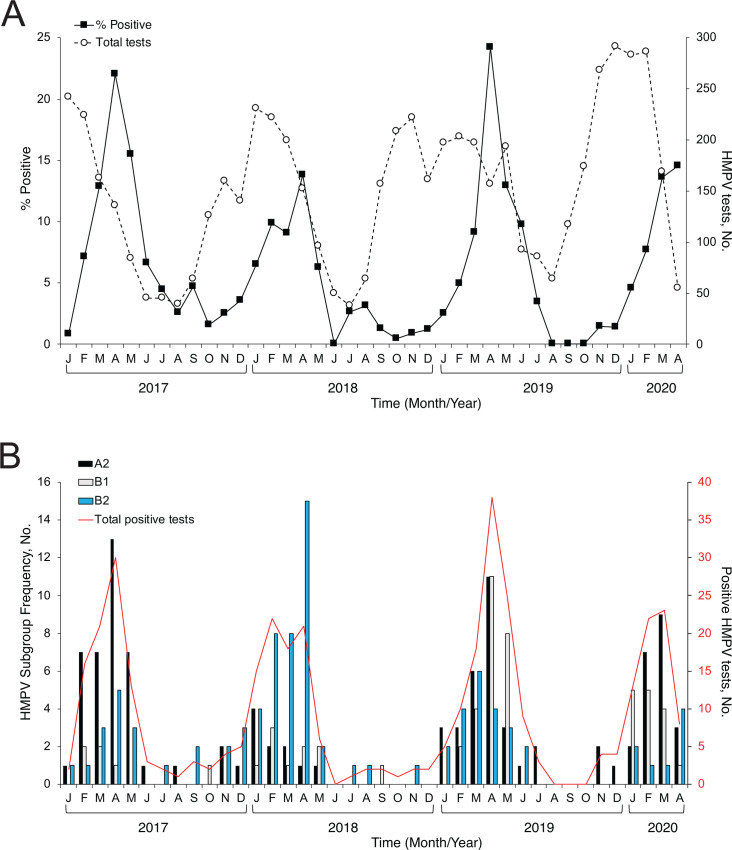 Figure 1
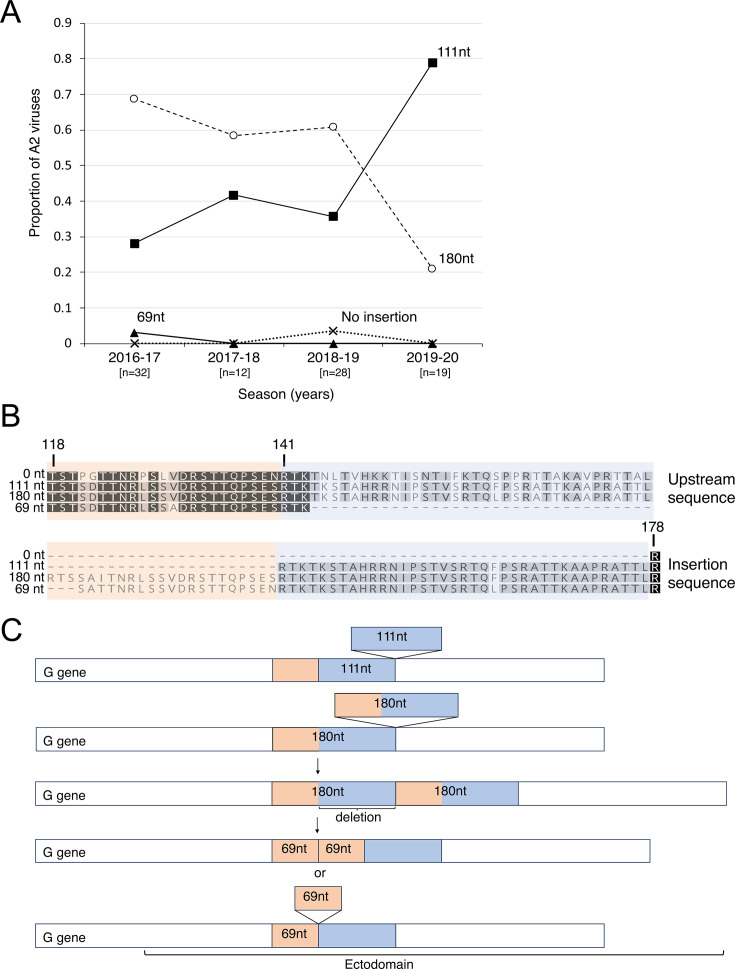 Figure 2
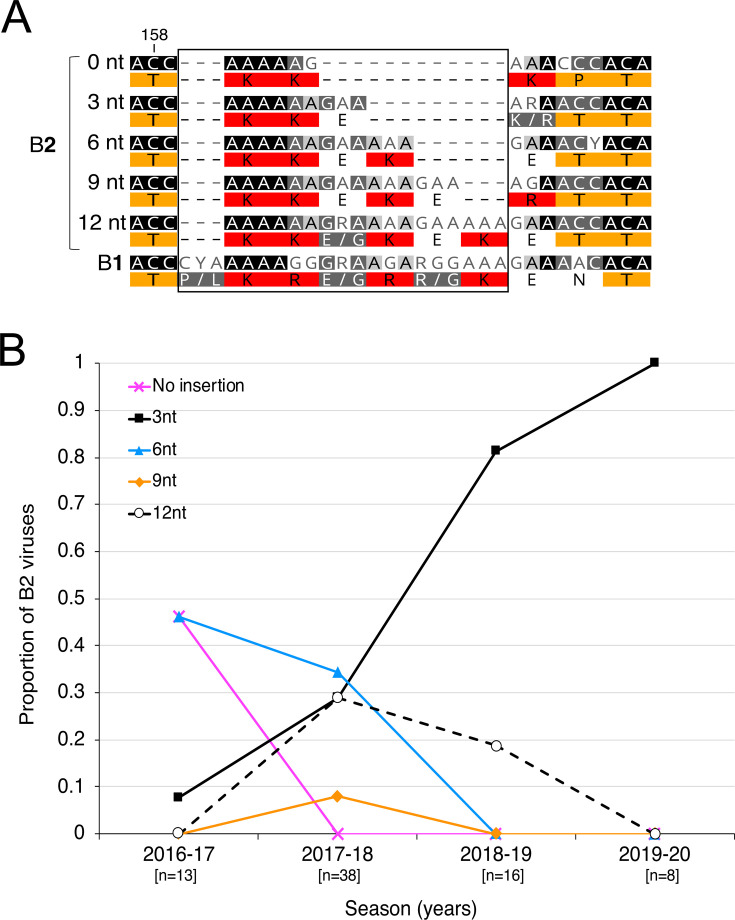 Figure 3
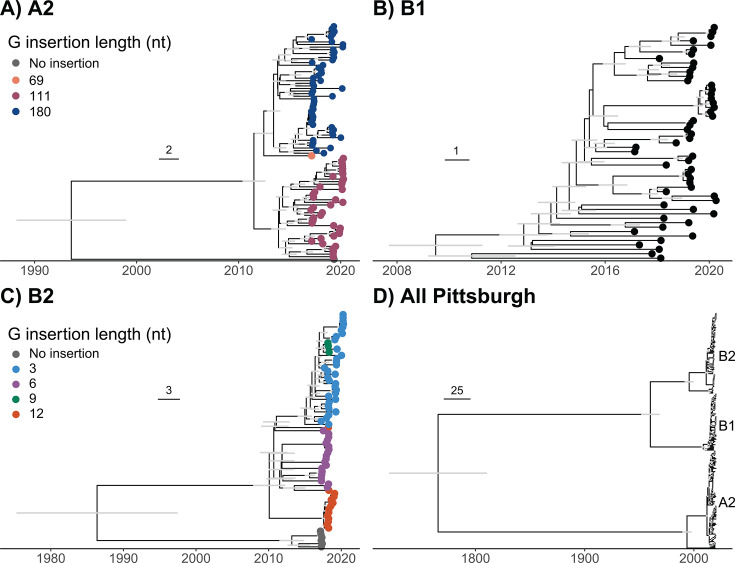 Figure 4
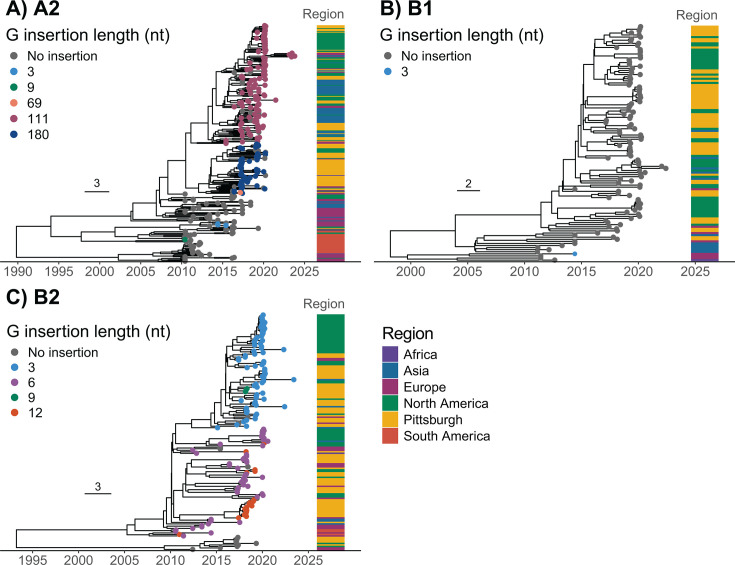 Figure 5
Peer Reviews
No public reviews on file for this paper yet. If you reviewed it on a platform where reviews are public (OpenReview, ICLR, NeurIPS, ICML), you can paste yours below so the community can read it here.
Videos
No videos yet. Explain this paper in a talk, walkthrough, or lecture? Add one.
Taxonomy
TopicsRespiratory viral infections research · Pneumonia and Respiratory Infections · Pediatric health and respiratory diseases