The unique role of nucS-mediated noncanonical mismatch repair in Mycobacterium tuberculosis resistance evolution
Isabel Martín-Blecua, Jorge Sastre-Domínguez, José Ramón Valverde, Pablo García-Bravo, Ángel Ruiz-Enamorado, Rafael Prados-Rosales, Lahari Das, William R. Jacobs, Álvaro San Millán, Jesús Blázquez, Sonia Gullón

TL;DR
This study shows that NucS, a DNA repair enzyme in Mycobacterium tuberculosis, has a limited role in preventing drug resistance mutations, suggesting other mechanisms are at play.
Contribution
The study reveals that NucS in M. tuberculosis does not significantly impact mutation rates or drug resistance evolution, challenging current assumptions about its role.
Findings
Deleting nucS in M. tuberculosis altered the mutational spectrum but had minimal impact on antibiotic resistance emergence.
The R144S polymorphism in NucS does not significantly affect mutation rates or resistance.
NucS is under strong purifying selection and R144S changes arose independently during M. tuberculosis evolution.
Abstract
DNA surveillance mechanisms are crucial for maintaining genome stability and minimizing mutation rates. Mismatch repair (MMR) corrects replication errors that escape DNA-polymerase proofreading. In most organisms, MMR is orchestrated by MutS and MutL proteins. However, certain Archaea and Actinobacteria, including the major human pathogen Mycobacterium tuberculosis, lack these components. Instead, they appear to rely on the nuclease EndoMS/NucS, a structurally distinct enzyme governing a non-canonical MMR pathway. Since M. tuberculosis acquires drug resistance exclusively through chromosomal mutations, understanding its mutation rate regulation is critical. Nevertheless, the role of NucS in drug resistance evolution remains largely unexplored. We investigated NucS function in M. tuberculosis and uncovered a unique resistance dynamic distinct from other Actinobacteria. Deleting nucS…
Genes, proteins, chemicals, diseases, species, mutations and cell lines named across the full text — each resolved to its canonical identifier and authoritative record.
Click any figure to enlarge with its caption.
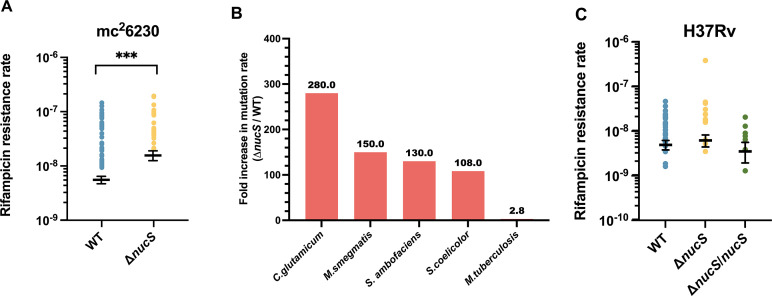 Figure 1
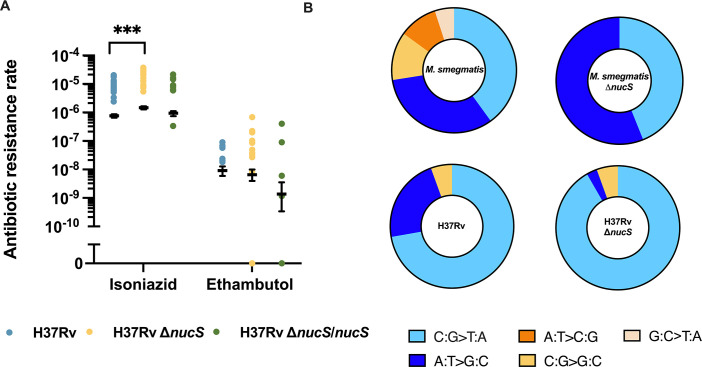 Figure 2
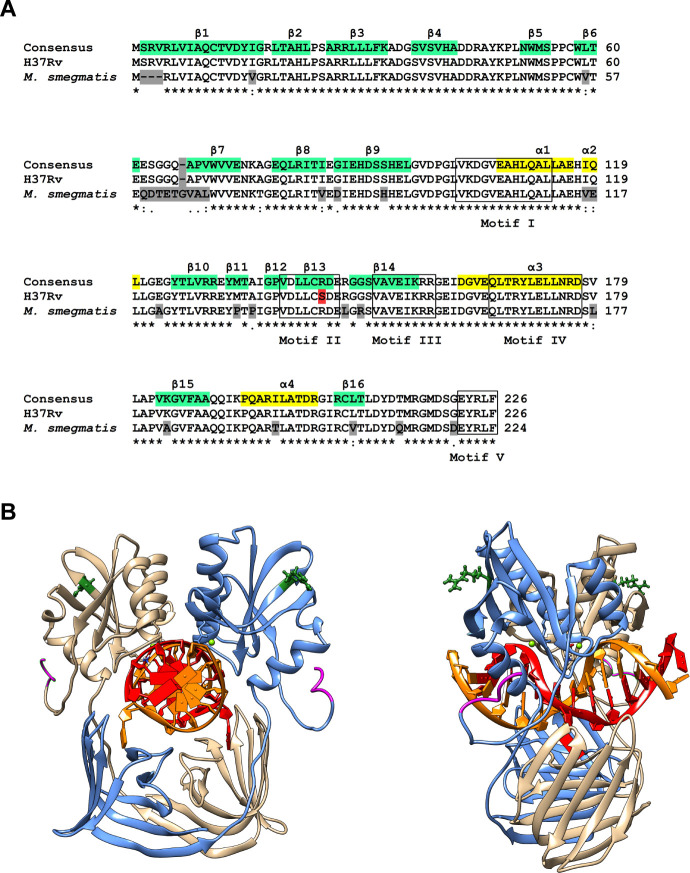 Figure 3
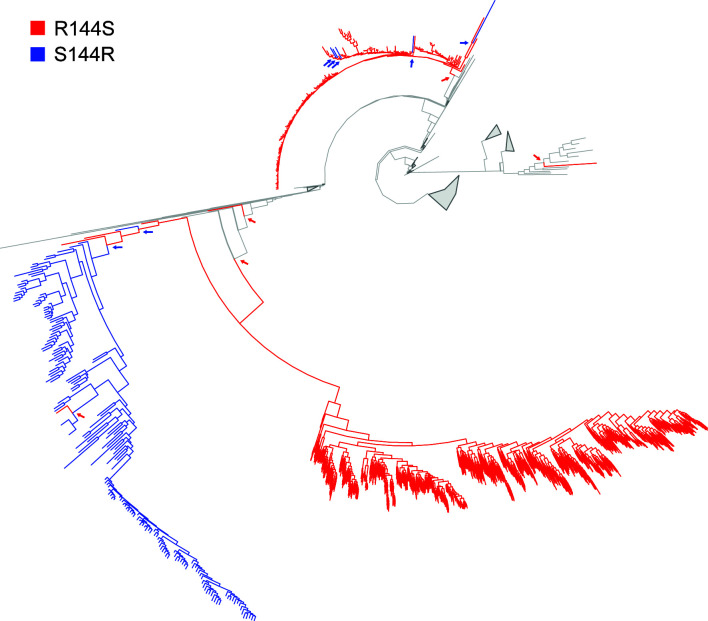 Figure 4
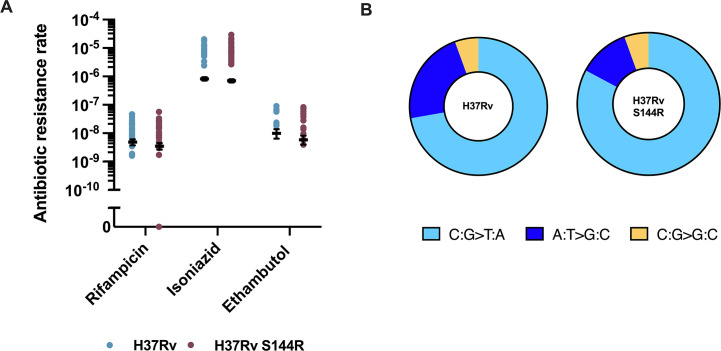 Figure 5
Peer Reviews
No public reviews on file for this paper yet. If you reviewed it on a platform where reviews are public (OpenReview, ICLR, NeurIPS, ICML), you can paste yours below so the community can read it here.
Videos
No videos yet. Explain this paper in a talk, walkthrough, or lecture? Add one.
Taxonomy
TopicsGenetic factors in colorectal cancer · Tuberculosis Research and Epidemiology · Evolution and Genetic Dynamics