Accurate serotype identification of Streptococcus pneumoniae using nanopore Cas9-targeted serotype identification (nCATSerotyping)
Hyun Jung Ji, A-Yeung Jang, Seung Hyun Han, Min-Kyu Kim, Charles Euloge Lamien, Viskam Wijewardana, Ki Bum Ahn, Kyung-Hyo Kim, Joon Young Song, Ho Seong Seo

TL;DR
A new method called nCATSerotyping accurately identifies Streptococcus pneumoniae serotypes, including emerging ones, using nanopore sequencing and Cas9 technology.
Contribution
The novel nCATSerotyping platform combines Cas9 enrichment and nanopore sequencing to achieve higher accuracy and coverage in pneumococcal serotyping.
Findings
nCATSerotyping achieved a 97.10% serotyping success rate in clinical isolates, outperforming conventional methods.
The method identified emerging serotypes and non-typeable strains missed by traditional approaches.
Whole-genome sequencing confirmed 100% accuracy in identifying S. pneumoniae isolates.
Abstract
Streptococcus pneumoniae (pneumococcus) is a leading cause of community-acquired pneumonia and invasive diseases, particularly among children and the elderly. The introduction of pneumococcal conjugate vaccines has significantly reduced invasive pneumococcal disease, but the prevalence of non-vaccine serotypes and newly emerging serotypes is increasing globally. Thus, accurate serotyping is essential for epidemiological surveillance and the development of next-generation multivalent pneumococcal vaccines. Conventional serotyping methods, including multiplex polymerase chain reaction (mPCR), monoclonal antibody (mAb) assays, and Quellung reaction using rabbit antisera, are limited by serotype coverage and cross-reactivity, making the detection of new or emerging serotypes challenging. In this study, we developed a nanopore Cas9-targeted serotyping (nCATSerotyping) platform, which employs…
Genes, proteins, chemicals, diseases, species, mutations and cell lines named across the full text — each resolved to its canonical identifier and authoritative record.
Click any figure to enlarge with its caption.
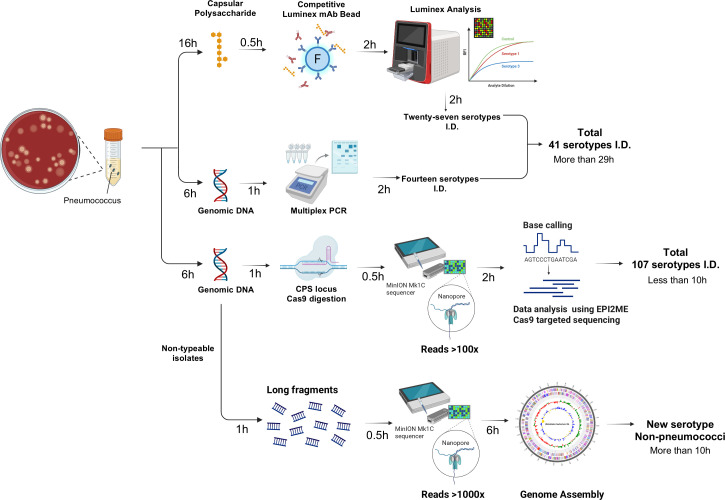 Figure 1
 Figure 2
Peer Reviews
No public reviews on file for this paper yet. If you reviewed it on a platform where reviews are public (OpenReview, ICLR, NeurIPS, ICML), you can paste yours below so the community can read it here.
Videos
No videos yet. Explain this paper in a talk, walkthrough, or lecture? Add one.
Taxonomy
TopicsPneumonia and Respiratory Infections · Respiratory viral infections research · vaccines and immunoinformatics approaches