Cryptococcal antigen titers and semi-quantitative assay scores among people with HIV-associated cryptococcal antigenemia
Tshiama M. Mwamba, Nozuko P. Blasich, Lindi M. Coetzee, Rudzani Mashau, Nelesh P. Govender

TL;DR
This study shows that most HIV patients with cryptococcal antigenemia in South Africa have high antigen levels, indicating a high risk of meningitis, but few undergo the recommended spinal tap to confirm it.
Contribution
The study introduces the use of single-strip semi-quantitative CrAg testing as a rapid, risk-stratification tool for cryptococcal meningitis in resource-limited settings.
Findings
63% of patients had a cryptococcal antigen titer of ≥160, indicating high risk of meningitis.
Only 31% of patients had a lumbar puncture within 28 days of a positive test, and 60% of those had confirmed meningitis.
Semi-quantitative CrAg testing can identify high-risk patients quickly, reducing the need for full titer testing.
Abstract
While South African guidelines recommend a lumbar puncture (LP) to exclude cryptococcal meningitis (CM) among all people with a newly positive cryptococcal antigen (CrAg) test, irrespective of CM symptoms, this is not always feasible. High blood CrAg lateral flow assay (LFA) titers are associated with concurrent CM and increased mortality. Single-strip CrAg semi-quantitative (SQ) tests could risk-stratify people with antigenemia. Consecutive fresh LFA-positive remnant plasma samples from a CD4 laboratory network collected between April and July 2021 were retested. We described LFA titers, CrAgSQ scores, and the proportion with cerebrospinal fluid (CSF) collected 28 days before or after a positive CrAg screening test. Of 2,240 re-tested plasma samples from unique patients, 2,166 (97%) were confirmed LFA-positive. The median LFA titer was 640 (IQR, 40–5,120), 63% (1,354/2,166) had a titer…
Genes, proteins, chemicals, diseases, species, mutations and cell lines named across the full text — each resolved to its canonical identifier and authoritative record.
Click any figure to enlarge with its caption.
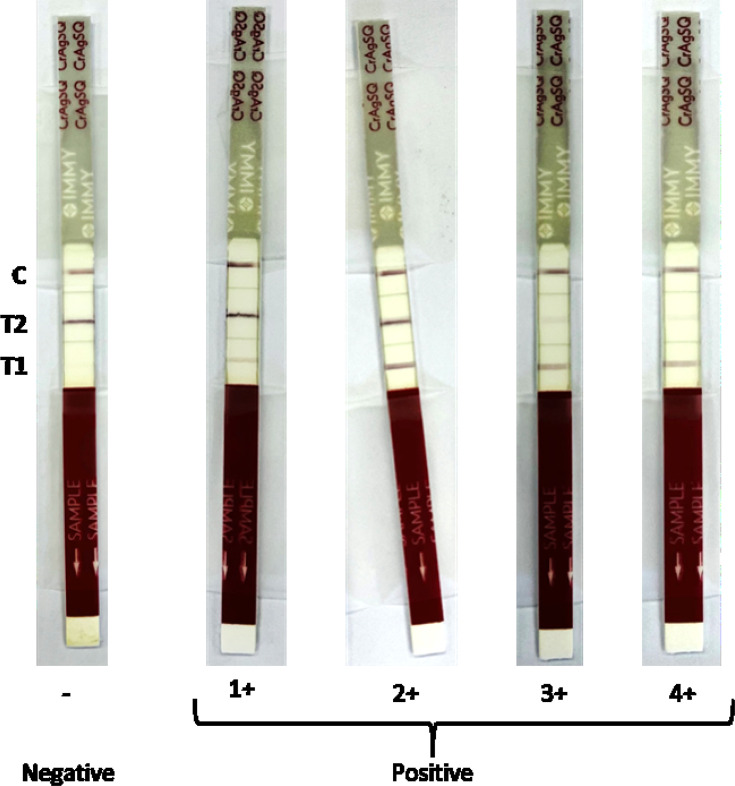 Figure 1
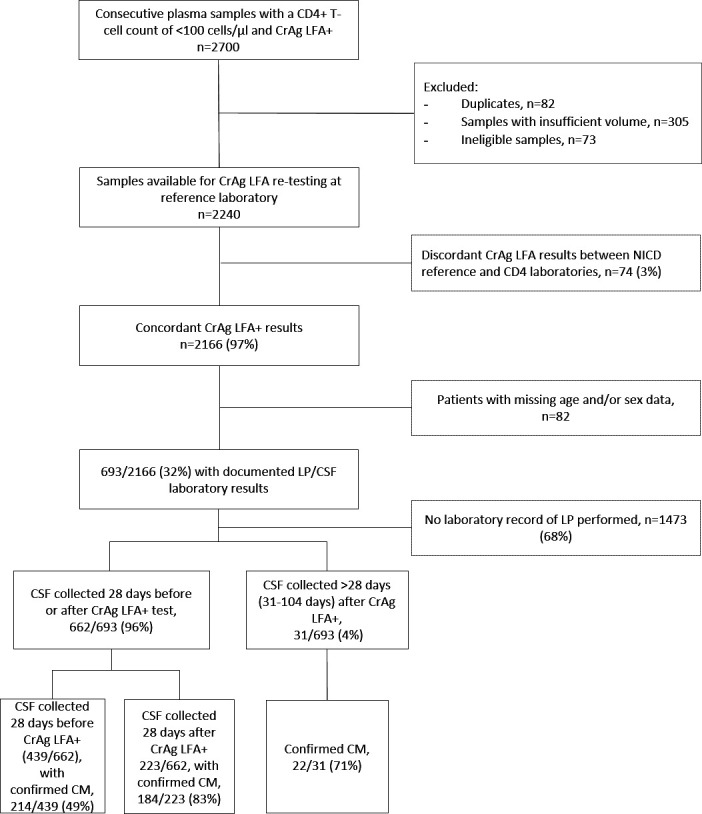 Figure 2
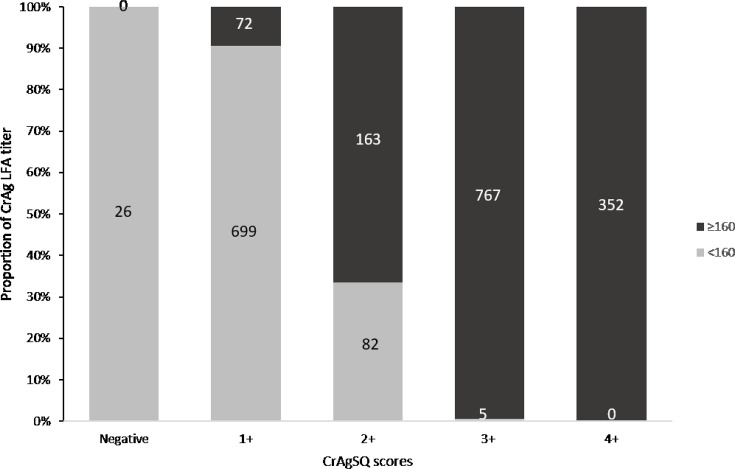 Figure 3
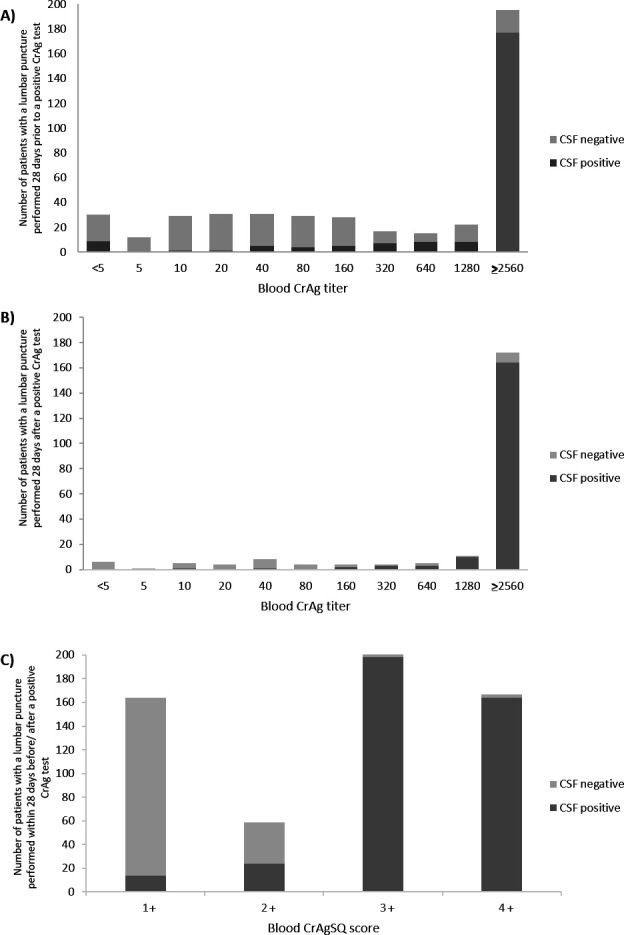 Figure 4
Peer Reviews
No public reviews on file for this paper yet. If you reviewed it on a platform where reviews are public (OpenReview, ICLR, NeurIPS, ICML), you can paste yours below so the community can read it here.
Videos
No videos yet. Explain this paper in a talk, walkthrough, or lecture? Add one.
Taxonomy
TopicsFungal Infections and Studies · Nail Diseases and Treatments · Streptococcal Infections and Treatments