Extracellular vesicles: the double-edged sword in viral infections
Sharda Kumari, Arup Banerjee

TL;DR
Extracellular vesicles play a dual role in viral infections, acting both as potential biomarkers and as tools viruses use to spread and evade the immune system.
Contribution
This review comprehensively compiles the role of extracellular vesicles in viral infection and disease progression.
Findings
EVs can serve as biomarkers for infectious diseases due to their cargo from infected cells.
Viruses exploit EV biogenesis to spread and modulate immune responses.
EVs contribute to disease progression by carrying immune modulatory molecules.
Abstract
Extracellular vesicles (EVs) are lipid-bound nanocarriers released by various eukaryotic cells and found in diverse bodily fluids. EVs have transitioned from being considered cellular waste disposers to significant players in intercellular communication and signaling. These EVs carry signature cargos of infected cells and thus can be helpful as biomarkers or prognostic markers for infectious diseases. Viruses can manipulate the EV biogenesis machinery in their own dissemination. EVs released from virus-infected cells can carry immune modulatory molecules, thus contributing to disease progression. This comprehensive review collates the information on the impact of EVs on viral infection and disease progression.
Genes, proteins, chemicals, diseases, species, mutations and cell lines named across the full text — each resolved to its canonical identifier and authoritative record.
Click any figure to enlarge with its caption.
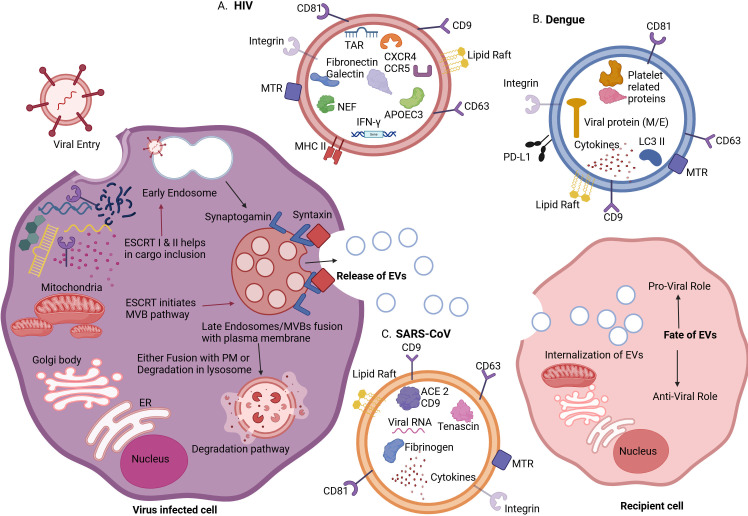 Figure 1
Peer Reviews
No public reviews on file for this paper yet. If you reviewed it on a platform where reviews are public (OpenReview, ICLR, NeurIPS, ICML), you can paste yours below so the community can read it here.
Videos
No videos yet. Explain this paper in a talk, walkthrough, or lecture? Add one.
Taxonomy
TopicsExtracellular vesicles in disease · interferon and immune responses · Neutrophil, Myeloperoxidase and Oxidative Mechanisms