Differentiation-dependent proximity proteomics identifies novel host factors linked to HPV16 E2 function
Claire D. James, Aya Youssef, Apurva T. Prabhakar, Jenny D. Roe, Elinor Lu, Austin Witt, Sarita Giri, Molly L. Bristol, Phoebe Bridy, Xu Wang, Arjun Rijal, Charles Lyons, Iain M. Morgan

TL;DR
This study identifies new host proteins that interact with the HPV16 E2 protein during cell differentiation, revealing a key role for nucleolin in viral genome stability.
Contribution
The study reveals a novel E2–TOPBP1–NCL axis critical for HPV16 genome maintenance during differentiation.
Findings
TurboID proximity labeling identified both known and novel E2-associated host factors, including chromatin regulators and DNA repair proteins.
Nucleolin (NCL) was validated as a differentiation-dependent E2 partner stabilized by TOPBP1.
NCL is required for episomal genome maintenance, highlighting a cooperative E2–TOPBP1–NCL axis.
Abstract
Human papillomavirus 16 (HPV16) is a causative agent of oropharyngeal, cervical, and anogenital cancers. The viral E2 protein is essential for viral genome replication, transcriptional regulation, episome maintenance, and activation of the host DNA damage response. Despite its central role, the full network of HPV16 E2 interactions with host proteins remains incompletely defined, particularly under differentiating conditions, which support the complete viral life cycle. In this study, we used TurboID-based proximity labeling to characterize the interactome of HPV16 E2 and its known host partner protein TOPBP1 in both undifferentiated monolayer and differentiating keratinocytes. We generated stable keratinocyte lines expressing doxycycline-inducible TurboID-tagged HPV16 E2 and confirmed that the tagged protein retained transcriptional, replicative, and DNA damage-inducing functions. Mass…
Genes, proteins, chemicals, diseases, species, mutations and cell lines named across the full text — each resolved to its canonical identifier and authoritative record.
Click any figure to enlarge with its caption.
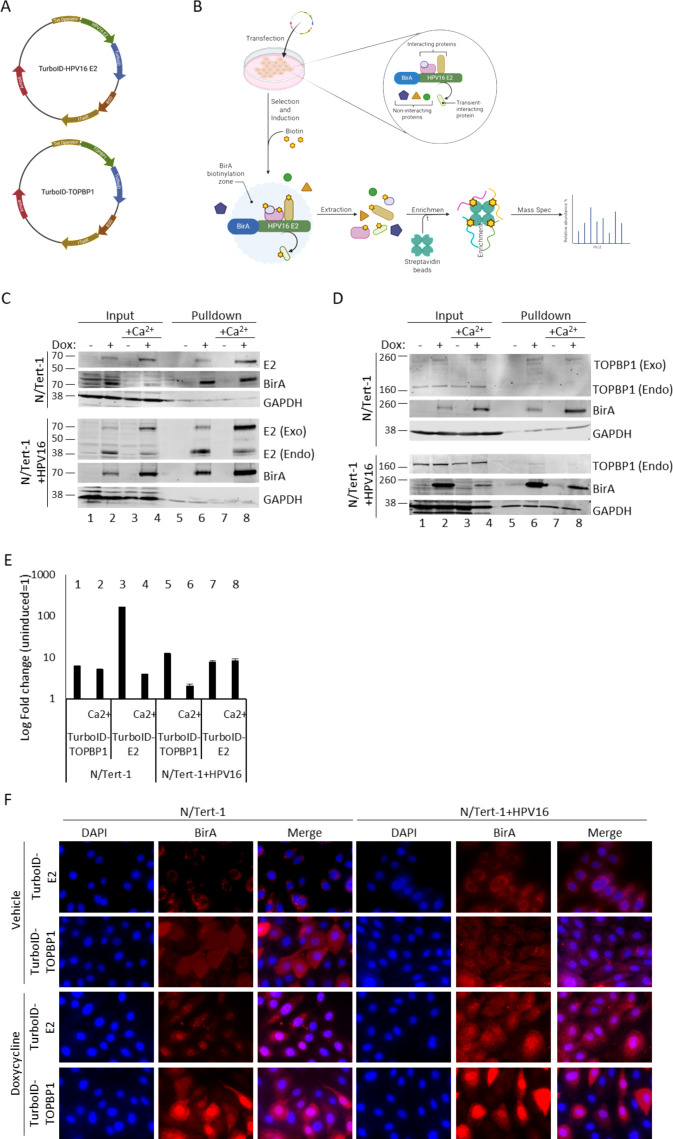 Figure 1
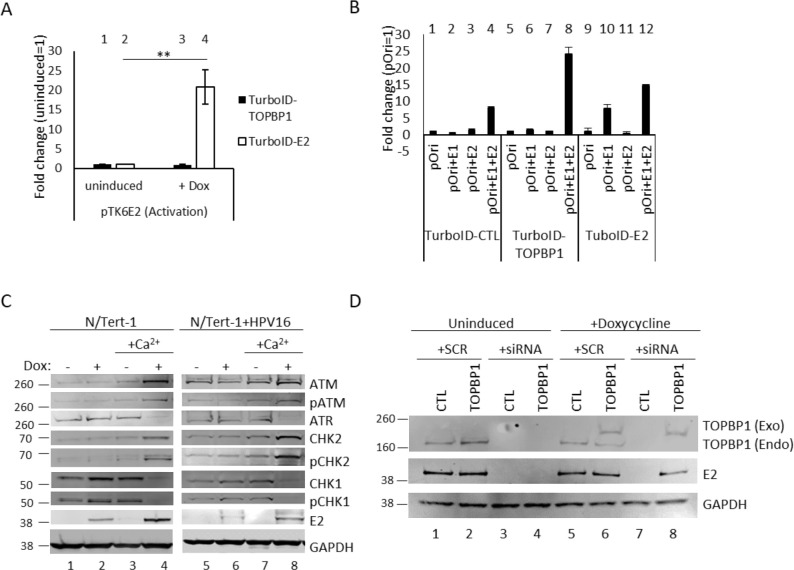 Figure 2
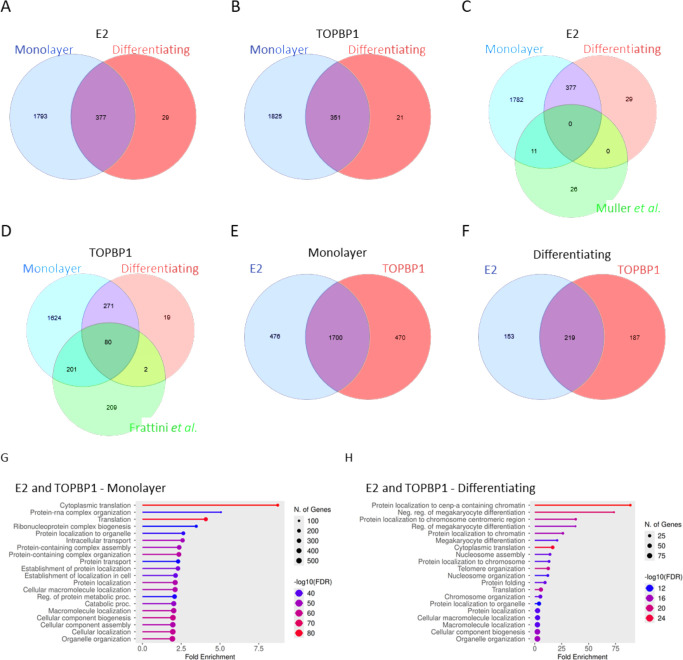 Figure 3
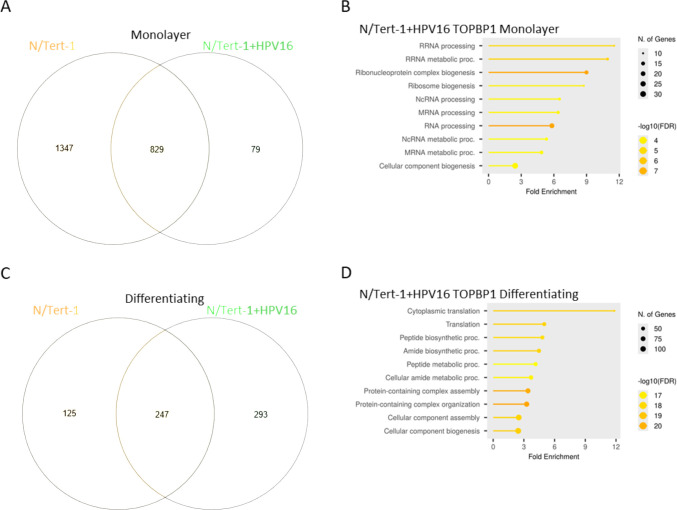 Figure 4
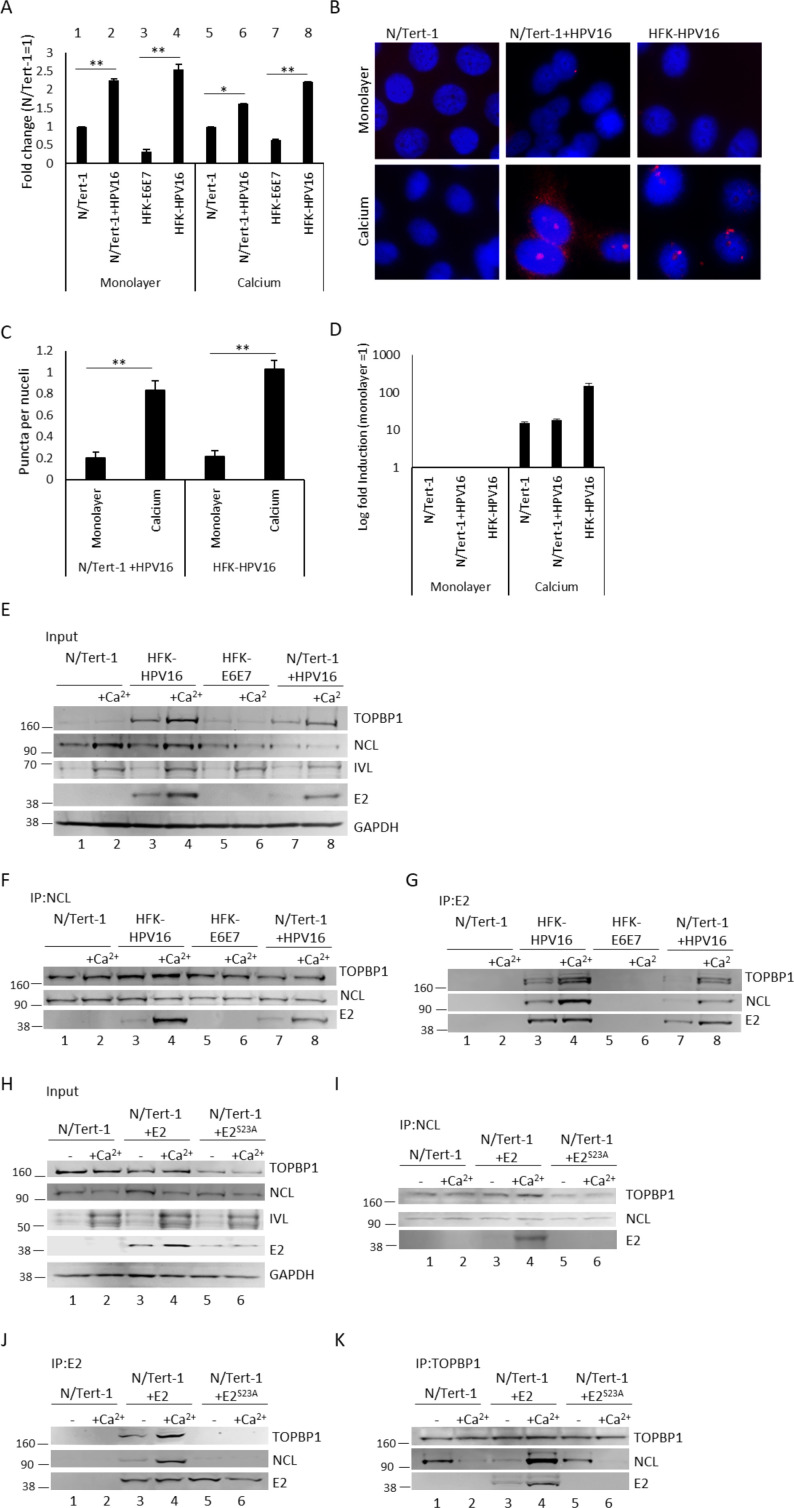 Figure 5
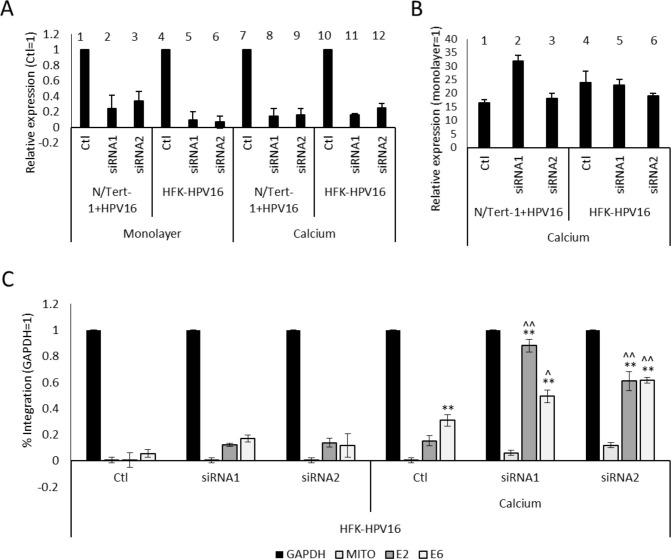 Figure 6
Peer Reviews
No public reviews on file for this paper yet. If you reviewed it on a platform where reviews are public (OpenReview, ICLR, NeurIPS, ICML), you can paste yours below so the community can read it here.
Videos
No videos yet. Explain this paper in a talk, walkthrough, or lecture? Add one.
Taxonomy
TopicsCervical Cancer and HPV Research · Cancer-related Molecular Pathways · Ubiquitin and proteasome pathways