Reprogramming Listeria monocytogenes flavin metabolism to improve its therapeutic safety profile and broaden innate T-cell activation
Victoria Chevée, Mariya Lobanovska, Rafael Rivera-Lugo, Leslie Güereca, Ying Feng, Andrea Anaya-Sanchez, Jesse Garcia Castillo, Austin M. Huckins, Edward E. Lemmens, Chris S. Rae, Jonathan W. Hardy, Russell Carrington, Jonathan W. Kotula, Daniel A. Portnoy

TL;DR
Scientists engineered a safer Listeria monocytogenes strain that still activates immune cells, making it a better candidate for cancer vaccines.
Contribution
A quadruple-attenuated Listeria strain (QUAIL) was developed with improved safety and the ability to activate mucosal-associated invariant T cells.
Findings
QUAIL lacks extracellular growth in blood and catheters, reducing toxicity.
QUAIL maintains strong immunoprotective properties like its predecessors.
QUAIL can be engineered to activate mucosal-associated invariant T cells.
Abstract
Listeria monocytogenes is a facultative intracellular bacterial pathogen that is a potent inducer of cell-mediated immunity, which has led to the development of attenuated, Listeria-based cancer vaccines. L. monocytogenes strains, such as live-attenuated double-deleted Listeria (LADD), lacking two key virulence factors, ΔactA and ΔinlB, have been used safely in clinical trials and showed promising anti-tumor activity. Despite early clinical success, improving potency and safety by preventing extracellular bacterial growth is paramount for the development of further clinical applications. We describe a quadruple attenuated intracellular Listeria (QUAIL) strain that, in addition to ΔactAΔinlB, lacks ribC and ribF, which encode enzymes required for generating the essential flavin cofactors flavin mononucleotide (FMN) and flavin adenine nucleotide (FAD). QUAIL imported FMN and FAD during…
Genes, proteins, chemicals, diseases, species, mutations and cell lines named across the full text — each resolved to its canonical identifier and authoritative record.
Click any figure to enlarge with its caption.
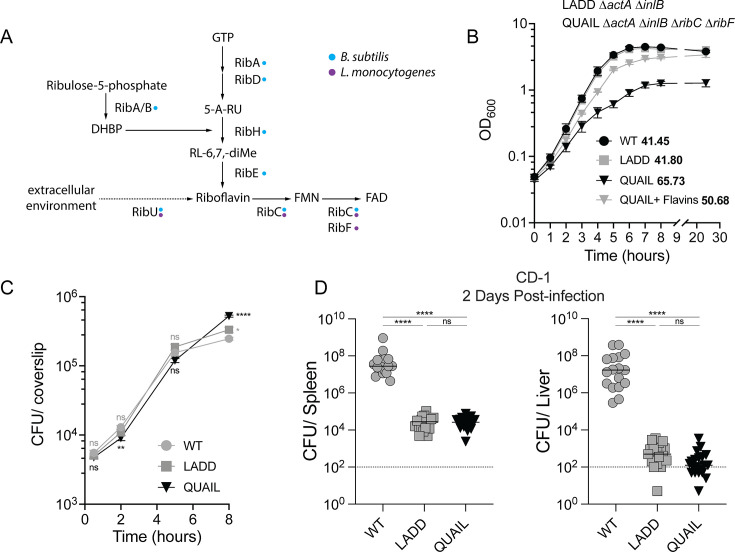 Figure 1
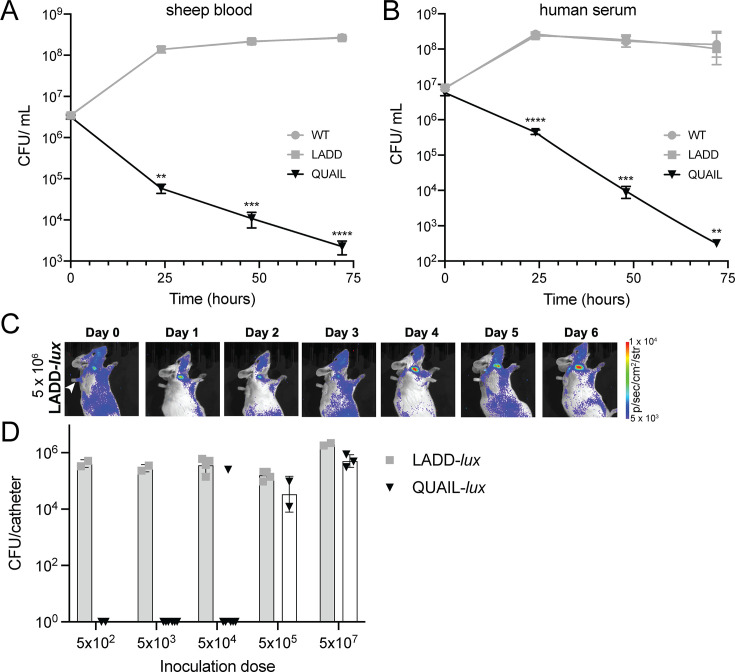 Figure 2
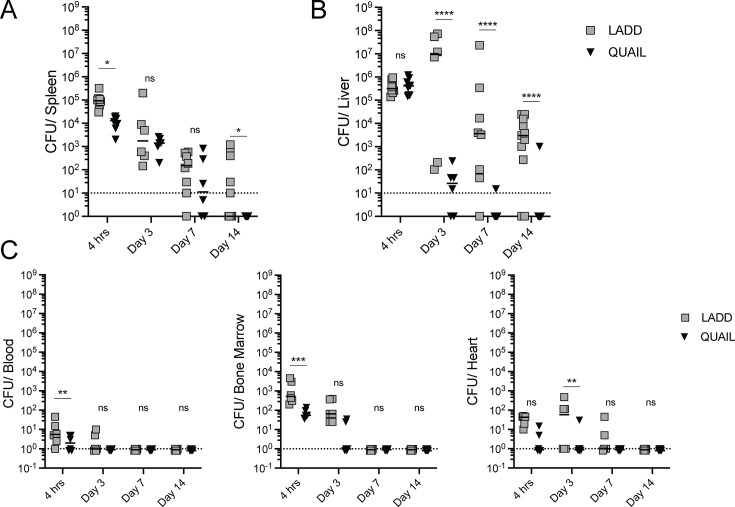 Figure 3
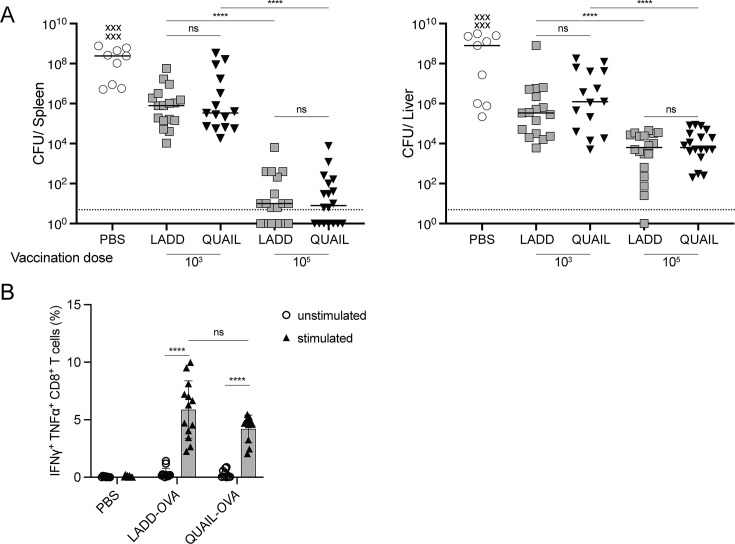 Figure 4
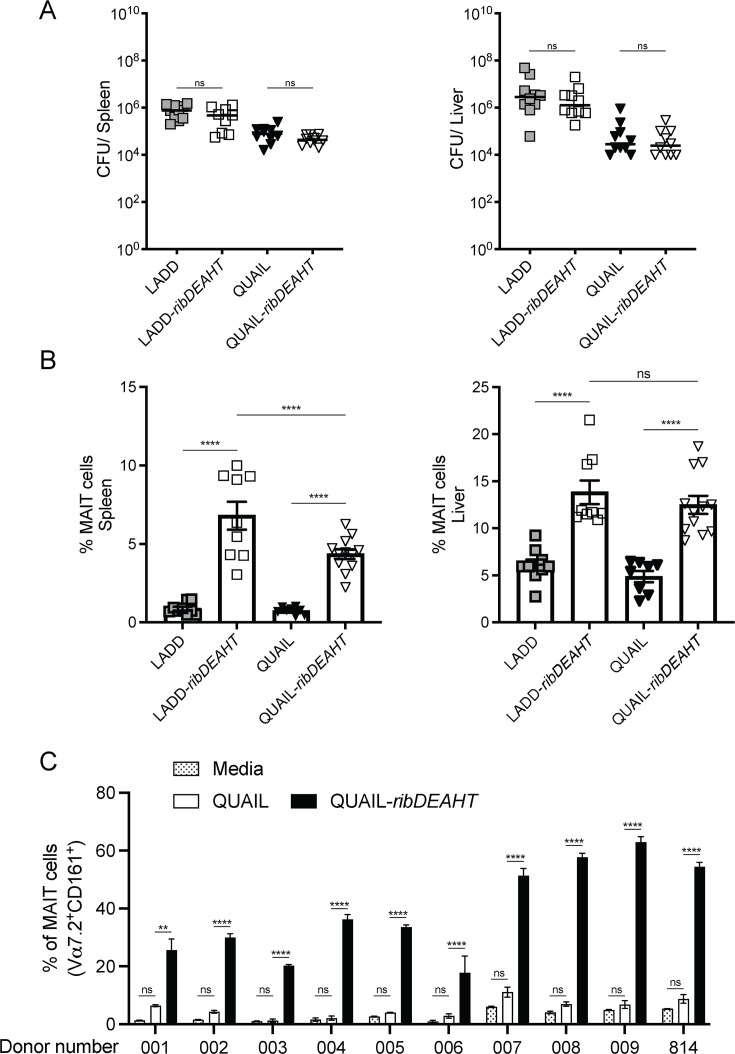 Figure 5
Peer Reviews
No public reviews on file for this paper yet. If you reviewed it on a platform where reviews are public (OpenReview, ICLR, NeurIPS, ICML), you can paste yours below so the community can read it here.
Videos
No videos yet. Explain this paper in a talk, walkthrough, or lecture? Add one.
Taxonomy
TopicsListeria monocytogenes in Food Safety · Cancer Research and Treatments · Transgenic Plants and Applications