Spatial distribution of canine visceral leishmaniasis and its relationship with human visceral leishmaniasis in a municipality of Rio de Janeiro, Brazil
Anna Eduarda Oliveira Pires Gonçalves, José Ueleres Braga, Fernanda Nunes Santos, Sandro Antonio Pereira, Artur Augusto Velho Mendes, Lucas Keidel Oliveira, Adilson Benedito de Almeida, Rodrigo Caldas Menezes, Millena Borges Conti Fonseca, Elvira Maria Godinho Seixas Maciel

TL;DR
This study maps the spread of canine and human visceral leishmaniasis in Barra Mansa, Brazil, showing a strong link between urban and rural areas.
Contribution
The study provides new spatial insights into the relationship between canine and human visceral leishmaniasis in an urban-rural setting.
Findings
Most cases of canine and human visceral leishmaniasis were found in urban areas of Barra Mansa.
Persistent clusters of canine infections were near rural zones and preceded human cases by up to three years.
Over half of human cases were within 600 meters of canine infection clusters.
Abstract
Visceral leishmaniasis (VL) is an infectious disease that represents a considerable public health problem. In Brazil, VL was gradually expanded in all the territory and from rural to urban areas. A notable concentration of VL emerged in 2010 in the Médio Paraíba region of the state of Rio de Janeiro, where the municipality of Barra Mansa is located. However, information on the geographic distribution of VL in this municipality is scarce. Therefore, this study aimed to characterize the spatial distribution of VL in Barra Mansa from 2014 to 2023. This exploratory epidemiological study involved creating point maps for human visceral leishmaniasis (HVL) and canine visceral leishmaniasis (CVL), as well as kernel density and cluster maps for CVL. In addition, maps were produced by superimposing the point maps of human cases with the cluster maps of canine infections. In total, 99.1% of…
Genes, proteins, chemicals, diseases, species, mutations and cell lines named across the full text — each resolved to its canonical identifier and authoritative record.
Click any figure to enlarge with its caption.
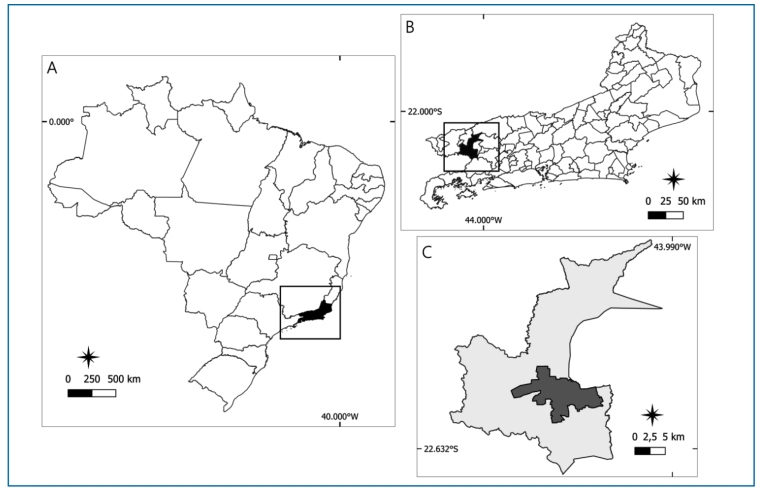 Figure 1
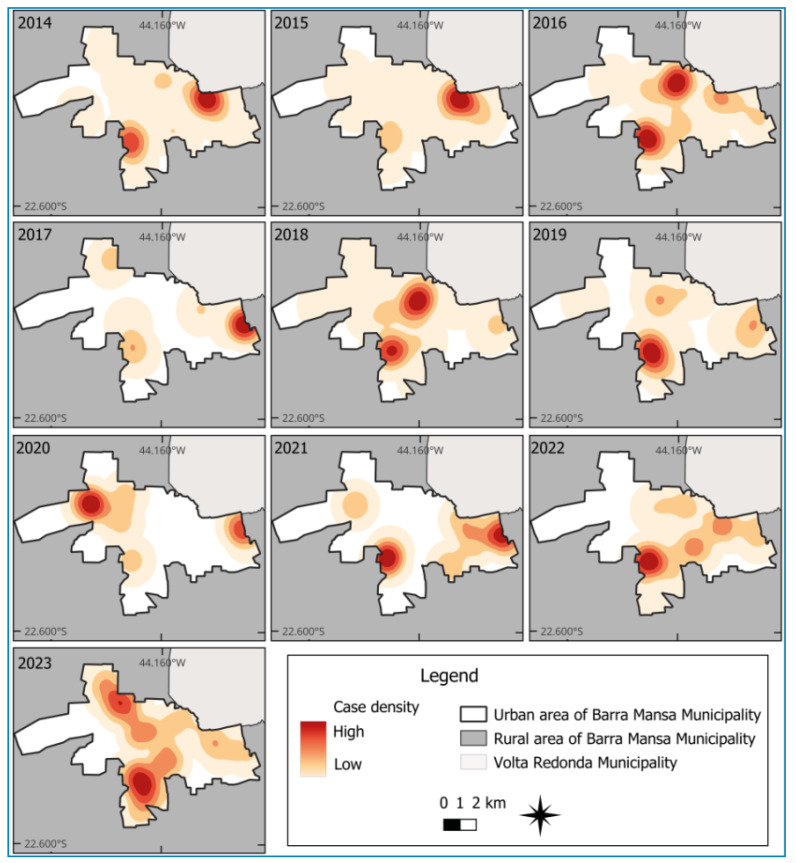 Figure 2
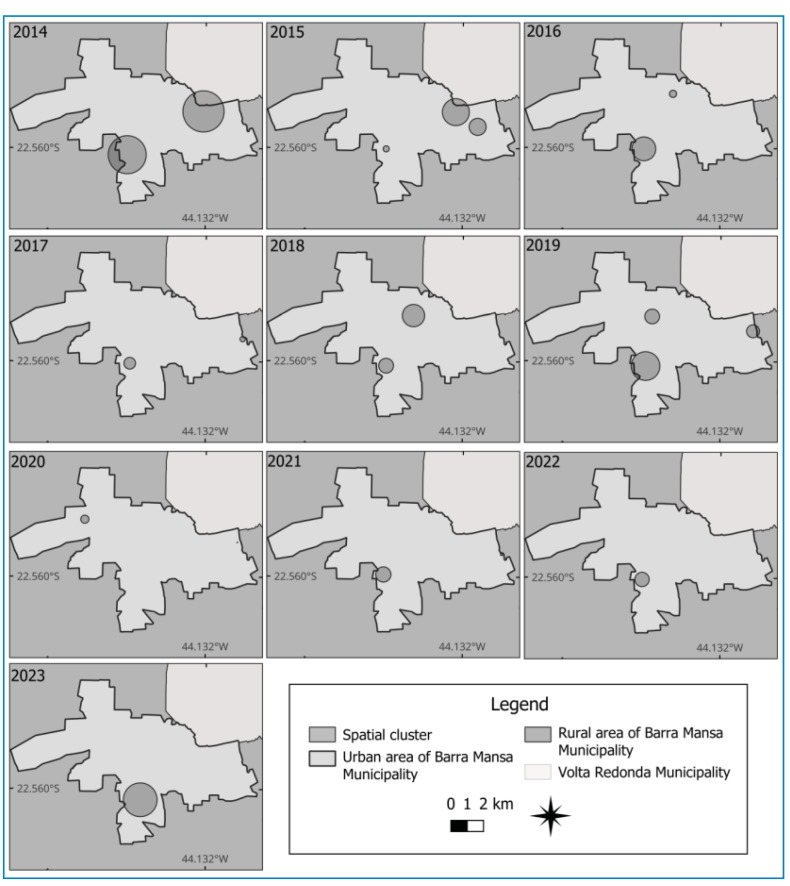 Figure 3
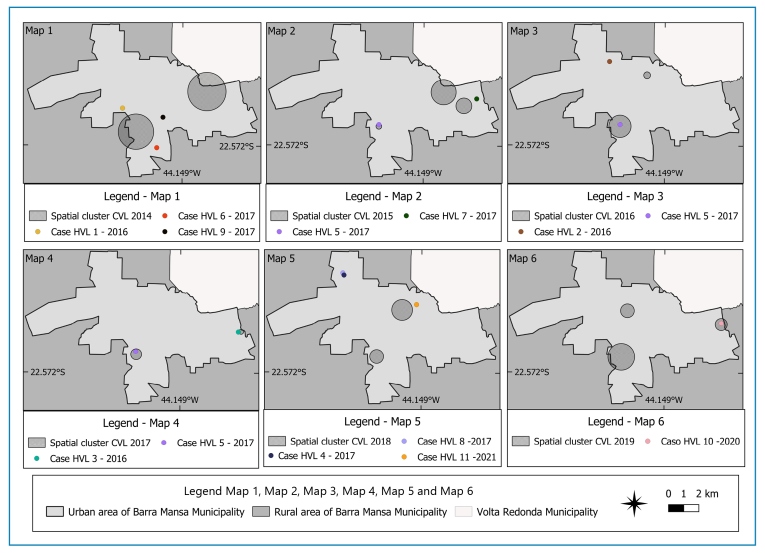 Figure 4
Peer Reviews
No public reviews on file for this paper yet. If you reviewed it on a platform where reviews are public (OpenReview, ICLR, NeurIPS, ICML), you can paste yours below so the community can read it here.
Videos
No videos yet. Explain this paper in a talk, walkthrough, or lecture? Add one.
Taxonomy
TopicsResearch on Leishmaniasis Studies · Syphilis Diagnosis and Treatment · Trypanosoma species research and implications