Transcriptional signature of induced neurons differentiates virologically suppressed people with HIV from people without HIV
Philipp N. Ostermann, Youjun Wu, Scott A. Bowler, Samuel Martínez-Meza, Mohammad Adnan Siddiqui, David H. Meyer, Alberto Herrera, Brandon A. Sealy, Mega Sidharta, Kiran Ramnarine, Leslie Ann St. Bernard, Desiree Byrd, R. Brad Jones, Masahiro Yamashita, Douglas F. Nixon

TL;DR
Scientists found a unique gene pattern in brain-like cells from HIV patients that could explain why some people with HIV still face brain issues even when the virus is controlled.
Contribution
The study identifies a novel transcriptional signature in induced neurons that differentiates HIV-positive individuals from HIV-negative individuals despite viral suppression.
Findings
29 genes were found to be significantly differentially expressed between HIV-positive and HIV-negative induced neurons.
PLWH iNs showed altered extracellular matrix organization and synaptic transmission pathways.
Reduced FOXL2NB-FOXL2-LINC01391 expression correlated with neurocognitive impairment in HIV-positive individuals.
Abstract
Neurocognitive impairment is a prevalent comorbidity in virologically suppressed people living with HIV (PLWH), yet the underlying mechanisms remain elusive and treatments lacking. We explored use of participant-derived directly induced neurons (iNs) to model neuronal biology and injury in PLWH. iNs retain age- and disease-related donor features, providing unique opportunities to reveal important aspects of neurological disorders. We obtained primary dermal fibroblasts from 6 virologically suppressed PLWH and 7 matched people without HIV (PWOH). iNs were generated using transcription factors NGN2 and ASCL1 and validated by immunocytochemistry, single-cell RNA-Seq, and electrophysiological recordings. Transcriptomic aging analyses confirmed retention of donor age-related signatures. Bulk RNA-Seq identified 29 significantly differentially expressed genes between PLWH and PWOH iNs. Of…
Genes, proteins, chemicals, diseases, species, mutations and cell lines named across the full text — each resolved to its canonical identifier and authoritative record.
Click any figure to enlarge with its caption.
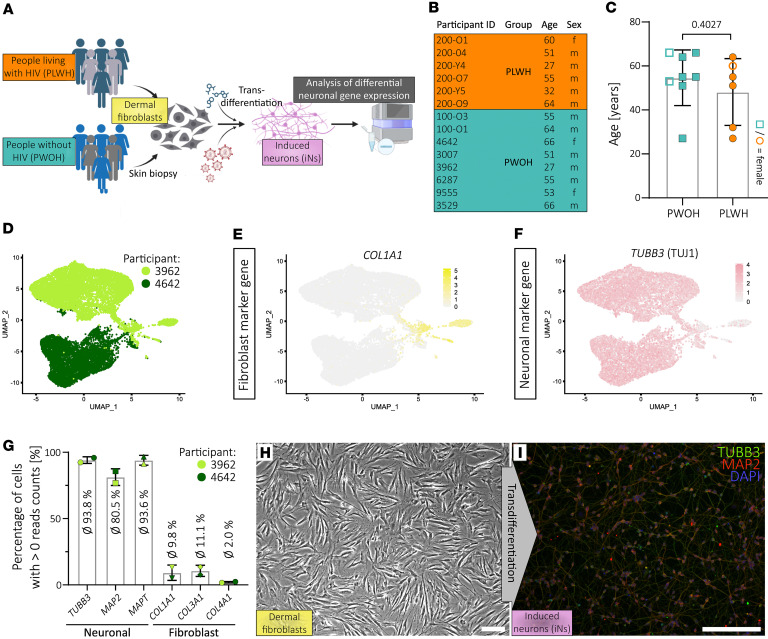 Figure 1
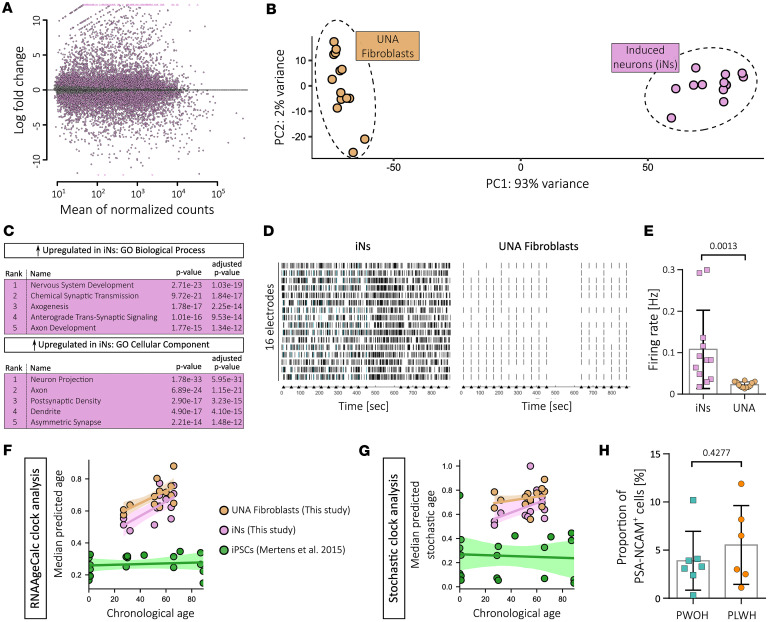 Figure 2
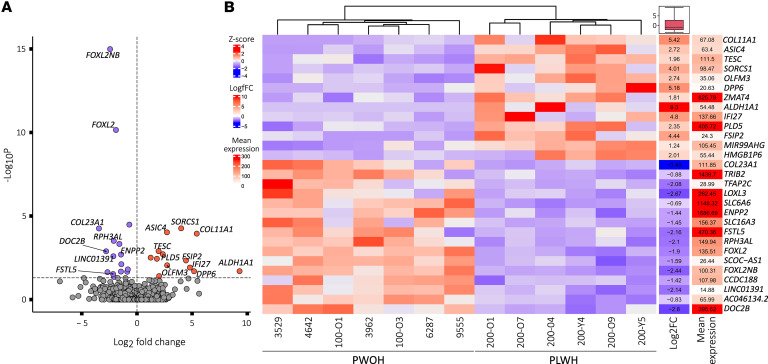 Figure 3
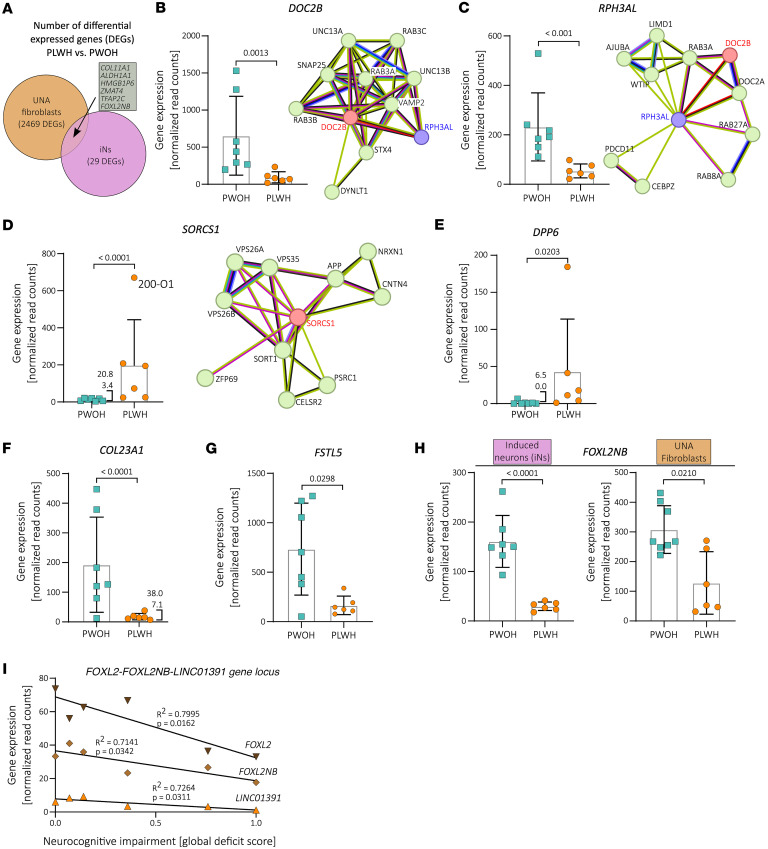 Figure 4
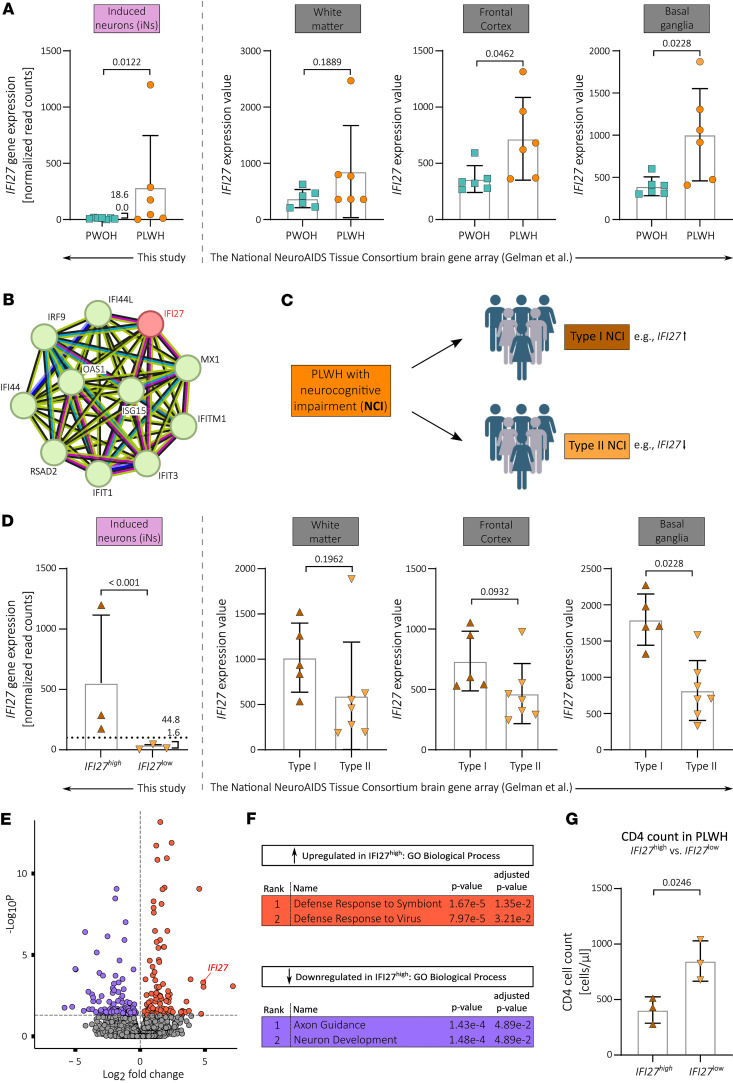 Figure 5
Peer Reviews
No public reviews on file for this paper yet. If you reviewed it on a platform where reviews are public (OpenReview, ICLR, NeurIPS, ICML), you can paste yours below so the community can read it here.
Videos
No videos yet. Explain this paper in a talk, walkthrough, or lecture? Add one.
Taxonomy
TopicsHIV Research and Treatment · Single-cell and spatial transcriptomics · Neuroinflammation and Neurodegeneration Mechanisms