Levels of circulating kidney injury markers and IL-10 identify non-critically ill patients with COVID-19 at risk of death
Olivia Lenoir, Florence Morin, Anouk Walter-Petrich, Léa Resmini, Mohamad Zaidan, Nassim Mahtal, Sophie Ferlicot, Victor G. Puelles, Nicola Wanner, Julien Dang, Thibaut d’Izarny-Gargas, Jana Biermann, Benjamin Izar, Stéphanie Baron, Benjamin Terrier, Ziad A. Massy, Marie Essig

TL;DR
This study shows that kidney injury markers and IL-10 levels in blood can predict death risk in non-critically ill COVID-19 patients.
Contribution
The study introduces a new risk prediction model (CORIMUNO) that highlights the role of subclinical kidney injury in predicting mortality in non-critical COVID-19 patients.
Findings
The CORIMUNO model combining KIM-1, LCN2, IL-10, and age showed high accuracy in predicting mortality in non-critically ill patients.
Early increases in kidney injury markers were strongly linked to severe disease progression and death.
Kidney-derived proteins and IL-10 levels were significantly associated with mortality, even without overt kidney injury.
Abstract
After identifying 2 immunomarkers of acute injury, KIM-1 and LCN2, in all kidney biopsies from 31 patients with COVID-19 pneumonia and de novo kidney dysfunction, we investigated whether circulating markers of kidney epithelial injury are common in patients with laboratory-confirmed COVID-19 who require oxygen support but do not have critical illness. We studied 196 patients admitted to 15 hospitals with moderate to severe pneumonia who were enrolled in 2 independent randomized clinical trials. We measured 41 immune mediators and markers of kidney and endothelial injury in peripheral blood in these patients within 24 hours of randomization. We constructed a generalized linear CORIMUNO model combining serum levels of KIM-1, LCN2, IL-10, and age at hospital admission that showed high discrimination for mortality (derivation cohort: AUC = 0.82, 95% CI: 0.73–0.92; validation cohort: AUC =…
Genes, proteins, chemicals, diseases, species, mutations and cell lines named across the full text — each resolved to its canonical identifier and authoritative record.
Click any figure to enlarge with its caption.
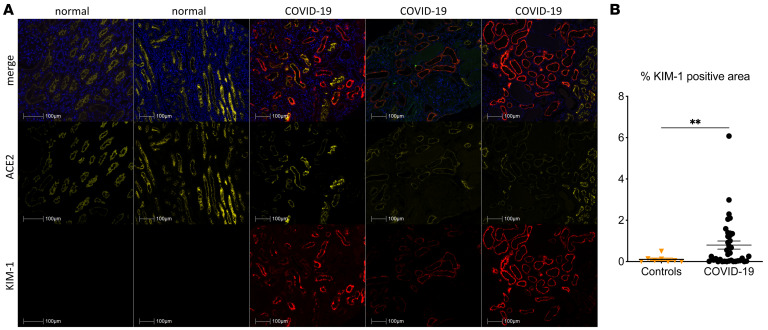 Figure 1
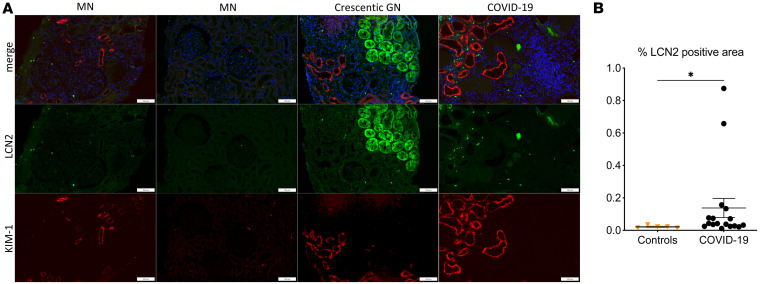 Figure 2
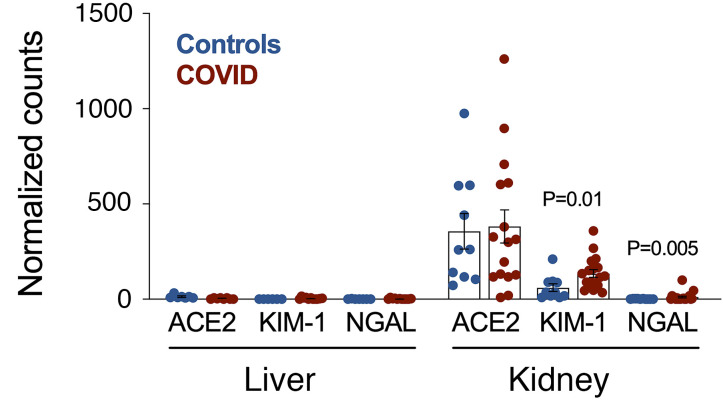 Figure 3
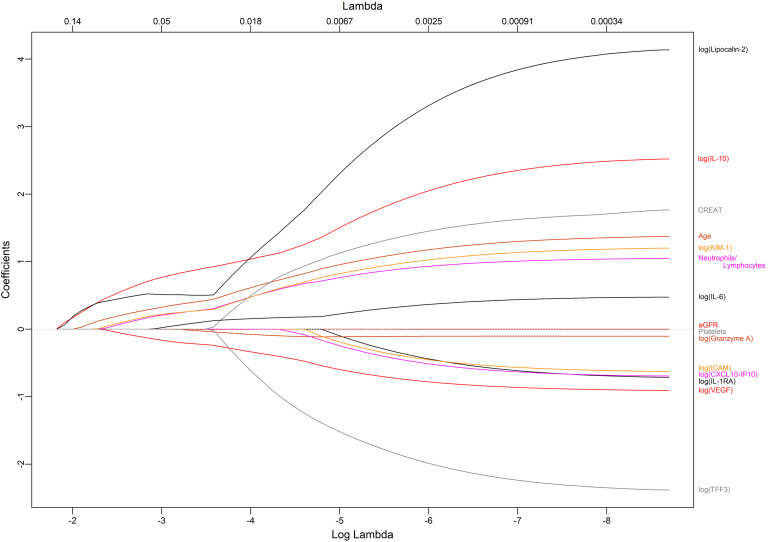 Figure 4
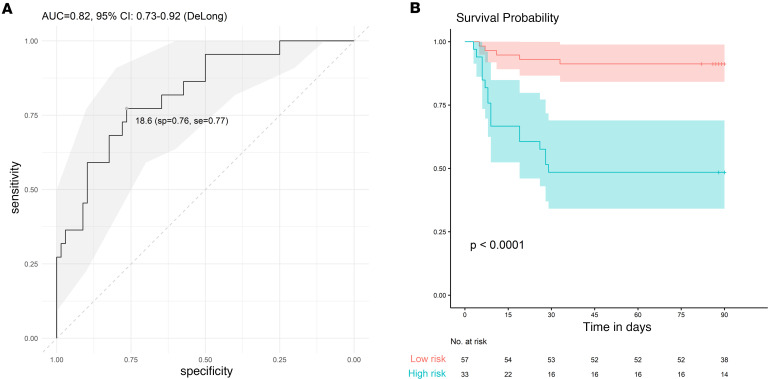 Figure 5
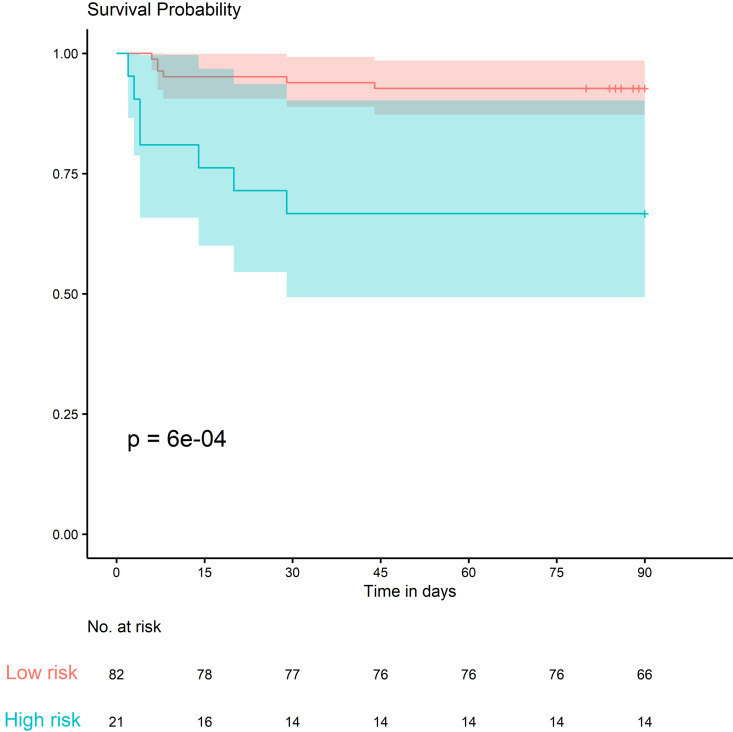 Figure 6
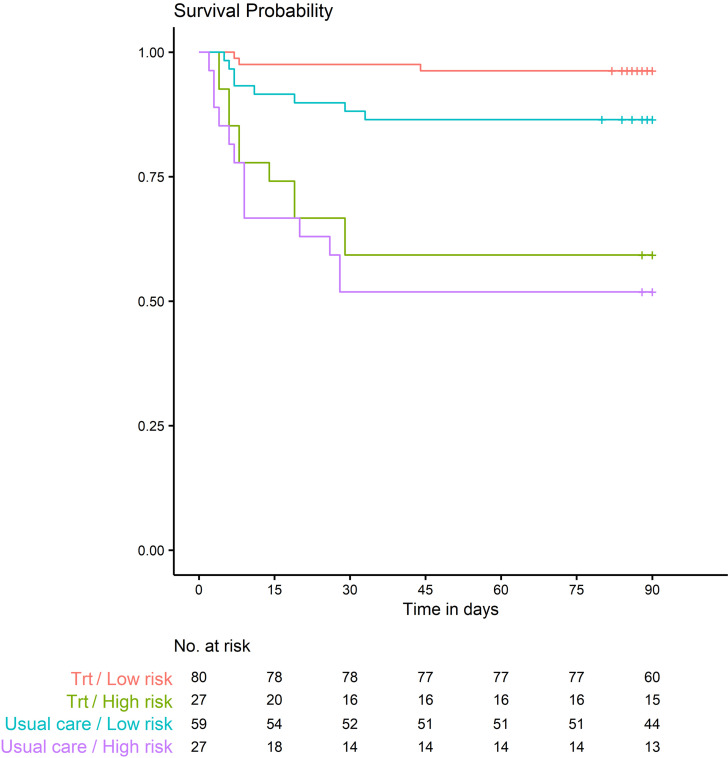 Figure 7
 Figure 8
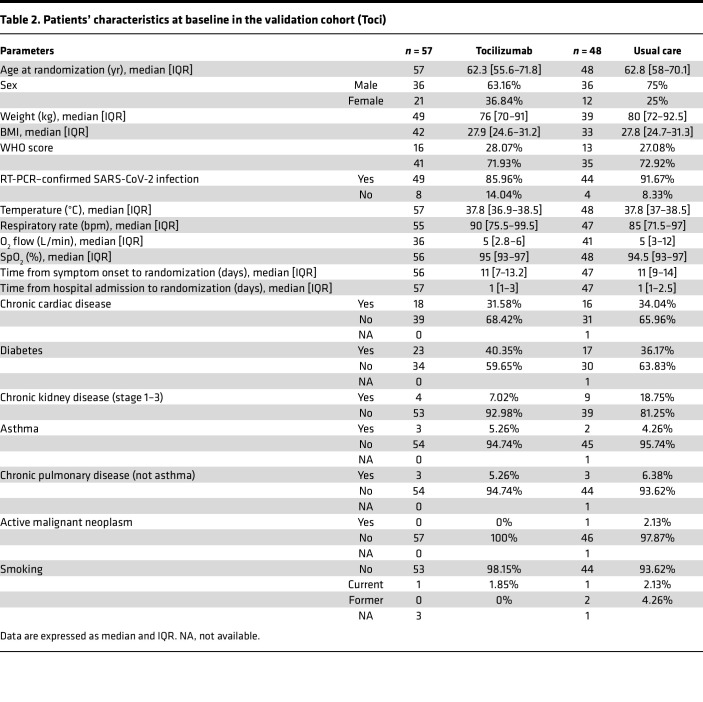 Figure 9
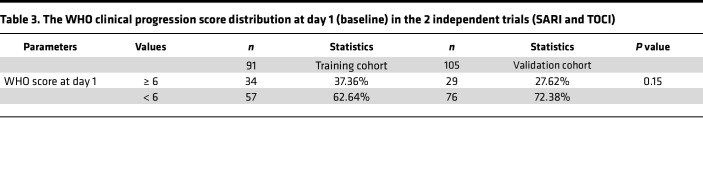 Figure 10
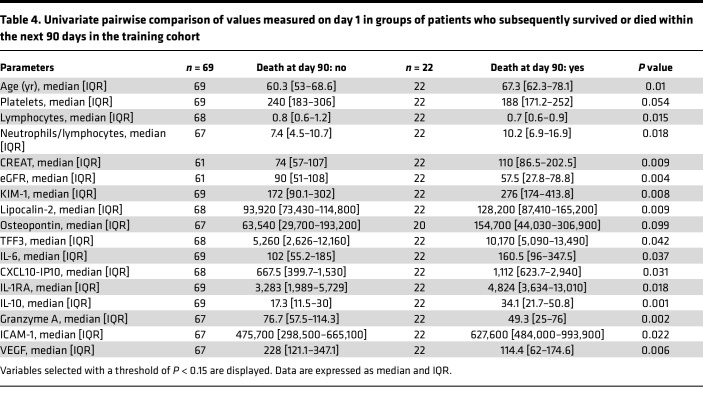 Figure 11
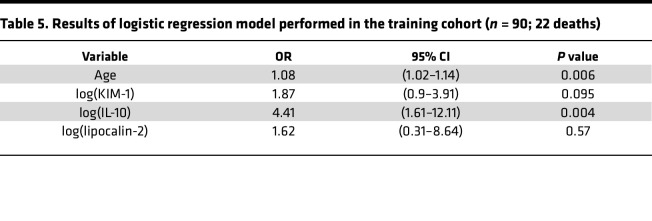 Figure 12
 Figure 13
 Figure 14
Peer Reviews
No public reviews on file for this paper yet. If you reviewed it on a platform where reviews are public (OpenReview, ICLR, NeurIPS, ICML), you can paste yours below so the community can read it here.
Videos
No videos yet. Explain this paper in a talk, walkthrough, or lecture? Add one.
Taxonomy
TopicsCOVID-19 Clinical Research Studies · Acute Kidney Injury Research · SARS-CoV-2 and COVID-19 Research