Spatial transcriptomics identifies differentiation, lipid metabolism, and retinoid pathway alterations in acne vulgaris
Joseph S. Durgin, Natalia A. Veniaminova, Thomas J. Huyge, Shih-Ying Tsai, Jennifer Fox, Yuli Cai, Mrinal K. Sarkar, Lam C. Tsoi, Johann E. Gudjonsson, Sunny Y. Wong

TL;DR
This study uses spatial transcriptomics to uncover gene expression changes in acne, revealing new insights into lipid metabolism and retinoid signaling, and identifies potential new treatments.
Contribution
The study introduces a novel AP-1 inhibitor, T-5224, which reduces acne-like pustule formation in a mouse model.
Findings
Comedonal skin upregulates sebogenesis genes while pustular skin downregulates them.
Both acne subtypes show increased AP-1 transcription factors and elevated FABP5.
The AP-1 inhibitor T-5224 reduces pustule formation in a mouse model of folliculitis.
Abstract
Acne vulgaris is a common skin condition involving complex interactions among lipid-secreting sebaceous glands, keratinocytes, immune cells, and microbiota. While retinoids are effective for treating acne, disease pathogenesis remains poorly understood. In particular, it remains unclear how different subtypes of acne, including inflammatory (pustular) and noninflammatory (comedonal) lesions, vary in gene expression, signaling, and sebaceous gland involvement. Here, we performed spatial transcriptomics on healthy, nonlesional, comedonal, and pustular acne skin using a custom panel targeting sebaceous differentiation, lipid metabolism, and retinoid signaling pathways. We also designed a specialized segmentation pipeline to improve transcript assignment in the spatially complex sebaceous gland. Our analyses identified a PPARG+ transitional basal cell state in sebocytes and revealed that…
Genes, proteins, chemicals, diseases, species, mutations and cell lines named across the full text — each resolved to its canonical identifier and authoritative record.
Click any figure to enlarge with its caption.
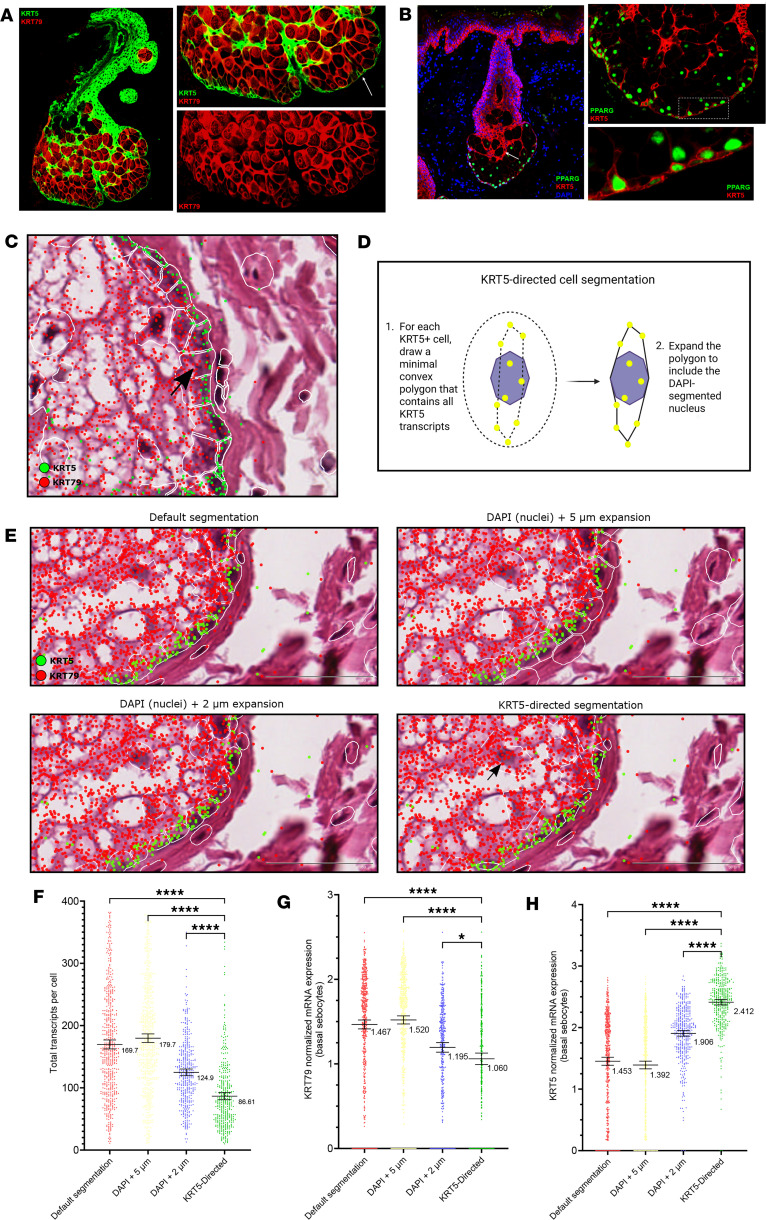 Figure 1
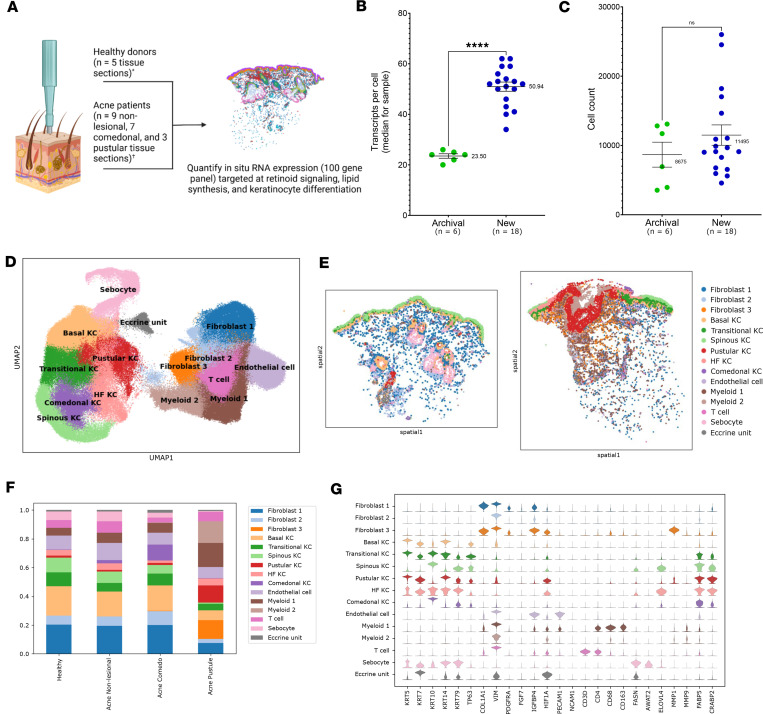 Figure 2
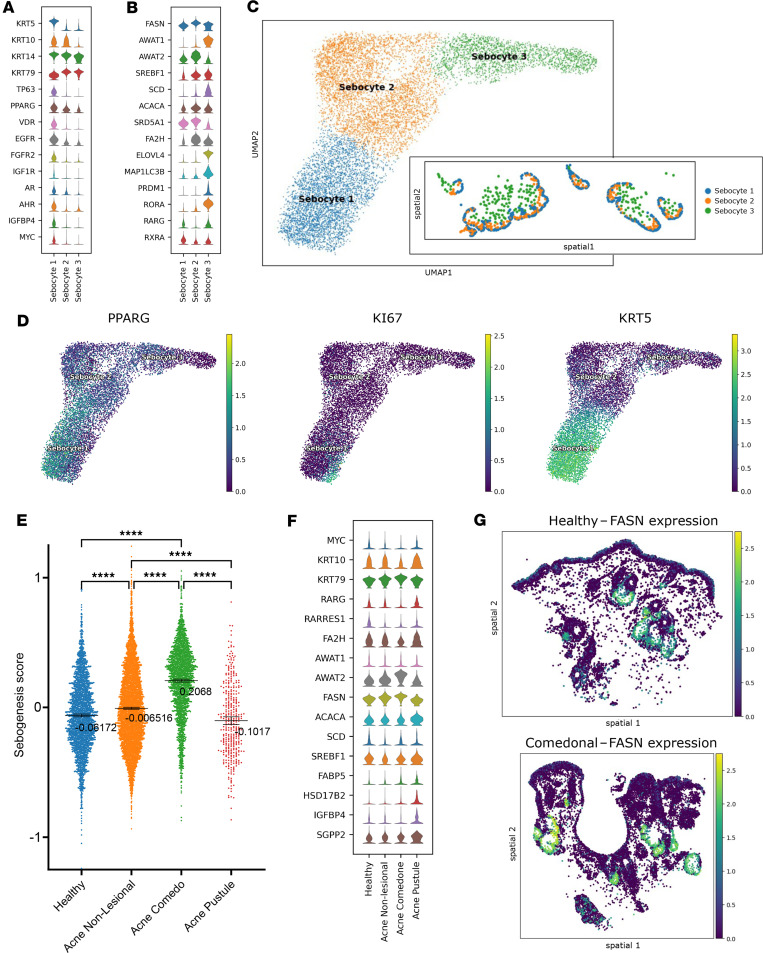 Figure 3
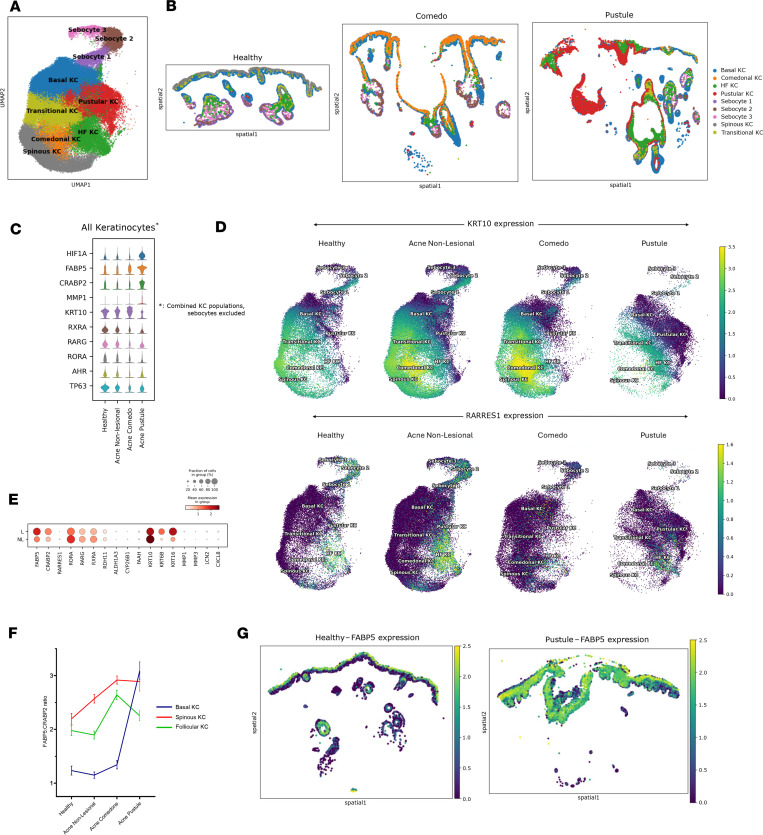 Figure 4
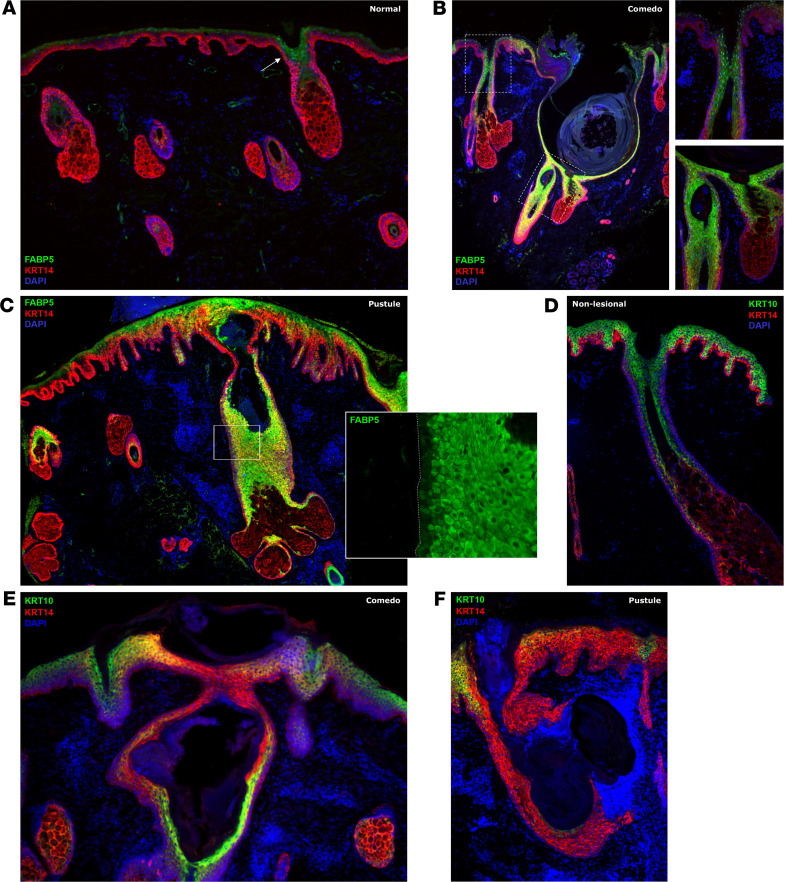 Figure 5
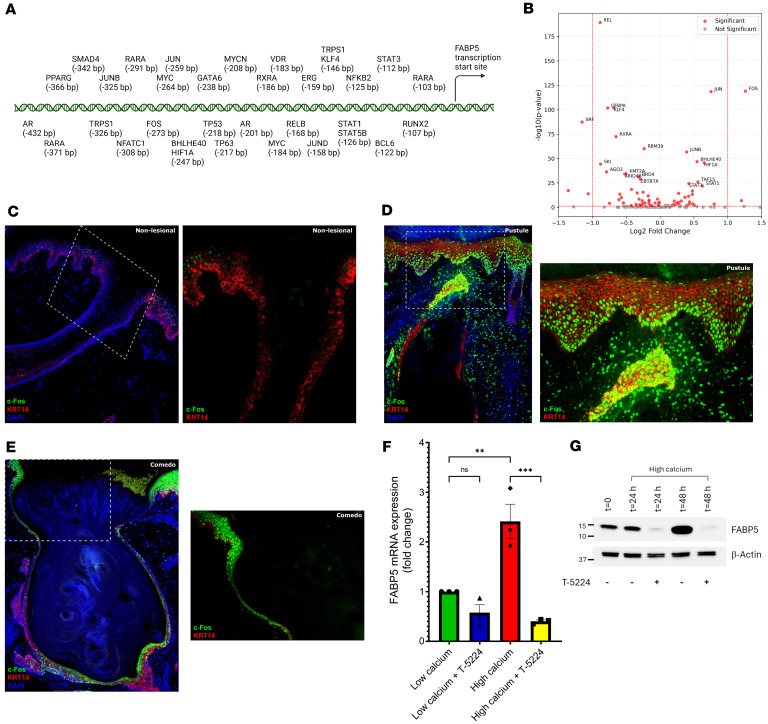 Figure 6
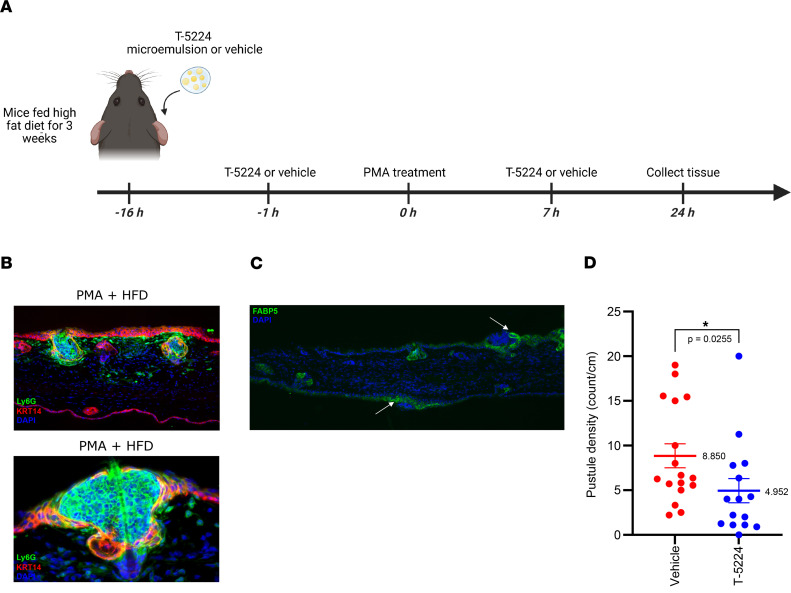 Figure 7
Peer Reviews
No public reviews on file for this paper yet. If you reviewed it on a platform where reviews are public (OpenReview, ICLR, NeurIPS, ICML), you can paste yours below so the community can read it here.
Videos
No videos yet. Explain this paper in a talk, walkthrough, or lecture? Add one.
Taxonomy
TopicsAcne and Rosacea Treatments and Effects · Dermatology and Skin Diseases · Hidradenitis Suppurativa and Treatments