Epitope-specific competitive ELISA predicts malaria transmission-blocking vaccine Pfs230D1 activity measured in standard membrane feeding assay
Cristina A. Meehan, Matthew V. Cowles, Robert D. Morrison, Yuyan Yi, Jingwen Gu, Jen C.C. Hume, Mina P. Peyton, Issaka Sagara, Sara A. Healy, Jonathan P. Renn, Patrick E. Duffy

TL;DR
A new ELISA test predicts how well a malaria vaccine candidate prevents mosquito infections, potentially replacing a more complex assay.
Contribution
An epitope-specific competitive ELISA platform (P230Compete) is developed to predict vaccine activity against malaria transmission.
Findings
EUF and IgG1F strongly correlate and predict TRA with high accuracy.
Combining EUF and IgG1F improves predictive performance for TRA.
P230Compete shows promise as a scalable alternative to SMFA for vaccine trials.
Abstract
Functional antibody responses to malaria transmission-blocking vaccines (TBVs) are assessed using the standard membrane feeding assay (SMFA). This assay quantifies the percentage reduction of oocyst levels in mosquitoes fed gametocytes mixed with antisera/antibodies, referred to as transmission-reducing activity (TRA). As TBVs advance to large clinical trials, new scalable assays are needed to characterize vaccine responses. Here, we developed an epitope-specific competitive ELISA platform (P230Compete) for TBV candidate Pfs230D1, based on single-chain variable fragments against epitopes recognized by human monoclonal antibodies with high TRA. We quantified functional epitope-specific antibody responses (F) in phase I Pfs230D1-EPA/AS01 vaccine trial participants, using 171 serum samples collected at 2 postvaccination time points. Five antibody features were examined by P230Compete,…
Genes, proteins, chemicals, diseases, species, mutations and cell lines named across the full text — each resolved to its canonical identifier and authoritative record.
Click any figure to enlarge with its caption.
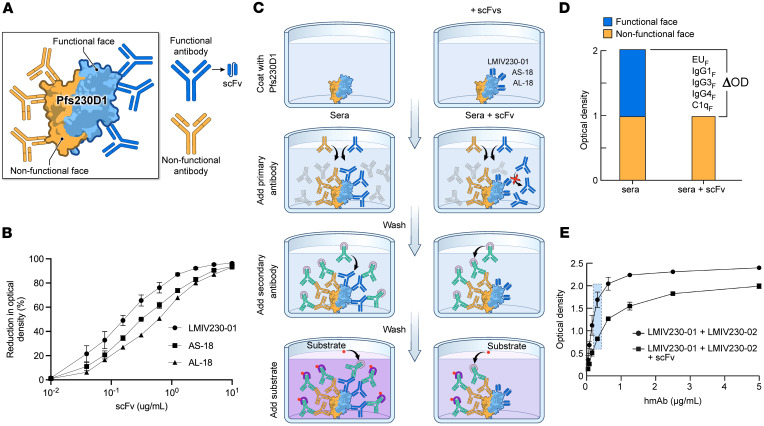 Figure 1
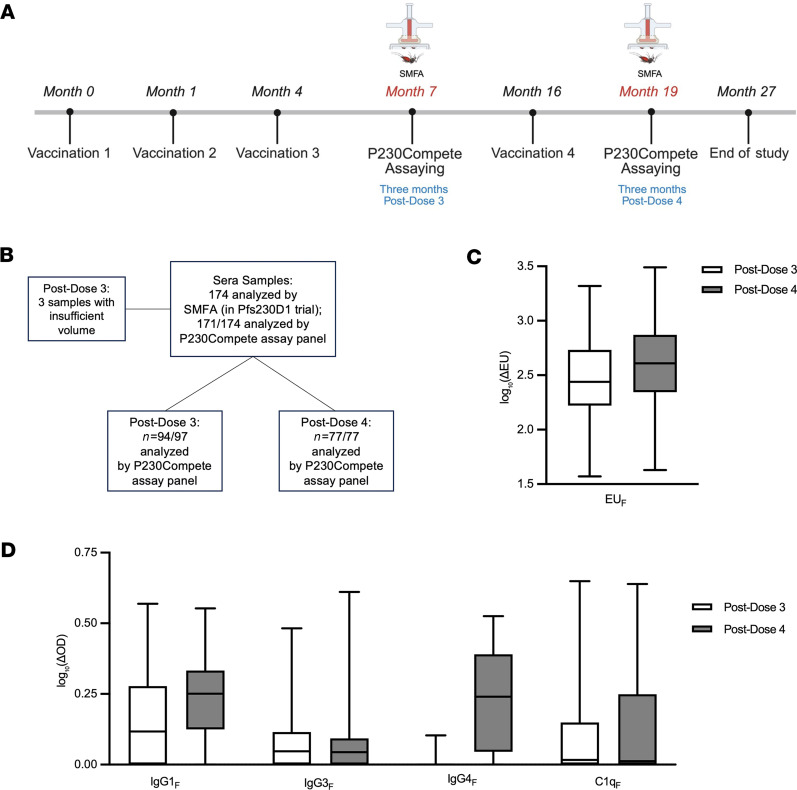 Figure 2
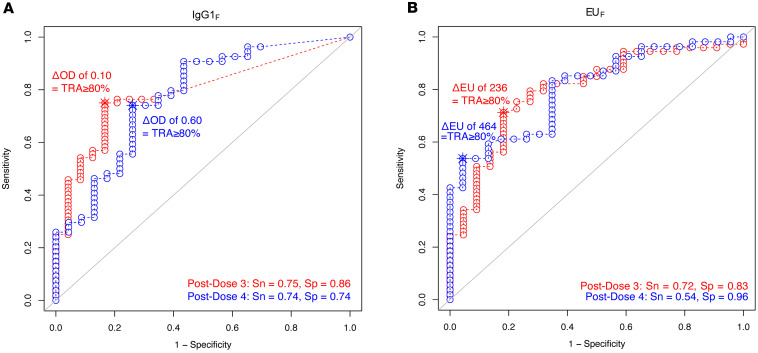 Figure 3
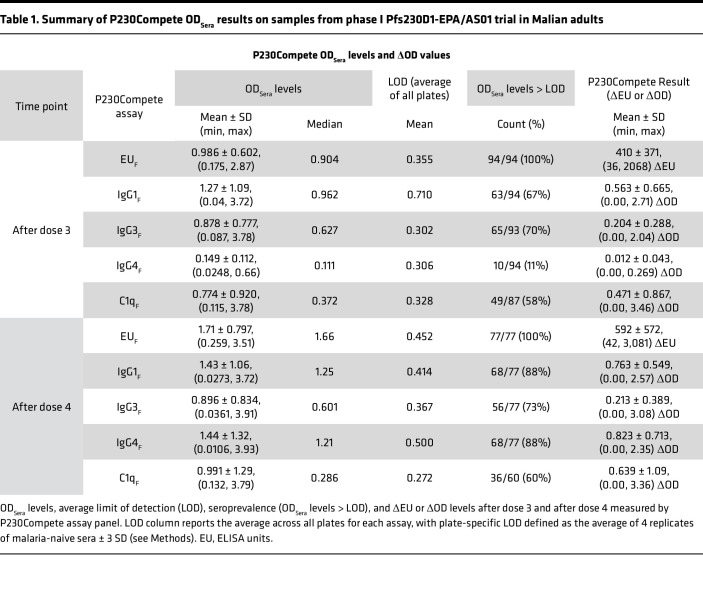 Figure 4
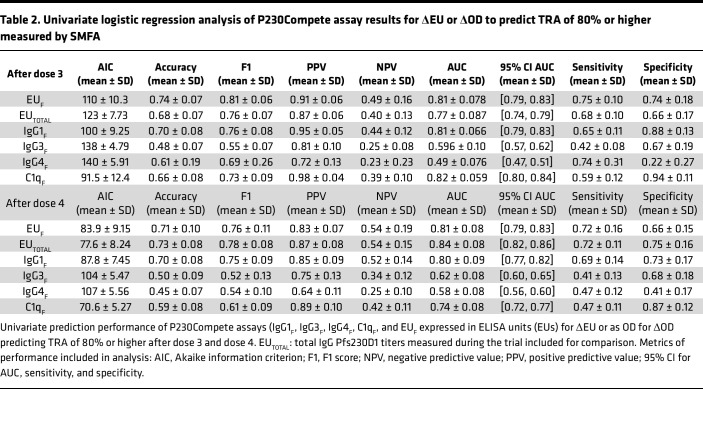 Figure 5
Peer Reviews
No public reviews on file for this paper yet. If you reviewed it on a platform where reviews are public (OpenReview, ICLR, NeurIPS, ICML), you can paste yours below so the community can read it here.
Videos
No videos yet. Explain this paper in a talk, walkthrough, or lecture? Add one.
Taxonomy
TopicsMalaria Research and Control · Invertebrate Immune Response Mechanisms · vaccines and immunoinformatics approaches