Protein-protein interaction–interfering peptide rescues dysregulated NMDA receptor signaling
Robert E. Featherstone, Hongbin Li, Ameet S. Sengar, Karin E. Borgmann-Winter, Olya Melnychenko, Lindsey M. Crown, Ray L. Gifford, Felix Amirfathi, Anamika Banerjee, AiVi Tran, Krishna Parekh, Margaret Heller, Wenyu Zhang, Robert J. Gallop, Adam D. Marc, Pragya Komal

TL;DR
This paper shows that a special peptide can reverse NMDAR signaling issues in schizophrenia by targeting protein interactions.
Contribution
The study introduces a novel therapeutic strategy using a peptide to disrupt harmful protein interactions in schizophrenia.
Findings
TAT-SAPIP enhanced NMDAR currents in mice with NMDAR hypofunction.
Chronic TAT-SAPIP injections improved cognitive deficits in mice.
The peptide increased Src activity in human brain samples.
Abstract
The complex and heterogeneous genetic architecture of neuropsychiatric illnesses compels us to look beyond individual risk genes for therapeutic strategies and target the interactive dynamics and convergence of their protein products. A mechanistic substrate for convergence of synaptic neuropsychiatric risk genes are protein-protein interactions (PPIs) in the N-methyl-D-aspartate receptor (NMDAR) complex. NMDAR hypofunction in schizophrenia is associated with hypoactivity of Src kinase, resulting from convergent alterations in PPIs of Src with its partners. Of these, the association of Src with PSD-95, which inhibits the activity of this kinase in the NMDAR complex, is known to be increased in schizophrenia. Here, we devised a strategy to suppress the inhibition of Src by PSD-95 by employing a cell-penetrating and Src-activating PSD-95 inhibitory peptide (TAT-SAPIP). TAT-SAPIP enhanced…
Genes, proteins, chemicals, diseases, species, mutations and cell lines named across the full text — each resolved to its canonical identifier and authoritative record.
Click any figure to enlarge with its caption.
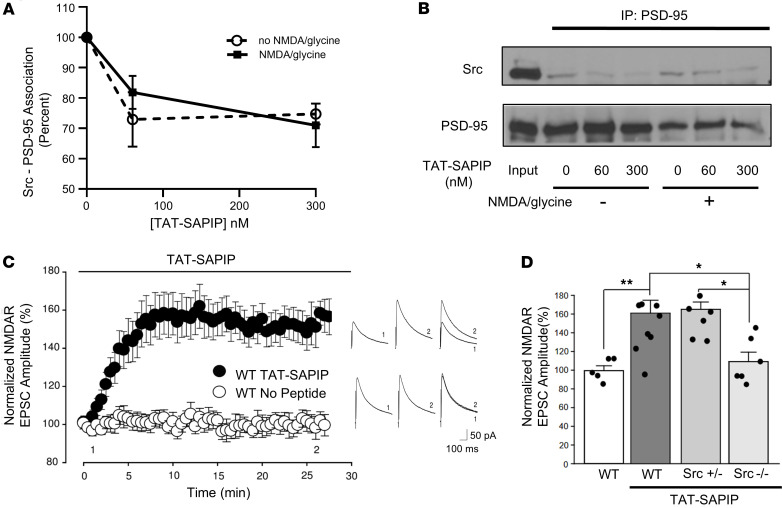 Figure 1
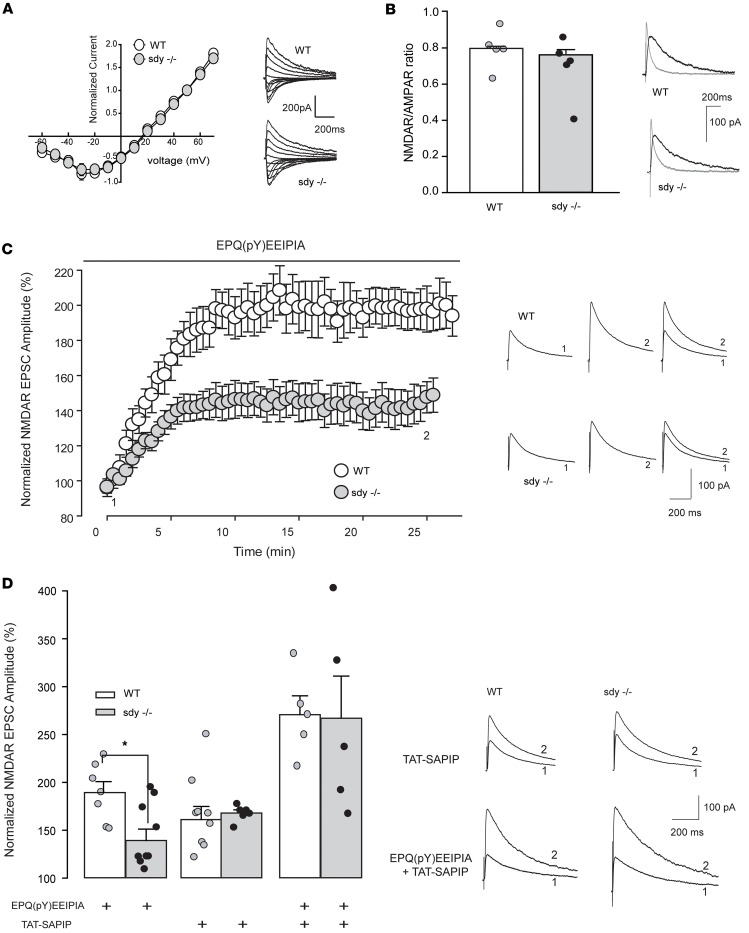 Figure 2
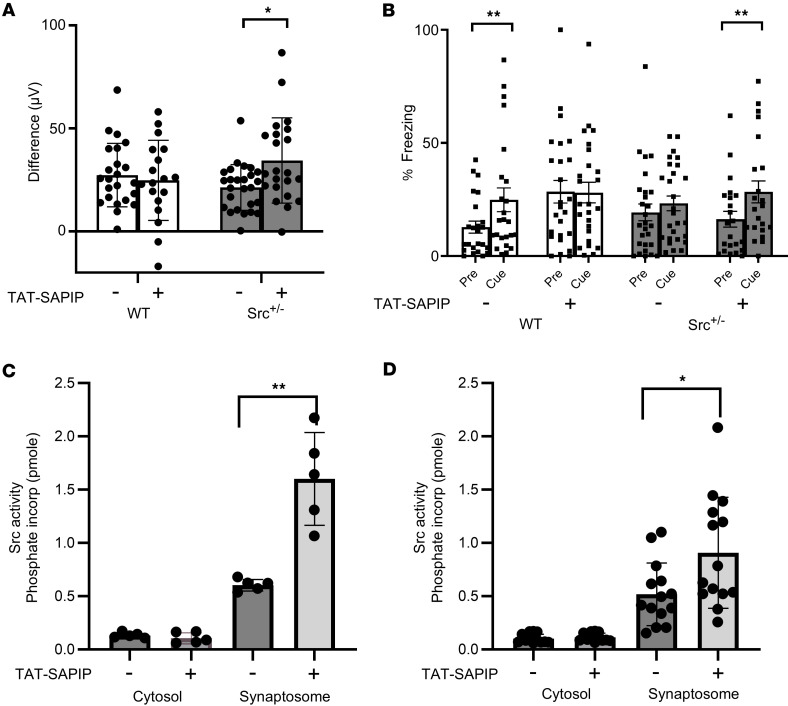 Figure 3
Peer Reviews
No public reviews on file for this paper yet. If you reviewed it on a platform where reviews are public (OpenReview, ICLR, NeurIPS, ICML), you can paste yours below so the community can read it here.
Videos
No videos yet. Explain this paper in a talk, walkthrough, or lecture? Add one.
Taxonomy
TopicsAmino Acid Enzymes and Metabolism · Neuroscience and Neuropharmacology Research · Tryptophan and brain disorders