Thrombomodulin protects against acute vascular and multiorgan injury in sickle cell disease
Guohui Ren, Dustin R. Fraidenburg, Suman Setty, Jiwang Chen, Janae Gonzales, Maria Armila Ruiz, Zalaya Ivy, Najmeh Eskandari, Richard D. Minshall, James P. Lash, Victor R. Gordeuk, Santosh L. Saraf

TL;DR
Thrombomodulin protects against acute vascular and organ damage in sickle cell disease, with recombinant thrombomodulin showing potential to mitigate injury.
Contribution
The study identifies thrombomodulin dysfunction as a novel contributor to multiorgan failure in sickle cell disease and proposes its therapeutic use.
Findings
Reduced thrombomodulin function correlates with vascular and organ injury in SCD patients and mice.
Recombinant thrombomodulin infusion restores blood flow and reduces injury biomarkers in mice.
Thrombomodulin loss is linked to systemic vasculopathy in SCD-related multiorgan failure.
Abstract
Vaso-occlusive episodes (VOEs) in the setting of hyperhemolysis can rapidly evolve into multiorgan failure in sickle cell disease (SCD). Although the mechanisms for rapid progression to multiorgan failure are unclear, a systemic vasculopathy with thrombotic microangiopathy–type features has been described. Reduced thrombomodulin (TM) function is implicated in some thrombotic microangiopathy syndromes. We observed a greater decline in platelet count and hemoglobin concentration and an increase in vascular injury biomarkers within 24 hours of admission for a VOE in 12 patients with SCD with multiorgan failure versus 12 patients without multiorgan failure. We observed decreased TM expression on the lung and kidney vasculature of 3 additional patients with SCD with multiorgan failure compared with a control patient without SCD. Transgenic SCD mice challenged with cell-free hemoglobin had…
Genes, proteins, chemicals, diseases, species, mutations and cell lines named across the full text — each resolved to its canonical identifier and authoritative record.
Click any figure to enlarge with its caption.
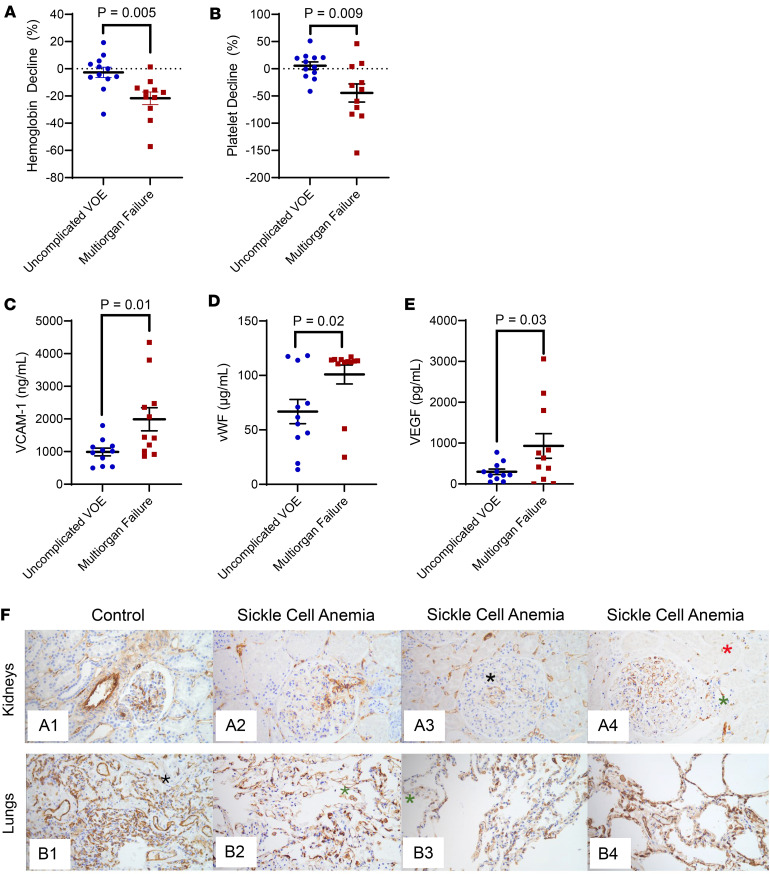 Figure 1
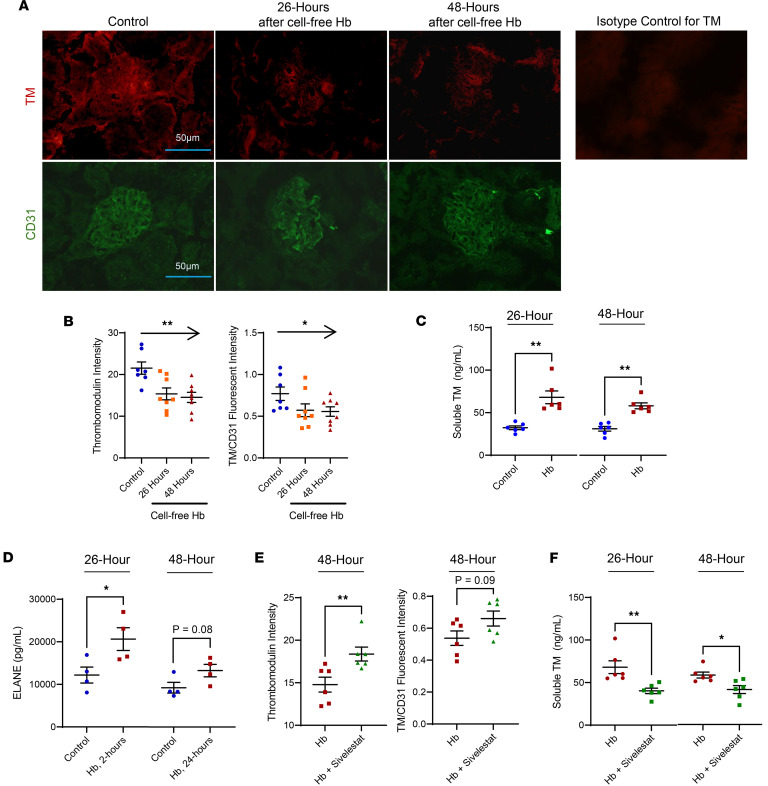 Figure 2
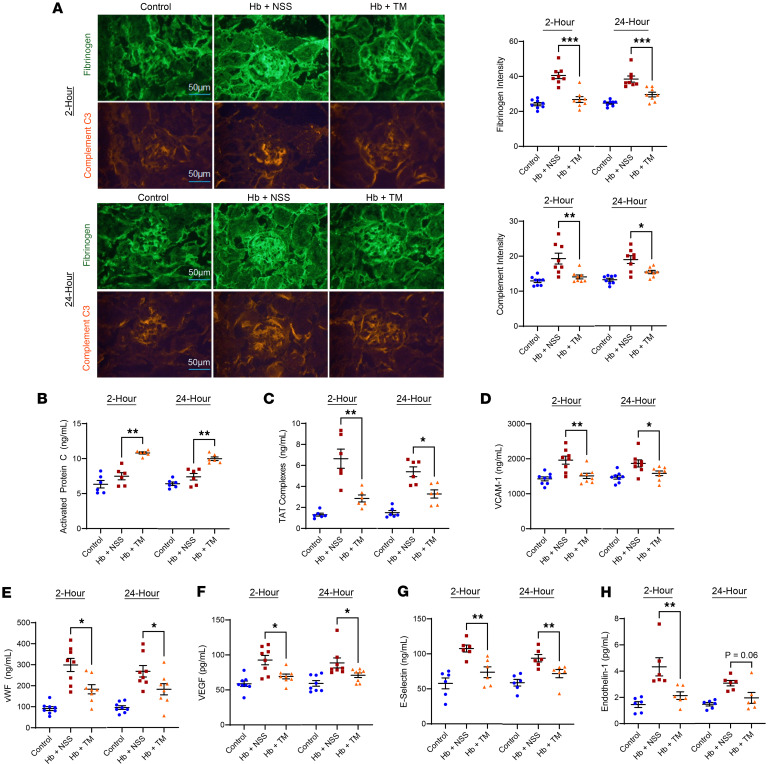 Figure 3
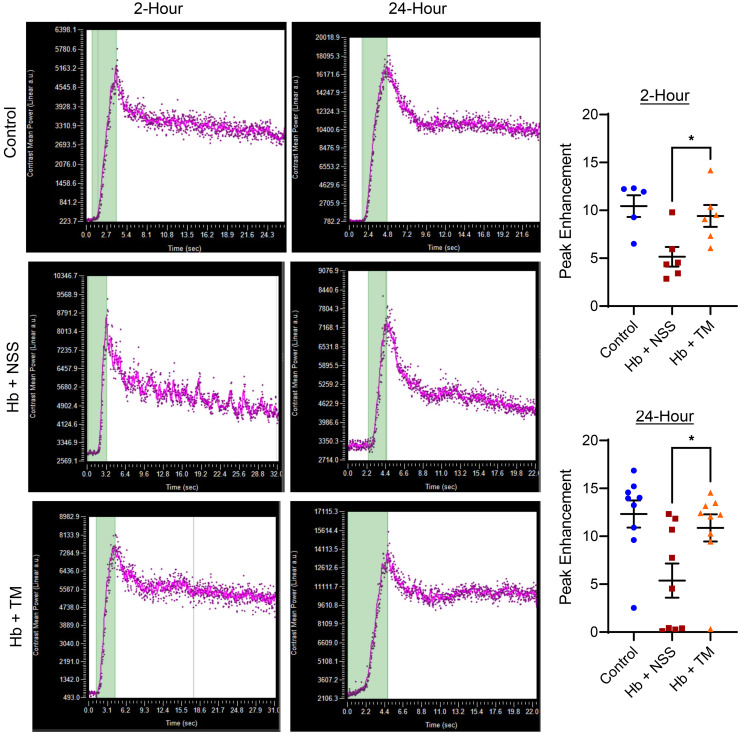 Figure 4
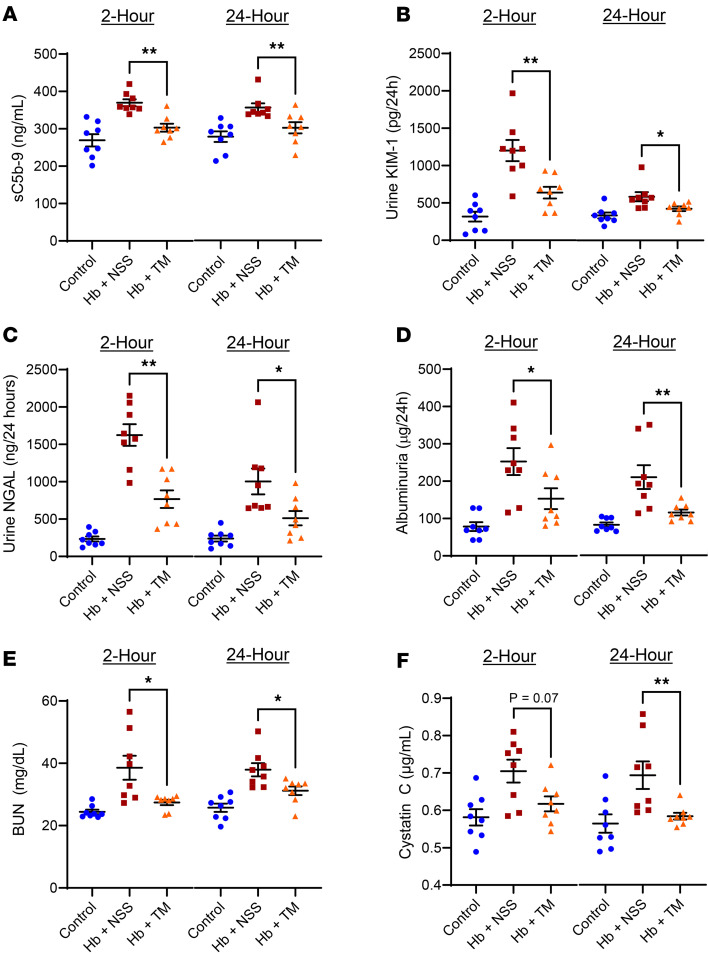 Figure 5
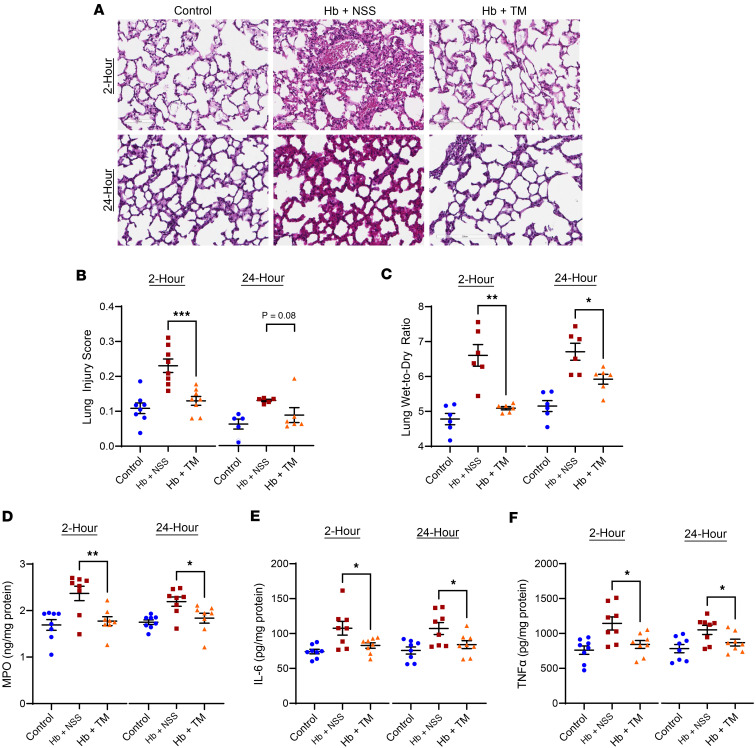 Figure 6
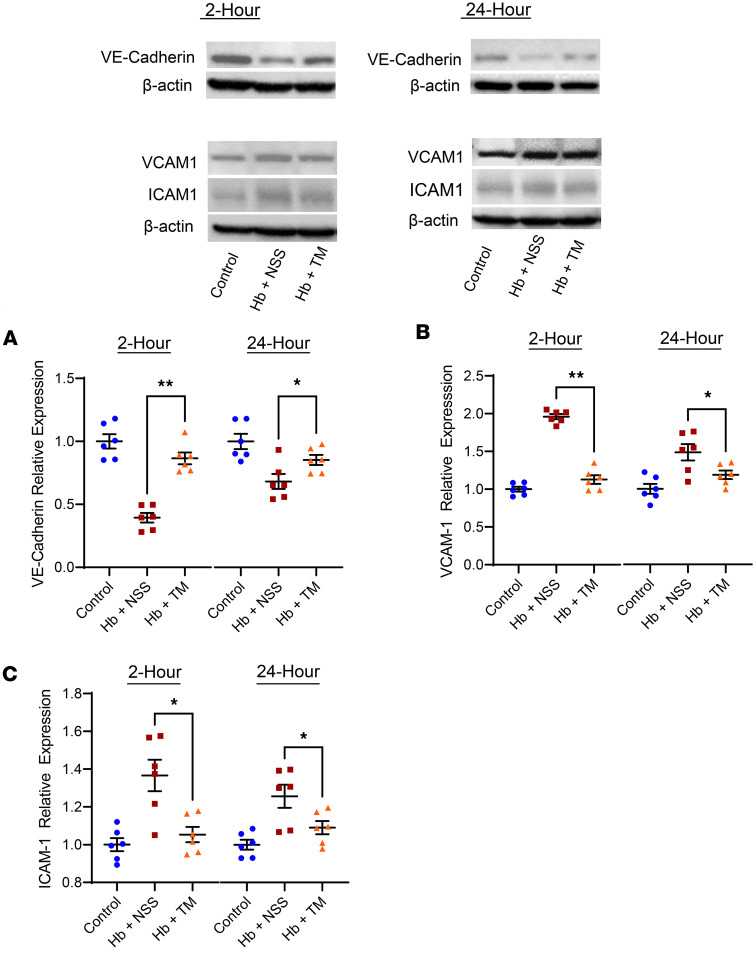 Figure 7
Peer Reviews
No public reviews on file for this paper yet. If you reviewed it on a platform where reviews are public (OpenReview, ICLR, NeurIPS, ICML), you can paste yours below so the community can read it here.
Videos
No videos yet. Explain this paper in a talk, walkthrough, or lecture? Add one.
Taxonomy
TopicsHemoglobinopathies and Related Disorders · Blood Coagulation and Thrombosis Mechanisms · Complement system in diseases