Challenging the recessive paradigm of Mahvash disease: heterozygous phenotypes from a novel splice-site variant
Francisco Martínez Bugallo, Gema García de la Rosa, Carol Prieto-Morín

TL;DR
A family with a new genetic variant in the GCGR gene shows that heterozygous carriers can have mild pancreatic changes, challenging the idea that Mahvash disease only affects homozygous individuals.
Contribution
This study reports a novel splice-site variant in GCGR and demonstrates that heterozygous carriers can exhibit subtle phenotypes, challenging the recessive model of Mahvash disease.
Findings
Homozygous individuals displayed classic Mahvash disease features, including pancreatic tumors and hyperplasia.
Heterozygous carriers showed mild biochemical and structural pancreatic changes without overt disease.
The findings suggest semidominant expression of GCGR-related disease and the need to reconsider surveillance for heterozygotes.
Abstract
Mahvash disease is a rare autosomal recessive condition caused by biallelic inactivating variants in the GCGR gene, impairing glucagon signaling and leading to alpha-cell hyperplasia and pancreatic neuroendocrine tumors (PNETs). Fewer than 20 cases have been reported, and the clinical impact of heterozygous variants remains unclear. Case Presentation: We report a family with a novel GCGR splice-site variant (c.1176+1_1176+7delGTGCCCG). The index case, a 61-year-old woman, presented with extensive pancreatic cystic disease and was found to be homozygous for the variant. She developed well-differentiated PNETs and underwent total pancreatectomy. Her sister, also homozygous, had similar clinical features and surgical history. In contrast, the heterozygous brother and two sons showed mild biochemical changes, such as elevated glucagon levels and small pancreatic cysts, without overt…
Genes, proteins, chemicals, diseases, species, mutations and cell lines named across the full text — each resolved to its canonical identifier and authoritative record.
Click any figure to enlarge with its caption.
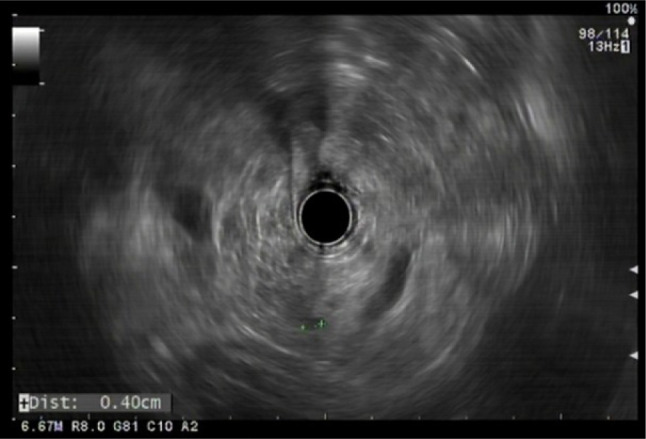 Figure 1
Peer Reviews
No public reviews on file for this paper yet. If you reviewed it on a platform where reviews are public (OpenReview, ICLR, NeurIPS, ICML), you can paste yours below so the community can read it here.
Videos
No videos yet. Explain this paper in a talk, walkthrough, or lecture? Add one.
Taxonomy
TopicsPancreatic function and diabetes · Neuroendocrine Tumor Research Advances · Diabetes Treatment and Management