A Matched Case‐Control Study to Evaluate Predicted Drug Exposures and Neutropenia during Valganciclovir Prophylaxis in Pediatric Solid Organ Transplant Recipients
Mai‐Uyen T. Nguyen, Michael N. Neely, Anders Åsberg, Craig L. K. Boge, Kevin J. Downes

TL;DR
This study found no link between predicted drug levels and neutropenia in children taking valganciclovir after organ transplants, suggesting genetic or other factors may be responsible.
Contribution
The study introduces a matched case-control approach using pharmacokinetic modeling to assess drug exposure and toxicity in pediatric transplant patients.
Findings
No significant differences in predicted ganciclovir AUCs were found between cases with and without neutropenia.
Pharmacokinetic differences did not appear to drive toxicity in pediatric solid organ transplant recipients.
Genetic or intrinsic factors may play a role in neutropenia development in this population.
Abstract
Neutropenia during valganciclovir (VGCV) prophylaxis for cytomegalovirus infection in pediatric solid organ transplant (pSOT) recipients is common, but it is uncertain if this toxicity is exposure‐dependent. To compare ganciclovir (GCV) exposures in children treated with VGCV with and without neutropenia, we performed a retrospective matched case‐control study among pSOT prescribed VGCV, dosed based on body surface area. Cases were defined as an absolute neutrophil count (ANC) < 1000/µL. Controls without neutropenia were matched by age (+/−1 year), transplanted organ, and duration of VGCV prophylaxis. We used a published population pharmacokinetic model to inform predictions of GCV concentrations using Pmetrics, accounting for each subject's time‐dependent variables (age, weight, creatinine clearance). We then calculated 24‐h, 7‐day, and cumulative area under the curve (AUC) in each…
Genes, proteins, chemicals, diseases, species, mutations and cell lines named across the full text — each resolved to its canonical identifier and authoritative record.
Click any figure to enlarge with its caption.
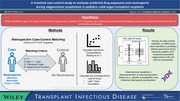 Figure 1
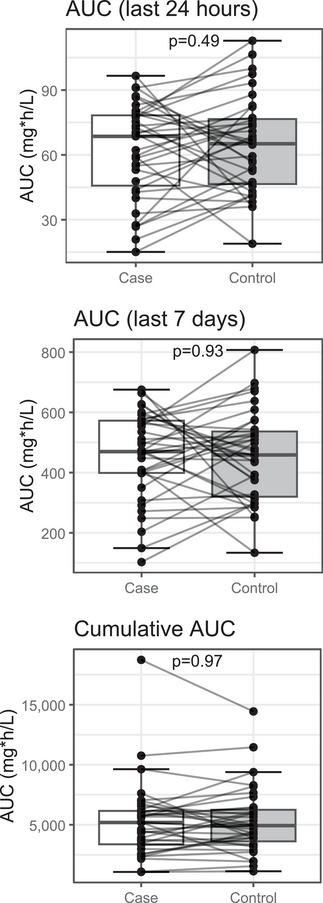 Figure 2
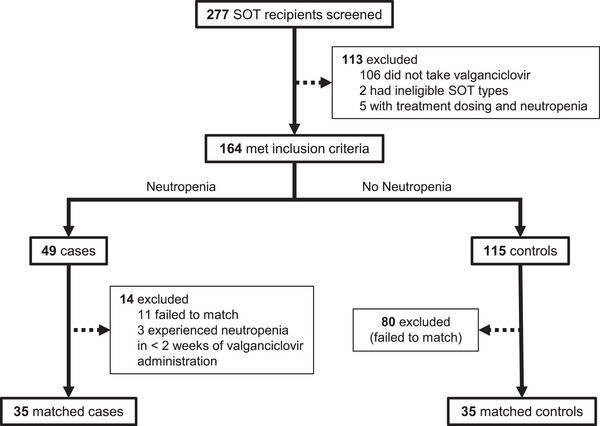 Figure 3
Peer Reviews
No public reviews on file for this paper yet. If you reviewed it on a platform where reviews are public (OpenReview, ICLR, NeurIPS, ICML), you can paste yours below so the community can read it here.
Videos
No videos yet. Explain this paper in a talk, walkthrough, or lecture? Add one.
Taxonomy
TopicsCytomegalovirus and herpesvirus research · Viral-associated cancers and disorders · Renal Transplantation Outcomes and Treatments