Efficacy of high doses of ivermectin–clorsulon in cattle on Glossina palpalis gambiensis survival and fecundity: implications for human and animal trypanosomoses control
Sié Hermann Pooda, Soumaïla Pagabeleguem, Ange Irénée Toé, Adrien Marie Gaston Belem, Karine Mouline, Philippe Solano

TL;DR
High doses of ivermectin–clorsulon in cattle significantly reduced tsetse fly survival and reproduction, offering a new tool to control trypanosomoses in Africa.
Contribution
Demonstrates that high-dose ivermectin–clorsulon in cattle effectively reduces tsetse fly survival and fecundity.
Findings
30-day fly mortality rates were 24.0% (control), 59.8% (TD), 88.9% (2TD), and 90.4% (4TD) at 1 DPI.
Pupal production decreased by 43.6–100% in treated groups compared to control at 1 DPI.
Toxic effects of 4TD lasted until 15 DPI for survival and 8 DPI for fecundity.
Abstract
Trypanosomoses are parasitic diseases caused by Trypanosoma protozoa transmitted by tsetse flies (Glossina spp.) to humans and animals. These diseases cause major health and economic disruptions in sub-Saharan Africa. Despite the development and wide implementation of control strategies, the disease burden remains high and complementary tools are needed. Ivermectin is an endectocide toxic to arthropods, including Glossina. The aim of this study was to test the efficacy of different doses of ivermectin administered to cattle on the survival and fecundity of Glossina palpalis gambiensis Vanderplank, 1949 in Burkina Faso. This study compared the survival and fecundity of tsetse flies exposed to cattle treated with ivermectin–clorsulon (onefold veterinary therapeutic dose [TD; 0.2 mg/kg], twofold TD [2TD; 0.4 mg/kg], and fourfold TD [4TD; 0.8 mg/kg]) with those of flies exposed to control…
Genes, proteins, chemicals, diseases, species, mutations and cell lines named across the full text — each resolved to its canonical identifier and authoritative record.
Click any figure to enlarge with its caption.
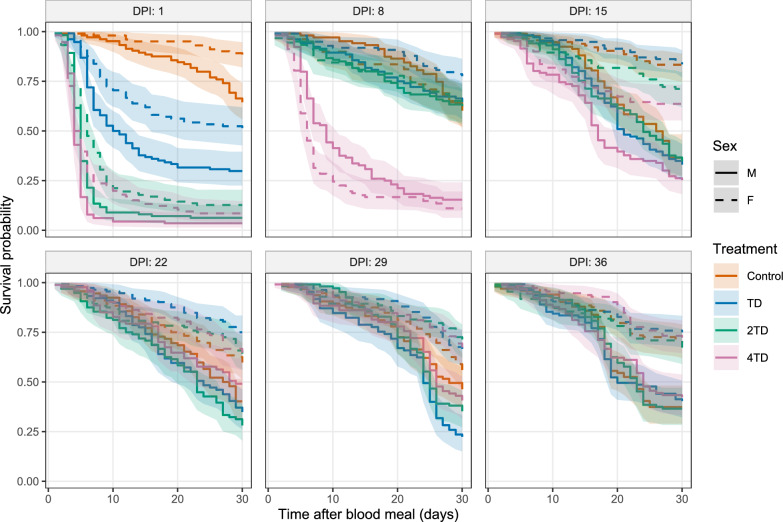 Figure 1
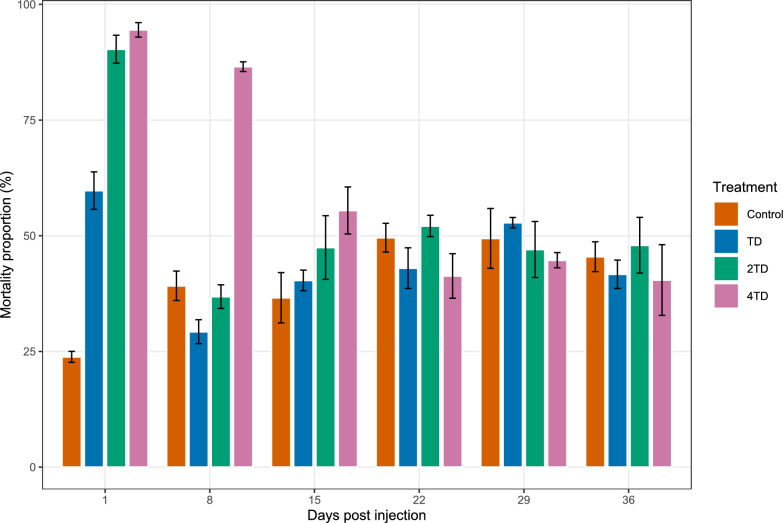 Figure 2
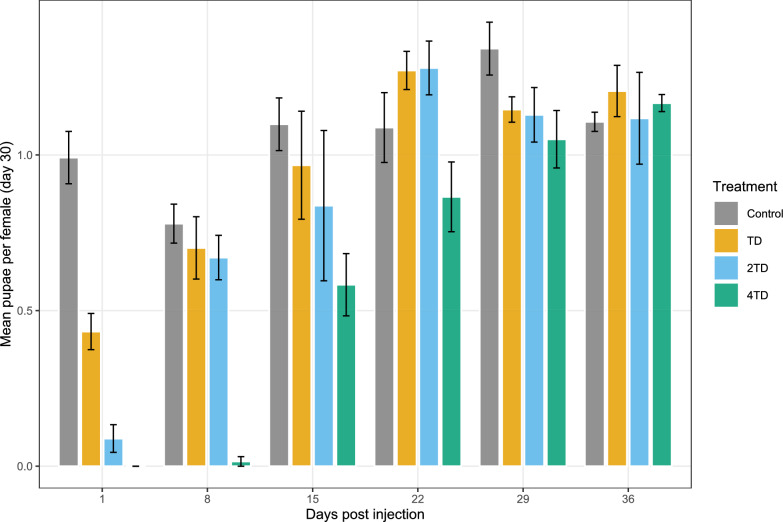 Figure 3
 Figure 4
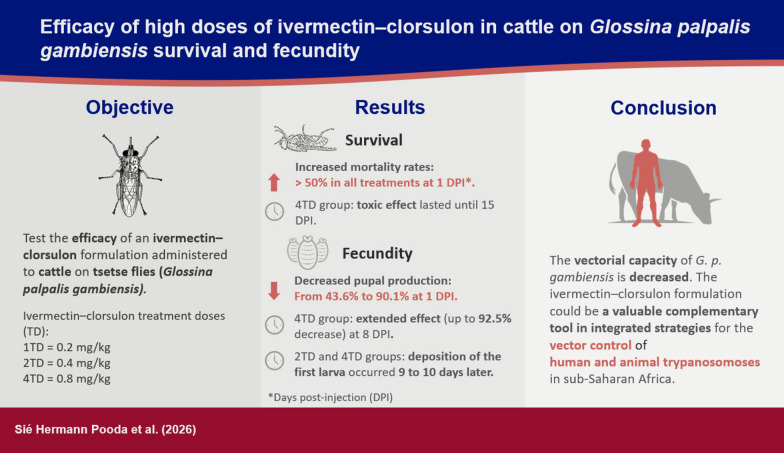 Figure 5
Peer Reviews
No public reviews on file for this paper yet. If you reviewed it on a platform where reviews are public (OpenReview, ICLR, NeurIPS, ICML), you can paste yours below so the community can read it here.
Videos
No videos yet. Explain this paper in a talk, walkthrough, or lecture? Add one.
Taxonomy
TopicsTrypanosoma species research and implications · Parasitic Diseases Research and Treatment · Helminth infection and control