Artificial intelligence-driven clustering for phenotyping life-threatening prehospital trauma
Rubén Pérez-García, Erik Alonso, Raúl López-Izquierdo, Carlos del Pozo Vegas, Mikel Idoyaga, Asier Losada, José Luis Martín-Conty, Begoña Polonio-López, Ancor Sanz-García, Francisco Martín-Rodríguez

TL;DR
This study uses AI to identify three trauma patient groups with very different mortality risks, which could improve emergency care and resource allocation.
Contribution
A novel AI-driven clustering method was used to phenotype prehospital trauma patients based on mortality risk and injury patterns.
Findings
Three distinct trauma phenotypes were identified with mortality rates of 93.1%, 68.1%, and 10.6%.
Cluster T-1 was primarily associated with traumatic brain injuries, thoracic trauma, and burns.
Cluster T-3 predominantly involved orthopedic trauma with the lowest mortality rate.
Abstract
Traumatic patients usually suffer from several complex conditions that hinder their risk characterization. The aim of this study was to derive phenotypes of prehospital acute life-threatening trauma via nonsupervised artificial intelligence (AI) clustering methods. This was a prospective multicenter study in adult trauma patients treated in prehospital care and transferred to the emergency department. The study included 147 ambulances, 4 helicopters, and 11 hospitals in Spain between 1 January 2021 and 31 August 2024. Epidemiological variables, trauma-related data, baseline vital signs and blood tests were collected. The primary outcome was all-cause 2-day in-hospital mortality. A total of 1474 patients were included, with a 2-day in-hospital mortality rate of 8.3%. The selected clustering method identified three clusters: the T-1 phenotype comprised 6.9% (101 cases) with a mortality…
Genes, proteins, chemicals, diseases, species, mutations and cell lines named across the full text — each resolved to its canonical identifier and authoritative record.
Click any figure to enlarge with its caption.
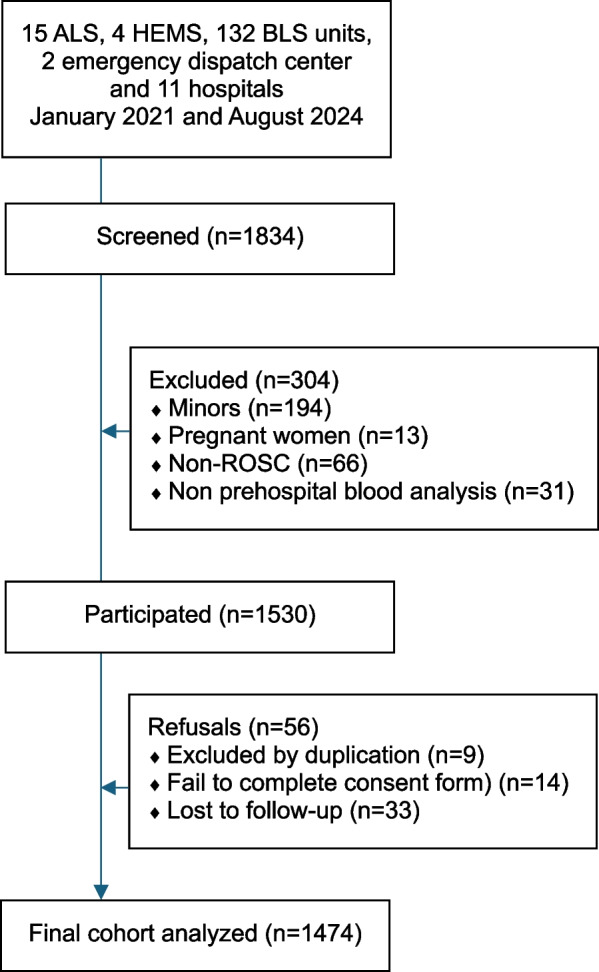 Figure 1
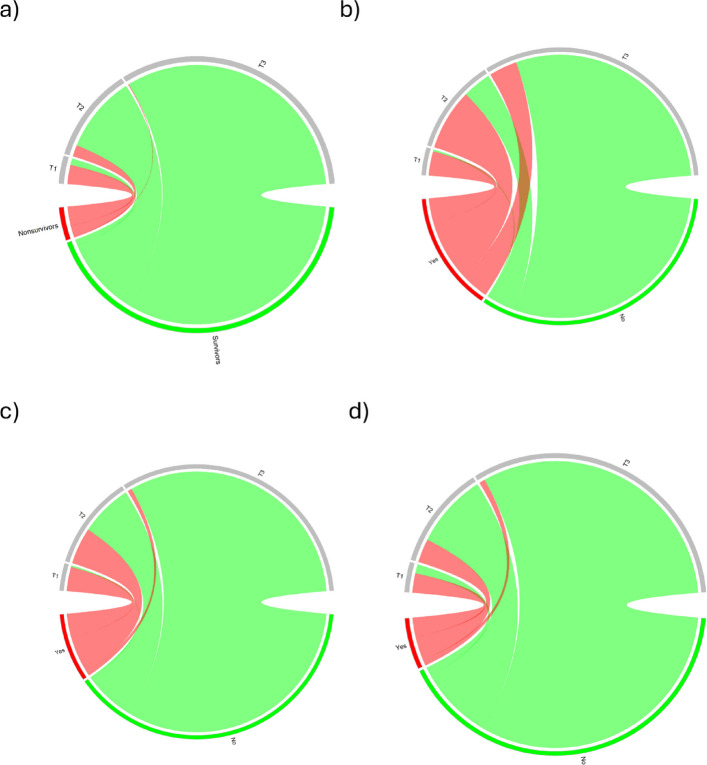 Figure 2
Peer Reviews
No public reviews on file for this paper yet. If you reviewed it on a platform where reviews are public (OpenReview, ICLR, NeurIPS, ICML), you can paste yours below so the community can read it here.
Videos
No videos yet. Explain this paper in a talk, walkthrough, or lecture? Add one.
Taxonomy
TopicsTrauma and Emergency Care Studies · Trauma, Hemostasis, Coagulopathy, Resuscitation · Artificial Intelligence in Healthcare and Education