Cyclohexyl acetate functions like a volatile sex pheromone mimic in Caenorhabditis nematodes
Xuan Wan, Yuki Togawa, Matthew R. Gronquist, Marika Sagawa, Daniel Leighton, Chung Man Chan, Frank C. Schroeder, King L. Chow, Paul W. Sternberg, Ryoji Shinya

TL;DR
This study shows that cyclohexyl acetate mimics a male-specific attractant in nematodes, using a different sensory pathway than natural pheromones.
Contribution
The study identifies cyclohexyl acetate as a volatile compound that mimics sex pheromone effects in Caenorhabditis nematodes through a novel sensory pathway.
Findings
Cyclohexyl acetate acts as a male-specific attractant in Caenorhabditis nematodes.
Cyclohexyl acetate perception involves AWCon neurons and srd-1-independent pathways.
Cyclohexyl acetate is a structural analog, not a major component of natural volatile sex pheromones.
Abstract
Nematodes communicate via diverse sex pheromones, including long-range volatile signals, short-range chemical cues, and contact-dependent molecules. While the ascaroside family of small molecules that mediate short-range attraction is well characterized, the identities and roles of volatile sex pheromones (VSPs) that act over longer ranges remain unknown. Using GC–MS analysis of crude VSP extracts, we identified cyclohexyl acetate (CA) as a candidate mimic, sharing retention time and mass spectral features with natural VSPs. Behavioral assays demonstrated that CA acts as a concentration-dependent, male-specific attractant in Caenorhabditis. Pre-exposure to VSPs induced cross-adaptation to CA, suggesting shared sensory processing. Surprisingly, genetic and calcium imaging analyses revealed that CA perception is mediated primarily by AWCon (str-2-expressing) neurons and involves VSP…
Genes, proteins, chemicals, diseases, species, mutations and cell lines named across the full text — each resolved to its canonical identifier and authoritative record.
Click any figure to enlarge with its caption.
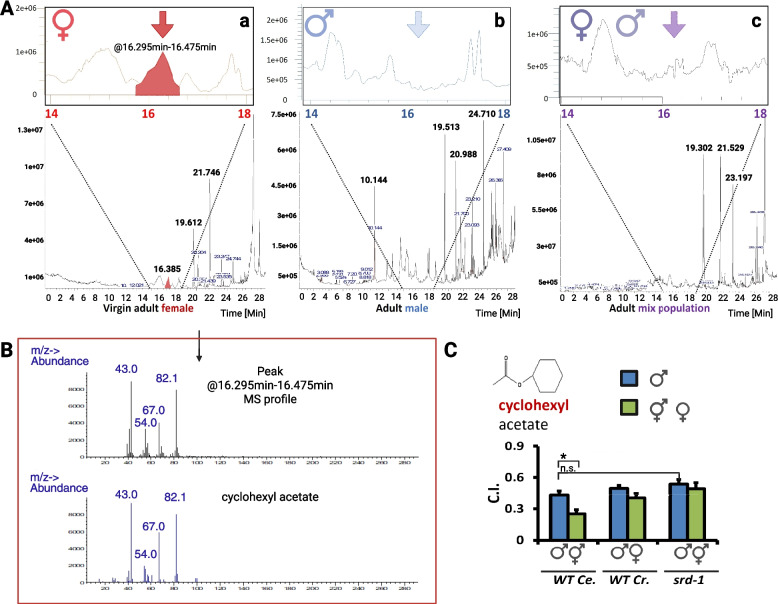 Figure 1
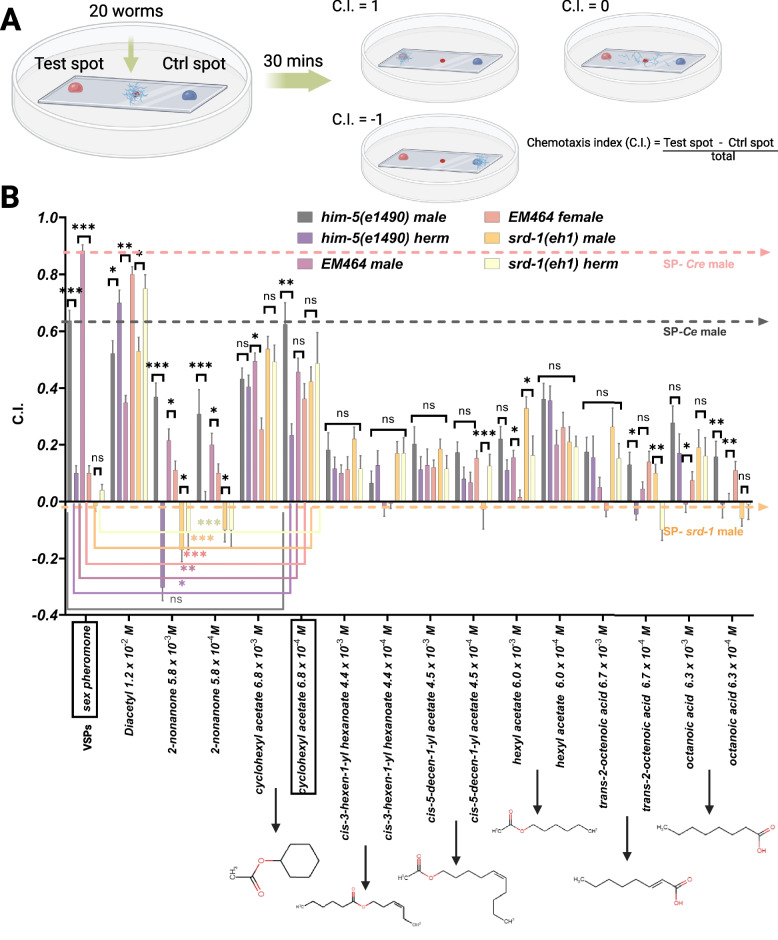 Figure 2
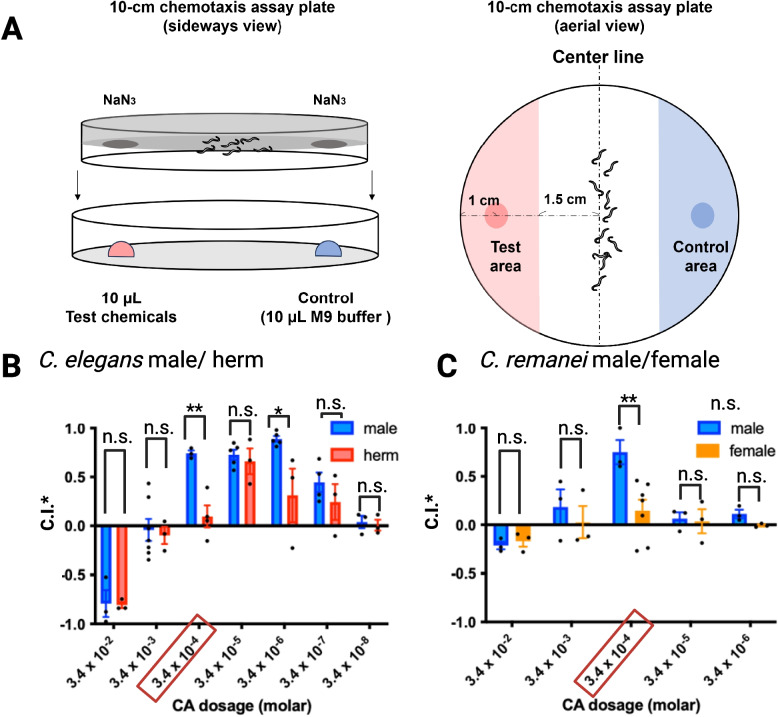 Figure 3
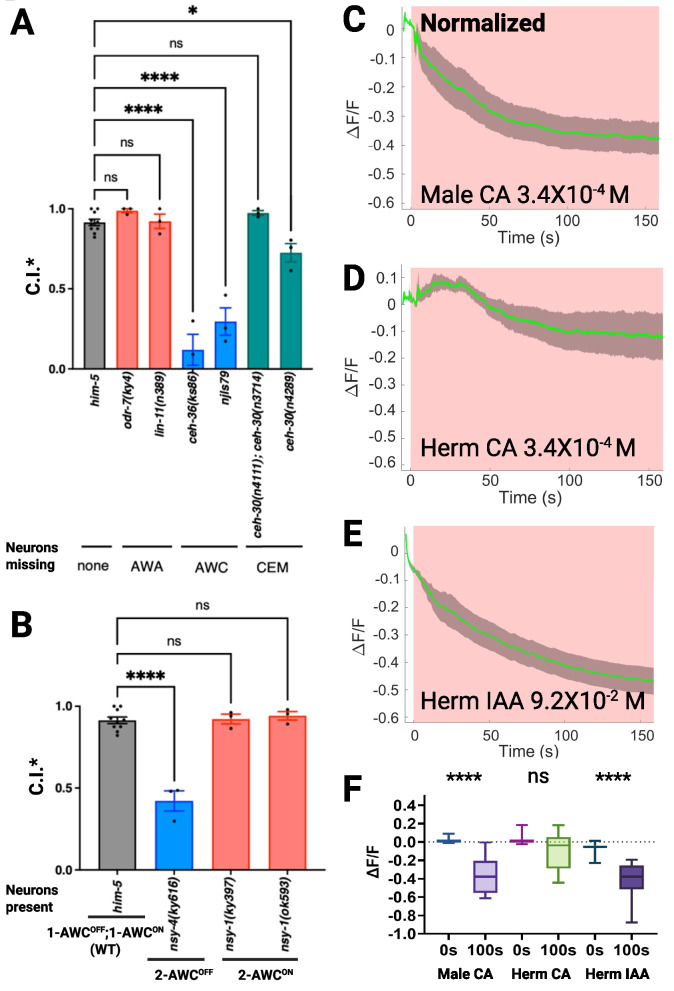 Figure 4
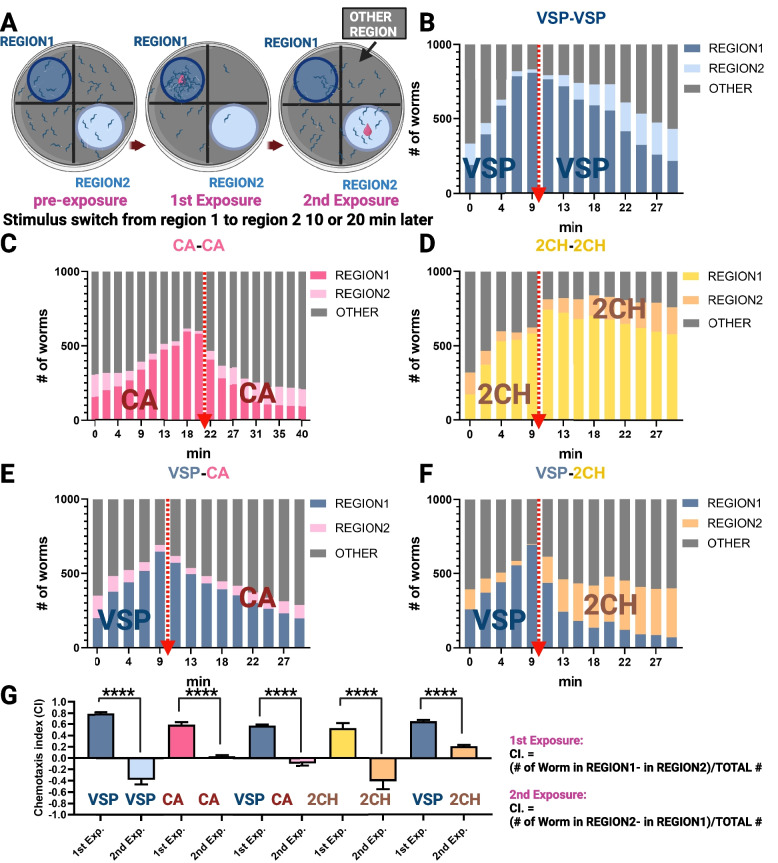 Figure 5
Peer Reviews
No public reviews on file for this paper yet. If you reviewed it on a platform where reviews are public (OpenReview, ICLR, NeurIPS, ICML), you can paste yours below so the community can read it here.
Videos
No videos yet. Explain this paper in a talk, walkthrough, or lecture? Add one.
Taxonomy
TopicsGenetics, Aging, and Longevity in Model Organisms · Entomopathogenic Microorganisms in Pest Control · Neurobiology and Insect Physiology Research