Sex-specific obesity paradox and type 2 myocardial infarction in acute ischemic stroke (AIS) patients
Wan Wang, Man Huang, Wu-lin Li, Xiao-wei Du, Yue Li, Zhao-hui Lu, Bei-bei Sun, Yu-qing Mao, Xiao-ya Ma, Xiao Han, Xiao Wu, Hui Chen, Fei Wang

TL;DR
In female stroke patients, being obese is linked to a lower risk of a specific type of heart damage compared to being normal or underweight, but this pattern does not hold for males.
Contribution
The study reveals a sex-specific obesity paradox in acute ischemic stroke patients regarding type 2 myocardial infarction risk.
Findings
Obese female AIS patients had a lower risk of T2MI compared to normal-weight and underweight females.
No significant association between BMI and T2MI was found in male AIS patients.
The relationship between BMI and T2MI risk was linear, as confirmed by restricted cubic spline analysis.
Abstract
Obesity is usually linked to negative outcomes in many diseases; however, some acute critical conditions exhibit a phenomenon known as the obesity paradox. This investigation assessed sex-specific differences in type 2 myocardial infarction (T2MI), a condition caused by an imbalance between oxygen supply and demand in the myocardium and unrelated to atherosclerotic plaque rupture. Additionally, the study explored the implications of body mass index (BMI) in patients with acute ischemic stroke (AIS). AIS patients were consecutively enrolled at Jiading District Central Hospital affiliated Shanghai University of Medicine & Health Sciences, from October 1, 2017, to December 31, 2023. Participants were divided into four groups based on their BMI: underweight group, normal weight group, overweight group, and obesity group. The primary outcome of the study was the incidence of T2MI. We…
Genes, proteins, chemicals, diseases, species, mutations and cell lines named across the full text — each resolved to its canonical identifier and authoritative record.
Click any figure to enlarge with its caption.
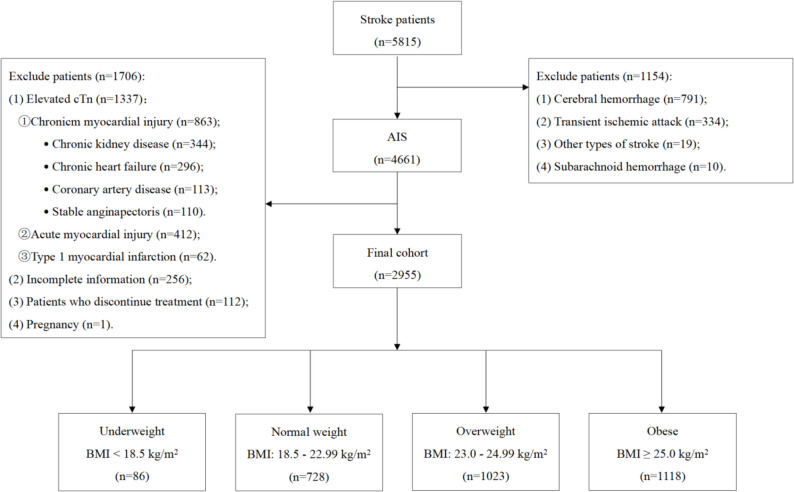 Figure 1
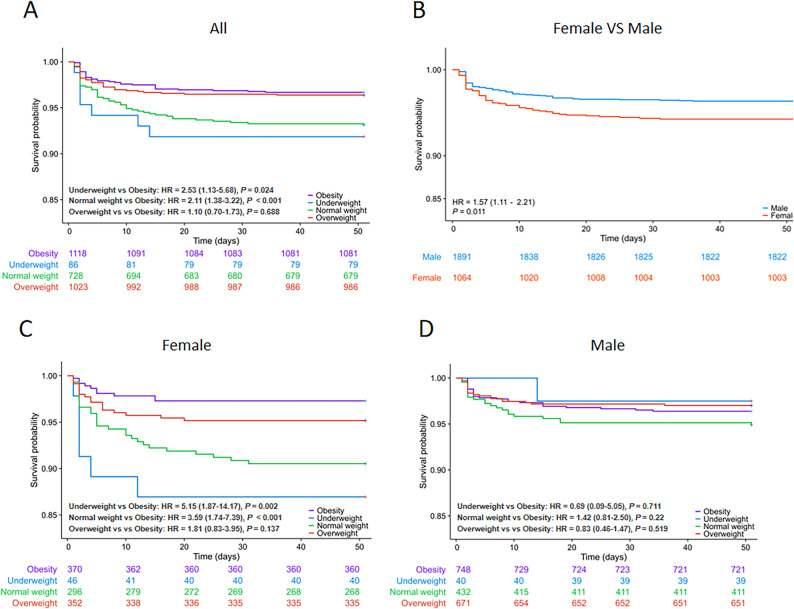 Figure 2
 Figure 3
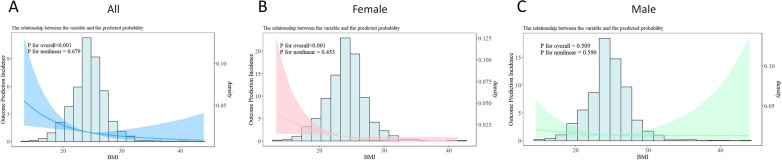 Figure 4
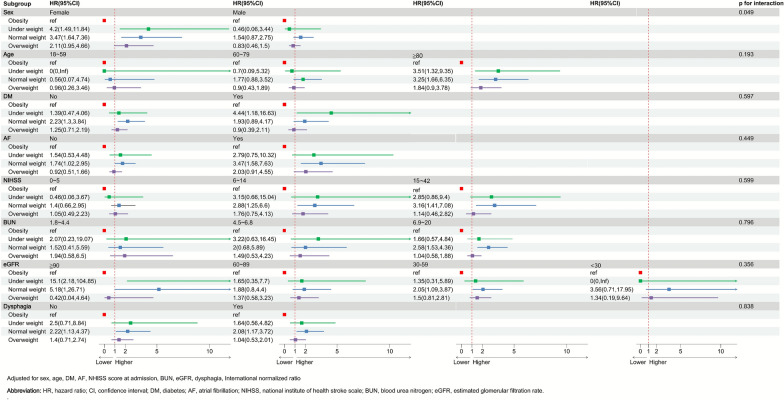 Figure 5
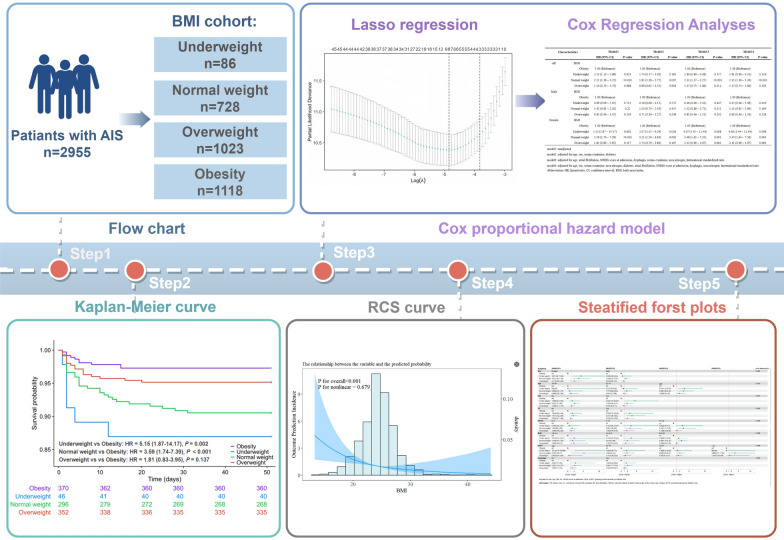 Figure 6
Peer Reviews
No public reviews on file for this paper yet. If you reviewed it on a platform where reviews are public (OpenReview, ICLR, NeurIPS, ICML), you can paste yours below so the community can read it here.
Videos
No videos yet. Explain this paper in a talk, walkthrough, or lecture? Add one.
Taxonomy
TopicsCardiovascular Function and Risk Factors · Acute Ischemic Stroke Management · Cardiovascular Health and Disease Prevention