Characterization of broad-host-range Salmonella phage GSP006 and its efficacy in controlling Salmonella Pullorum contamination in poultry feed and drinking water
Shenyu Pang, Hongyang Zhang, Xincong Liu, Jilai Wang, Shunyuan Pan, Xiangyu Kong, Jun Song, Dongyang Gao

TL;DR
This study identifies a phage, GSP006, that effectively targets Salmonella Pullorum in poultry feed and water, offering a natural alternative to antibiotics.
Contribution
The discovery and characterization of a broad-host-range phage GSP006 with potential for biocontrol of Salmonella Pullorum in poultry.
Findings
Phage GSP006 is stable across a wide range of temperatures and pH levels.
GSP006 significantly reduces Salmonella Pullorum in poultry feed and drinking water in vitro.
The phage belongs to the genus Jerseyvirus and has a dsDNA genome of 42,165 bp.
Abstract
Salmonella enterica subsp. enterica serovar Pullorum (Salmonella Pullorum) is the major pathogen that is harmful to the poultry industry in developing countries. It causes acute systemic and severe gastrointestinal diseases in chicks, resulting in high mortality. As a natural alternative to conventional antimicrobial agents, phage therapy is increasingly recognized as highly effective and promising for the control of multidrug-resistant bacterial infections, including salmonellosis caused by Salmonella. In this study, a broad-host-range phage, GSP006, targeting Salmonella Pullorum was isolated from poultry farm wastewater. It exhibited lytic activity against Salmonella Pullorum, Salmonella Enteritidis, Salmonella Typhimurium and other Salmonella serotypes. Genomic analysis revealed that GSP006 possesses a double-stranded DNA (dsDNA) genome of 42,165 bp with a G + C content of 50%.…
Genes, proteins, chemicals, diseases, species, mutations and cell lines named across the full text — each resolved to its canonical identifier and authoritative record.
Click any figure to enlarge with its caption.
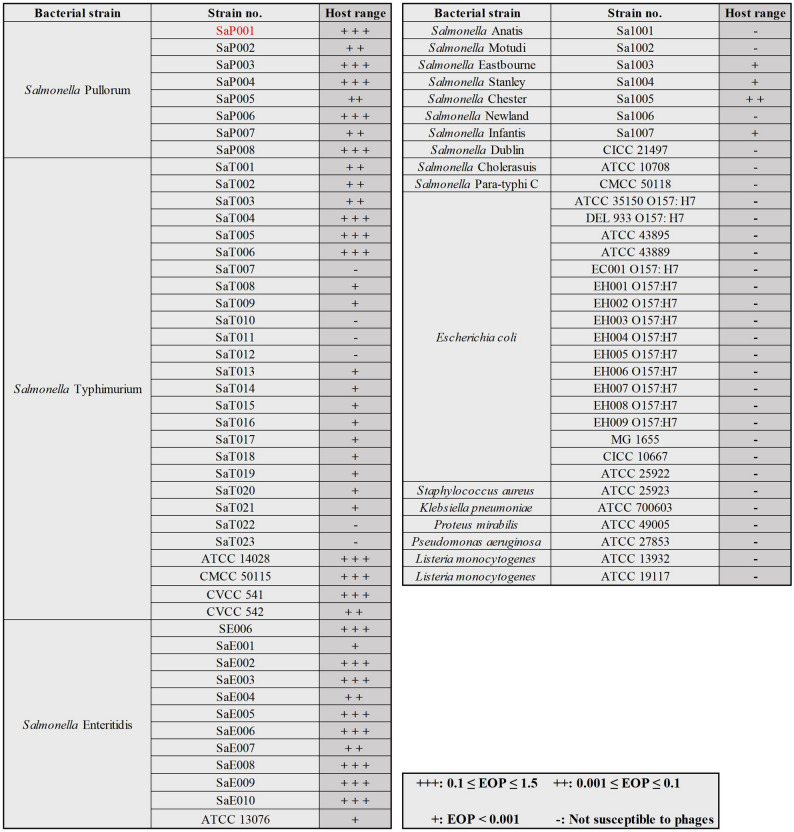 Figure 1
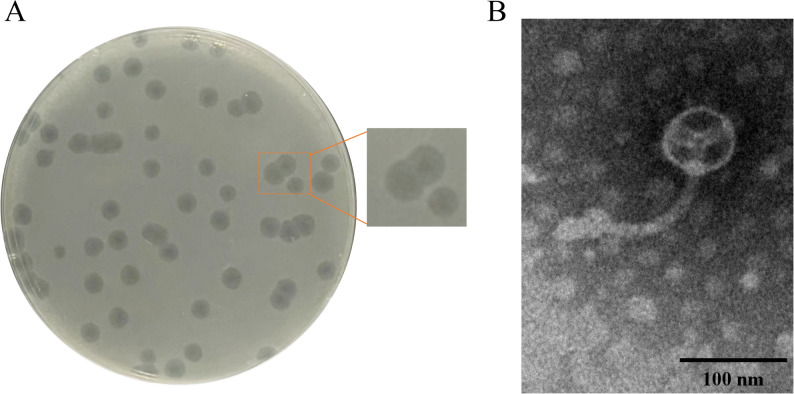 Figure 2
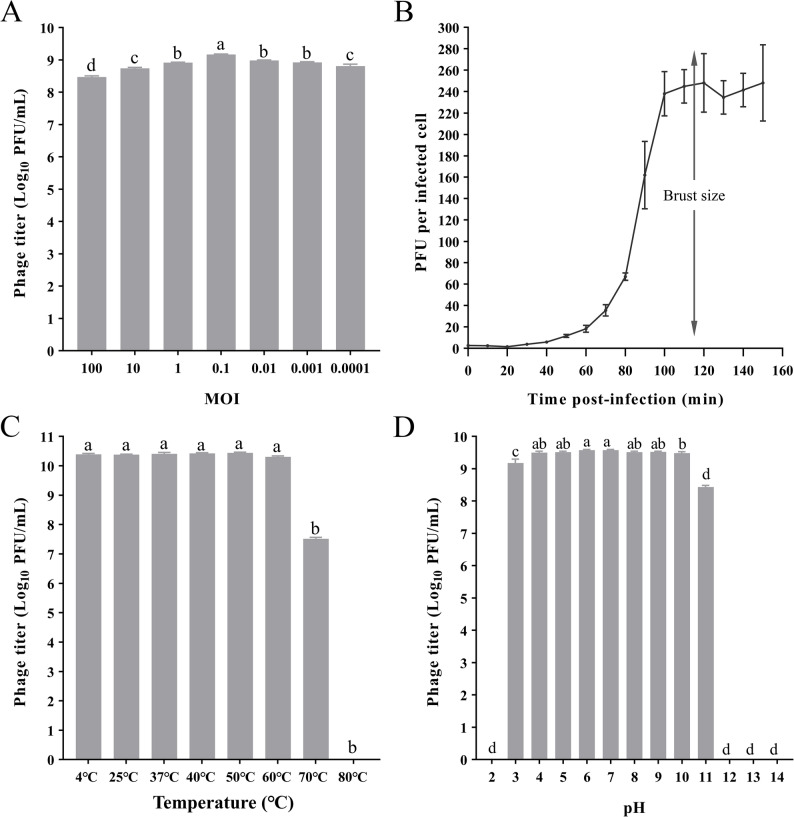 Figure 3
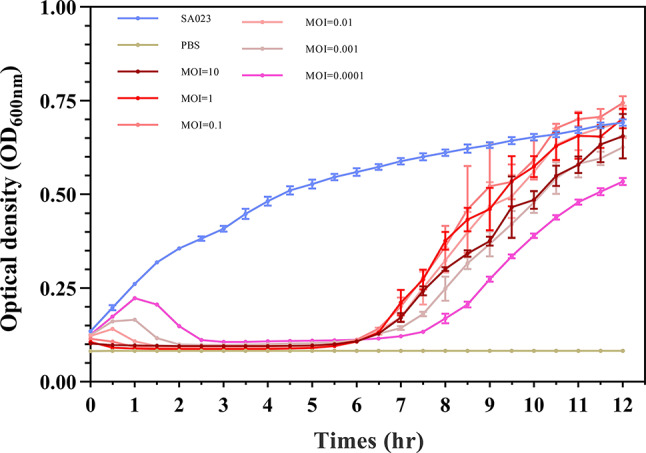 Figure 4
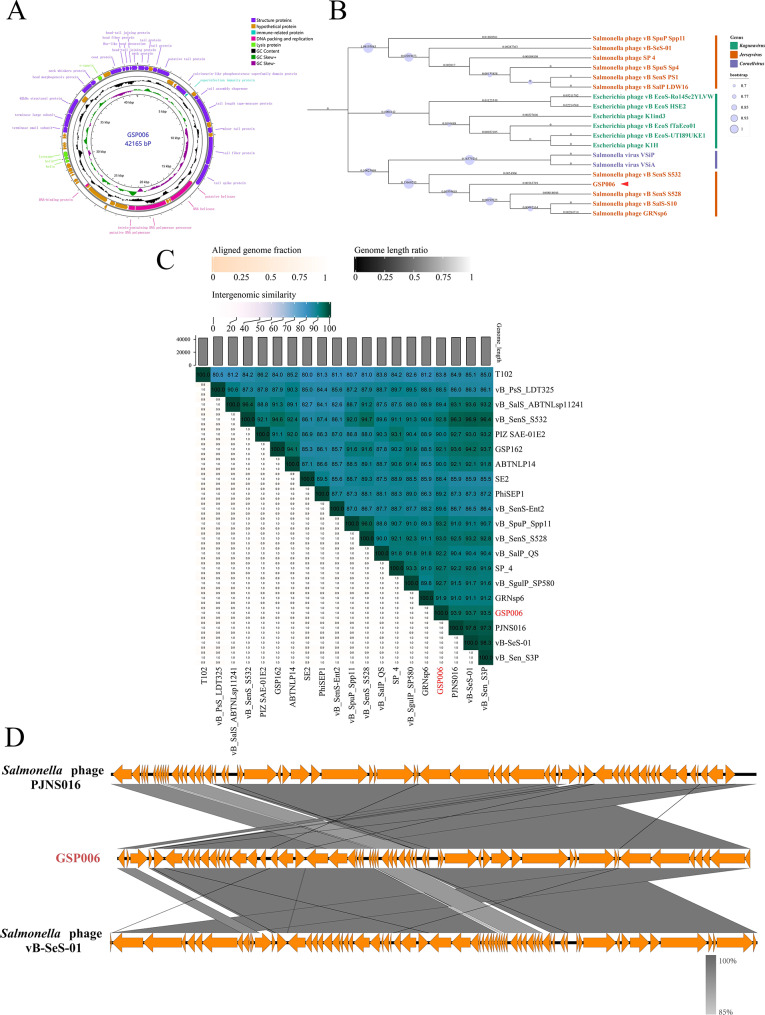 Figure 5
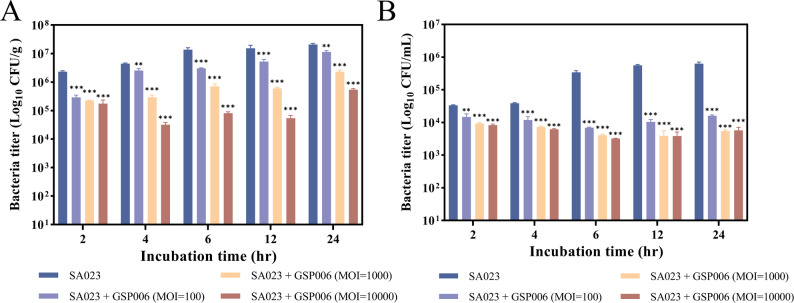 Figure 6
Peer Reviews
No public reviews on file for this paper yet. If you reviewed it on a platform where reviews are public (OpenReview, ICLR, NeurIPS, ICML), you can paste yours below so the community can read it here.
Videos
No videos yet. Explain this paper in a talk, walkthrough, or lecture? Add one.
Taxonomy
TopicsBacteriophages and microbial interactions · Cancer Research and Treatments · Salmonella and Campylobacter epidemiology