Factors influencing late HIV presentation in China: results from logistic regression and Bayesian network analyses
He-he Zhao, Dong-hang Luo, Li-ping Fei, Shi Wang, Fang-fang Chen, Qian-qian Qin, Chang Cai, Yi-Chen Jin, Jie Xu, Hou-lin Tang, Fan Lyu

TL;DR
This study identifies factors that contribute to late HIV diagnosis in China, using statistical and network analyses to inform better testing and intervention strategies.
Contribution
The study combines logistic regression and Bayesian network analysis to reveal complex interrelationships among factors influencing late HIV presentation.
Findings
Age, gender, and sample sources were key factors in late HIV presentation, with age having the most central role.
Education and ethnicity indirectly influenced late diagnosis through their effects on occupation and transient status.
A history of STDs increased the risk of late HIV diagnosis both directly and indirectly through transient population status.
Abstract
Late presentation (LP) of HIV infection remains a major challenge to epidemic control, leading to advanced immunodeficiency, poorer treatment outcomes, and ongoing transmission before diagnosis. Despite expanded testing and awareness efforts, a considerable proportion of people living with HIV (PLHIV) in China are still diagnosed late. This study analyzed 386,704 newly reported HIV cases (2019–2022) from the National HIV/AIDS Comprehensive Response Information Management System (CRIMS). Logistic regression was used to identify significant predictors of LP, and a Bayesian network was constructed to model the complex interrelationships among variables. Logistic regression identified several factors associated with LP of HIV. Key factors included being male (aOR = 1.3), over 60 (aOR = 3.36), Han ethnicity (aOR = 1.16), education at below senior high school (aOR = 1.1), being a farmer or…
Genes, proteins, chemicals, diseases, species, mutations and cell lines named across the full text — each resolved to its canonical identifier and authoritative record.
Click any figure to enlarge with its caption.
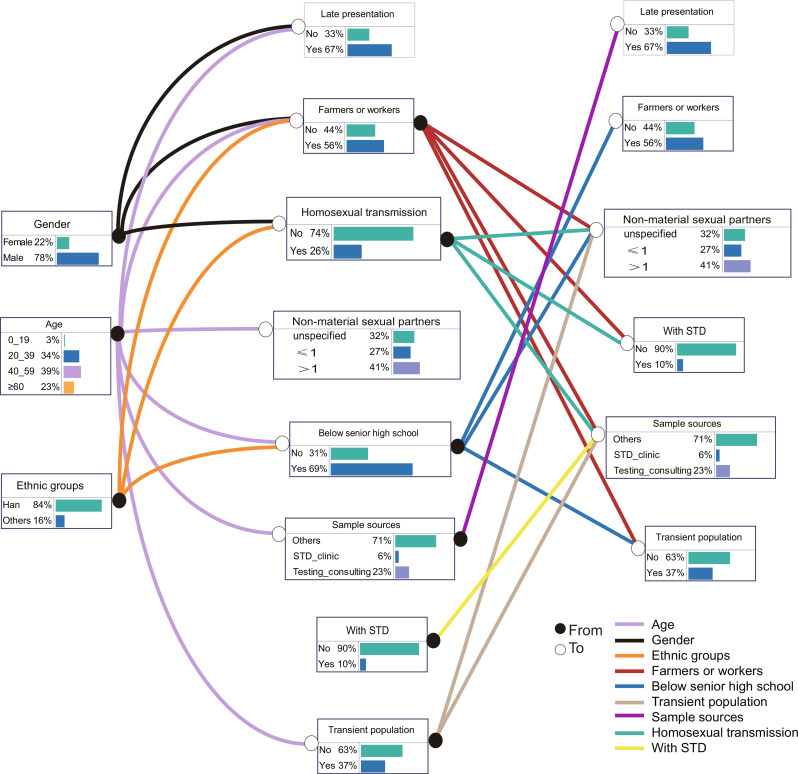 Figure 1
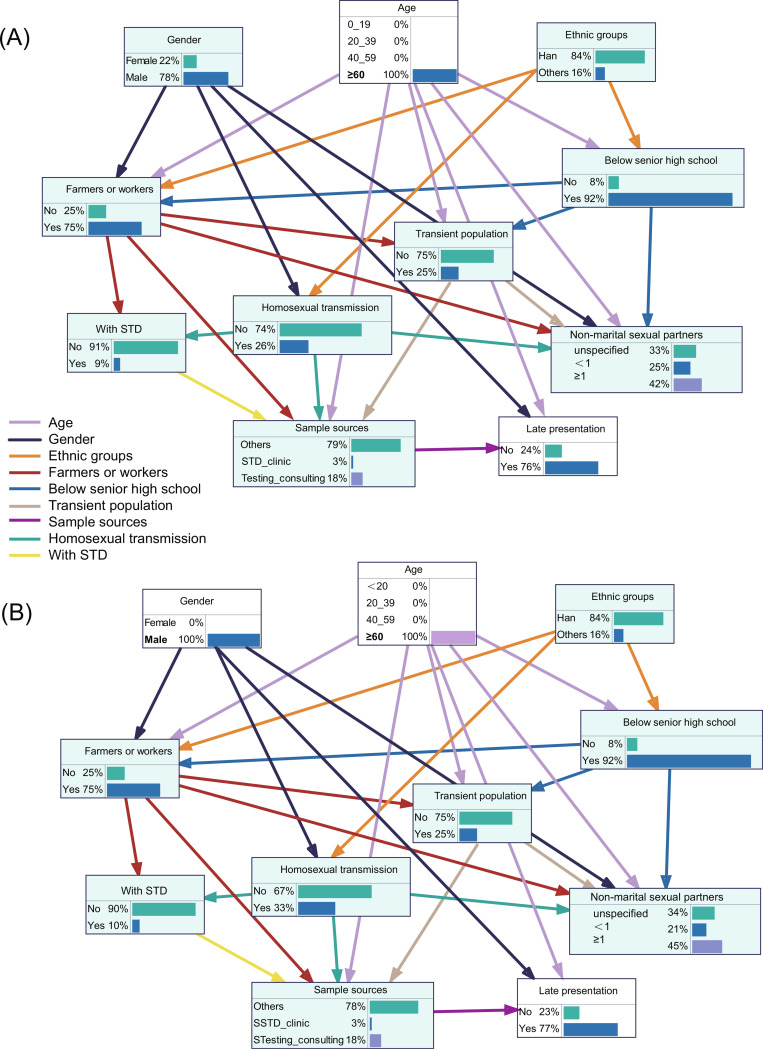 Figure 2
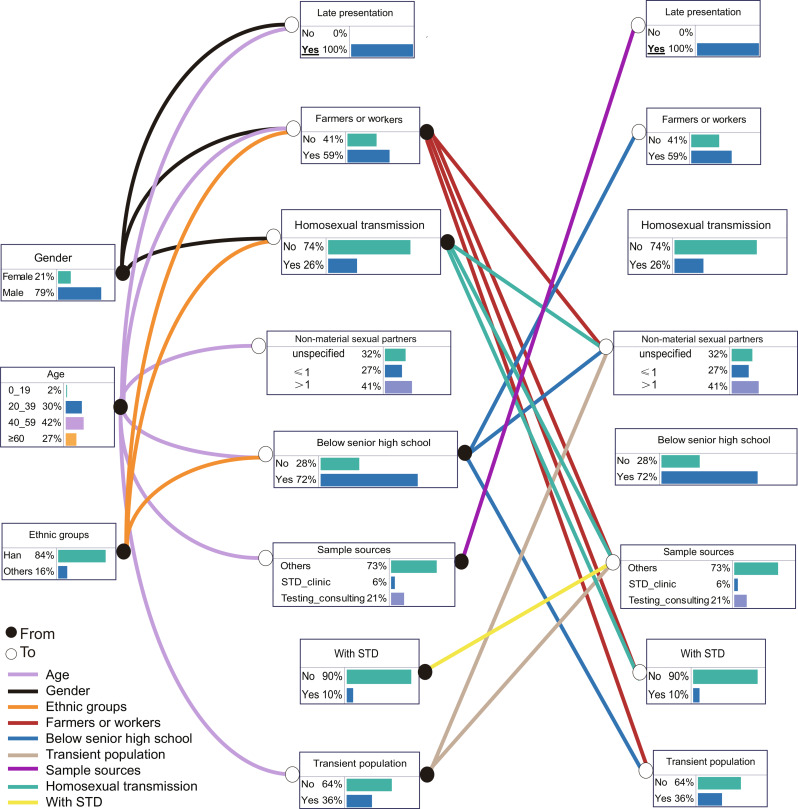 Figure 3
Peer Reviews
No public reviews on file for this paper yet. If you reviewed it on a platform where reviews are public (OpenReview, ICLR, NeurIPS, ICML), you can paste yours below so the community can read it here.
Videos
No videos yet. Explain this paper in a talk, walkthrough, or lecture? Add one.
Taxonomy
TopicsHIV/AIDS Research and Interventions · HIV Research and Treatment · HIV, Drug Use, Sexual Risk